Adhyaya 6
Dakṣa’s Daughters, Cosmic Lineages, and the Population of the Three Worlds
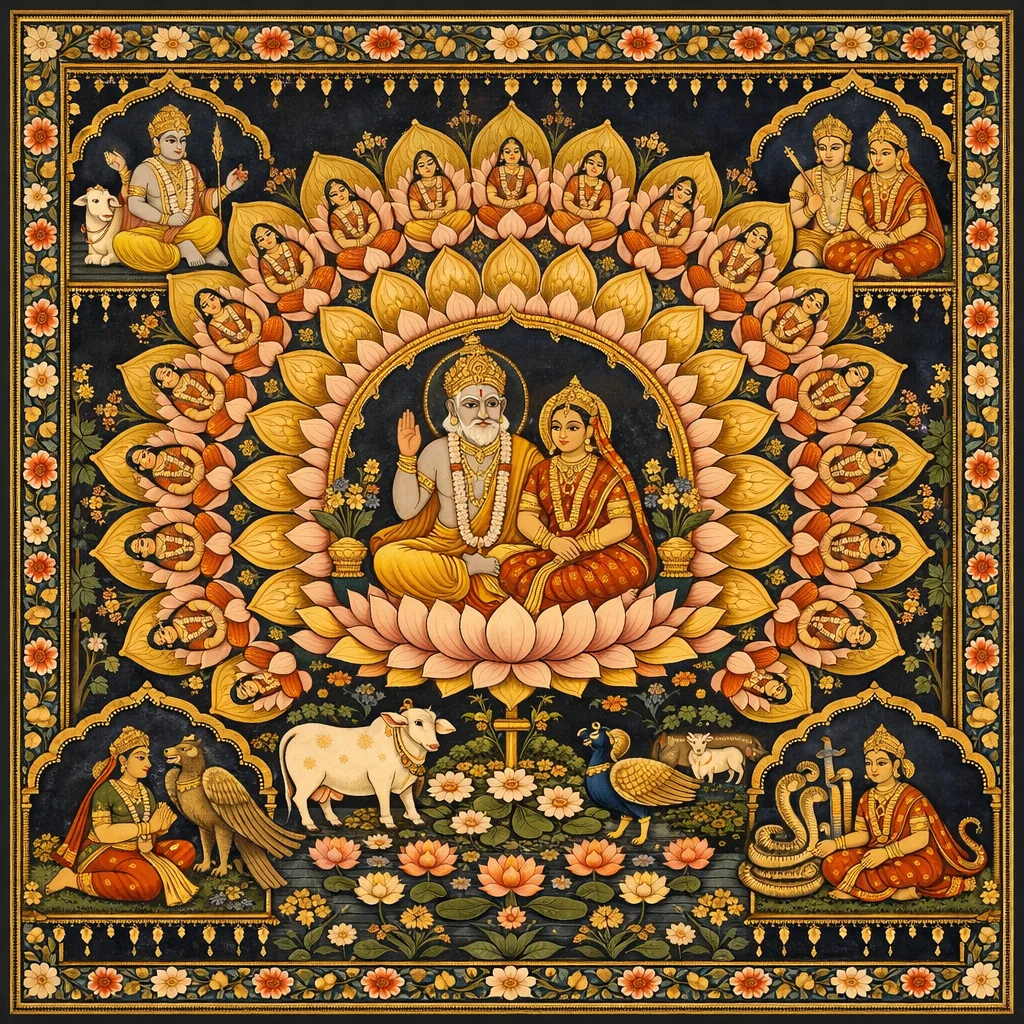
Continuing the canto’s movement from moral governance (Yama’s domain) into cosmic administration (visarga), Śukadeva narrates how, at Brahmā’s request, Prajāpati Dakṣa (Prācetasa) begets sixty daughters in Asiknī and distributes them in marriages that become channels of secondary creation. Ten daughters marry Dharmarāja (Yamarāja), generating lineages such as the Mauhūrtikas and the eight Vasus; the chapter details their spouses and progeny, including notable figures like Upendra (Jayanta) and Viśvakarmā, and identifies expansions of the Supreme (e.g., Śiśumāra). The account then turns to other prajāpatis—Aṅgirā and Kṛśāśva—and to Kaśyapa’s wives (Vinatā, Kadrū, etc.), mapping births of Garuḍa, Aruṇa, serpents, birds, and locusts. The narrative explains the moon-god’s curse and recovery, then enumerates Kaśyapa’s principal wives (Aditi, Diti, Danu, etc.) and the species emerging from them, culminating in the opening of Aditi’s lineage and the birth-context for Viśvarūpa. This sets up the next chapter’s deeper focus on Aditi’s descendants and the unfolding deva–asura tensions tied to priesthood and power.
Shlokas
Verse 1
श्रीशुक उवाच तत: प्राचेतसोऽसिक्न्यामनुनीत: स्वयम्भुवा । षष्टिं सञ्जनयामास दुहितृ: पितृवत्सला: ॥ १ ॥
Śrī Śukadeva Gosvāmī said: My dear King, thereafter, at the request of Lord Brahmā, Prajāpati Dakṣa, who is known as Prācetasa, begot sixty daughters in the womb of his wife Asiknī. All the daughters were very affectionate toward their father.
Verse 2
दश धर्माय कायादाद्द्विषट्त्रिणव चेन्दवे । भूताङ्गिर:कृशाश्वेभ्यो द्वे द्वे तार्क्ष्याय चापरा: ॥ २ ॥
He gave ten daughters in charity to Dharmarāja [Yamarāja], thirteen to Kaśyapa [first twelve and then one more], twenty-seven to the moon-god, and two each to Aṅgirā, Kṛśāśva and Bhūta. The other four daughters were given to Kaśyapa. [Thus Kaśyapa received seventeen daughters in all.]
Verse 3
नामधेयान्यमूषां त्वं सापत्यानां च मे शृणु । यासां प्रसूतिप्रसवैर्लोका आपूरितास्त्रय: ॥ ३ ॥
Now please hear from me the names of all these daughters and their descendants, who filled all the three worlds.
Verse 4
भानुर्लम्बा ककुद्यामिर्विश्वा साध्या मरुत्वती । वसुर्मुहूर्ता सङ्कल्पा धर्मपत्न्य: सुताञ्शृणु ॥ ४ ॥
The ten daughters given to Yamarāja were named Bhānu, Lambā, Kakud, Yāmi, Viśvā, Sādhyā, Marutvatī, Vasu, Muhūrtā and Saṅkalpā. Now hear the names of their sons.
Verse 5
भानोस्तु देवऋषभ इन्द्रसेनस्ततो नृप । विद्योत आसील्लम्बायास्ततश्च स्तनयित्नव: ॥ ५ ॥
O King, a son named Deva-ṛṣabha was born from the womb of Bhānu, and from him came a son named Indrasena. From the womb of Lambā came a son named Vidyota, who generated all the clouds.
Verse 6
ककुद: सङ्कटस्तस्य कीकटस्तनयो यत: । भुवो दुर्गाणि यामेय: स्वर्गो नन्दिस्ततोऽभवत् ॥ ६ ॥
From the womb of Kakud came the son named Saṅkaṭa, whose son was named Kīkaṭa. From Kīkaṭa came the demigods named Durgā. From Yāmi came the son named Svarga, whose son was named Nandi.
Verse 7
विश्वेदेवास्तु विश्वाया अप्रजांस्तान् प्रचक्षते । साध्योगणश्च साध्याया अर्थसिद्धिस्तु तत्सुत: ॥ ७ ॥
The sons of Viśvā were the Viśvadevas, who had no progeny. From the womb of Sādhyā came the Sādhyas, who had a son named Arthasiddhi.
Verse 8
मरुत्वांश्च जयन्तश्च मरुत्वत्या बभूवतु: । जयन्तो वासुदेवांश उपेन्द्र इति यं विदु: ॥ ८ ॥
The two sons who took birth from the womb of Marutvatī were Marutvān and Jayanta. Jayanta, who is an expansion of Lord Vāsudeva, is known as Upendra.
Verse 9
मौहूर्तिका देवगणा मुहूर्तायाश्च जज्ञिरे । ये वै फलं प्रयच्छन्ति भूतानां स्वस्वकालजम् ॥ ९ ॥
The demigods named the Mauhūrtikas took birth from the womb of Muhūrtā. These demigods deliver the results of actions to the living entities of their respective times.
Verse 10
सङ्कल्पायास्तु सङ्कल्प: काम: सङ्कल्पज: स्मृत: । वसवोऽष्टौ वसो: पुत्रास्तेषां नामानि मे शृणु ॥ १० ॥ द्रोण: प्राणो ध्रुवोऽर्कोऽग्निर्दोषो वास्तुर्विभावसु: । द्रोणस्याभिमते: पत्न्या हर्षशोकभयादय: ॥ ११ ॥
The son of Saṅkalpā was known as Saṅkalpa, and from him lust was born. The sons of Vasu were known as the eight Vasus. Just hear their names from me: Droṇa, Prāṇa, Dhruva, Arka, Agni, Doṣa, Vāstu and Vibhāvasu. From Abhimati, the wife of the Vasu named Droṇa, were generated the sons named Harṣa, Śoka, Bhaya and so on.
Verse 11
सङ्कल्पायास्तु सङ्कल्प: काम: सङ्कल्पज: स्मृत: । वसवोऽष्टौ वसो: पुत्रास्तेषां नामानि मे शृणु ॥ १० ॥ द्रोण: प्राणो ध्रुवोऽर्कोऽग्निर्दोषो वास्तुर्विभावसु: । द्रोणस्याभिमते: पत्न्या हर्षशोकभयादय: ॥ ११ ॥
The son of Saṅkalpā was known as Saṅkalpa, and from him lust was born. The sons of Vasu were known as the eight Vasus. Just hear their names from me: Droṇa, Prāṇa, Dhruva, Arka, Agni, Doṣa, Vāstu and Vibhāvasu. From Abhimati, the wife of the Vasu named Droṇa, were generated the sons named Harṣa, Śoka, Bhaya and so on.
Verse 12
प्राणस्योर्जस्वती भार्या सह आयु: पुरोजव: । ध्रुवस्य भार्या धरणिरसूत विविधा: पुर: ॥ १२ ॥
Ūrjasvatī, the wife of Prāṇa, gave birth to three sons, named Saha, Āyus and Purojava. The wife of Dhruva was known as Dharaṇi, and from her womb various cities took birth.
Verse 13
अर्कस्य वासना भार्या पुत्रास्तर्षादय: स्मृता: । अग्नेर्भार्या वसोर्धारा पुत्रा द्रविणकादय: ॥ १३ ॥
From the womb of Vāsanā, the wife of Arka, came many sons, headed by Tarṣa. Dhārā, the wife of the Vasu named Agni, gave birth to many sons, headed by Draviṇaka.
Verse 14
स्कन्दश्च कृत्तिकापुत्रो ये विशाखादयस्तत: । दोषस्य शर्वरीपुत्र: शिशुमारो हरे: कला ॥ १४ ॥
From Kṛttikā, another wife of Agni, came the son named Skanda, Kārttikeya, whose sons were headed by Viśākha. From the womb of Śarvarī, the wife of the Vasu named Doṣa, came the son named Śiśumāra, who was an expansion of the Supreme Personality of Godhead.
Verse 15
वास्तोराङ्गिरसीपुत्रो विश्वकर्माकृतीपति: । ततो मनुश्चाक्षुषोऽभूद् विश्वे साध्या मनो: सुता: ॥ १५ ॥
From Āṅgirasī, the wife of the Vasu named Vāstu, was born the great architect Viśvakarmā. Viśvakarmā became the husband of Ākṛtī, from whom the Manu named Cākṣuṣa was born. The sons of Manu were known as the Viśvadevas and Sādhyas.
Verse 16
विभावसोरसूतोषा व्युष्टं रोचिषमातपम् । पञ्चयामोऽथ भूतानि येन जाग्रति कर्मसु ॥ १६ ॥
Ūṣā, the wife of Vibhāvasu, gave birth to three sons — Vyuṣṭa, Rociṣa and Ātapa. From Ātapa came Pañcayāma, the span of day, who awakens all living entities to material activities.
Verse 17
सरूपासूत भूतस्य भार्या रुद्रांश्च कोटिश: । रैवतोऽजो भवो भीमो वाम उग्रो वृषाकपि: ॥ १७ ॥ अजैकपादहिर्ब्रध्नो बहुरूपो महानिति । रुद्रस्य पार्षदाश्चान्ये घोरा: प्रेतविनायका: ॥ १८ ॥
Sarūpā, the wife of Bhūta, gave birth to the ten million Rudras, of whom the eleven principle Rudras were Raivata, Aja, Bhava, Bhīma, Vāma, Ugra, Vṛṣākapi, Ajaikapāt, Ahirbradhna, Bahurūpa and Mahān. Their associates, the ghosts and goblins, who are very fearful, were born of the other wife of Bhūta.
Verse 18
सरूपासूत भूतस्य भार्या रुद्रांश्च कोटिश: । रैवतोऽजो भवो भीमो वाम उग्रो वृषाकपि: ॥ १७ ॥ अजैकपादहिर्ब्रध्नो बहुरूपो महानिति । रुद्रस्य पार्षदाश्चान्ये घोरा: प्रेतविनायका: ॥ १८ ॥
Sarūpā, the wife of Bhūta, gave birth to the ten million Rudras, of whom the eleven principle Rudras were Raivata, Aja, Bhava, Bhīma, Vāma, Ugra, Vṛṣākapi, Ajaikapāt, Ahirbradhna, Bahurūpa and Mahān. Their associates, the ghosts and goblins, who are very fearful, were born of the other wife of Bhūta.
Verse 19
प्रजापतेरङ्गिरस: स्वधा पत्नी पितृनथ । अथर्वाङ्गिरसं वेदं पुत्रत्वे चाकरोत् सती ॥ १९ ॥
The prajāpati Aṅgirā had two wives, named Svadhā and Satī. The wife named Svadhā accepted all the Pitās as her sons, and Satī accepted the Atharvāṅgirasa Veda as her son.
Verse 20
कृशाश्वोऽर्चिषि भार्यायां धूमकेतुमजीजनत् । धिषणायां वेदशिरो देवलं वयुनं मनुम् ॥ २० ॥
Kṛśāśva had two wives, named Arcis and Dhiṣaṇā. In the wife named Arcis he begot Dhūmaketu and in Dhiṣaṇā he begot four sons, named Vedaśirā, Devala, Vayuna and Manu.
Verse 21
तार्क्ष्यस्य विनता कद्रू: पतङ्गी यामिनीति च । पतङ्गयसूत पतगान्यामिनी शलभानथ ॥ २१ ॥ सुपर्णासूत गरुडं साक्षाद् यज्ञेशवाहनम् । सूर्यसूतमनूरुं च कद्रूर्नागाननेकश: ॥ २२ ॥
Kaśyapa, who is also named Tārkṣya, had four wives — Vinatā [Suparṇā], Kadrū, Pataṅgī and Yāminī. Pataṅgī gave birth to many kinds of birds, and Yāminī gave birth to locusts. Vinatā [Suparṇā] gave birth to Garuḍa, the carrier of Lord Viṣṇu, and to Anūru, or Aruṇa, the chariot driver of the sun-god. Kadrū gave birth to different varieties of serpents.
Verse 22
तार्क्ष्यस्य विनता कद्रू: पतङ्गी यामिनीति च । पतङ्गयसूत पतगान्यामिनी शलभानथ ॥ २१ ॥ सुपर्णासूत गरुडं साक्षाद् यज्ञेशवाहनम् । सूर्यसूतमनूरुं च कद्रूर्नागाननेकश: ॥ २२ ॥
Kaśyapa, who is also named Tārkṣya, had four wives — Vinatā [Suparṇā], Kadrū, Pataṅgī and Yāminī. Pataṅgī gave birth to many kinds of birds, and Yāminī gave birth to locusts. Vinatā [Suparṇā] gave birth to Garuḍa, the carrier of Lord Viṣṇu, and to Anūru, or Aruṇa, the chariot driver of the sun-god. Kadrū gave birth to different varieties of serpents.
Verse 23
कृत्तिकादीनि नक्षत्राणीन्दो: पत्न्यस्तु भारत । दक्षशापात् सोऽनपत्यस्तासु यक्ष्मग्रहार्दित: ॥ २३ ॥
O Mahārāja Parīkṣit, best of the Bhāratas, the constellations named Kṛttikā were all wives of the moon-god. However, because Prajāpati Dakṣa had cursed him to suffer from a disease causing gradual destruction, the moon-god could not beget children in any of his wives.
Verse 24
पुन: प्रसाद्य तं सोम: कला लेभे क्षये दिता: । शृणु नामानि लोकानां मातृणां शङ्कराणि च ॥ २४ ॥ अथ कश्यपपत्नीनां यत्प्रसूतमिदं जगत् । अदितिर्दितिर्दनु: काष्ठा अरिष्टा सुरसा इला ॥ २५ ॥ मुनि: क्रोधवशा ताम्रा सुरभि: सरमा तिमि: । तिमेर्यादोगणा आसन् श्वापदा: सरमासुता: ॥ २६ ॥
Thereafter the King of the moon pacified Prajāpati Dakṣa with courteous words and thus regained the portions of light he had lost during his disease. Nevertheless he could not beget children. The moon loses his shining power during the dark fortnight, and in the bright fortnight it is manifest again. O King Parīkṣit, now please hear from me the names of Kaśyapa’s wives, from whose wombs the population of the entire universe has come. They are the mothers of almost all the population of the entire universe, and their names are very auspicious to hear. They are Aditi, Diti, Danu, Kāṣṭhā, Ariṣṭā, Surasā, Ilā, Muni, Krodhavaśā, Tāmrā, Surabhi, Saramā and Timi. From the womb of Timi all the aquatics took birth, and from the womb of Saramā the ferocious animals like the tigers and lions took birth.
Verse 25
पुन: प्रसाद्य तं सोम: कला लेभे क्षये दिता: । शृणु नामानि लोकानां मातृणां शङ्कराणि च ॥ २४ ॥ अथ कश्यपपत्नीनां यत्प्रसूतमिदं जगत् । अदितिर्दितिर्दनु: काष्ठा अरिष्टा सुरसा इला ॥ २५ ॥ मुनि: क्रोधवशा ताम्रा सुरभि: सरमा तिमि: । तिमेर्यादोगणा आसन् श्वापदा: सरमासुता: ॥ २६ ॥
Thereafter the King of the moon pacified Prajāpati Dakṣa with courteous words and thus regained the portions of light he had lost during his disease. Nevertheless he could not beget children. The moon loses his shining power during the dark fortnight, and in the bright fortnight it is manifest again. O King Parīkṣit, now please hear from me the names of Kaśyapa’s wives, from whose wombs the population of the entire universe has come. They are the mothers of almost all the population of the entire universe, and their names are very auspicious to hear. They are Aditi, Diti, Danu, Kāṣṭhā, Ariṣṭā, Surasā, Ilā, Muni, Krodhavaśā, Tāmrā, Surabhi, Saramā and Timi. From the womb of Timi all the aquatics took birth, and from the womb of Saramā the ferocious animals like the tigers and lions took birth.
Verse 26
पुन: प्रसाद्य तं सोम: कला लेभे क्षये दिता: । शृणु नामानि लोकानां मातृणां शङ्कराणि च ॥ २४ ॥ अथ कश्यपपत्नीनां यत्प्रसूतमिदं जगत् । अदितिर्दितिर्दनु: काष्ठा अरिष्टा सुरसा इला ॥ २५ ॥ मुनि: क्रोधवशा ताम्रा सुरभि: सरमा तिमि: । तिमेर्यादोगणा आसन् श्वापदा: सरमासुता: ॥ २६ ॥
Thereafter the King of the moon pacified Prajāpati Dakṣa with courteous words and thus regained the portions of light he had lost during his disease. Nevertheless he could not beget children. The moon loses his shining power during the dark fortnight, and in the bright fortnight it is manifest again. O King Parīkṣit, now please hear from me the names of Kaśyapa’s wives, from whose wombs the population of the entire universe has come. They are the mothers of almost all the population of the entire universe, and their names are very auspicious to hear. They are Aditi, Diti, Danu, Kāṣṭhā, Ariṣṭā, Surasā, Ilā, Muni, Krodhavaśā, Tāmrā, Surabhi, Saramā and Timi. From the womb of Timi all the aquatics took birth, and from the womb of Saramā the ferocious animals like the tigers and lions took birth.
Verse 27
सुरभेर्महिषा गावो ये चान्ये द्विशफा नृप । ताम्राया: श्येनगृध्राद्या मुनेरप्सरसां गणा: ॥ २७ ॥
My dear King Parīkṣit, from the womb of Surabhi the buffalo, cow and other animals with cloven hooves took birth, from the womb of Tāmrā the eagles, vultures and other large birds of prey took birth, and from the womb of Muni the angels took birth.
Verse 28
दन्दशूकादय: सर्पा राजन् क्रोधवशात्मजा: । इलाया भूरुहा: सर्वे यातुधानाश्च सौरसा: ॥ २८ ॥
The sons born of Krodhavaśā were the serpents known as dandaśūka, as well as other serpents and the mosquitoes. All the various creepers and trees were born from the womb of Ilā. The Rākṣasas, bad spirits, were born from the womb of Surasā.
Verse 29
अरिष्टायास्तु गन्धर्वा: काष्ठाया द्विशफेतरा: । सुता दनोरेकषष्टिस्तेषां प्राधानिकाञ् शृणु ॥ २९ ॥ द्विमूर्धा शम्बरोऽरिष्टो हयग्रीवो विभावसु: । अयोमुख: शङ्कुशिरा: स्वर्भानु: कपिलोऽरुण: ॥ ३० ॥ पुलोमा वृषपर्वा च एकचक्रोऽनुतापन: । धूम्रकेशो विरूपाक्षो विप्रचित्तिश्च दुर्जय: ॥ ३१ ॥
The Gandharvas were born from the womb of Ariṣṭā, and animals whose hooves are not split, such as the horse, were born from the womb of Kāṣṭhā. O King, from the womb of Danu came sixty-one sons, of whom these eighteen were very important: Dvimūrdhā, Śambara, Ariṣṭa, Hayagrīva, Vibhāvasu, Ayomukha, Śaṅkuśirā, Svarbhānu, Kapila, Aruṇa, Pulomā, Vṛṣaparvā, Ekacakra, Anutāpana, Dhūmrakeśa, Virūpākṣa, Vipracitti and Durjaya.
Verse 30
अरिष्टायास्तु गन्धर्वा: काष्ठाया द्विशफेतरा: । सुता दनोरेकषष्टिस्तेषां प्राधानिकाञ् शृणु ॥ २९ ॥ द्विमूर्धा शम्बरोऽरिष्टो हयग्रीवो विभावसु: । अयोमुख: शङ्कुशिरा: स्वर्भानु: कपिलोऽरुण: ॥ ३० ॥ पुलोमा वृषपर्वा च एकचक्रोऽनुतापन: । धूम्रकेशो विरूपाक्षो विप्रचित्तिश्च दुर्जय: ॥ ३१ ॥
The Gandharvas were born from the womb of Ariṣṭā, and animals whose hooves are not split, such as the horse, were born from the womb of Kāṣṭhā. O King, from the womb of Danu came sixty-one sons, of whom these eighteen were very important: Dvimūrdhā, Śambara, Ariṣṭa, Hayagrīva, Vibhāvasu, Ayomukha, Śaṅkuśirā, Svarbhānu, Kapila, Aruṇa, Pulomā, Vṛṣaparvā, Ekacakra, Anutāpana, Dhūmrakeśa, Virūpākṣa, Vipracitti and Durjaya.
Verse 31
अरिष्टायास्तु गन्धर्वा: काष्ठाया द्विशफेतरा: । सुता दनोरेकषष्टिस्तेषां प्राधानिकाञ् शृणु ॥ २९ ॥ द्विमूर्धा शम्बरोऽरिष्टो हयग्रीवो विभावसु: । अयोमुख: शङ्कुशिरा: स्वर्भानु: कपिलोऽरुण: ॥ ३० ॥ पुलोमा वृषपर्वा च एकचक्रोऽनुतापन: । धूम्रकेशो विरूपाक्षो विप्रचित्तिश्च दुर्जय: ॥ ३१ ॥
The Gandharvas were born from the womb of Ariṣṭā, and animals whose hooves are not split, such as the horse, were born from the womb of Kāṣṭhā. O King, from the womb of Danu came sixty-one sons, of whom these eighteen were very important: Dvimūrdhā, Śambara, Ariṣṭa, Hayagrīva, Vibhāvasu, Ayomukha, Śaṅkuśirā, Svarbhānu, Kapila, Aruṇa, Pulomā, Vṛṣaparvā, Ekacakra, Anutāpana, Dhūmrakeśa, Virūpākṣa, Vipracitti and Durjaya.
Verse 32
स्वर्भानो: सुप्रभां कन्यामुवाह नमुचि: किल । वृषपर्वणस्तु शर्मिष्ठां ययातिर्नाहुषो बली ॥ ३२ ॥
The daughter of Svarbhānu named Suprabhā was married by Namuci. The daughter of Vṛṣaparvā named Śarmiṣṭhā was given to the powerful King Yayāti, the son of Nahuṣa.
Verse 33
वैश्वानरसुता याश्च चतस्रश्चारुदर्शना: । उपदानवी हयशिरा पुलोमा कालका तथा ॥ ३३ ॥ उपदानवीं हिरण्याक्ष: क्रतुर्हयशिरां नृप । पुलोमां कालकां च द्वे वैश्वानरसुते तु क: ॥ ३४ ॥ उपयेमेऽथ भगवान् कश्यपो ब्रह्मचोदित: । पौलोमा: कालकेयाश्च दानवा युद्धशालिन: ॥ ३५ ॥ तयो: षष्टिसहस्राणि यज्ञघ्नांस्ते पितु: पिता । जघान स्वर्गतो राजन्नेक इन्द्रप्रियङ्कर: ॥ ३६ ॥
Vaiśvānara, the son of Danu, had four beautiful daughters, named Upadānavī, Hayaśirā, Pulomā and Kālakā. Hiraṇyākṣa married Upadānavī, and Kratu married Hayaśirā. Thereafter, at the request of Lord Brahmā, Prajāpati Kaśyapa married Pulomā and Kālakā, the other two daughters of Vaiśvānara. From the wombs of these two wives of Kaśyapa came sixty thousand sons, headed by Nivātakavaca, who are known as the Paulomas and the Kālakeyas. They were physically very strong and expert in fighting, and their aim was to disturb the sacrifices performed by the great sages. My dear King, when your grandfather Arjuna went to the heavenly planets, he alone killed all these demons, and thus King Indra became extremely affectionate toward him.
Verse 34
वैश्वानरसुता याश्च चतस्रश्चारुदर्शना: । उपदानवी हयशिरा पुलोमा कालका तथा ॥ ३३ ॥ उपदानवीं हिरण्याक्ष: क्रतुर्हयशिरां नृप । पुलोमां कालकां च द्वे वैश्वानरसुते तु क: ॥ ३४ ॥ उपयेमेऽथ भगवान् कश्यपो ब्रह्मचोदित: । पौलोमा: कालकेयाश्च दानवा युद्धशालिन: ॥ ३५ ॥ तयो: षष्टिसहस्राणि यज्ञघ्नांस्ते पितु: पिता । जघान स्वर्गतो राजन्नेक इन्द्रप्रियङ्कर: ॥ ३६ ॥
Vaiśvānara, the son of Danu, had four beautiful daughters, named Upadānavī, Hayaśirā, Pulomā and Kālakā. Hiraṇyākṣa married Upadānavī, and Kratu married Hayaśirā. Thereafter, at the request of Lord Brahmā, Prajāpati Kaśyapa married Pulomā and Kālakā, the other two daughters of Vaiśvānara. From the wombs of these two wives of Kaśyapa came sixty thousand sons, headed by Nivātakavaca, who are known as the Paulomas and the Kālakeyas. They were physically very strong and expert in fighting, and their aim was to disturb the sacrifices performed by the great sages. My dear King, when your grandfather Arjuna went to the heavenly planets, he alone killed all these demons, and thus King Indra became extremely affectionate toward him.
Verse 35
वैश्वानरसुता याश्च चतस्रश्चारुदर्शना: । उपदानवी हयशिरा पुलोमा कालका तथा ॥ ३३ ॥ उपदानवीं हिरण्याक्ष: क्रतुर्हयशिरां नृप । पुलोमां कालकां च द्वे वैश्वानरसुते तु क: ॥ ३४ ॥ उपयेमेऽथ भगवान् कश्यपो ब्रह्मचोदित: । पौलोमा: कालकेयाश्च दानवा युद्धशालिन: ॥ ३५ ॥ तयो: षष्टिसहस्राणि यज्ञघ्नांस्ते पितु: पिता । जघान स्वर्गतो राजन्नेक इन्द्रप्रियङ्कर: ॥ ३६ ॥
Vaiśvānara, the son of Danu, had four beautiful daughters, named Upadānavī, Hayaśirā, Pulomā and Kālakā. Hiraṇyākṣa married Upadānavī, and Kratu married Hayaśirā. Thereafter, at the request of Lord Brahmā, Prajāpati Kaśyapa married Pulomā and Kālakā, the other two daughters of Vaiśvānara. From the wombs of these two wives of Kaśyapa came sixty thousand sons, headed by Nivātakavaca, who are known as the Paulomas and the Kālakeyas. They were physically very strong and expert in fighting, and their aim was to disturb the sacrifices performed by the great sages. My dear King, when your grandfather Arjuna went to the heavenly planets, he alone killed all these demons, and thus King Indra became extremely affectionate toward him.
Verse 36
वैश्वानरसुता याश्च चतस्रश्चारुदर्शना: । उपदानवी हयशिरा पुलोमा कालका तथा ॥ ३३ ॥ उपदानवीं हिरण्याक्ष: क्रतुर्हयशिरां नृप । पुलोमां कालकां च द्वे वैश्वानरसुते तु क: ॥ ३४ ॥ उपयेमेऽथ भगवान् कश्यपो ब्रह्मचोदित: । पौलोमा: कालकेयाश्च दानवा युद्धशालिन: ॥ ३५ ॥ तयो: षष्टिसहस्राणि यज्ञघ्नांस्ते पितु: पिता । जघान स्वर्गतो राजन्नेक इन्द्रप्रियङ्कर: ॥ ३६ ॥
Vaiśvānara, the son of Danu, had four beautiful daughters, named Upadānavī, Hayaśirā, Pulomā and Kālakā. Hiraṇyākṣa married Upadānavī, and Kratu married Hayaśirā. Thereafter, at the request of Lord Brahmā, Prajāpati Kaśyapa married Pulomā and Kālakā, the other two daughters of Vaiśvānara. From the wombs of these two wives of Kaśyapa came sixty thousand sons, headed by Nivātakavaca, who are known as the Paulomas and the Kālakeyas. They were physically very strong and expert in fighting, and their aim was to disturb the sacrifices performed by the great sages. My dear King, when your grandfather Arjuna went to the heavenly planets, he alone killed all these demons, and thus King Indra became extremely affectionate toward him.
Verse 37
विप्रचित्ति: सिंहिकायां शतं चैकमजीजनत् । राहुज्येष्ठं केतुशतं ग्रहत्वं य उपागता: ॥ ३७ ॥
In his wife Siṁhikā, Vipracitti begot one hundred and one sons, of whom the eldest is Rāhu and the others are the one hundred Ketus. All of them attained positions in the influential planets.
Verse 38
अथात: श्रूयतां वंशो योऽदितेरनुपूर्वश: । यत्र नारायणो देव: स्वांशेनावातरद्विभु: ॥ ३८ ॥ विवस्वानर्यमा पूषा त्वष्टाथ सविता भग: । धाता विधाता वरुणो मित्र: शत्रु उरुक्रम: ॥ ३९ ॥
Now please hear me as I describe the descendants of Aditi in chronological order. In this dynasty the Supreme Personality of Godhead Nārāyaṇa descended by His plenary expansion. The names of the sons of Aditi are as follows: Vivasvān, Aryamā, Pūṣā, Tvaṣṭā, Savitā, Bhaga, Dhātā, Vidhātā, Varuṇa, Mitra, Śatru and Urukrama.
Verse 39
अथात: श्रूयतां वंशो योऽदितेरनुपूर्वश: । यत्र नारायणो देव: स्वांशेनावातरद्विभु: ॥ ३८ ॥ विवस्वानर्यमा पूषा त्वष्टाथ सविता भग: । धाता विधाता वरुणो मित्र: शत्रु उरुक्रम: ॥ ३९ ॥
Now please hear me as I describe the descendants of Aditi in chronological order. In this dynasty the Supreme Personality of Godhead Nārāyaṇa descended by His plenary expansion. The names of the sons of Aditi are as follows: Vivasvān, Aryamā, Pūṣā, Tvaṣṭā, Savitā, Bhaga, Dhātā, Vidhātā, Varuṇa, Mitra, Śatru and Urukrama.
Verse 40
विवस्वत: श्राद्धदेवं संज्ञासूयत वै मनुम् । मिथुनं च महाभागा यमं देवं यमीं तथा । सैव भूत्वाथ वडवा नासत्यौ सुषुवे भुवि ॥ ४० ॥
Saṁjñā, the wife of Vivasvān, the sun-god, gave birth to the Manu named Śrāddhadeva, and the same fortunate wife also gave birth to the twins Yamarāja and the river Yamunā. Then Yamī, while wandering on the earth in the form of a mare, gave birth to the Aśvinī-kumāras.
Verse 41
छाया शनैश्चरं लेभे सावर्णिं च मनुं तत: । कन्यां च तपतीं या वै वव्रे संवरणं पतिम् ॥ ४१ ॥
Chāyā, another wife of the sun-god, begot two sons named Śanaiścara and Sāvarṇi Manu, and one daughter, Tapatī, who married Saṁvaraṇa.
Verse 42
अर्यम्णो मातृका पत्नी तयोश्चर्षणय: सुता: । यत्र वै मानुषी जातिर्ब्रह्मणा चोपकल्पिता ॥ ४२ ॥
From the womb of Mātṛkā, the wife of Aryamā, were born many learned scholars. Among them Lord Brahmā created the human species, which are endowed with an aptitude for self-examination.
Verse 43
पूषानपत्य: पिष्टादो भग्नदन्तोऽभवत्पुरा । योऽसौ दक्षाय कुपितं जहास विवृतद्विज: ॥ ४३ ॥
Pūṣā had no sons. When Lord Śiva was angry at Dakṣa, Pūṣā had laughed at Lord Śiva and shown his teeth. Therefore he lost his teeth and had to live by eating only ground flour.
Verse 44
त्वष्टुर्दैत्यात्मजा भार्या रचना नाम कन्यका । सन्निवेशस्तयोर्जज्ञे विश्वरूपश्च वीर्यवान् ॥ ४४ ॥
Racanā, the daughter of the Daityas, became the wife of Prajāpati Tvaṣṭā. By his semen he begot in her womb two very powerful sons named Sanniveśa and Viśvarūpa.
Verse 45
तं वव्रिरे सुरगणा स्वस्रीयं द्विषतामपि । विमतेन परित्यक्ता गुरुणाङ्गिरसेन यत् ॥ ४५ ॥
Although Viśvarūpa was the son of the daughter of their eternal enemies the demons, the demigods accepted him as their priest in accordance with the order of Brahmā when they were abandoned by their spiritual master, Bṛhaspati, whom they had disrespected.
Frequently Asked Questions
The detail is a visarga map: marriages function as sanctioned channels of secondary creation, showing how cosmic population, administrative deities, and species-lines arise under Brahmā’s plan. The Bhāgavata frames genealogy not as mere history but as a theological chart of how the Lord’s order manifests through prajāpatis and their networks.
The eight Vasus—Droṇa, Prāṇa, Dhruva, Arka, Agni, Doṣa, Vāstu, and Vibhāvasu—represent elemental and functional powers within universal maintenance. Their family lines (e.g., Viśvakarmā from Vāstu; Skanda from Agni) illustrate how specialized cosmic roles (architecture, time divisions, leadership of devas) emerge within dharmic creation.
The curse episode explains the moon’s cyclical waxing and waning and simultaneously transitions the narrative from Dakṣa’s immediate marital distributions to Kaśyapa’s broader progenitive network. It anchors cosmological observation (lunar phases) in moral causality (Dakṣa’s curse) while keeping the focus on population dynamics.
Aditi’s sons include Vivasvān, Aryamā, Pūṣā, Tvaṣṭā, Savitā, Bhaga, Dhātā, Vidhātā, Varuṇa, Mitra, Śatru, and Urukrama. This Āditya line is crucial because it is a primary deva lineage through which the Supreme Lord’s plenary expansion is described as descending, and it sets the stage for conflicts and resolutions involving devas, asuras, and priestly authority (e.g., Viśvarūpa).