Adhyaya 7
Vyāsa’s Vision, the Power of Bhāgavatam, and the Arrest of Aśvatthāmā
Responding to Śaunaka’s inquiry, Sūta describes Vyāsadeva’s post-Nārada resolution: he retires to Śamyāprāsa on the Sarasvatī, purifies himself, and in bhakti-yoga directly beholds the Supreme Person along with māyā under His control. Seeing how the jīva—though distinct from the guṇas—suffers by misidentification, Vyāsa compiles the Bhāgavatam as the direct medicine; mere hearing kindles devotion that burns away grief and fear. Vyāsa then teaches this refined work to Śukadeva, prompting the question of why an ātmārāma would study it—answered by the Lord’s irresistible qualities that attract even the liberated. The narration then bridges into the post-Kurukṣetra crisis: Aśvatthāmā murders Draupadī’s sleeping sons, flees Arjuna, and releases a brahmāstra without knowing withdrawal. Guided by Kṛṣṇa, Arjuna counters and retracts the weapons to save the worlds, captures Aśvatthāmā, and faces a dharmic tension—justice versus mercy—setting up the next chapter’s resolution through Draupadī’s compassion and Kṛṣṇa’s nuanced counsel.
Shlokas
Verse 1
शौनक उवाच निर्गते नारदे सूत भगवान् बादरायण: । श्रुतवांस्तदभिप्रेतं तत: किमकरोद्विभु: ॥ १ ॥
Ṛṣi Śaunaka asked: O Sūta, the great and transcendentally powerful Vyāsadeva heard everything from Śrī Nārada Muni. So after Nārada’s departure, what did Vyāsadeva do?
Verse 2
सूत उवाच ब्रह्मनद्यां सरस्वत्यामाश्रम: पश्चिमे तटे । शम्याप्रास इति प्रोक्त ऋषीणां सत्रवर्धन: ॥ २ ॥
Śrī Sūta said: On the western bank of the river Sarasvatī, which is intimately related with the Vedas, there is a cottage for meditation at Śamyāprāsa which enlivens the transcendental activities of the sages.
Verse 3
तस्मिन् स्व आश्रमे व्यासो बदरीषण्डमण्डिते । आसीनोऽप उपस्पृश्य प्रणिदध्यौ मन: स्वयम् ॥ ३ ॥
In that place, Śrīla Vyāsadeva, in his own āśrama, which was surrounded by berry trees, sat down to meditate after touching water for purification.
Verse 4
भक्तियोगेन मनसि सम्यक् प्रणिहितेऽमले । अपश्यत्पुरुषं पूर्णं मायां च तदपाश्रयम् ॥ ४ ॥
Thus he fixed his mind, perfectly engaging it by linking it in devotional service [bhakti-yoga] without any tinge of materialism, and thus he saw the Absolute Personality of Godhead along with His external energy, which was under full control.
Verse 5
यया सम्मोहितो जीव आत्मानं त्रिगुणात्मकम् । परोऽपि मनुतेऽनर्थं तत्कृतं चाभिपद्यते ॥ ५ ॥
Due to this external energy, the living entity, although transcendental to the three modes of material nature, thinks of himself as a material product and thus undergoes the reactions of material miseries.
Verse 6
अनर्थोपशमं साक्षाद्भक्तियोगमधोक्षजे । लोकस्याजानतो विद्वांश्चक्रे सात्वतसंहिताम् ॥ ६ ॥
The material miseries of the living entity, which are superfluous to him, can be directly mitigated by the linking process of devotional service. But the mass of people do not know this, and therefore the learned Vyāsadeva compiled this Vedic literature, which is in relation to the Supreme Truth.
Verse 7
यस्यां वै श्रूयमाणायां कृष्णे परमपूरुषे । भक्तिरुत्पद्यते पुंस: शोकमोहभयापहा ॥ ७ ॥
Simply by giving aural reception to this Vedic literature, the feeling for loving devotional service to Lord Kṛṣṇa, the Supreme Personality of Godhead, sprouts up at once to extinguish the fire of lamentation, illusion and fearfulness.
Verse 8
स संहितां भागवतीं कृत्वानुक्रम्य चात्मजम् । शुकमध्यापयामास निवृत्तिनिरतं मुनि: ॥ ८ ॥
The great sage Vyāsadeva, after compiling the Śrīmad-Bhāgavatam and revising it, taught it to his own son, Śrī Śukadeva Gosvāmī, who was already engaged in self-realization.
Verse 9
शौनक उवाच स वै निवृत्तिनिरत: सर्वत्रोपेक्षको मुनि: । कस्य वा बृहतीमेतामात्माराम: समभ्यसत् ॥ ९ ॥
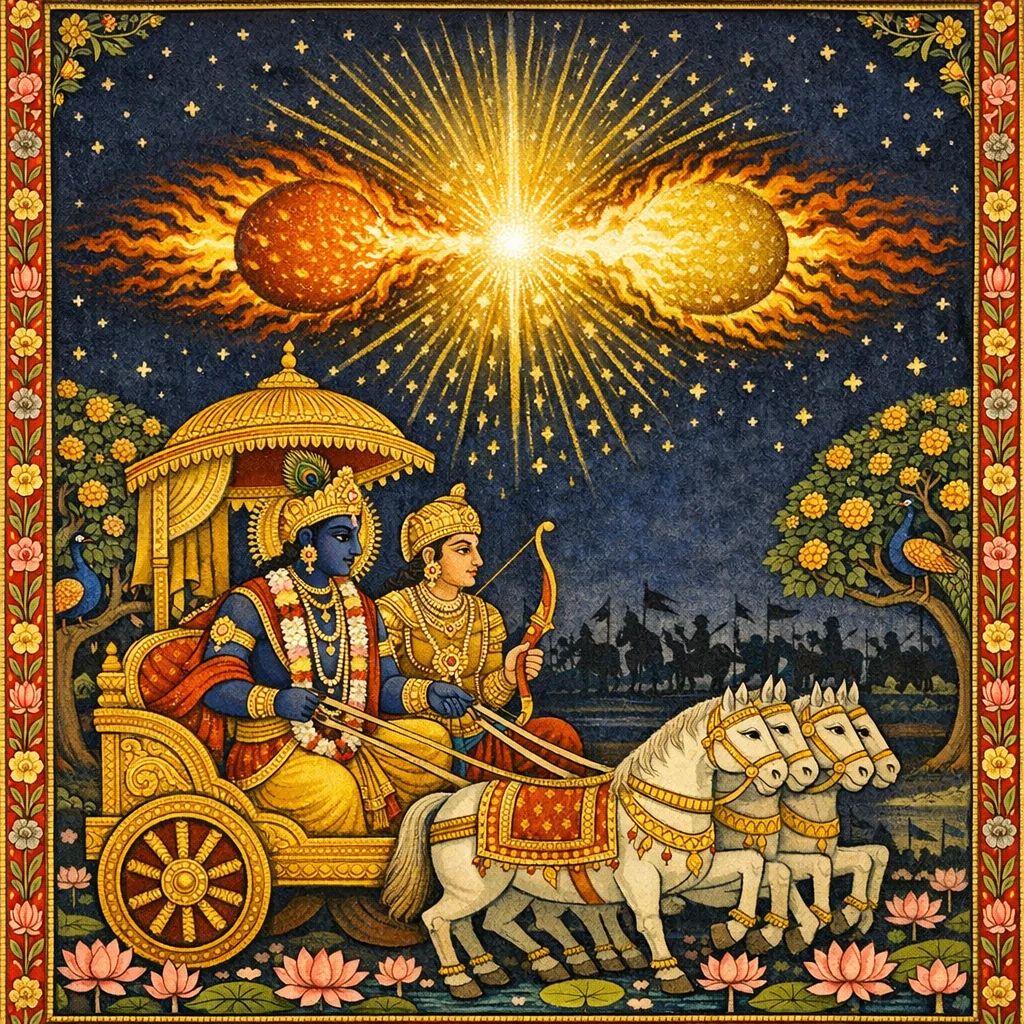
Śrī Śaunaka asked Sūta Gosvāmī: Śrī Śukadeva Gosvāmī was already on the path of self-realization, and thus he was pleased with his own self. So why did he take the trouble to undergo the study of such a vast literature?
Verse 10
सूत उवाच आत्मारामाश्च मुनयो निर्ग्रन्था अप्युरुक्रमे । कुर्वन्त्यहैतुकीं भक्तिमित्थम्भूतगुणो हरि: ॥ १० ॥
Sūta Gosvāmī said: All different varieties of ātmārāmas [those who take pleasure in the ātmā, or spirit self], especially those established on the path of self-realization, though freed from all kinds of material bondage, desire to render unalloyed devotional service unto the Personality of Godhead. This means that the Lord possesses transcendental qualities and therefore can attract everyone, including liberated souls.
Verse 11
हरेर्गुणाक्षिप्तमतिर्भगवान् बादरायणि: । अध्यगान्महदाख्यानं नित्यं विष्णुजनप्रिय: ॥ ११ ॥
Śrīla Śukadeva Gosvāmī, son of Śrīla Vyāsadeva, was not only transcendentally powerful. He was also very dear to the devotees of the Lord. Thus he underwent the study of this great narration [Śrīmad-Bhāgavatam].
Verse 12
परीक्षितोऽथ राजर्षेर्जन्मकर्मविलापनम् । संस्थां च पाण्डुपुत्राणां वक्ष्ये कृष्णकथोदयम् ॥ १२ ॥
Sūta Gosvāmī thus addressed the ṛṣis headed by Śaunaka: Now I shall begin the transcendental narration of the Lord Śrī Kṛṣṇa and topics of the birth, activities and deliverance of King Parīkṣit, the sage amongst kings, as well as topics of the renunciation of the worldly order by the sons of Pāṇḍu.
Verse 13
यदा मृधे कौरवसृञ्जयानां वीरेष्वथो वीरगतिं गतेषु । वृकोदराविद्धगदाभिमर्श- भग्नोरुदण्डे धृतराष्ट्रपुत्रे ॥ १३ ॥ भर्तु: प्रियं द्रौणिरिति स्म पश्यन् कृष्णासुतानां स्वपतां शिरांसि । उपाहरद्विप्रियमेव तस्य जुगुप्सितं कर्म विगर्हयन्ति ॥ १४ ॥
When the respective warriors of both camps, namely the Kauravas and the Pāṇḍavas, were killed on the Battlefield of Kurukṣetra and the dead warriors obtained their deserved destinations, and when the son of Dhṛtarāṣṭra fell down lamenting, his spine broken, being beaten by the club of Bhīmasena, the son of Droṇācārya [Aśvatthāmā] beheaded the five sleeping sons of Draupadī and delivered the heads as a prize to his master, foolishly thinking that he would be pleased. Duryodhana, however, disapproved of the heinous act, and he was not pleased in the least.
Verse 14
यदा मृधे कौरवसृञ्जयानां वीरेष्वथो वीरगतिं गतेषु । वृकोदराविद्धगदाभिमर्श- भग्नोरुदण्डे धृतराष्ट्रपुत्रे ॥ १३ ॥ भर्तु: प्रियं द्रौणिरिति स्म पश्यन् कृष्णासुतानां स्वपतां शिरांसि । उपाहरद्विप्रियमेव तस्य जुगुप्सितं कर्म विगर्हयन्ति ॥ १४ ॥
When the respective warriors of both camps, namely the Kauravas and the Pāṇḍavas, were killed on the Battlefield of Kurukṣetra and the dead warriors obtained their deserved destinations, and when the son of Dhṛtarāṣṭra fell down lamenting, his spine broken, being beaten by the club of Bhīmasena, the son of Droṇācārya [Aśvatthāmā] beheaded the five sleeping sons of Draupadī and delivered the heads as a prize to his master, foolishly thinking that he would be pleased. Duryodhana, however, disapproved of the heinous act, and he was not pleased in the least.
Verse 15
माता शिशूनां निधनं सुतानां निशम्य घोरं परितप्यमाना । तदारुदद्वाष्पकलाकुलाक्षी तां सान्त्वयन्नाह किरीटमाली ॥ १५ ॥
Draupadī, the mother of the five children of the Pāṇḍavas, after hearing of the massacre of her sons, began to cry in distress with eyes full of tears. Trying to pacify her in her great loss, Arjuna spoke to her thus:
Verse 16
तदा शुचस्ते प्रमृजामि भद्रे यद्ब्रह्मबन्धो: शिर आततायिन: । गाण्डीवमुक्तैर्विशिखैरुपाहरे त्वाक्रम्य यत्स्नास्यसि दग्धपुत्रा ॥ १६ ॥
O gentle lady, when I present you with the head of that brāhmaṇa, after beheading him with arrows from my Gāṇḍīva bow, I shall then wipe the tears from your eyes and pacify you. Then, after burning your sons’ bodies, you can take your bath standing on his head.
Verse 17
इति प्रियां वल्गुविचित्रजल्पै: स सान्त्वयित्वाच्युतमित्रसूत: । अन्वाद्रवद्दंशित उग्रधन्वा कपिध्वजो गुरुपुत्रं रथेन ॥ १७ ॥
Arjuna, who is guided by the infallible Lord as friend and driver, thus satisfied the dear lady by such statements. Then he dressed in armor and armed himself with furious weapons, and getting into his chariot, he set out to follow Aśvatthāmā, the son of his martial teacher.
Verse 18
तमापतन्तं स विलक्ष्य दूरात् कुमारहोद्विग्नमना रथेन । पराद्रवत्प्राणपरीप्सुरुर्व्यां यावद्गमं रुद्रभयाद्यथा क: ॥ १८ ॥
Aśvatthāmā, the murderer of the princes, seeing from a great distance Arjuna coming at him with great speed, fled in his chariot, panic stricken, just to save his life, as Brahmā fled in fear from Śiva.
Verse 19
यदाशरणमात्मानमैक्षत श्रान्तवाजिनम् । अस्त्रं ब्रह्मशिरो मेने आत्मत्राणं द्विजात्मज: ॥ १९ ॥
When the son of the brāhmaṇa [Aśvatthāmā] saw that his horses were tired, he considered that there was no alternative for protection outside of his using the ultimate weapon, the brahmāstra [nuclear weapon].
Verse 20
अथोपस्पृश्य सलिलं सन्दधे तत्समाहित: । अजानन्नपि संहारं प्राणकृच्छ्र उपस्थिते ॥ २० ॥
Since his life was in danger, he touched water in sanctity and concentrated upon the chanting of the hymns for throwing nuclear weapons, although he did not know how to withdraw such weapons.
Verse 21
तत: प्रादुष्कृतं तेज: प्रचण्डं सर्वतोदिशम् । प्राणापदमभिप्रेक्ष्य विष्णुं जिष्णुरुवाच ह ॥ २१ ॥
Thereupon a glaring light spread in all directions. It was so fierce that Arjuna thought his own life in danger, and so he began to address Lord Śrī Kṛṣṇa.
Verse 22
अर्जुन उवाच कृष्ण कृष्ण महाबाहो भक्तानामभयङ्कर । त्वमेको दह्यमानानामपवर्गोऽसि संसृते: ॥ २२ ॥
Arjuna said: O my Lord Śrī Kṛṣṇa, You are the almighty Personality of Godhead. There is no limit to Your different energies. Therefore only You are competent to instill fearlessness in the hearts of Your devotees. Everyone in the flames of material miseries can find the path of liberation in You only.
Verse 23
त्वमाद्य: पुरुष: साक्षादीश्वर: प्रकृते: पर: । मायां व्युदस्य चिच्छक्त्या कैवल्ये स्थित आत्मनि ॥ २३ ॥
You are the original Personality of Godhead who expands Himself all over the creations and is transcendental to material energy. You have cast away the effects of the material energy by dint of Your spiritual potency. You are always situated in eternal bliss and transcendental knowledge.
Verse 24
स एव जीवलोकस्य मायामोहितचेतस: । विधत्से स्वेन वीर्येण श्रेयो धर्मादिलक्षणम् ॥ २४ ॥
And yet, though You are beyond the purview of the material energy, You execute the four principles of liberation characterized by religion and so on for the ultimate good of the conditioned souls.
Verse 25
तथायं चावतारस्ते भुवो भारजिहीर्षया । स्वानां चानन्यभावानामनुध्यानाय चासकृत् ॥ २५ ॥
Thus You descend as an incarnation to remove the burden of the world and to benefit Your friends, especially those who are Your exclusive devotees and are constantly rapt in meditation upon You.
Verse 26
किमिदं स्वित्कुतो वेति देवदेव न वेद्म्यहम् । सर्वतोमुखमायाति तेज: परमदारुणम् ॥ २६ ॥
O Lord of lords, how is it that this dangerous effulgence is spreading all around? Where does it come from? I do not understand it.
Verse 27
श्रीभगवानुवाच वेत्थेदं द्रोणपुत्रस्य ब्राह्ममस्त्रं प्रदर्शितम् । नैवासौ वेद संहारं प्राणबाध उपस्थिते ॥ २७ ॥
The Supreme Personality of Godhead said: Know from Me that this is the act of the son of Droṇa. He has thrown the hymns of nuclear energy [brahmāstra], and he does not know how to retract the glare. He has helplessly done this, being afraid of imminent death.
Verse 28
न ह्यस्यान्यतमं किञ्चिदस्त्रं प्रत्यवकर्शनम् । जह्यस्त्रतेज उन्नद्धमस्त्रज्ञो ह्यस्त्रतेजसा ॥ २८ ॥
O Arjuna, only another brahmāstra can counteract this weapon. Since you are expert in the military science, subdue this weapon’s glare with the power of your own weapon.
Verse 29
सूत उवाच श्रुत्वा भगवता प्रोक्तं फाल्गुन: परवीरहा । स्पृष्ट्वापस्तं परिक्रम्य ब्राह्मं ब्राह्मास्त्रं सन्दधे ॥ २९ ॥
Śrī Sūta Gosvāmī said: Hearing this from the Personality of Godhead, Arjuna touched water for purification, and after circumambulating Lord Śrī Kṛṣṇa, he cast his brahmāstra weapon to counteract the other one.
Verse 30
संहत्यान्योन्यमुभयोस्तेजसी शरसंवृते । आवृत्य रोदसी खं च ववृधातेऽर्कवह्निवत् ॥ ३० ॥
When the rays of the two brahmāstras combined, a great circle of fire, like the disc of the sun, covered all outer space and the whole firmament of planets.
Verse 31
दृष्ट्वास्त्रतेजस्तु तयोस्त्रील्लोकान् प्रदहन्महत् । दह्यमाना: प्रजा: सर्वा: सांवर्तकममंसत ॥ ३१ ॥
All the population of the three worlds was scorched by the combined heat of the weapons. Everyone was reminded of the sāṁvartaka fire which takes place at the time of annihilation.
Verse 32
प्रजोपद्रवमालक्ष्य लोकव्यतिकरं च तम् । मतं च वासुदेवस्य सञ्जहारार्जुनो द्वयम् ॥ ३२ ॥
Thus seeing the disturbance of the general populace and the imminent destruction of the planets, Arjuna at once retracted both brahmāstra weapons, as Lord Śrī Kṛṣṇa desired.
Verse 33
तत आसाद्य तरसा दारुणं गौतमीसुतम् । बबन्धामर्षताम्राक्ष: पशुं रशनया यथा ॥ ३३ ॥
Arjuna, his eyes blazing in anger like two red balls of copper, dexterously arrested the son of Gautamī and bound him with ropes like an animal.
Verse 34
शिबिराय निनीषन्तं रज्ज्वा बद्ध्वा रिपुं बलात् । प्राहार्जुनं प्रकुपितो भगवानम्बुजेक्षण: ॥ ३४ ॥
After binding Aśvatthāmā, Arjuna wanted to take him to the military camp. The Personality of Godhead Śrī Kṛṣṇa, looking on with His lotus eyes, spoke to Arjuna in an angry mood.
Verse 35
मैनं पार्थार्हसि त्रातुं ब्रह्मबन्धुमिमं जहि । योऽसावनागस: सुप्तानवधीन्निशि बालकान् ॥ ३५ ॥
Lord Śrī Kṛṣṇa said: O Arjuna, you should not show mercy by releasing this relative of a brāhmaṇa [brahma-bandhu], for he has killed innocent boys in their sleep.
Verse 36
मत्तं प्रमत्तमुन्मत्तं सुप्तं बालं स्त्रियं जडम् । प्रपन्नं विरथं भीतं न रिपुं हन्ति धर्मवित् ॥ ३६ ॥
A person who knows the principles of religion does not kill an enemy who is careless, intoxicated, insane, asleep, afraid or devoid of his chariot. Nor does he kill a boy, a woman, a foolish creature or a surrendered soul.
Verse 37
स्वप्राणान् य: परप्राणै: प्रपुष्णात्यघृण: खल: । तद्वधस्तस्य हि श्रेयो यद्दोषाद्यात्यध: पुमान् ॥ ३७ ॥
A cruel and wretched person who maintains his existence at the cost of others’ lives deserves to be killed for his own well-being, otherwise he will go down by his own actions.
Verse 38
प्रतिश्रुतं च भवता पाञ्चाल्यै शृण्वतो मम । आहरिष्ये शिरस्तस्य यस्ते मानिनि पुत्रहा ॥ ३८ ॥
Furthermore, I have personally heard you promise Draupadī that you would bring forth the head of the killer of her sons.
Verse 39
तदसौ वध्यतां पाप आतताय्यात्मबन्धुहा । भर्तुश्च विप्रियं वीर कृतवान् कुलपांसन: ॥ ३९ ॥
This man is an assassin and murderer of your own family members. Not only that, but he has also dissatisfied his master. He is but the burnt remnants of his family. Kill him immediately.
Verse 40
सूत उवाच एवं परीक्षता धर्मं पार्थ: कृष्णेन चोदित: । नैच्छद्धन्तुं गुरुसुतं यद्यप्यात्महनं महान् ॥ ४० ॥
Sūta Gosvāmī said: Although Kṛṣṇa, who was examining Arjuna in religion, encouraged Arjuna to kill the son of Droṇācārya, Arjuna, a great soul, did not like the idea of killing him, although Aśvatthāmā was a heinous murderer of Arjuna’s family members.
Verse 41
अथोपेत्य स्वशिबिरं गोविन्दप्रियसारथि: । न्यवेदयत्तं प्रियायै शोचन्त्या आत्मजान् हतान् ॥ ४१ ॥
After reaching his own camp, Arjuna, along with his dear friend and charioteer [Śrī Kṛṣṇa], entrusted the murderer unto his dear wife, who was lamenting for her murdered sons.
Verse 42
तथाहृतं पशुवत् पाशबद्ध- मवाङ्मुखं कर्मजुगुप्सितेन । निरीक्ष्य कृष्णापकृतं गुरो: सुतं वामस्वभावा कृपया ननाम च ॥ ४२ ॥
Śrī Sūta Gosvāmī said: Draupadī then saw Aśvatthāmā, who was bound with ropes like an animal and silent for having enacted the most inglorious murder. Due to her female nature, and due to her being naturally good and well-behaved, she showed him due respects as a brāhmaṇa.
Verse 43
उवाच चासहन्त्यस्य बन्धनानयनं सती । मुच्यतां मुच्यतामेष ब्राह्मणो नितरां गुरु: ॥ ४३ ॥
She could not tolerate Aśvatthāmā’s being bound by ropes, and being a devoted lady, she said: Release him, release him, for he is a brāhmaṇa, our spiritual master.
Verse 44
सरहस्यो धनुर्वेद: सविसर्गोपसंयम: । अस्त्रग्रामश्च भवता शिक्षितो यदनुग्रहात् ॥ ४४ ॥
It was by Droṇācārya’s mercy that you learned the military art of throwing arrows and the confidential art of controlling weapons.
Verse 45
स एष भगवान्द्रोण: प्रजारूपेण वर्तते । तस्यात्मनोऽर्धं पत्न्यास्ते नान्वगाद्वीरसू: कृपी ॥ ४५ ॥
He [Droṇācārya] is certainly still existing, being represented by his son. His wife Kṛpī did not undergo a satī with him because she had a son.
Verse 46
तद् धर्मज्ञ महाभाग भवद्भिर्गौरवं कुलम् । वृजिनं नार्हति प्राप्तुं पूज्यं वन्द्यमभीक्ष्णश: ॥ ४६ ॥
O most fortunate one who know the principles of religion, it is not good for you to cause grief to glorious family members who are always respectable and worshipful.
Verse 47
मा रोदीदस्य जननी गौतमी पतिदेवता । यथाहं मृतवत्सार्ता रोदिम्यश्रुमुखी मुहु: ॥ ४७ ॥
My lord, do not make the wife of Droṇācārya cry like me. I am aggrieved for the death of my sons. She need not cry constantly like me.
Verse 48
यै: कोपितं ब्रह्मकुलं राजन्यैरजितात्मभि: । तत् कुलं प्रदहत्याशु सानुबन्धं शुचार्पितम् ॥ ४८ ॥
If the kingly administrative order, being unrestricted in sense control, offends the brāhmaṇa order and enrages them, then the fire of that rage burns up the whole body of the royal family and brings grief upon them all.
Verse 49
सूत उवाच धर्म्यं न्याय्यं सकरुणं निर्व्यलीकं समं महत् । राजा धर्मसुतो राज्ञ्या: प्रत्यनन्दद्वचो द्विजा: ॥ ४९ ॥
Sūta Gosvāmī said: O brāhmaṇas, King Yudhiṣṭhira fully supported the statements of the Queen, which were in accordance with the principles of religion and were justified, glorious, full of mercy and equity, and without duplicity.
Verse 50
नकुल: सहदेवश्च युयुधानो धनञ्जय: । भगवान् देवकीपुत्रो ये चान्ये याश्च योषित: ॥ ५० ॥
Nakula and Sahadeva [the younger brothers of the King] and also Sātyaki, Arjuna, the Personality of Godhead Lord Sri Kṛṣṇa, son of Devakī, and the ladies and others all unanimously agreed with the King.
Verse 51
तत्राहामर्षितो भीमस्तस्य श्रेयान् वध: स्मृत: । न भर्तुर्नात्मनश्चार्थे योऽहन् सुप्तान् शिशून् वृथा ॥ ५१ ॥
Bhīma, however, angrily disagreed with them and recommended killing this culprit, who had murdered sleeping children for no purpose and for neither his nor his master’s interest.
Verse 52
निशम्य भीमगदितं द्रौपद्याश्च चतुर्भुज: । आलोक्य वदनं सख्युरिदमाहहसन्निव ॥ ५२ ॥
Caturbhuja [the four-armed one], or the Personality of Godhead, after hearing the words of Bhīma, Draupadī and others, saw the face of His dear friend Arjuna, and He began to speak as if smiling.
Verse 53
श्रीभगवानुवाच ब्रह्मबन्धुर्न हन्तव्य आततायी वधार्हण: । मयैवोभयमाम्नातं परिपाह्यनुशासनम् ॥ ५३ ॥ कुरु प्रतिश्रुतं सत्यं यत्तत्सान्त्वयता प्रियाम् । प्रियं च भीमसेनस्य पाञ्चाल्या मह्यमेव च ॥ ५४ ॥
The Personality of Godhead, Śrī Kṛṣṇa said: A friend of a brāhmaṇa is not to be killed, but if he is an aggressor he must be killed. All these rulings are in the scriptures, and you should act accordingly. You have to fulfill your promise to your wife, and you must also act to the satisfaction of Bhīmasena and Me.
Verse 54
श्रीभगवानुवाच ब्रह्मबन्धुर्न हन्तव्य आततायी वधार्हण: । मयैवोभयमाम्नातं परिपाह्यनुशासनम् ॥ ५३ ॥ कुरु प्रतिश्रुतं सत्यं यत्तत्सान्त्वयता प्रियाम् । प्रियं च भीमसेनस्य पाञ्चाल्या मह्यमेव च ॥ ५४ ॥
The Personality of Godhead, Śrī Kṛṣṇa said: A friend of a brāhmaṇa is not to be killed, but if he is an aggressor he must be killed. All these rulings are in the scriptures, and you should act accordingly. You have to fulfill your promise to your wife, and you must also act to the satisfaction of Bhīmasena and Me.
Verse 55
सूत उवाच अर्जुन: सहसाज्ञाय हरेर्हार्दमथासिना । मणिं जहार मूर्धन्यं द्विजस्य सहमूर्धजम् ॥ ५५ ॥
Sūta Gosvāmī said: Just then Arjuna could understand the motive of the Lord by His equivocal orders, and thus with his sword he severed both hair and jewel from the head of Aśvatthāmā.
Verse 56
विमुच्य रशनाबद्धं बालहत्याहतप्रभम् । तेजसा मणिना हीनं शिबिरान्निरयापयत् ॥ ५६ ॥
He [Aśvatthāmā] had already lost his bodily luster due to infanticide, and now, moreover, having lost the jewel from his head, he lost even more strength. Thus he was unbound and driven out of the camp.
Verse 57
वपनं द्रविणादानं स्थानान्निर्यापणं तथा । एष हि ब्रह्मबन्धूनां वधो नान्योऽस्ति दैहिक: ॥ ५७ ॥
Cutting the hair from his head, depriving him of his wealth and driving him from his residence are the prescribed punishments for the relative of a brāhmaṇa. There is no injunction for killing the body.
Verse 58
पुत्रशोकातुरा: सर्वे पाण्डवा: सह कृष्णया । स्वानां मृतानां यत्कृत्यं चक्रुर्निर्हरणादिकम् ॥ ५८ ॥
Thereafter, the sons of Pāṇḍu, and Draupadī, overwhelmed with grief, performed the proper rituals for the dead bodies of their relatives.
Frequently Asked Questions
After Nārada’s instruction, Vyāsa recognizes that mere literary completeness is insufficient without explicit, exclusive glorification of Bhagavān that awakens bhakti. In meditation he perceives the Lord and māyā’s subservience, and he also sees the jīva’s needless suffering caused by misidentification. Therefore he compiles Bhāgavatam as a deliberate, compassionate intervention: a śravaṇa-centered scripture whose very reception generates devotion and directly mitigates material misery, fulfilling the Purāṇic purpose of guiding souls toward nirodha (cessation of bondage) through bhakti.
The ātmārāma teaching here explains that self-satisfied sages, though freed from material bondage, are drawn to render unalloyed devotion because Bhagavān possesses transcendental qualities (guṇa) that are not material and therefore remain ever-fresh even for the liberated. Bhāgavatam is thus not studied to fill a deficiency but to relish and serve the Supreme Reality. Śukadeva’s engagement exemplifies bhakti as the positive perfection of liberation, not a preliminary step beneath it.