Adhyaya 15
The Priyavrata Dynasty Continues: Sumati’s Line and the Glorification of Mahārāja Gaya
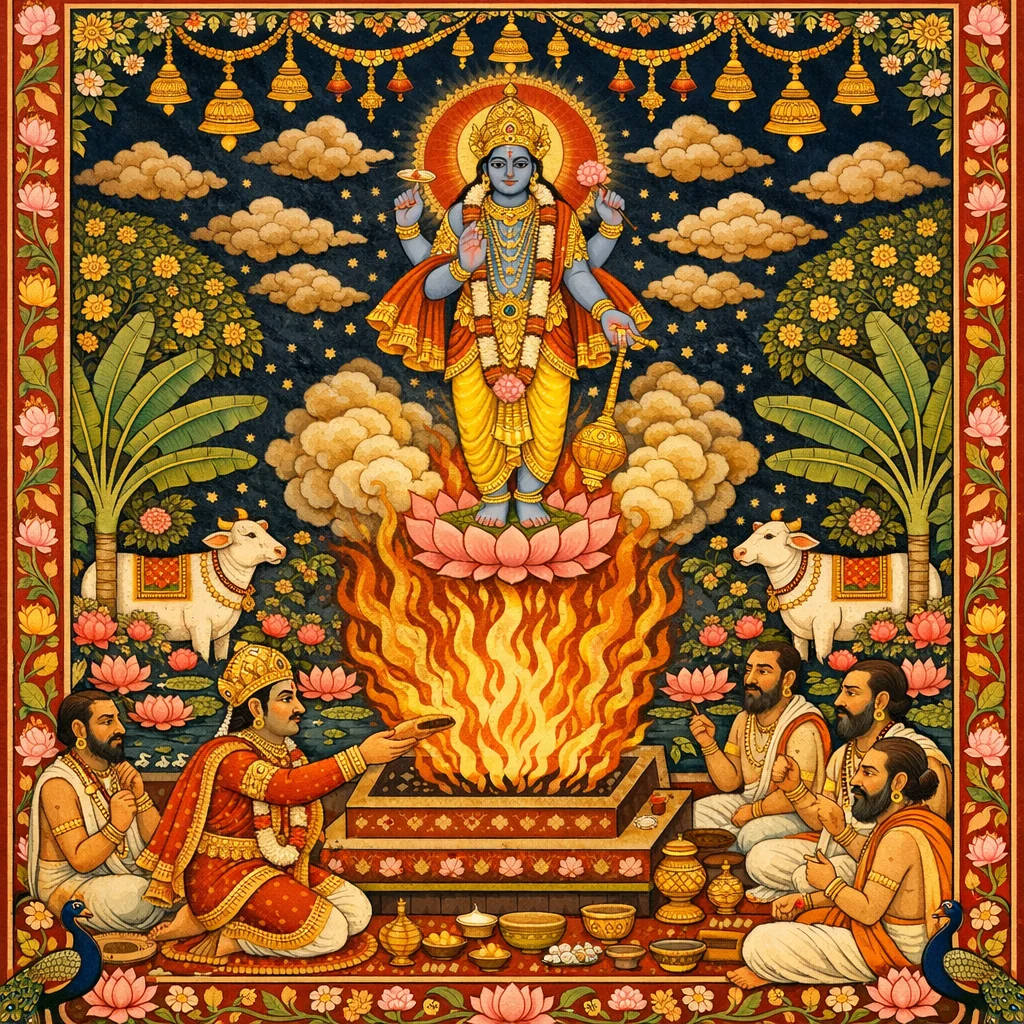
Śukadeva Gosvāmī continues the Priyavrata-vaṁśa by tracing the descendants of Mahārāja Bharata through Sumati, while warning Parīkṣit that in Kali-yuga unscrupulous, atheistic interpreters will misidentify Sumati as Lord Buddha and distort Vedic principles to justify irreligion. The genealogy proceeds through Devatājit, Devadyumna, Parameṣṭhī, and Pratīha, who personally propagates self-realization and attains direct devotion to Viṣṇu. From Pratīha’s ritual-expert sons the line extends to King Gaya, praised as a Mahāpuruṣa situated in viśuddha-sattva—an expansion aligned with the Lord’s protecting potency. Gaya exemplifies ideal kingship via poṣaṇa (provision/security), prīṇana (charity), upalālana (gentle encouragement), and anuśāsana (moral instruction), while remaining a strict householder-devotee free from pride and bodily identification. Scholars of Purāṇic history eulogize his yajñas, where Indra drinks soma and Viṣṇu personally accepts the offerings, declaring His satisfaction—implying universal satisfaction when the Supreme is pleased. The chapter then extends Gaya’s progeny through Citraratha and further generations to Viraja, whose fame adorns the dynasty, setting the narrative momentum for continued dynastic unfolding in the subsequent chapter(s).
Shlokas
Verse 1
श्रीशुक उवाच भरतस्यात्मज: सुमतिर्नामाभिहितो यमु ह वाव केचित्पाखण्डिन ऋषभपदवीमनुवर्तमानं चानार्या अवेदसमाम्नातां देवतां स्वमनीषया पापीयस्या कलौ कल्पयिष्यन्ति ॥ १ ॥
Śrīla Śukadeva Gosvāmī continued: The son of Mahārāja Bharata known as Sumati followed the path of Ṛṣabhadeva, but in the Age of Kali some unscrupulous people will imagine him to be Lord Buddha himself. These people, who will actually be atheistic and of bad character, will interpret the Vedic principles in an imaginary, infamous way to support their activities. Thus these sinful people will accept Sumati as Lord Buddhadeva and propagate the theory that everyone should follow the principles of Sumati. In this way they will be carried away by mental concoction.
Verse 2
तस्माद्वृद्धसेनायां देवताजिन्नाम पुत्रोऽभवत् ॥ २ ॥
From Sumati, a son named Devatājit was born by the womb of his wife named Vṛddhasenā.
Verse 3
अथासुर्यां तत्तनयो देवद्युम्नस्ततो धेनुमत्यां सुत: परमेष्ठी तस्य सुवर्चलायां प्रतीह उपजात: ॥ ३ ॥
Thereafter, in the womb of Āsurī, the wife of Devatājit, a son named Devadyumna was begotten. Devadyumna begot in the womb of his wife, Dhenumatī, a son named Parameṣṭhī. Parameṣṭhī begot a son named Pratīha in the womb of his wife, Suvarcalā.
Verse 4
य आत्मविद्यामाख्याय स्वयं संशुद्धो महापुरुषमनुसस्मार ॥ ४ ॥
King Pratīha personally propagated the principles of self-realization. In this way, not only was he purified, but he became a great devotee of the Supreme Person, Lord Viṣṇu, and directly realized Him.
Verse 5
प्रतीहात्सुवर्चलायां प्रतिहर्त्रादयस्त्रय आसन्निज्याकोविदा: सूनव: प्रतिहर्तु: स्तुत्यामजभूमानावजनिषाताम् ॥ ५ ॥
In the womb of his wife Suvarcalā, Pratīha begot three sons, named Pratihartā, Prastotā and Udgātā. These three sons were very expert in performing Vedic rituals. Pratihartā begot two sons, named Aja and Bhūmā, in the womb of his wife, named Stutī.
Verse 6
भूम्न ऋषिकुल्यायामुद्गीथस्तत: प्रस्तावो देवकुल्यायां प्रस्तावान्नियुत्सायां हृदयज आसीद्विभुर्विभो रत्यां च पृथुषेणस्तस्मान्नक्त आकूत्यां जज्ञे नक्ताद्द्रुतिपुत्रो गयो राजर्षिप्रवर उदारश्रवा अजायत साक्षाद्भगवतो विष्णोर्जगद्रिरक्षिषया गृहीतसत्त्वस्य कलाऽऽत्मवत्त्वादिलक्षणेन महापुरुषतां प्राप्त: ॥ ६ ॥
In the womb of his wife, Ṛṣikulyā, King Bhūmā begot a son named Udgītha. From Udgītha’s wife, Devakulyā, a son named Prastāva was born, and Prastāva begot a son named Vibhu through his wife, Niyutsā. In the womb of his wife, Ratī, Vibhu begot a son named Pṛthuṣeṇa. Pṛthuṣeṇa begot a son named Nakta in the womb of his wife, named Ākūti. Nakta’s wife was Druti, and from her womb the great King Gaya was born. Gaya was very famous and pious; he was the best of saintly kings. Lord Viṣṇu and His expansions, who are meant to protect the universe, are always situated in the transcendental mode of goodness, known as viśuddha-sattva. Being the direct expansion of Lord Viṣṇu, King Gaya was also situated in the viśuddha-sattva. Because of this, Mahārāja Gaya was fully equipped with transcendental knowledge. Therefore he was called Mahāpuruṣa.
Verse 7
स वै स्वधर्मेण प्रजापालन पोषणप्रीणनोपलालनानुशासनलक्षणेनेज्यादिना च भगवति महापुरुषे परावरे ब्रह्मणि सर्वात्मनार्पितपरमार्थलक्षणेन ब्रह्मविच्चरणानुसेवयाऽऽपादितभगवद्भक्तियोगेन चाभीक्ष्णश: परिभावितातिशुद्ध मतिरुपरतानात्म्य आत्मनि स्वयमुपलभ्यमानब्रह्मात्मानुभवोऽपि निरभिमान एवावनिमजूगुपत् ॥ ७ ॥
King Gaya gave full protection and security to the citizens so that their personal property would not be disturbed by undesirable elements. He also saw that there was sufficient food to feed all the citizens. [This is called poṣaṇa.] He would sometimes distribute gifts to the citizens to satisfy them. [This is called prīṇana.] He would sometimes call meetings and satisfy the citizens with sweet words. [This is called upalālana.] He would also give them good instructions on how to become first-class citizens. [This is called anuśāsana.] Such were the characteristics of King Gaya’s royal order. Besides all this, King Gaya was a householder who strictly observed the rules and regulations of household life. He performed sacrifices and was an unalloyed pure devotee of the Supreme Personality of Godhead. He was called Mahāpuruṣa because as a king he gave the citizens all facilities, and as a householder he executed all his duties so that at the end he became a strict devotee of the Supreme Lord. As a devotee, he was always ready to give respect to other devotees and to engage in the devotional service of the Lord. This is the bhakti-yoga process. Due to all these transcendental activities, King Gaya was always free from the bodily conception. He was full in Brahman realization, and consequently he was always jubilant. He did not experience material lamentation. Although he was perfect in all respects, he was not proud, nor was he anxious to rule the kingdom.
Verse 8
तस्येमां गाथां पाण्डवेय पुराविद उपगायन्ति ॥ ८ ॥
My dear King Parīkṣit, those who are learned scholars in the histories of the Purāṇas eulogize and glorify King Gaya with the following verses.
Verse 9
गयं नृप: क: प्रतियाति कर्मभि-र्यज्वाभिमानी बहुविद्धर्मगोप्ता । समागतश्री: सदसस्पति: सतांसत्सेवकोऽन्यो भगवत्कलामृते ॥ ९ ॥
The great King Gaya used to perform all kinds of Vedic rituals. He was highly intelligent and expert in studying all the Vedic literatures. He maintained the religious principles and possessed all kinds of opulence. He was a leader among gentlemen and a servant of the devotees. He was a totally qualified plenary expansion of the Supreme Personality of Godhead. Therefore who could equal him in the performance of gigantic ritualistic ceremonies?
Verse 10
यमभ्यषिञ्चन् परया मुदा सती:सत्याशिषो दक्षकन्या: सरिद्भि: । यस्य प्रजानां दुदुहे धराऽऽशिषोनिराशिषो गुणवत्सस्नुतोधा: ॥ १० ॥
All the chaste and honest daughters of Mahārāja Dakṣa, such as Śraddhā, Maitrī and Dayā, whose blessings were always effective, bathed Mahārāja Gaya with sanctified water. Indeed, they were very satisfied with Mahārāja Gaya. The planet earth personified came as a cow, and, as though she saw her calf, she delivered milk profusely when she saw all the good qualities of Mahārāja Gaya. In other words, Mahārāja Gaya was able to derive all benefits from the earth and thus satisfy the desires of his citizens. However, he personally had no desire.
Verse 11
छन्दांस्यकामस्य च यस्य कामान्दुदूहुराजह्रुरथो बलिं नृपा: । प्रत्यञ्चिता युधि धर्मेण विप्रायदाशिषां षष्ठमंशं परेत्य ॥ ११ ॥
Although King Gaya had no personal desire for sense gratification, all his desires were fulfilled by virtue of his performance of Vedic rituals. All the kings with whom Mahārāja Gaya had to fight were forced to fight on religious principles. They were very satisfied with his fighting, and they would present all kinds of gifts to him. Similarly, all the brāhmaṇas in his kingdom were very satisfied with King Gaya’s munificent charities. Consequently the brāhmaṇas contributed a sixth of their pious activities for King Gaya’s benefit in the next life.
Verse 12
यस्याध्वरे भगवानध्वरात्मामघोनि माद्यत्युरुसोमपीथे । श्रद्धाविशुद्धाचलभक्तियोग-समर्पितेज्याफलमाजहार ॥ १२ ॥
In Mahārāja Gaya’s sacrifices, there was a great supply of the intoxicant known as soma. King Indra used to come and become intoxicated by drinking large quantities of soma-rasa. Also, the Supreme Personality of Godhead, Lord Viṣṇu [the yajña-puruṣa] also came and personally accepted all the sacrifices offered unto Him with pure and firm devotion in the sacrificial arena.
Verse 13
यत्प्रीणनाद्बर्हिषि देवतिर्यङ्-मनुष्यवीरुत्तृणमाविरिञ्चात् । प्रीयेत सद्य: स ह विश्वजीव:प्रीत: स्वयं प्रीतिमगाद्गयस्य ॥ १३ ॥
When the Supreme Lord is pleased by a person’s actions, automatically all the demigods, human beings, animals, birds, bees, creepers, trees, grass and all other living entities, beginning with Lord Brahmā, are pleased. The Supreme Personality of Godhead is the Supersoul of everyone, and He is by nature fully pleased. Nonetheless, He came to the arena of Mahārāja Gaya and said, “I am fully pleased.”
Verse 14
गयाद्गयन्त्यां चित्ररथ: सुगतिरवरोधन इति त्रय: पुत्रा बभूवुश्चित्ररथादूर्णायां सम्राडजनिष्ट तत उत्कलायां मरीचिर्मरीचे ॥ १४ ॥ र्बिन्दुमत्यां बिन्दुमानुदपद्यत तस्मात्सरघायां मधुर्नामाभवन्मधो: सुमनसि वीरव्रतस्ततो भोजायां मन्थुप्रमन्थू जज्ञाते मन्थो: सत्यायां भौवनस्ततो दूषणायां त्वष्टाजनिष्ट त्वष्टुर्विरोचनायां विरजो विरजस्य शतजित्प्रवरं पुत्रशतं कन्या च विषूच्यां किल जातम् ॥ १५ ॥
In the womb of Gayantī, Mahārāja Gaya begot three sons, named Citraratha, Sugati and Avarodhana. In the womb of his wife Ūrṇā, Citraratha begot a son named Samrāṭ. The wife of Samrāṭ was Utkalā, and in her womb Samrāṭ begot a son named Marīci. In the womb of his wife Bindumatī, Marīci begot a son named Bindu. In the womb of his wife Saraghā, Bindu begot a son named Madhu. In the womb of his wife named Sumanā, Madhu begot a son named Vīravrata. In the womb of his wife Bhojā, Vīravrata begot two sons named Manthu and Pramanthu. In the womb of his wife Satyā, Manthu begot a son named Bhauvana, and in the womb of his wife Dūṣaṇā, Bhauvana begot a son named Tvaṣṭā. In the womb of his wife Virocanā, Tvaṣṭā begot a son named Viraja. The wife of Viraja was Viṣūcī, and in her womb Viraja begot one hundred sons and one daughter. Of all these sons, the son named Śatajit was predominant.
Verse 15
गयाद्गयन्त्यां चित्ररथ: सुगतिरवरोधन इति त्रय: पुत्रा बभूवुश्चित्ररथादूर्णायां सम्राडजनिष्ट तत उत्कलायां मरीचिर्मरीचे ॥ १४ ॥ र्बिन्दुमत्यां बिन्दुमानुदपद्यत तस्मात्सरघायां मधुर्नामाभवन्मधो: सुमनसि वीरव्रतस्ततो भोजायां मन्थुप्रमन्थू जज्ञाते मन्थो: सत्यायां भौवनस्ततो दूषणायां त्वष्टाजनिष्ट त्वष्टुर्विरोचनायां विरजो विरजस्य शतजित्प्रवरं पुत्रशतं कन्या च विषूच्यां किल जातम् ॥ १५ ॥
In the womb of Gayantī, Mahārāja Gaya begot three sons, named Citraratha, Sugati and Avarodhana. In the womb of his wife Ūrṇā, Citraratha begot a son named Samrāṭ. The wife of Samrāṭ was Utkalā, and in her womb Samrāṭ begot a son named Marīci. In the womb of his wife Bindumatī, Marīci begot a son named Bindu. In the womb of his wife Saraghā, Bindu begot a son named Madhu. In the womb of his wife named Sumanā, Madhu begot a son named Vīravrata. In the womb of his wife Bhojā, Vīravrata begot two sons named Manthu and Pramanthu. In the womb of his wife Satyā, Manthu begot a son named Bhauvana, and in the womb of his wife Dūṣaṇā, Bhauvana begot a son named Tvaṣṭā. In the womb of his wife Virocanā, Tvaṣṭā begot a son named Viraja. The wife of Viraja was Viṣūcī, and in her womb Viraja begot one hundred sons and one daughter. Of all these sons, the son named Śatajit was predominant.
Verse 16
तत्रायं श्लोक:— प्रैयव्रतं वंशमिमं विरजश्चरमोद्भव: । अकरोदत्यलं कीर्त्या विष्णु: सुरगणं यथा ॥ १६ ॥
There is a famous verse about King Viraja. “Because of his high qualities and wide fame, King Viraja became the jewel of the dynasty of King Priyavrata, just as Lord Viṣṇu, by His transcendental potency, decorates and blesses the demigods.”
Frequently Asked Questions
The warning highlights a Kali-yuga pattern: people lacking śraddhā in Vedic authority may appropriate revered names to legitimize anti-Vedic or self-serving behavior. By “imaginary interpretation,” they invert śāstric intent (dharma leading to Viṣṇu) into a pretext for irreligion, thereby breaking paramparā and replacing realized meaning with mental concoction.
Mahārāja Gaya is a celebrated king in the Priyavrata dynasty described as situated in viśuddha-sattva, the Lord’s transcendental goodness associated with divine protection. He is called Mahāpuruṣa because his kingship and household life perfectly integrate welfare governance (poṣaṇa, prīṇana, upalālana, anuśāsana), Vedic sacrifice offered with devotion, humility toward devotees, and steady Brahman realization culminating in pure bhakti.
The chapter states that when the Supreme Lord is pleased, all beings—from Brahmā down to animals and plants—are automatically satisfied because Viṣṇu is the Supersoul of everyone. This establishes a Bhāgavatam axiom: devotion to the root (the Supreme Person) nourishes every branch (all living entities), making yajña with bhakti the universal harmonizer.
They are functional pillars of rāja-dharma: poṣaṇa is protection and ensuring necessities like food; prīṇana is satisfying citizens through appropriate gifts and support; upalālana is encouraging and pacifying through kind speech and consultation; anuśāsana is disciplined instruction that forms first-class citizens. In Gaya’s example, these are not merely political tools but devotional service expressed as responsible governance.