Adhyaya 3
Śaryāti, Sukanyā, Cyavana Muni, the Aśvinī-kumāras, and Kakudmī-Revatī (Baladeva Marriage)
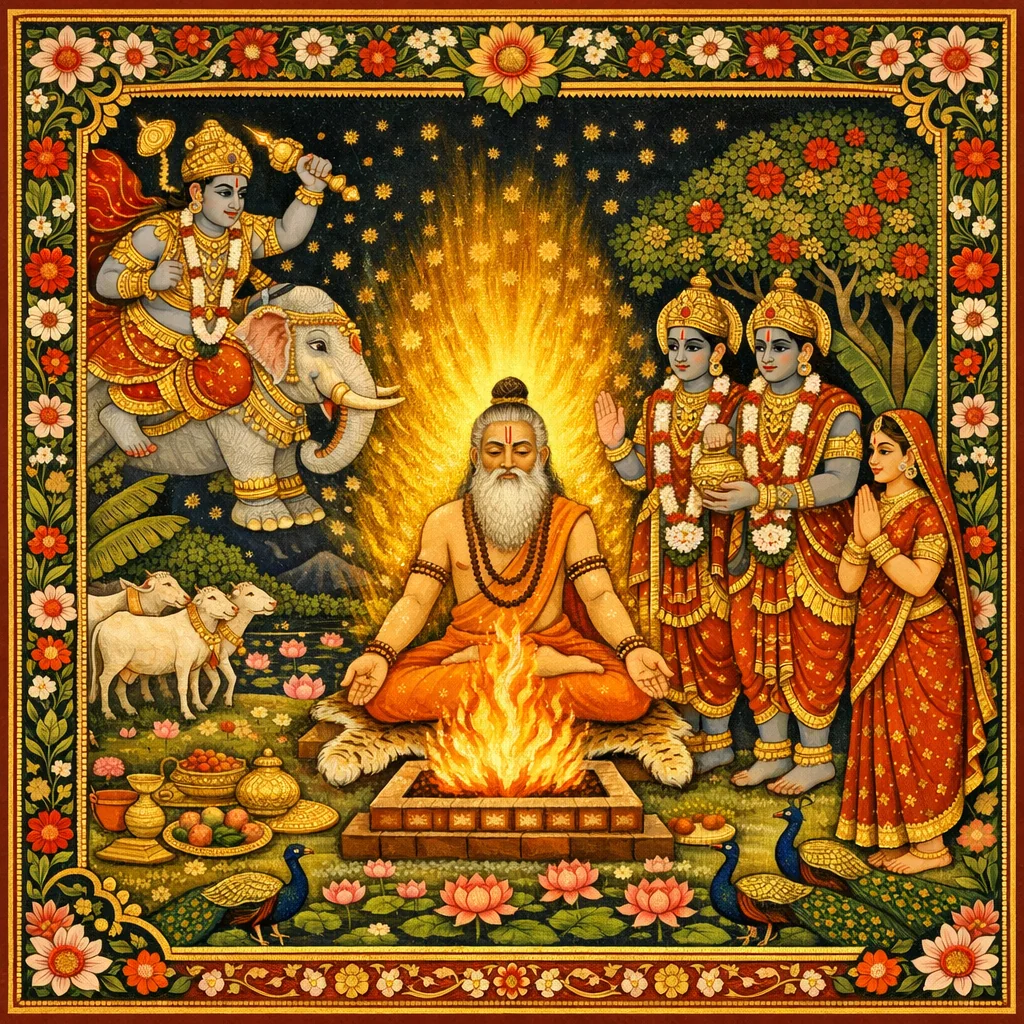
Continuing the dynastic narration of Manu’s descendants, this chapter spotlights King Śaryāti’s encounter with Cyavana Muni, illustrating how royal power is checked by brāhmaṇical tapas and how dharma is restored through humility and right action. Sukanyā’s inadvertent offense (piercing Cyavana’s eyes) results in a collective bodily obstruction for the king’s soldiers, revealing the social consequences of āśrama pollution and the immediacy of sage’s curse. Śaryāti appeases the sage by giving Sukanyā in marriage; her steadfast service becomes the ethical center of the episode. The Aśvinī-kumāras rejuvenate Cyavana, leading to a soma-yajña dispute where Cyavana secures soma rights for the Aśvins and restrains Indra’s violence—showing yajña as both ritual and cosmic politics. The narrative then transitions back to lineage: Śaryāti’s descendants include Revata and Kakudmī, whose visit to Brahmā illustrates time dilation (27 catur-yugas). Brahmā directs Revatī’s marriage to Baladeva, linking dynastic history to the Lord’s descent and preparing the next genealogical continuations.
Shlokas
Verse 1
श्रीशुक उवाच शर्यातिर्मानवो राजा ब्रह्मिष्ठ: सम्बभूव ह । यो वा अङ्गिरसां सत्रे द्वितीयमहरूचिवान् ॥ १ ॥
Śrī Śukadeva Gosvāmī continued: O King, Śaryāti, another son of Manu, was a ruler completely aware of Vedic knowledge. He gave instructions about the functions for the second day of the yajña to be performed by the descendants of Aṅgirā.
Verse 2
सुकन्या नाम तस्यासीत् कन्या कमललोचना । तया सार्धं वनगतो ह्यगमच्च्यवनाश्रमम् ॥ २ ॥
Śaryāti had a beautiful lotus-eyed daughter named Sukanyā, with whom he went to the forest to see the āśrama of Cyavana Muni.
Verse 3
सा सखीभि: परिवृता विचिन्वन्त्यङ्घ्रिपान् वने । वल्मीकरन्ध्रे ददृशे खद्योते इव ज्योतिषी ॥ ३ ॥
While that Sukanyā, surrounded by her friends, was collecting various types of fruits from the trees in the forest, she saw within the hole of an earthworm two things glowing like luminaries.
Verse 4
ते दैवचोदिता बाला ज्योतिषी कण्टकेन वै । अविध्यन्मुग्धभावेन सुस्रावासृक् ततो बहि: ॥ ४ ॥
As if induced by providence, the girl ignorantly pierced those two glowworms with a thorn, and when they were pierced, blood began to ooze out of them.
Verse 5
शकृन्मूत्रनिरोधोऽभूत् सैनिकानां च तत्क्षणात् । राजर्षिस्तमुपालक्ष्य पुरुषान् विस्मितोऽब्रवीत् ॥ ५ ॥
Thereupon, all the soldiers of Śaryāti were immediately obstructed from passing urine and stool. Upon perceiving this, Śaryāti spoke to his associates in surprise.
Verse 6
अप्यभद्रं न युष्माभिर्भार्गवस्य विचेष्टितम् । व्यक्तं केनापि नस्तस्य कृतमाश्रमदूषणम् ॥ ६ ॥
How strange it is that one of us has attempted to do something wrong to Cyavana Muni, the son of Bhṛgu. It certainly appears that someone among us has polluted this āśrama.
Verse 7
सुकन्या प्राह पितरं भीता किञ्चित् कृतं मया । द्वे ज्योतिषी अजानन्त्या निर्भिन्ने कण्टकेन वै ॥ ७ ॥
Being very much afraid, the girl Sukanyā said to her father: I have done something wrong, for I have ignorantly pierced these two luminous substances with a thorn.
Verse 8
दुहितुस्तद् वच: श्रुत्वा शर्यातिर्जातसाध्वस: । मुनिं प्रसादयामास वल्मीकान्तर्हितं शनै: ॥ ८ ॥
After hearing this statement by his daughter, King Śaryāti was very much afraid. In various ways, he tried to appease Cyavana Muni, for it was he who sat within the hole of the earthworm.
Verse 9
तदभिप्रायमाज्ञाय प्रादाद् दुहितरं मुने: । कृच्छ्रान्मुक्तस्तमामन्त्र्य पुरं प्रायात् समाहित: ॥ ९ ॥
King Śaryāti, being very contemplative and thus understanding Cyavana Muni’s purpose, gave his daughter in charity to the sage. Thus released from danger with great difficulty, he took permission from Cyavana Muni and returned home.
Verse 10
सुकन्या च्यवनं प्राप्य पतिं परमकोपनम् । प्रीणयामास चित्तज्ञा अप्रमत्तानुवृत्तिभि: ॥ १० ॥
Cyavana Muni was very irritable, but since Sukanyā had gotten him as her husband, she dealt with him carefully, according to his mood. Knowing his mind, she performed service to him without being bewildered.
Verse 11
कस्यचित् त्वथ कालस्य नासत्यावाश्रमागतौ । तौ पूजयित्वा प्रोवाच वयो मे दत्तमीश्वरौ ॥ ११ ॥
Thereafter, some time having passed, the Aśvinī-kumāra brothers, the heavenly physicians, happened to come to Cyavana Muni’s āśrama. After offering them respectful obeisances, Cyavana Muni requested them to give him youthful life, for they were able to do so.
Verse 12
ग्रहं ग्रहीष्ये सोमस्य यज्ञे वामप्यसोमपो: । क्रियतां मे वयो रूपं प्रमदानां यदीप्सितम् ॥ १२ ॥
Cyavana Muni said: Although you are ineligible to drink soma-rasa in sacrifices, I promise to give you a full pot of it. Kindly arrange beauty and youth for me, because they are attractive to young women.
Verse 13
बाढमित्यूचतुर्विप्रमभिनन्द्य भिषक्तमौ । निमज्जतां भवानस्मिन् ह्रदे सिद्धविनिर्मिते ॥ १३ ॥
The great physicians, the Aśvinī-kumāras, very gladly accepted Cyavana Muni’s proposal. Thus they told the brāhmaṇa, “Just dive into this lake of successful life.” [One who bathes in this lake has his desires fulfilled.]
Verse 14
इत्युक्तो जरया ग्रस्तदेहो धमनिसन्तत: । ह्रदं प्रवेशितोऽश्विभ्यां वलीपलितविग्रह: ॥ १४ ॥
After saying this, the Aśvinī-kumāras caught hold of Cyavana Muni, who was an old, diseased invalid with loose skin, white hair, and veins visible all over his body, and all three of them entered the lake.
Verse 15
पुरुषास्त्रय उत्तस्थुरपीव्या वनिताप्रिया: । पद्मस्रज: कुण्डलिनस्तुल्यरूपा: सुवासस: ॥ १५ ॥
Thereafter, three men with very beautiful bodily features emerged from the lake. They were nicely dressed and decorated with earrings and garlands of lotuses. All of them were of the same standard of beauty.
Verse 16
तान् निरीक्ष्य वरारोहा सरूपान् सूर्यवर्चस: । अजानती पतिं साध्वी अश्विनौ शरणं ययौ ॥ १६ ॥
The chaste and very beautiful Sukanyā could not distinguish her husband from the two Aśvinī-kumāras, for they were equally beautiful. Not understanding who her real husband was, she took shelter of the Aśvinī-kumāras.
Verse 17
दर्शयित्वा पतिं तस्यै पातिव्रत्येन तोषितौ । ऋषिमामन्त्र्य ययतुर्विमानेन त्रिविष्टपम् ॥ १७ ॥
The Aśvinī-kumāras were very pleased to see Sukanyā’s chastity and faithfulness. Thus they showed her Cyavana Muni, her husband, and after taking permission from him, they returned to the heavenly planets in their plane.
Verse 18
यक्ष्यमाणोऽथ शर्यातिश्च्यवनस्याश्रमं गत: । ददर्श दुहितु: पार्श्वे पुरुषं सूर्यवर्चसम् ॥ १८ ॥
Thereafter, King Śaryāti, desiring to perform a sacrifice, went to the residence of Cyavana Muni. There he saw by the side of his daughter a very beautiful young man, as bright as the sun.
Verse 19
राजा दुहितरं प्राह कृतपादाभिवन्दनाम् । आशिषश्चाप्रयुञ्जानो नातिप्रीतिमना इव ॥ १९ ॥
After receiving obeisances from his daughter, the King, instead of offering blessings to her, appeared very displeased and spoke as follows.
Verse 20
चिकीर्षितं ते किमिदं पतिस्त्वया प्रलम्भितो लोकनमस्कृतो मुनि: । यत् त्वं जराग्रस्तमसत्यसम्मतं विहाय जारं भजसेऽमुमध्वगम् ॥ २० ॥
O unchaste girl, what is this that you have desired to do? You have cheated the most respectable husband, who is honored by everyone, for I see that because he was old, diseased and therefore unattractive, you have left his company to accept as your husband this young man, who appears to be a beggar from the street.
Verse 21
कथं मतिस्तेऽवगतान्यथा सतां कुलप्रसूते कुलदूषणं त्विदम् । बिभर्षि जारं यदपत्रपा कुलं पितुश्च भर्तुश्च नयस्यधस्तम: ॥ २१ ॥
O my daughter, who were born in a respectable family, how have you degraded your consciousness in this way? How is it that you are shamelessly maintaining a paramour? You will thus degrade the dynasties of both your father and your husband to hellish life.
Verse 22
एवं ब्रुवाणं पितरं स्मयमाना शुचिस्मिता । उवाच तात जामाता तवैष भृगुनन्दन: ॥ २२ ॥
Sukanyā, however, being very proud of her chastity, smiled upon hearing the rebukes of her father. She smilingly told him, “My dear father, this young man by my side is your actual son-in-law, the great sage Cyavana, who was born in the family of Bhṛgu.”
Verse 23
शशंस पित्रे तत् सर्वं वयोरूपाभिलम्भनम् । विस्मित: परमप्रीतस्तनयां परिषस्वजे ॥ २३ ॥
Thus Sukanyā explained how her husband had received the beautiful body of a young man. When the King heard this he was very surprised, and in great pleasure he embraced his beloved daughter.
Verse 24
सोमेन याजयन् वीरं ग्रहं सोमस्य चाग्रहीत् । असोमपोरप्यश्विनोश्च्यवन: स्वेन तेजसा ॥ २४ ॥
Cyavana Muni, by his own prowess, enabled King Śaryāti to perform the soma-yajña. The muni offered a full pot of soma-rasa to the Aśvinī-kumāras, although they were unfit to drink it.
Verse 25
हन्तुं तमाददे वज्रं सद्योमन्युरमर्षित: । सवज्रं स्तम्भयामास भुजमिन्द्रस्य भार्गव: ॥ २५ ॥
King Indra, being perturbed and angry, wanted to kill Cyavana Muni, and therefore he impetuously took up his thunderbolt. But Cyavana Muni, by his powers, paralyzed Indra’s arm that held the thunderbolt.
Verse 26
अन्वजानंस्तत: सर्वे ग्रहं सोमस्य चाश्विनो: । भिषजाविति यत् पूर्वं सोमाहुत्या बहिष्कृतौ ॥ २६ ॥
Although the Aśvinī-kumāras were only physicians and were therefore excluded from drinking soma-rasa in sacrifices, the demigods agreed to allow them henceforward to drink it.
Verse 27
उत्तानबर्हिरानर्तो भूरिषेण इति त्रय: । शर्यातेरभवन् पुत्रा आनर्ताद् रेवतोऽभवत् ॥ २७ ॥
King Śaryāti begot three sons, named Uttānabarhi, Ānarta and Bhūriṣeṇa. From Ānarta came a son named Revata.
Verse 28
सोऽन्त:समुद्रे नगरीं विनिर्माय कुशस्थलीम् । आस्थितोऽभुङ्क्त विषयानानर्तादीनरिन्दम । तस्य पुत्रशतं जज्ञे ककुद्मिज्येष्ठमुत्तमम् ॥ २८ ॥
O Mahārāja Parīkṣit, subduer of enemies, this Revata constructed a kingdom known as Kuśasthalī in the depths of the ocean. There he lived and ruled such tracts of land as Ānarta, etc. He had one hundred very nice sons, of whom the eldest was Kakudmī.
Verse 29
ककुद्मी रेवतीं कन्यां स्वामादाय विभुं गत: । पुत्र्यावरं परिप्रष्टुं ब्रह्मलोकमपावृतम् ॥ २९ ॥
Taking his own daughter, Revatī, Kakudmī went to Lord Brahmā in Brahmaloka, which is transcendental to the three modes of material nature, and inquired about a husband for her.
Verse 30
आवर्तमाने गान्धर्वे स्थितोऽलब्धक्षण: क्षणम् । तदन्त आद्यमानम्य स्वाभिप्रायं न्यवेदयत् ॥ ३० ॥
When Kakudmī arrived there, Lord Brahmā was engaged in hearing musical performances by the Gandharvas and had not a moment to talk with him. Therefore Kakudmī waited, and at the end of the musical performances he offered his obeisances to Lord Brahmā and thus submitted his long-standing desire.
Verse 31
तच्छ्रुत्वा भगवान् ब्रह्मा प्रहस्य तमुवाच ह । अहो राजन् निरुद्धास्ते कालेन हृदि ये कृता: ॥ ३१ ॥
After hearing his words, Lord Brahmā, who is most powerful, laughed loudly and said to Kakudmī: O King, all those whom you may have decided within the core of your heart to accept as your son-in-law have passed away in the course of time.
Verse 32
तत्पुत्रपौत्रनप्तृणां गोत्राणि च न शृण्महे । कालोऽभियातस्त्रिणवचतुर्युगविकल्पित: ॥ ३२ ॥
Twenty-seven catur-yugas have already passed. Those upon whom you may have decided are now gone, and so are their sons, grandsons and other descendants. You cannot even hear about their names.
Verse 33
तद् गच्छ देवदेवांशो बलदेवो महाबल: । कन्यारत्नमिदं राजन् नररत्नाय देहि भो: ॥ ३३ ॥
O King, leave here and offer your daughter to Lord Baladeva, who is still present. He is most powerful. Indeed, He is the Supreme Personality of Godhead, whose plenary portion is Lord Viṣṇu. Your daughter is fit to be given to Him in charity.
Verse 34
भुवो भारावताराय भगवान् भूतभावन: । अवतीर्णो निजांशेन पुण्यश्रवणकीर्तन: ॥ ३४ ॥
Lord Baladeva is the Supreme Personality of Godhead. One who hears and chants about Him is purified. Because He is always the well-wisher of all living entities, He has descended with all His paraphernalia to purify the entire world and lessen its burden.
Verse 35
इत्यादिष्टोऽभिवन्द्याजं नृप: स्वपुरमागत: । त्यक्तं पुण्यजनत्रासाद् भ्रातृभिर्दिक्ष्ववस्थितै: ॥ ३५ ॥
Having received this order from Lord Brahmā, Kakudmī offered obeisances unto him and returned to his own residence. He then saw that his residence was vacant, having been abandoned by his brothers and other relatives, who were living in all directions because of fear of such higher living beings as the Yakṣas.
Verse 36
सुतां दत्त्वानवद्याङ्गीं बलाय बलशालिने । बदर्याख्यं गतो राजा तप्तुं नारायणाश्रमम् ॥ ३६ ॥
Thereafter, the King gave his most beautiful daughter in charity to the supremely powerful Baladeva and then retired from worldly life and went to Badarikāśrama to please Nara-Nārāyaṇa.
Frequently Asked Questions
The episode teaches that an offense within a sage’s āśrama (āśrama-aparādha) can generate immediate, collective reactions because a brāhmaṇa endowed with tapas embodies spiritual potency (brāhmaṇa-tejas). Sukanyā pierced the luminous “glowworms,” which were actually Cyavana Muni’s eyes; the resulting affliction upon the king’s retinue highlights how rulers and their dependents share karmic-social consequences when sanctity is disturbed, compelling the king toward repentance and restitution.
When three equally beautiful men emerge from the lake, Sukanyā cannot identify her husband by appearance alone and therefore takes shelter of the Aśvinī-kumāras to resolve the dilemma rather than choosing by attraction. Pleased by her integrity, they reveal Cyavana. The narrative frames chastity (pativratā-dharma) as fidelity to dharma and truth, not merely emotional attachment to a particular bodily form.
Within Vedic sacrificial polity, soma participation reflects recognized status among the principal devas. The Aśvins, though exalted as divine physicians, were treated as outside the core soma-entitled circle. Cyavana Muni’s intervention—offering them a full pot of soma and compelling acceptance—demonstrates that sacrificial privilege can be reconfigured by brāhmaṇical authority aligned with dharma, and that even Indra’s enforcement can be checked by tapas.
It dramatizes the supremacy of spiritual power (tapas and brahminical authority) over administrative-celestial power when the latter becomes impetuous and adharma-driven. Indra’s anger reflects fear of losing privilege; Cyavana’s restraint protects yajña’s integrity and establishes a corrected cosmic agreement—after which the devas accept the Aśvins’ soma eligibility.
Kakudmī’s waiting while Brahmā listened to Gandharva music results in the passage of 27 catur-yugas on earth, illustrating kāla’s relativity across higher realms. The teaching is theological and cosmological: time is a governing potency of the Lord, and worldly plans (such as choosing a husband) are rendered provisional when confronted with cosmic scales.
Brahmā indicates that all previously considered suitors have perished due to the vast passage of time, and directs Kakudmī to Baladeva, who is present on earth. The narrative links dynastic continuity to divine descent: Revatī’s marriage is not merely social arrangement but an alignment of lineage with the Lord’s līlā, reinforcing that providence guides history beyond human calculation.