Adhyaya 17
Dynasty of Kṣatravṛddha: Kāśi Kings, Dhanvantari, Rajī’s Sons, and the Transition to Nahuṣa
Continuing the lunar dynasty stream from Purūravā through Āyu, Śukadeva highlights Āyu’s powerful sons and focuses on Kṣatravṛddha’s line. The chapter first lays out Kṣatravṛddha → Suhotra and his sons (Kāśya, Kuśa, Gṛtsamada), culminating in the Ṛg-veda authority Śaunaka—showing how royal lines can yield brahminical luminaries. From Kāśya comes the Kāśi branch: Dīrghatama’s son Dhanvantari, identified as an incarnation of Vāsudeva and founder of Āyurveda, whose remembrance is praised as disease-destroying. The narrative proceeds through Kāśi kings (Divodāsa/Dyumān/Pratardana and Alarka’s extraordinarily long reign) and further descendants. It then turns to other Āyu branches: Anenā’s descendants, and especially Rajī—who restores heaven to Indra, after which Indra, via Bṛhaspati’s stratagem, causes Rajī’s sons to fall from dharma and be slain. The chapter closes by finishing Kuśa’s sub-line within Kṣatravṛddha’s dynasty and explicitly signals the next movement: the forthcoming description of Nahuṣa’s dynasty.
Shlokas
Verse 1
श्रीबादरायणिरुवाच य: पुरूरवस: पुत्र आयुस्तस्याभवन् सुता: । नहुष: क्षत्रवृद्धश्च रजी राभश्च वीर्यवान् ॥ १ ॥ अनेना इति राजेन्द्र शृणु क्षत्रवृधोऽन्वयम् । क्षत्रवृद्धसुतस्यासन् सुहोत्रस्यात्मजास्त्रय: ॥ २ ॥ काश्य: कुशो गृत्समद इति गृत्समदादभूत् । शुनक: शौनको यस्य बह्वृचप्रवरो मुनि: ॥ ३ ॥
Śukadeva Gosvāmī said: From Purūravā came a son named Āyu, whose very powerful sons were Nahuṣa, Kṣatravṛddha, Rajī, Rābha and Anenā. O Mahārāja Parīkṣit, now hear about the dynasty of Kṣatravṛddha. Kṣatravṛddha’s son was Suhotra, who had three sons, named Kāśya, Kuśa and Gṛtsamada. From Gṛtsamada came Śunaka, and from him came Śaunaka, the great saint, the best of those conversant with the Ṛg Veda.
Verse 2
श्रीबादरायणिरुवाच य: पुरूरवस: पुत्र आयुस्तस्याभवन् सुता: । नहुष: क्षत्रवृद्धश्च रजी राभश्च वीर्यवान् ॥ १ ॥ अनेना इति राजेन्द्र शृणु क्षत्रवृधोऽन्वयम् । क्षत्रवृद्धसुतस्यासन् सुहोत्रस्यात्मजास्त्रय: ॥ २ ॥ काश्य: कुशो गृत्समद इति गृत्समदादभूत् । शुनक: शौनको यस्य बह्वृचप्रवरो मुनि: ॥ ३ ॥
Śukadeva Gosvāmī said: From Purūravā came a son named Āyu, whose very powerful sons were Nahuṣa, Kṣatravṛddha, Rajī, Rābha and Anenā. O Mahārāja Parīkṣit, now hear about the dynasty of Kṣatravṛddha. Kṣatravṛddha’s son was Suhotra, who had three sons, named Kāśya, Kuśa and Gṛtsamada. From Gṛtsamada came Śunaka, and from him came Śaunaka, the great saint, the best of those conversant with the Ṛg Veda.
Verse 3
श्रीबादरायणिरुवाच य: पुरूरवस: पुत्र आयुस्तस्याभवन् सुता: । नहुष: क्षत्रवृद्धश्च रजी राभश्च वीर्यवान् ॥ १ ॥ अनेना इति राजेन्द्र शृणु क्षत्रवृधोऽन्वयम् । क्षत्रवृद्धसुतस्यासन् सुहोत्रस्यात्मजास्त्रय: ॥ २ ॥ काश्य: कुशो गृत्समद इति गृत्समदादभूत् । शुनक: शौनको यस्य बह्वृचप्रवरो मुनि: ॥ ३ ॥
Śukadeva Gosvāmī said: From Purūravā came a son named Āyu, whose very powerful sons were Nahuṣa, Kṣatravṛddha, Rajī, Rābha and Anenā. O Mahārāja Parīkṣit, now hear about the dynasty of Kṣatravṛddha. Kṣatravṛddha’s son was Suhotra, who had three sons, named Kāśya, Kuśa and Gṛtsamada. From Gṛtsamada came Śunaka, and from him came Śaunaka, the great saint, the best of those conversant with the Ṛg Veda.
Verse 4
काश्यस्य काशिस्तत्पुत्रो राष्ट्रो दीर्घतम:पिता । धन्वन्तरिर्दीर्घतमस आयुर्वेदप्रवर्तक: । यज्ञभुग् वासुदेवांश: स्मृतमात्रार्तिनाशन: ॥ ४ ॥
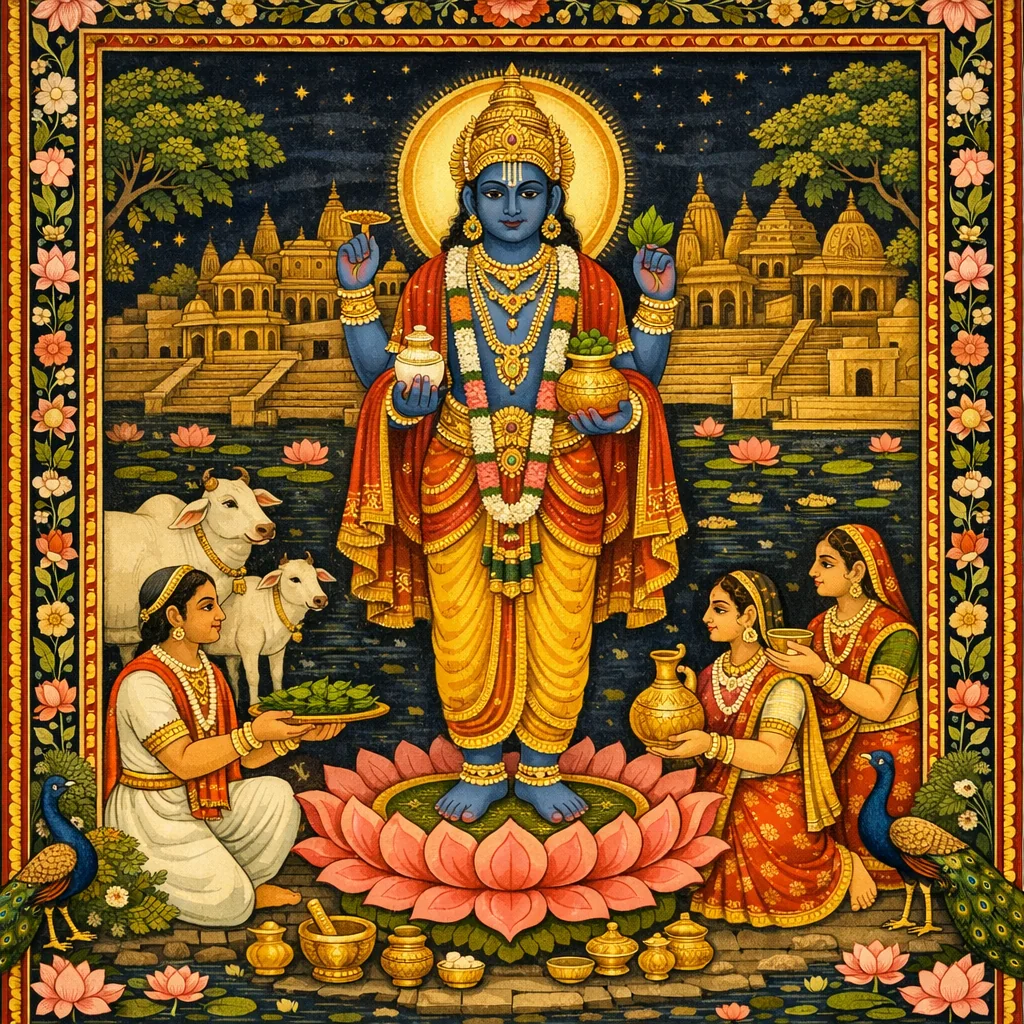
The son of Kāśya was Kāśi, and his son was Rāṣṭra, the father of Dīrghatama. Dīrghatama had a son named Dhanvantari, who was the inaugurator of the medical science and an incarnation of Lord Vāsudeva, the enjoyer of the results of sacrifices. One who remembers the name of Dhanvantari can be released from all disease.
Verse 5
तत्पुत्र: केतुमानस्य जज्ञे भीमरथस्तत: । दिवोदासो द्युमांस्तस्मात् प्रतर्दन इति स्मृत: ॥ ५ ॥
The son of Dhanvantari was Ketumān, and his son was Bhīmaratha. The son of Bhīmaratha was Divodāsa, and the son of Divodāsa was Dyumān, also known as Pratardana.
Verse 6
स एव शत्रुजिद् वत्स ऋतध्वज इतीरित: । तथा कुवलयाश्वेति प्रोक्तोऽलर्कादयस्तत: ॥ ६ ॥
Dyumān was also known as Śatrujit, Vatsa, Ṛtadhvaja and Kuvalayāśva. From him were born Alarka and other sons.
Verse 7
षष्टिंवर्षसहस्राणि षष्टिंवर्षशतानि च । नालर्कादपरो राजन् बुभुजे मेदिनीं युवा ॥ ७ ॥
Alarka, the son of Dyumān, reigned over the earth for sixty-six thousand years, my dear King Parīkṣit. No one other than him has reigned over the earth for so long as a young man.
Verse 8
अलर्कात्सन्ततिस्तस्मात् सुनीथोऽथ निकेतन: । धर्मकेतु: सुतस्तस्मात् सत्यकेतुरजायत ॥ ८ ॥
From Alarka came a son named Santati, and his son was Sunītha. The son of Sunītha was Niketana, the son of Niketana was Dharmaketu, and the son of Dharmaketu was Satyaketu.
Verse 9
धृष्टकेतुस्ततस्तस्मात् सुकुमार: क्षितीश्वर: । वीतिहोत्रोऽस्य भर्गोऽतो भार्गभूमिरभून्नृप ॥ ९ ॥
O King Parīkṣit, from Satyaketu came a son named Dhṛṣṭaketu, and from Dhṛṣṭaketu came Sukumāra, the emperor of the entire world. From Sukumāra came a son named Vītihotra; from Vītihotra, Bharga; and from Bharga, Bhārgabhūmi.
Verse 10
इतीमे काशयो भूपा: क्षत्रवृद्धान्वयायिन: । राभस्य रभस: पुत्रो गम्भीरश्चाक्रियस्तत: ॥ १० ॥
O Mahārāja Parīkṣit, all of these kings were descendants of Kāśi, and they could also be called descendants of Kṣatravṛddha. The son of Rābha was Rabhasa, from Rabhasa came Gambhīra, and from Gambhīra came a son named Akriya.
Verse 11
तद्गोत्रं ब्रह्मविज् जज्ञे शृणु वंशमनेनस: । शुद्धस्तत: शुचिस्तस्माच्चित्रकृद् धर्मसारथि: ॥ ११ ॥
The son of Akriya was known as Brahmavit, O King. Now hear about the descendants of Anenā. From Anenā came a son named Śuddha, and his son was Śuci. The son of Śuci was Dharmasārathi, also called Citrakṛt.
Verse 12
तत: शान्तरजो जज्ञे कृतकृत्य: स आत्मवान् । रजे: पञ्चशतान्यासन् पुत्राणाममितौजसाम् ॥ १२ ॥
From Citrakṛt was born a son named Śāntaraja, a self-realized soul who performed all kinds of Vedic ritualistic ceremonies and therefore did not beget any progeny. The sons of Rajī were five hundred, all very powerful.
Verse 13
देवैरभ्यर्थितो दैत्यान् हत्वेन्द्रायाददाद् दिवम् । इन्द्रस्तस्मै पुनर्दत्त्वा गृहीत्वा चरणौ रजे: । आत्मानमर्पयामास प्रह्रादाद्यरिशङ्कित: ॥ १३ ॥
On the request of the demigods, Rajī killed the demons and thus returned the kingdom of heaven to Lord Indra. But Indra, fearing such demons as Prahlāda, returned the kingdom of heaven to Rajī and surrendered himself at Rajī’s lotus feet.
Verse 14
पितर्युपरते पुत्रा याचमानाय नो ददु: । त्रिविष्टपं महेन्द्राय यज्ञभागान् समाददु: ॥ १४ ॥
Upon Rajī’s death, Indra begged Rajī’s sons for the return of the heavenly planet. They did not return it, however, although they agreed to return Indra’s shares in ritualistic ceremonies.
Verse 15
गुरुणा हूयमानेऽग्नौ बलभित् तनयान् रजे: । अवधीद् भ्रंशितान् मार्गान्न कश्चिदवशेषित: ॥ १५ ॥
Thereafter, Bṛhaspati, the spiritual master of the demigods, offered oblations in the fire so that the sons of Rajī would fall from moral principles. When they fell, Lord Indra killed them easily because of their degradation. Not a single one of them remained alive.
Verse 16
कुशात् प्रति: क्षात्रवृद्धात् सञ्जयस्तत्सुतो जय: । तत: कृत: कृतस्यापि जज्ञे हर्यबलो नृप: ॥ १६ ॥
From Kuśa, the grandson of Kṣatravṛddha, was born a son named Prati. The son of Prati was Sañjaya, and the son of Sañjaya was Jaya. From Jaya, Kṛta was born, and from Kṛta, King Haryabala.
Verse 17
सहदेवस्ततो हीनो जयसेनस्तु तत्सुत: । सङ्कृतिस्तस्य च जय: क्षत्रधर्मा महारथ: । क्षत्रवृद्धान्वया भूपा इमेशृण्वथनाहुषान् ॥ १७ ॥
From Haryabala came a son named Sahadeva, and from Sahadeva came Hīna. The son of Hīna was Jayasena, and the son of Jayasena was Saṅkṛti. The son of Saṅkṛti was the powerful and expert fighter named Jaya. These kings were the members of the Kṣatravṛddha dynasty. Now let me describe to you the dynasty of Nahuṣa.
Frequently Asked Questions
Dhanvantari is presented as a descendant in the Kāśi line (through Dīrghatama) and described as an incarnation of Lord Vāsudeva who inaugurates medical science (Āyurveda). The text praises remembrance of his name as a means to be freed from disease, linking healing to divine grace and sacred memory.
In Bhāgavata theology, nāma-smaraṇa carries purifying potency because it connects the mind to Bhagavān and His śakti. Since Dhanvantari is identified with Vāsudeva’s avatāra principle, remembrance is portrayed as spiritually and psychosomatically purificatory—removing impediments (including disease) by invoking divine auspiciousness.
After Rajī’s death, his sons refused to return the heavenly kingdom to Indra, though they agreed to restore Indra’s sacrificial shares. Bṛhaspati then performed oblations that led them to fall from moral principles; in that degraded state, Indra killed them. The narrative teaches that adharmic attachment to power invites downfall, and that even great strength becomes vulnerable when dharma is lost.
It demonstrates the Bhāgavata’s integrated view of society: kṣatriya lines can produce brahminical sages, and true eminence is measured by Vedic realization, not merely kingship. By placing Śaunaka (a foremost knower of the Ṛg Veda) within the lineage, the text elevates spiritual authority as the enduring fruit of history.
After completing the Kṣatravṛddha-related branches (including Kuśa’s sub-line), Śukadeva explicitly announces the next topic: the dynasty of Nahuṣa. This keeps the genealogical flow continuous from Āyu’s sons into successive lines, maintaining the Canto’s vaṁśānucarita progression.