Adhyaya 13
Bhāgavatam Mahimā — The Glory, Measure, Transmission, and Gift of Śrīmad-Bhāgavatam
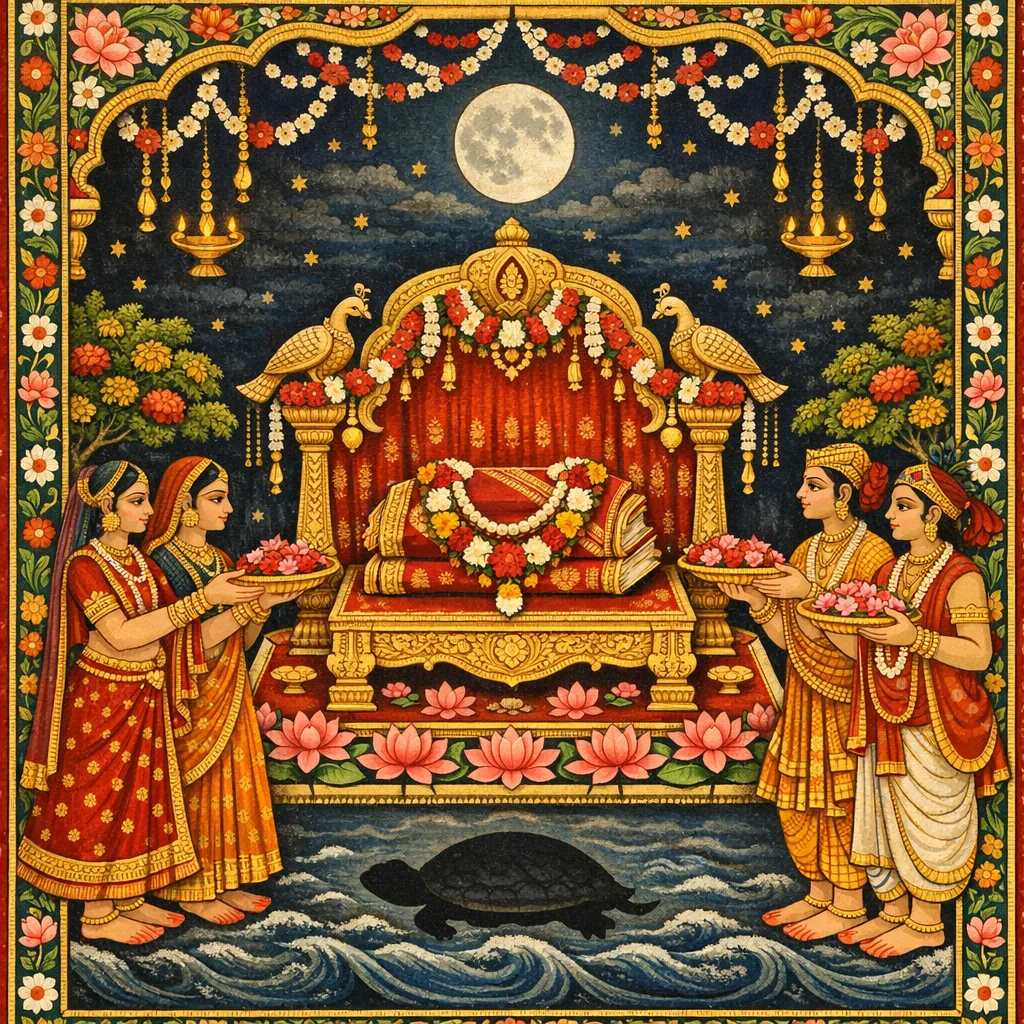
Sūta Gosvāmī offers maṅgalācaraṇa—obeisances to the Supreme Lord praised by the Vedas and realized by perfected yogīs—then invokes the Lord’s Kūrma form as cosmic support and protection. He transitions from the canto’s end-of-age perspective to a formal summation: the verse-counts of the Purāṇas, establishing Śrīmad-Bhāgavatam’s distinct stature within the 400,000 Purāṇic verses. He recounts the Bhāgavatam’s original revelation to Brahmā and defines its core telos: renunciation through divine narration, the essence of Vedānta, and exclusive devotional service to the nondual Absolute Truth realized as Bhagavān Hari. The chapter prescribes a ritualized dāna (gift) of the Bhāgavatam—placing it on a golden throne on Bhādra Pūrṇimā—and proclaims the text’s supremacy among Purāṇas, likening it to Gaṅgā among rivers and Kāśī among tīrthas. It culminates in the paramparā remembrance (Brahmā–Nārada–Vyāsa–Śuka–Parīkṣit) and closing prayers for pure bhakti, linking the previous canto’s concluding mood to the Purāṇa’s final benediction: liberation through devoted hearing and chanting.
Shlokas
Verse 1
सूत उवाच यं ब्रह्मा वरुणेन्द्ररुद्रमरुत: स्तुन्वन्ति दिव्यै: स्तवै- र्वेदै: साङ्गपदक्रमोपनिषदैर्गायन्ति यं सामगा: । ध्यानावस्थिततद्गतेन मनसा पश्यन्ति यं योगिनो यस्यान्तं न विदु: सुरासुरगणा देवाय तस्मै नम: ॥ १ ॥
Sūta Gosvāmī said: Unto that personality whom Brahmā, Varuṇa, Indra, Rudra and the Maruts praise by chanting transcendental hymns and reciting the Vedas with all their corollaries, pada-kramas and Upaniṣads, to whom the chanters of the Sāma Veda always sing, whom the perfected yogīs see within their minds after fixing themselves in trance and absorbing themselves within Him, and whose limit can never be found by any demigod or demon — unto that Supreme Personality of Godhead I offer my humble obeisances.
Verse 2
पृष्ठे भ्राम्यदमन्दमन्दरगिरिग्रावाग्रकण्डूयना- न्निद्रालो: कमठाकृतेर्भगवत: श्वासानिला: पान्तु व: । यत्संस्कारकलानुवर्तनवशाद् वेलानिभेनाम्भसां यातायातमतन्द्रितं जलनिधेर्नाद्यापि विश्राम्यति ॥ २ ॥
When the Supreme Personality of Godhead appeared as Lord Kūrma, a tortoise, His back was scratched by the sharp-edged stones lying on massive, whirling Mount Mandara, and this scratching made the Lord sleepy. May you all be protected by the winds caused by the Lord’s breathing in this sleepy condition. Ever since that time, even up to the present day, the ocean tides have imitated the Lord’s inhalation and exhalation by piously coming in and going out.
Verse 3
पुराणसङ्ख्यासम्भूतिमस्य वाच्यप्रयोजने । दानं दानस्य माहात्म्यं पाठादेश्च निबोधत ॥ ३ ॥
Now please hear a summation of the verse length of each of the Purāṇas. Then hear of the prime subject and purpose of this Bhāgavata Purāṇa, the proper method of giving it as a gift, the glories of such gift-giving, and finally the glories of hearing and chanting this literature.
Verse 4
ब्राह्मं दशसहस्राणि पाद्मं पञ्चोनषष्टि च । श्रीवैष्णवं त्रयोविंशच्चतुर्विंशति शैवकम् ॥ ४ ॥ दशाष्टौ श्रीभागवतं नारदं पञ्चविंशति । मार्कण्डं नव वाह्नं च दशपञ्च चतु:शतम् ॥ ५ ॥ चतुर्दश भविष्यं स्यात्तथा पञ्चशतानि च । दशाष्टौ ब्रह्मवैवर्तं लैङ्गमेकादशैव तु ॥ ६ ॥ चतुर्विंशति वाराहमेकाशीतिसहस्रकम् । स्कान्दं शतं तथा चैकं वामनं दश कीर्तितम् ॥ ७ ॥ कौर्मं सप्तदशाख्यातं मात्स्यं तत्तु चतुर्दश । एकोनविंशत्सौपर्णं ब्रह्माण्डं द्वादशैव तु ॥ ८ ॥ एवं पुराणसन्दोहश्चतुर्लक्ष उदाहृत: । तत्राष्टदशसाहस्रं श्रीभागवतमिष्यते ॥ ९ ॥
The Brahma Purāṇa consists of ten thousand verses, the Padma Purāṇa of fifty-five thousand, Śrī Viṣṇu Purāṇa of twenty-three thousand, the Śiva Purāṇa of twenty-four thousand and Śrīmad-Bhāgavatam of eighteen thousand. The Nārada Purāṇa has twenty-five thousand verses, the Mārkaṇḍeya Purāṇa nine thousand, the Agni Purāṇa fifteen thousand four hundred, the Bhaviṣya Purāṇa fourteen thousand five hundred, the Brahma-vaivarta Purāṇa eighteen thousand and the Liṅga Purāṇa eleven thousand. The Varāha Purāṇa contains twenty-four thousand verses, the Skanda Purāṇa eighty-one thousand one hundred, the Vāmana Purāṇa ten thousand, the Kūrma Purāṇa seventeen thousand, the Matsya Purāṇa fourteen thousand, the Garuḍa Purāṇa nineteen thousand and the Brahmāṇḍa Purāṇa twelve thousand. Thus the total number of verses in all the Purāṇas is four hundred thousand. Eighteen thousand of these, once again, belong to the beautiful Bhāgavatam.
Verse 5
ब्राह्मं दशसहस्राणि पाद्मं पञ्चोनषष्टि च । श्रीवैष्णवं त्रयोविंशच्चतुर्विंशति शैवकम् ॥ ४ ॥ दशाष्टौ श्रीभागवतं नारदं पञ्चविंशति । मार्कण्डं नव वाह्नं च दशपञ्च चतु:शतम् ॥ ५ ॥ चतुर्दश भविष्यं स्यात्तथा पञ्चशतानि च । दशाष्टौ ब्रह्मवैवर्तं लैङ्गमेकादशैव तु ॥ ६ ॥ चतुर्विंशति वाराहमेकाशीतिसहस्रकम् । स्कान्दं शतं तथा चैकं वामनं दश कीर्तितम् ॥ ७ ॥ कौर्मं सप्तदशाख्यातं मात्स्यं तत्तु चतुर्दश । एकोनविंशत्सौपर्णं ब्रह्माण्डं द्वादशैव तु ॥ ८ ॥ एवं पुराणसन्दोहश्चतुर्लक्ष उदाहृत: । तत्राष्टदशसाहस्रं श्रीभागवतमिष्यते ॥ ९ ॥
The Brahma Purāṇa consists of ten thousand verses, the Padma Purāṇa of fifty-five thousand, Śrī Viṣṇu Purāṇa of twenty-three thousand, the Śiva Purāṇa of twenty-four thousand and Śrīmad-Bhāgavatam of eighteen thousand. The Nārada Purāṇa has twenty-five thousand verses, the Mārkaṇḍeya Purāṇa nine thousand, the Agni Purāṇa fifteen thousand four hundred, the Bhaviṣya Purāṇa fourteen thousand five hundred, the Brahma-vaivarta Purāṇa eighteen thousand and the Liṅga Purāṇa eleven thousand. The Varāha Purāṇa contains twenty-four thousand verses, the Skanda Purāṇa eighty-one thousand one hundred, the Vāmana Purāṇa ten thousand, the Kūrma Purāṇa seventeen thousand, the Matsya Purāṇa fourteen thousand, the Garuḍa Purāṇa nineteen thousand and the Brahmāṇḍa Purāṇa twelve thousand. Thus the total number of verses in all the Purāṇas is four hundred thousand. Eighteen thousand of these, once again, belong to the beautiful Bhāgavatam.
Verse 6
ब्राह्मं दशसहस्राणि पाद्मं पञ्चोनषष्टि च । श्रीवैष्णवं त्रयोविंशच्चतुर्विंशति शैवकम् ॥ ४ ॥ दशाष्टौ श्रीभागवतं नारदं पञ्चविंशति । मार्कण्डं नव वाह्नं च दशपञ्च चतु:शतम् ॥ ५ ॥ चतुर्दश भविष्यं स्यात्तथा पञ्चशतानि च । दशाष्टौ ब्रह्मवैवर्तं लैङ्गमेकादशैव तु ॥ ६ ॥ चतुर्विंशति वाराहमेकाशीतिसहस्रकम् । स्कान्दं शतं तथा चैकं वामनं दश कीर्तितम् ॥ ७ ॥ कौर्मं सप्तदशाख्यातं मात्स्यं तत्तु चतुर्दश । एकोनविंशत्सौपर्णं ब्रह्माण्डं द्वादशैव तु ॥ ८ ॥ एवं पुराणसन्दोहश्चतुर्लक्ष उदाहृत: । तत्राष्टदशसाहस्रं श्रीभागवतमिष्यते ॥ ९ ॥
The Brahma Purāṇa consists of ten thousand verses, the Padma Purāṇa of fifty-five thousand, Śrī Viṣṇu Purāṇa of twenty-three thousand, the Śiva Purāṇa of twenty-four thousand and Śrīmad-Bhāgavatam of eighteen thousand. The Nārada Purāṇa has twenty-five thousand verses, the Mārkaṇḍeya Purāṇa nine thousand, the Agni Purāṇa fifteen thousand four hundred, the Bhaviṣya Purāṇa fourteen thousand five hundred, the Brahma-vaivarta Purāṇa eighteen thousand and the Liṅga Purāṇa eleven thousand. The Varāha Purāṇa contains twenty-four thousand verses, the Skanda Purāṇa eighty-one thousand one hundred, the Vāmana Purāṇa ten thousand, the Kūrma Purāṇa seventeen thousand, the Matsya Purāṇa fourteen thousand, the Garuḍa Purāṇa nineteen thousand and the Brahmāṇḍa Purāṇa twelve thousand. Thus the total number of verses in all the Purāṇas is four hundred thousand. Eighteen thousand of these, once again, belong to the beautiful Bhāgavatam.
Verse 7
ब्राह्मं दशसहस्राणि पाद्मं पञ्चोनषष्टि च । श्रीवैष्णवं त्रयोविंशच्चतुर्विंशति शैवकम् ॥ ४ ॥ दशाष्टौ श्रीभागवतं नारदं पञ्चविंशति । मार्कण्डं नव वाह्नं च दशपञ्च चतु:शतम् ॥ ५ ॥ चतुर्दश भविष्यं स्यात्तथा पञ्चशतानि च । दशाष्टौ ब्रह्मवैवर्तं लैङ्गमेकादशैव तु ॥ ६ ॥ चतुर्विंशति वाराहमेकाशीतिसहस्रकम् । स्कान्दं शतं तथा चैकं वामनं दश कीर्तितम् ॥ ७ ॥ कौर्मं सप्तदशाख्यातं मात्स्यं तत्तु चतुर्दश । एकोनविंशत्सौपर्णं ब्रह्माण्डं द्वादशैव तु ॥ ८ ॥ एवं पुराणसन्दोहश्चतुर्लक्ष उदाहृत: । तत्राष्टदशसाहस्रं श्रीभागवतमिष्यते ॥ ९ ॥
The Brahma Purāṇa consists of ten thousand verses, the Padma Purāṇa of fifty-five thousand, Śrī Viṣṇu Purāṇa of twenty-three thousand, the Śiva Purāṇa of twenty-four thousand and Śrīmad-Bhāgavatam of eighteen thousand. The Nārada Purāṇa has twenty-five thousand verses, the Mārkaṇḍeya Purāṇa nine thousand, the Agni Purāṇa fifteen thousand four hundred, the Bhaviṣya Purāṇa fourteen thousand five hundred, the Brahma-vaivarta Purāṇa eighteen thousand and the Liṅga Purāṇa eleven thousand. The Varāha Purāṇa contains twenty-four thousand verses, the Skanda Purāṇa eighty-one thousand one hundred, the Vāmana Purāṇa ten thousand, the Kūrma Purāṇa seventeen thousand, the Matsya Purāṇa fourteen thousand, the Garuḍa Purāṇa nineteen thousand and the Brahmāṇḍa Purāṇa twelve thousand. Thus the total number of verses in all the Purāṇas is four hundred thousand. Eighteen thousand of these, once again, belong to the beautiful Bhāgavatam.
Verse 8
ब्राह्मं दशसहस्राणि पाद्मं पञ्चोनषष्टि च । श्रीवैष्णवं त्रयोविंशच्चतुर्विंशति शैवकम् ॥ ४ ॥ दशाष्टौ श्रीभागवतं नारदं पञ्चविंशति । मार्कण्डं नव वाह्नं च दशपञ्च चतु:शतम् ॥ ५ ॥ चतुर्दश भविष्यं स्यात्तथा पञ्चशतानि च । दशाष्टौ ब्रह्मवैवर्तं लैङ्गमेकादशैव तु ॥ ६ ॥ चतुर्विंशति वाराहमेकाशीतिसहस्रकम् । स्कान्दं शतं तथा चैकं वामनं दश कीर्तितम् ॥ ७ ॥ कौर्मं सप्तदशाख्यातं मात्स्यं तत्तु चतुर्दश । एकोनविंशत्सौपर्णं ब्रह्माण्डं द्वादशैव तु ॥ ८ ॥ एवं पुराणसन्दोहश्चतुर्लक्ष उदाहृत: । तत्राष्टदशसाहस्रं श्रीभागवतमिष्यते ॥ ९ ॥
The Brahma Purāṇa consists of ten thousand verses, the Padma Purāṇa of fifty-five thousand, Śrī Viṣṇu Purāṇa of twenty-three thousand, the Śiva Purāṇa of twenty-four thousand and Śrīmad-Bhāgavatam of eighteen thousand. The Nārada Purāṇa has twenty-five thousand verses, the Mārkaṇḍeya Purāṇa nine thousand, the Agni Purāṇa fifteen thousand four hundred, the Bhaviṣya Purāṇa fourteen thousand five hundred, the Brahma-vaivarta Purāṇa eighteen thousand and the Liṅga Purāṇa eleven thousand. The Varāha Purāṇa contains twenty-four thousand verses, the Skanda Purāṇa eighty-one thousand one hundred, the Vāmana Purāṇa ten thousand, the Kūrma Purāṇa seventeen thousand, the Matsya Purāṇa fourteen thousand, the Garuḍa Purāṇa nineteen thousand and the Brahmāṇḍa Purāṇa twelve thousand. Thus the total number of verses in all the Purāṇas is four hundred thousand. Eighteen thousand of these, once again, belong to the beautiful Bhāgavatam.
Verse 9
ब्राह्मं दशसहस्राणि पाद्मं पञ्चोनषष्टि च । श्रीवैष्णवं त्रयोविंशच्चतुर्विंशति शैवकम् ॥ ४ ॥ दशाष्टौ श्रीभागवतं नारदं पञ्चविंशति । मार्कण्डं नव वाह्नं च दशपञ्च चतु:शतम् ॥ ५ ॥ चतुर्दश भविष्यं स्यात्तथा पञ्चशतानि च । दशाष्टौ ब्रह्मवैवर्तं लैङ्गमेकादशैव तु ॥ ६ ॥ चतुर्विंशति वाराहमेकाशीतिसहस्रकम् । स्कान्दं शतं तथा चैकं वामनं दश कीर्तितम् ॥ ७ ॥ कौर्मं सप्तदशाख्यातं मात्स्यं तत्तु चतुर्दश । एकोनविंशत्सौपर्णं ब्रह्माण्डं द्वादशैव तु ॥ ८ ॥ एवं पुराणसन्दोहश्चतुर्लक्ष उदाहृत: । तत्राष्टदशसाहस्रं श्रीभागवतमिष्यते ॥ ९ ॥
The Brahma Purāṇa consists of ten thousand verses, the Padma Purāṇa of fifty-five thousand, Śrī Viṣṇu Purāṇa of twenty-three thousand, the Śiva Purāṇa of twenty-four thousand and Śrīmad-Bhāgavatam of eighteen thousand. The Nārada Purāṇa has twenty-five thousand verses, the Mārkaṇḍeya Purāṇa nine thousand, the Agni Purāṇa fifteen thousand four hundred, the Bhaviṣya Purāṇa fourteen thousand five hundred, the Brahma-vaivarta Purāṇa eighteen thousand and the Liṅga Purāṇa eleven thousand. The Varāha Purāṇa contains twenty-four thousand verses, the Skanda Purāṇa eighty-one thousand one hundred, the Vāmana Purāṇa ten thousand, the Kūrma Purāṇa seventeen thousand, the Matsya Purāṇa fourteen thousand, the Garuḍa Purāṇa nineteen thousand and the Brahmāṇḍa Purāṇa twelve thousand. Thus the total number of verses in all the Purāṇas is four hundred thousand. Eighteen thousand of these, once again, belong to the beautiful Bhāgavatam.
Verse 10
इदं भगवता पूर्वं ब्रह्मणे नाभिपङ्कजे । स्थिताय भवभीताय कारुण्यात् सम्प्रकाशितम् ॥ १० ॥
It was to Lord Brahmā that the Supreme Personality of Godhead first revealed the Śrīmad-Bhāgavatam in full. At the time, Brahmā, frightened by material existence, was sitting on the lotus flower that had grown from the Lord’s navel.
Verse 11
आदिमध्यावसानेषु वैराग्याख्यानसंयुतम् । हरिलीलाकथाव्रातामृतानन्दितसत्सुरम् ॥ ११ ॥ सर्ववेदान्तसारं यद ब्रह्मात्मैकत्वलक्षणम् । वस्त्वद्वितीयं तन्निष्ठं कैवल्यैकप्रयोजनम् ॥ १२ ॥
From beginning to end, the Śrīmad-Bhāgavatam is full of narrations that encourage renunciation of material life, as well as nectarean accounts of Lord Hari’s transcendental pastimes, which give ecstasy to the saintly devotees and demigods. This Bhāgavatam is the essence of all Vedānta philosophy because its subject matter is the Absolute Truth, which, while nondifferent from the spirit soul, is the ultimate reality, one without a second. The goal of this literature is exclusive devotional service unto that Supreme Truth.
Verse 12
आदिमध्यावसानेषु वैराग्याख्यानसंयुतम् । हरिलीलाकथाव्रातामृतानन्दितसत्सुरम् ॥ ११ ॥ सर्ववेदान्तसारं यद ब्रह्मात्मैकत्वलक्षणम् । वस्त्वद्वितीयं तन्निष्ठं कैवल्यैकप्रयोजनम् ॥ १२ ॥
From beginning to end, the Śrīmad-Bhāgavatam is full of narrations that encourage renunciation of material life, as well as nectarean accounts of Lord Hari’s transcendental pastimes, which give ecstasy to the saintly devotees and demigods. This Bhāgavatam is the essence of all Vedānta philosophy because its subject matter is the Absolute Truth, which, while nondifferent from the spirit soul, is the ultimate reality, one without a second. The goal of this literature is exclusive devotional service unto that Supreme Truth.
Verse 13
प्रौष्ठपद्यां पौर्णमास्यां हेमसिंहसमन्वितम् । ददाति यो भागवतं स याति परमां गतिम् ॥ १३ ॥
If on the full moon day of the month of Bhādra one places Śrīmad-Bhāgavatam on a golden throne and gives it as a gift, he will attain the supreme transcendental destination.
Verse 14
राजन्ते तावदन्यानि पुराणानि सतां गणे । यावद्भागवतं नैव श्रूयतेऽमृतसागरम् ॥ १४ ॥
All other Purāṇic scriptures shine forth in the assembly of saintly devotees only as long as that great ocean of nectar, Śrīmad-Bhāgavatam, is not heard.
Verse 15
सर्ववेदान्तसारं हि श्रीभागवतमिष्यते । तद्रसामृततृप्तस्य नान्यत्र स्याद्रति: क्वचित् ॥ १५ ॥
Śrīmad-Bhāgavatam is declared to be the essence of all Vedānta philosophy. One who has felt satisfaction from its nectarean mellow will never be attracted to any other literature.
Verse 16
निम्नगानां यथा गङ्गा देवानामच्युतो यथा । वैष्णवानां यथा शम्भु: पुराणानामिदं तथा ॥ १६ ॥
Just as the Gaṅgā is the greatest of all rivers, Lord Acyuta the supreme among deities and Lord Śambhu [Śiva] the greatest of Vaiṣṇavas, so Śrīmad-Bhāgavatam is the greatest of all Purāṇas.
Verse 17
क्षेत्राणां चैव सर्वेषां यथा काशी ह्यनुत्तमा । तथा पुराणव्रातानां श्रीमद्भागवतं द्विजा: ॥ १७ ॥
O brāhmaṇas, in the same way that the city of Kāśī is unexcelled among holy places, Śrīmad-Bhāgavatam is supreme among all the Purāṇas.
Verse 18
श्रीमद्भागवतं पुराणममलं यद्वैष्णवानां प्रियं यस्मिन् पारमहंस्यमेकममलं ज्ञानं परं गीयते । तत्र ज्ञानविरागभक्तिसहितं नैष्कर्म्यमाविष्कृतं तच्छृण्वन् सुपठन् विचारणपरो भक्त्या विमुच्येन्नर: ॥ १८ ॥
Śrīmad-Bhāgavatam is the spotless Purāṇa. It is most dear to the Vaiṣṇavas because it describes the pure and supreme knowledge of the paramahaṁsas. This Bhāgavatam reveals the means for becoming free from all material work, together with the processes of transcendental knowledge, renunciation and devotion. Anyone who seriously tries to understand Śrīmad-Bhāgavatam, who properly hears and chants it with devotion, becomes completely liberated.
Verse 19
कस्मै येन विभासितोऽयमतुलो ज्ञानप्रदीप: पुरा तद्रूपेण च नारदाय मुनये कृष्णाय तद्रूपिणा । योगीन्द्राय तदात्मनाथ भगवद्राताय कारुण्यत- स्तच्छुद्धं विमलं विशोकममृतं सत्यं परं धीमहि ॥ १९ ॥
I meditate upon that pure and spotless Supreme Absolute Truth, who is free from suffering and death and who in the beginning personally revealed this incomparable torchlight of knowledge to Brahmā. Brahmā then spoke it to the sage Nārada, who narrated it to Kṛṣṇa-dvaipāyana Vyāsa. Śrīla Vyāsa revealed this Bhāgavatam to the greatest of sages, Śukadeva Gosvāmī, and Śukadeva mercifully spoke it to Mahārāja Parīkṣit.
Verse 20
नमस्तस्मै भगवते वासुदेवाय साक्षिणे । य इदं कृपया कस्मै व्याचचक्षे मुमुक्षवे ॥ २० ॥
We offer our obeisances to the Supreme Personality of Godhead, Lord Vāsudeva, the all-pervading witness, who mercifully explained this science to Brahmā when he anxiously desired salvation.
Verse 21
योगीन्द्राय नमस्तस्मै शुकाय ब्रह्मरूपिणे । संसारसर्पदष्टं यो विष्णुरातममूमुचत् ॥ २१ ॥
I offer my humble obeisances to Śrī Śukadeva Gosvāmī, the best of mystic sages and a personal manifestation of the Absolute Truth. He saved Mahārāja Parīkṣit, who was bitten by the snake of material existence.
Verse 22
भवे भवे यथा भक्ति: पादयोस्तव जायते । तथा कुरुष्व देवेश नाथस्त्वं नो यत: प्रभो ॥ २२ ॥
O Lord of lords, O master, please grant us pure devotional service at Your lotus feet, life after life.
Verse 23
नामसङ्कीर्तनं यस्य सर्वपापप्रणाशनम् । प्रणामो दु:खशमनस्तं नमामि हरिं परम् ॥ २३ ॥
I offer my respectful obeisances unto the Supreme Lord, Hari, the congregational chanting of whose holy names destroys all sinful reactions, and the offering of obeisances unto whom relieves all material suffering.
Frequently Asked Questions
The enumeration functions as a traditional pramāṇa-style framing: it situates Śrīmad-Bhāgavatam within the wider Purāṇic canon (400,000 verses total) and then highlights the Bhāgavatam’s distinct identity (18,000 verses) to underscore its unique authority, completeness, and supremacy as the Vedānta-sāra and amala-purāṇa.
The chapter states that from beginning to end the Bhāgavatam teaches renunciation through Hari-kathā and establishes the Absolute Truth as its subject—one without a second—culminating not in impersonal conclusion but in exclusive devotional service (kevalā-bhakti) to that Supreme Truth. Thus, Vedānta’s final import is presented as bhakti grounded in realized knowledge.
The chapter identifies Brahmā as the first recipient of the Bhāgavatam directly from the Supreme Lord. Brahmā spoke it to Nārada; Nārada to Kṛṣṇa-dvaipāyana Vyāsa; Vyāsa to Śukadeva Gosvāmī; and Śuka spoke it to Mahārāja Parīkṣit—establishing the authorized chain of revelation and teaching.
The text prescribes a specific dāna-vidhi: placing the Bhāgavatam on a golden throne and offering it as a gift on the full moon of Bhādra. The significance is twofold—honoring the Bhāgavatam as the living embodiment of sacred knowledge and cultivating bhakti through generosity—said to grant the supreme transcendental destination.
It is termed spotless (amala) because its teaching culminates in pure devotion free from ulterior motives (karma and mere jñāna) and because it reveals paramahaṁsa-knowledge: the integrated path of jñāna, vairāgya, and bhakti that liberates the sincere hearer through devoted śravaṇa and kīrtana.