Adhyaya 75
Duryodhana’s Envy at Yudhiṣṭhira’s Rājasūya and the Avabhṛtha Festival
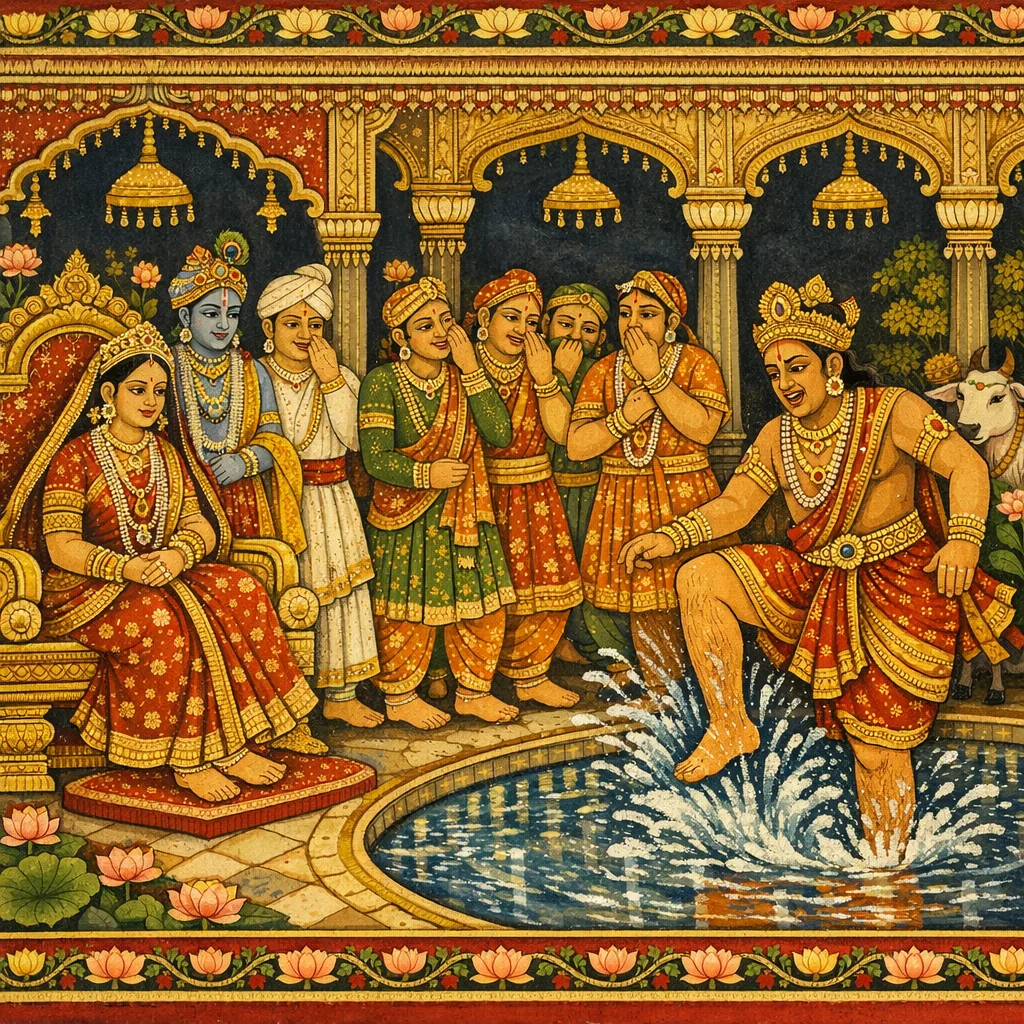
Responding to Parīkṣit’s query about Duryodhana alone being displeased at the Rājasūya, Śukadeva describes how Yudhiṣṭhira’s relatives and allies joyfully took up humble services—Bhīma in the kitchen, Duryodhana over the treasury, Sahadeva welcoming guests, and even Kṛṣṇa washing feet—revealing the sacrifice as a collective act of devotion to the king whose life is dedicated to Nārāyaṇa. After proper honors and gifts, the avabhṛtha celebration unfolds on the Yamunā with music, procession, mantra-recitation, and festive water-sport, culminating in final rites and purification baths, followed by generous distribution of ornaments and garments. As guests depart praising the yajña, Yudhiṣṭhira cannot bear separation and requests Kṛṣṇa to stay briefly. The narrative then pivots to the seed of Mahābhārata conflict: Duryodhana, disturbed by Yudhiṣṭhira’s opulence and Draupadī’s presence, is further humiliated by Maya Dānava’s illusory architecture, becoming an object of laughter. Burning with shame, he departs in silence—an envy that will mature into hostility, while Kṛṣṇa remains silent, intent on relieving the earth’s burden, linking this chapter’s palace episode to the coming escalation toward the dice match and war.
Shlokas
Verse 1
श्रीराजोवाच अजातशत्रोस्तं दृष्ट्वा राजसूयमहोदयम् । सर्वे मुमुदिरे ब्रह्मन् नृदेवा ये समागता: ॥ १ ॥ दुर्योधनं वर्जयित्वा राजान: सर्षय: सुरा: । इति श्रुतं नो भगवंस्तत्र कारणमुच्यताम् ॥ २ ॥
Mahārāja Parīkṣit said: O brāhmaṇa, according to what I have heard from you, all the assembled kings, sages and demigods were delighted to see the wonderful festivities of King Ajātaśatru’s Rājasūya sacrifice, with the sole exception of Duryodhana. Please tell me why this was so, my lord.
Verse 2
श्रीराजोवाच अजातशत्रोस्तं दृष्ट्वा राजसूयमहोदयम् । सर्वे मुमुदिरे ब्रह्मन् नृदेवा ये समागता: ॥ १ ॥ दुर्योधनं वर्जयित्वा राजान: सर्षय: सुरा: । इति श्रुतं नो भगवंस्तत्र कारणमुच्यताम् ॥ २ ॥
Mahārāja Parīkṣit said: O brāhmaṇa, according to what I have heard from you, all the assembled kings, sages and demigods were delighted to see the wonderful festivities of King Ajātaśatru’s Rājasūya sacrifice, with the sole exception of Duryodhana. Please tell me why this was so, my lord.
Verse 3
श्रीबादरायणिरुवाच पितामहस्य ते यज्ञे राजसूये महात्मन: । बान्धवा: परिचर्यायां तस्यासन्प्रेमबन्धना: ॥ ३ ॥
Śrī Bādarāyaṇi said: At the Rājasūya sacrifice of your saintly grandfather, his family members, bound by their love for him, engaged themselves in humble services on his behalf.
Verse 4
भीमो महानसाध्यक्षो धनाध्यक्ष: सुयोधन: । सहदेवस्तु पूजायां नकुलो द्रव्यसाधने ॥ ४ ॥ गुरुशुश्रूषणे जिष्णु: कृष्ण: पादावनेजने । परिवेषणे द्रुपदजा कर्णो दाने महामना: ॥ ५ ॥ युयुधानो विकर्णश्च हार्दिक्यो विदुरादय: । बाह्लीकपुत्रा भूर्याद्या ये च सन्तर्दनादय: ॥ ६ ॥ निरूपिता महायज्ञे नानाकर्मसु ते तदा । प्रवर्तन्ते स्म राजेन्द्र राज्ञ: प्रियचिकीर्षव: ॥ ७ ॥
Bhīma supervised the kitchen, Duryodhana looked after the treasury, while Sahadeva respectfully greeted the arriving guests. Nakula procured needed items, Arjuna attended the respectable elders, and Kṛṣṇa washed everyone’s feet, while Draupadī served food, and generous Karṇa gave out the gifts. Many others, such as Yuyudhāna; Vikarṇa, Hārdikya; Vidura; Bhūriśravā and other sons of Bāhlīka; and Santardana, similarly volunteered for various duties during the elaborate sacrifice. They did so because of their eagerness to please Mahārāja Yudhiṣṭhira, O best of kings.
Verse 5
भीमो महानसाध्यक्षो धनाध्यक्ष: सुयोधन: । सहदेवस्तु पूजायां नकुलो द्रव्यसाधने ॥ ४ ॥ गुरुशुश्रूषणे जिष्णु: कृष्ण: पादावनेजने । परिवेषणे द्रुपदजा कर्णो दाने महामना: ॥ ५ ॥ युयुधानो विकर्णश्च हार्दिक्यो विदुरादय: । बाह्लीकपुत्रा भूर्याद्या ये च सन्तर्दनादय: ॥ ६ ॥ निरूपिता महायज्ञे नानाकर्मसु ते तदा । प्रवर्तन्ते स्म राजेन्द्र राज्ञ: प्रियचिकीर्षव: ॥ ७ ॥
Bhīma supervised the kitchen, Duryodhana looked after the treasury, while Sahadeva respectfully greeted the arriving guests. Nakula procured needed items, Arjuna attended the respectable elders, and Kṛṣṇa washed everyone’s feet, while Draupadī served food, and generous Karṇa gave out the gifts. Many others, such as Yuyudhāna; Vikarṇa, Hārdikya; Vidura; Bhūriśravā and other sons of Bāhlīka; and Santardana, similarly volunteered for various duties during the elaborate sacrifice. They did so because of their eagerness to please Mahārāja Yudhiṣṭhira, O best of kings.
Verse 6
भीमो महानसाध्यक्षो धनाध्यक्ष: सुयोधन: । सहदेवस्तु पूजायां नकुलो द्रव्यसाधने ॥ ४ ॥ गुरुशुश्रूषणे जिष्णु: कृष्ण: पादावनेजने । परिवेषणे द्रुपदजा कर्णो दाने महामना: ॥ ५ ॥ युयुधानो विकर्णश्च हार्दिक्यो विदुरादय: । बाह्लीकपुत्रा भूर्याद्या ये च सन्तर्दनादय: ॥ ६ ॥ निरूपिता महायज्ञे नानाकर्मसु ते तदा । प्रवर्तन्ते स्म राजेन्द्र राज्ञ: प्रियचिकीर्षव: ॥ ७ ॥
Bhīma supervised the kitchen, Duryodhana looked after the treasury, while Sahadeva respectfully greeted the arriving guests. Nakula procured needed items, Arjuna attended the respectable elders, and Kṛṣṇa washed everyone’s feet, while Draupadī served food, and generous Karṇa gave out the gifts. Many others, such as Yuyudhāna; Vikarṇa, Hārdikya; Vidura; Bhūriśravā and other sons of Bāhlīka; and Santardana, similarly volunteered for various duties during the elaborate sacrifice. They did so because of their eagerness to please Mahārāja Yudhiṣṭhira, O best of kings.
Verse 7
भीमो महानसाध्यक्षो धनाध्यक्ष: सुयोधन: । सहदेवस्तु पूजायां नकुलो द्रव्यसाधने ॥ ४ ॥ गुरुशुश्रूषणे जिष्णु: कृष्ण: पादावनेजने । परिवेषणे द्रुपदजा कर्णो दाने महामना: ॥ ५ ॥ युयुधानो विकर्णश्च हार्दिक्यो विदुरादय: । बाह्लीकपुत्रा भूर्याद्या ये च सन्तर्दनादय: ॥ ६ ॥ निरूपिता महायज्ञे नानाकर्मसु ते तदा । प्रवर्तन्ते स्म राजेन्द्र राज्ञ: प्रियचिकीर्षव: ॥ ७ ॥
Bhīma supervised the kitchen, Duryodhana looked after the treasury, while Sahadeva respectfully greeted the arriving guests. Nakula procured needed items, Arjuna attended the respectable elders, and Kṛṣṇa washed everyone’s feet, while Draupadī served food, and generous Karṇa gave out the gifts. Many others, such as Yuyudhāna; Vikarṇa, Hārdikya; Vidura; Bhūriśravā and other sons of Bāhlīka; and Santardana, similarly volunteered for various duties during the elaborate sacrifice. They did so because of their eagerness to please Mahārāja Yudhiṣṭhira, O best of kings.
Verse 8
ऋत्विक्सदस्यबहुवित्सु सुहृत्तमेषु स्विष्टेषु सूनृतसमर्हणदक्षिणाभि: । चैद्ये च सात्वतपतेश्चरणं प्रविष्टे चक्रुस्ततस्त्ववभृथस्नपनं द्युनद्याम् ॥ ८ ॥
After the priests, the prominent delegates, the greatly learned saints and the King’s most intimate well-wishers had all been properly honored with pleasing words, auspicious offerings and various gifts as remuneration, and after the King of Cedi had entered the lotus feet of the Lord of the Sātvatas, the avabhṛtha bath was performed in the divine river Yamunā.
Verse 9
मृदङ्गशङ्खपणवधुन्धुर्यानकगोमुखा: । वादित्राणि विचित्राणि नेदुरावभृथोत्सवे ॥ ९ ॥
During the avabhṛtha celebration, the music of many kinds of instruments resounded, including mṛdaṅgas, conchshells, panavas, dhundhuris, kettledrums and gomukha horns.
Verse 10
नार्तक्यो ननृतुर्हृष्टा गायका यूथशो जगु: । वीणावेणुतलोन्नादस्तेषां स दिवमस्पृशत् ॥ १० ॥
Female dancers danced with great joy, and choruses sang, while the loud vibrations of vīnās, flutes and hand cymbals reached all the way to the heavenly regions.
Verse 11
चित्रध्वजपताकाग्रैरिभेन्द्रस्यन्दनार्वभि: । स्वलङ्कृतैर्भटैर्भूपा निर्ययू रुक्ममालिन: ॥ ११ ॥
All the kings, wearing gold necklaces, then set off for the Yamunā. They had flags and banners of various colors and were accompanied by infantrymen and well-adorned soldiers riding lordly elephants, chariots and horses.
Verse 12
यदुसृञ्जयकाम्बोजकुरुकेकयकोशला: । कम्पयन्तो भुवं सैन्यैर्यजमानपुर:सरा: ॥ १२ ॥
The massed armies of the Yadus, Sṛñjayas, Kāmbojas, Kurus, Kekayas and Kośalas made the earth tremble as they followed Yudhiṣṭhira Mahārāja, the performer of the sacrifice, in procession.
Verse 13
सदस्यर्त्विग्द्विजश्रेष्ठा ब्रह्मघोषेणभूयसा । देवर्षिपितृगन्धर्वास्तुष्टुवु: पुष्पवर्षिण: ॥ १३ ॥
The assembly officials, the priests and other excellent brāhmaṇas resoundingly vibrated Vedic mantras, while the demigods, divine sages, Pitās and Gandharvas sang praises and rained down flowers.
Verse 14
स्वलङ्कृता नरा नार्यो गन्धस्रग्भूषणाम्बरै: । विलिम्पन्त्योऽभिसिञ्चन्त्यो विजह्रुर्विविधै रसै: ॥ १४ ॥
Men and women, all adorned with sandalwood paste, flower garlands, jewelry and fine clothing, sported by smearing and sprinkling one another with various liquids.
Verse 15
तैलगोरसगन्धोदहरिद्रासान्द्रकुङ्कुमै: । पुम्भिर्लिप्ता: प्रलिम्पन्त्यो विजह्रुर्वारयोषित: ॥ १५ ॥
The men smeared the courtesans with plentiful oil, yogurt, perfumed water, turmeric and kuṅkuma powder, and the courtesans playfully smeared the men with the same substances.
Verse 16
गुप्ता नृभिर्निरगमन्नुपलब्धुमेतद् देव्यो यथा दिवि विमानवरैर्नृदेव्यो । ता मातुलेयसखिभि: परिषिच्यमाना: सव्रीडहासविकसद्वदना विरेजु: ॥ १६ ॥
Surrounded by guards, King Yudhiṣṭhira’s queens came out on their chariots to see the fun, just as the demigods’ wives appeared in the sky in celestial airplanes. As maternal cousins and intimate friends sprinkled the queens with liquids, the ladies’ faces bloomed with shy smiles, enhancing the queens’ splendid beauty.
Verse 17
ता देवरानुत सखीन् सिषिचुर्दृतीभि: क्लिन्नाम्बरा विवृतगात्रकुचोरुमध्या: । औत्सुक्यमुक्तकवराच्च्यवमानमाल्या: क्षोभं दधुर्मलधियां रुचिरैर्विहारै: ॥ १७ ॥
As the queens squirted water from syringes at their brothers-in-law and other male companions, their own garments became drenched, revealing their arms, breasts, thighs and waists. In their excitement, the flowers fell from their loosened braids. By these charming pastimes they agitated those with contaminated consciousness.
Verse 18
स सम्राड् रथमारुढ: सदश्वं रुक्ममालिनम् । व्यरोचत स्वपत्नीभि: क्रियाभि: क्रतुराडिव ॥ १८ ॥
The emperor, mounted upon his chariot drawn by excellent horses wearing golden collars, appeared splendid in the company of his wives, just like the brilliant Rājasūya sacrifice surrounded by its various rituals.
Verse 19
पत्नीसंयाजावभृथ्यैश्चरित्वा ते तमृत्विज: । आचान्तं स्नापयां चक्रुर्गङ्गायां सह कृष्णया ॥ १९ ॥
The priests led the King through the execution of the final rituals of patnī-saṁyāja and avabhṛthya. Then they had him and Queen Draupadī sip water for purification and bathe in the Ganges.
Verse 20
देवदुन्दुभयो नेदुर्नरदुन्दुभिभि: समम् । मुमुचु: पुष्पवर्षाणि देवर्षिपितृमानवा: ॥ २० ॥
The kettledrums of the gods resounded, along with those of human beings. Demigods, sages, forefathers and humans all poured down showers of flowers.
Verse 21
सस्नुस्तत्र तत: सर्वे वर्णाश्रमयुता नरा: । महापातक्यपि यत: सद्यो मुच्येत किल्बिषात् ॥ २१ ॥
All the citizens belonging to the various orders of varṇa and āśrama then bathed in that place, where even the most grievous sinner can immediately be freed from all sinful reactions.
Verse 22
अथ राजाहते क्षौमे परिधाय स्वलङ्कृत: । ऋत्विक्सदस्यविप्रादीनानर्चाभरणाम्बरै: ॥ २२ ॥
Next the King put on new silken garments and adorned himself with fine jewelry. He then honored the priests, assembly officials, learned brāhmaṇas and other guests by presenting them with ornaments and clothing.
Verse 23
बन्धूञ्ज्ञातीन् नृपान् मित्रसुहृदोऽन्यांश्च सर्वश: । अभीक्ष्णं पूजयामास नारायणपरो नृप: ॥ २३ ॥
In various ways King Yudhiṣṭhira, who had totally dedicated his life to Lord Nārāyaṇa, continuously honored his relatives, his immediate family, the other kings, his friends and well-wishers, and all others present as well.
Verse 24
सर्वे जना: सुररुचो मणिकुण्डलस्र- गुष्णीषकञ्चुकदुकूलमहार्घ्यहारा: । नार्यश्च कुण्डलयुगालकवृन्दजुष्ट- वक्त्रश्रिय: कनकमेखलया विरेजु: ॥ २४ ॥
All the men there shone like demigods. They were adorned with jeweled earrings, flower garlands, turbans, waistcoats, silk dhotīs and valuable pearl necklaces. The lovely faces of the women were beautified by their matched earrings and locks of hair, and they all wore golden belts.
Verse 25
अथर्त्विजो महाशीला: सदस्या ब्रह्मवादिन: । ब्रह्मक्षत्रियविट्शूद्रा राजानो ये समागता: ॥ २५ ॥ देवर्षिपितृभूतानि लोकपाला: सहानुगा: । पूजितास्तमनुज्ञाप्य स्वधामानि ययुर्नृप ॥ २६ ॥
Then the highly cultured priests, the great Vedic authorities who had served as sacrificial witnesses, the specially invited kings, the brāhmaṇas, kṣatriyas, vaiśyas, śūdras, demigods, sages, forefathers and mystic spirits, and the chief planetary rulers and their followers — all of them, having been worshiped by King Yudhiṣṭhira, took his permission and departed, O King, each for his own abode.
Verse 26
अथर्त्विजो महाशीला: सदस्या ब्रह्मवादिन: । ब्रह्मक्षत्रियविट्शूद्रा राजानो ये समागता: ॥ २५ ॥ देवर्षिपितृभूतानि लोकपाला: सहानुगा: । पूजितास्तमनुज्ञाप्य स्वधामानि ययुर्नृप ॥ २६ ॥
Then the highly cultured priests, the great Vedic authorities who had served as sacrificial witnesses, the specially invited kings, the brāhmaṇas, kṣatriyas, vaiśyas, śūdras, demigods, sages, forefathers and mystic spirits, and the chief planetary rulers and their followers — all of them, having been worshiped by King Yudhiṣṭhira, took his permission and departed, O King, each for his own abode.
Verse 27
हरिदासस्य राजर्षे राजसूयमहोदयम् । नैवातृप्यन्प्रशंसन्त: पिबन्मर्त्योऽमृतं यथा ॥ २७ ॥
As they all glorified the wonderful Rājasūya-yajña performed by that great saintly King and servant of Lord Hari, they were not satiated, just as an ordinary man is never satiated when drinking nectar.
Verse 28
ततो युधिष्ठिरो राजा सुहृत्सम्बन्धिबान्धवान् । प्रेम्णा निवारयामास कृष्णं च त्यागकातर: ॥ २८ ॥
At that time Rājā Yudhiṣṭhira stopped a number of his friends, immediate family members and other relatives from departing, among them Lord Kṛṣṇa. Out of love Yudhiṣṭhira could not let them go, for he felt the pain of imminent separation.
Verse 29
भगवानपि तत्राङ्ग न्यावात्सीत्तत्प्रियंकर: । प्रस्थाप्य यदुवीरांश्च साम्बादींश्च कुशस्थलीम् ॥ २९ ॥
My dear Parīkṣit, the Supreme Lord remained there for some time to please the King, after first sending Sāmba and the other Yadu heroes back to Dvārakā.
Verse 30
इत्थं राजा धर्मसुतो मनोरथमहार्णवम् । सुदुस्तरं समुत्तीर्य कृष्णेनासीद् गतज्वर: ॥ ३० ॥
Thus King Yudhiṣṭhira, the son of Dharma, was at last relieved of his burning ambition, having by the grace of Lord Kṛṣṇa successfully crossed the vast and formidable ocean of his desires.
Verse 31
एकदान्त:पुरे तस्य वीक्ष्य दुर्योधन: श्रियम् । अतप्यद् राजसूयस्य महित्वं चाच्युतात्मन: ॥ ३१ ॥
One day Duryodhana, while observing the riches of King Yudhiṣṭhira’s palace, felt greatly disturbed by the magnificence of both the Rājasūya sacrifice and its performer, the King, whose life and soul was Lord Acyuta.
Verse 32
यस्मिन् नरेन्द्रदितिजेन्द्रसुरेन्द्रलक्ष्मी- र्नाना विभान्ति किल विश्वसृजोपक्लृप्ता: । ताभि: पतीन् द्रुपदराजसुतोपतस्थे यस्यां विषक्तहृदय: कुरुराडतप्यत् ॥ ३२ ॥
In that palace all the collected opulences of the kings of men, demons and gods were brilliantly manifest, having been brought there by the cosmic inventor, Maya Dānava. With those riches Draupadī served her husbands, and Duryodhana, the prince of the Kurus, lamented because he was very much attracted to her.
Verse 33
यस्मिन् तदा मधुपतेर्महिषीसहस्रं श्रोणीभरेण शनकै: क्वणदङ्घ्रिशोभम् । मध्ये सुचारु कुचकुङ्कुमशोणहारं श्रीमन्मुखं प्रचलकुण्डलकुन्तलाढ्यम् ॥ ३३ ॥
Lord Madhupati’s thousands of queens were also staying in the palace. Their feet moved slowly, weighed down by their hips, and the bells on their feet tinkled charmingly. Their waists were very slender, the kuṅkuma from their breasts reddened their pearl necklaces, and their swaying earrings and flowing locks of hair enhanced the exquisite beauty of their faces.
Verse 34
सभायां मयक्लृप्तायां क्वापि धर्मसुतोऽधिराट् । वृतोऽनुगैर्बन्धुभिश्च कृष्णेनापि स्वचक्षुषा ॥ ३४ ॥ आसीन: काञ्चने साक्षादासने मघवानिव । पारमेष्ठ्यश्रिया जुष्ट: स्तूयमानश्च वन्दिभि: ॥ ३५ ॥
It so happened that Emperor Yudhiṣṭhira, the son of Dharma, was sitting just like Indra on a golden throne in the assembly hall built by Maya Dānava. Present with him were his attendants and family members, and also Lord Kṛṣṇa, his special eye. Displaying the opulences of Brahma himself, King Yudhiṣṭhira was being praised by the court poets.
Verse 35
सभायां मयक्लृप्तायां क्वापि धर्मसुतोऽधिराट् । वृतोऽनुगैर्बन्धुभिश्च कृष्णेनापि स्वचक्षुषा ॥ ३४ ॥ आसीन: काञ्चने साक्षादासने मघवानिव । पारमेष्ठ्यश्रिया जुष्ट: स्तूयमानश्च वन्दिभि: ॥ ३५ ॥
It so happened that Emperor Yudhiṣṭhira, the son of Dharma, was sitting just like Indra on a golden throne in the assembly hall built by Maya Dānava. Present with him were his attendants and family members, and also Lord Kṛṣṇa, his special eye. Displaying the opulences of Brahma himself, King Yudhiṣṭhira was being praised by the court poets.
Verse 36
तत्र दुर्योधनो मानी परीतो भ्रातृभिर्नृप । किरीटमाली न्यविशदसिहस्त: क्षिपन् रुषा ॥ ३६ ॥
Proud Duryodhana, holding a sword in his hand and wearing a crown and necklace, angrily went into the palace in the company of his brothers, O King, insulting the doorkeepers as he entered.
Verse 37
स्थलेऽभ्यगृह्णाद् वस्त्रान्तं जलं मत्वा स्थलेऽपतत् । जले च स्थलवद् भ्रान्त्या मयमायाविमोहित: ॥ ३७ ॥
Bewildered by the illusions created through Maya Dānava’s magic, Duryodhana mistook the solid floor for water and lifted the end of his garment. And elsewhere he fell into the water, mistaking it for the solid floor.
Verse 38
जहास भीमस्तं दृष्ट्वा स्त्रियो नृपतयोऽपरे । निवार्यमाणा अप्यङ्ग राज्ञा कृष्णानुमोदिता: ॥ ३८ ॥
My dear Parīkṣit, Bhīma laughed to see this, and so did the women, kings and others. King Yudhiṣṭhira tried to stop them, but Lord Kṛṣṇa showed His approval.
Verse 39
स व्रीडितोऽवाग्वदनो रुषा ज्वलन् निष्क्रम्य तूष्णीं प्रययौ गजाह्वयम् । हाहेति शब्द: सुमहानभूत् सता- मजातशत्रुर्विमना इवाभवत् । बभूव तूष्णीं भगवान् भुवो भरं समुज्जिहीर्षुर्भ्रमति स्म यद् दृशा ॥ ३९ ॥
Humiliated and burning with anger, Duryodhana turned his face down, left without uttering a word and went back to Hastināpura. The saintly persons present loudly cried out, “Alas, alas!” and King Yudhiṣṭhira was somewhat saddened. But the Supreme Lord, whose mere glance had bewildered Duryodhana, remained silent, for His intention was to remove the burden of the earth.
Verse 40
एतत्तेऽभिहितं राजन् यत्पृष्टोऽहमिह त्वया । सुयोधनस्य दौरात्म्यं राजसूये महाक्रतौ ॥ ४० ॥
I have now replied to your question, O King, concerning why Duryodhana was dissatisfied on the occasion of the great Rājasūya sacrifice.
Frequently Asked Questions
His dissatisfaction arises from matsara (envy) and wounded pride: he witnesses Yudhiṣṭhira’s divinely supported prosperity and the universal honor given to a king devoted to Acyuta. This contrast intensifies Duryodhana’s inner insecurity, and the palace episode—where Maya’s illusions cause him to stumble and be laughed at—turns envy into humiliation, crystallizing future antagonism.
It demonstrates bhakti’s inversion of worldly status: the Supreme Lord willingly accepts a servant’s role to honor devotees and sanctify the assembly. In Bhāgavata theology, such līlā reveals that true greatness is not domination but loving reciprocity (bhakta-vātsalya), and it also validates the sacrifice by placing it under Bhagavān’s direct presence and approval.
Avabhṛtha is the concluding purification bath of major śrauta sacrifices, marking ritual completion and communal auspiciousness. The Bhāgavata emphasizes it with music, mantra, procession, and celebratory water-sport to show yajña’s social and cosmic harmony when aligned with dharma and devotion; it also frames Yudhiṣṭhira’s generosity and the sanctifying power of the sacred waters.
Maya Dānava, famed as a cosmic architect, built the hall whose visual illusions confuse Duryodhana. The episode teaches that pride is easily defeated by māyā: one who seeks status and control becomes bewildered, while the devotee-king remains steady. It also serves as narrative causality for Duryodhana’s rancor, a proximate cause leading toward the Kurukṣetra conflict.
The text states the Lord’s intention to remove the earth’s burden (bhū-bhāra-haraṇa). By allowing Duryodhana’s envy to ripen into the chain of events culminating in the war, Kṛṣṇa permits adharma to expose itself and be resolved through a divinely guided outcome, while still maintaining the moral responsibility of the actors.