Adhyaya 56
The Syamantaka Jewel: Accusation, Recovery, and Kṛṣṇa’s Marriage to Satyabhāmā
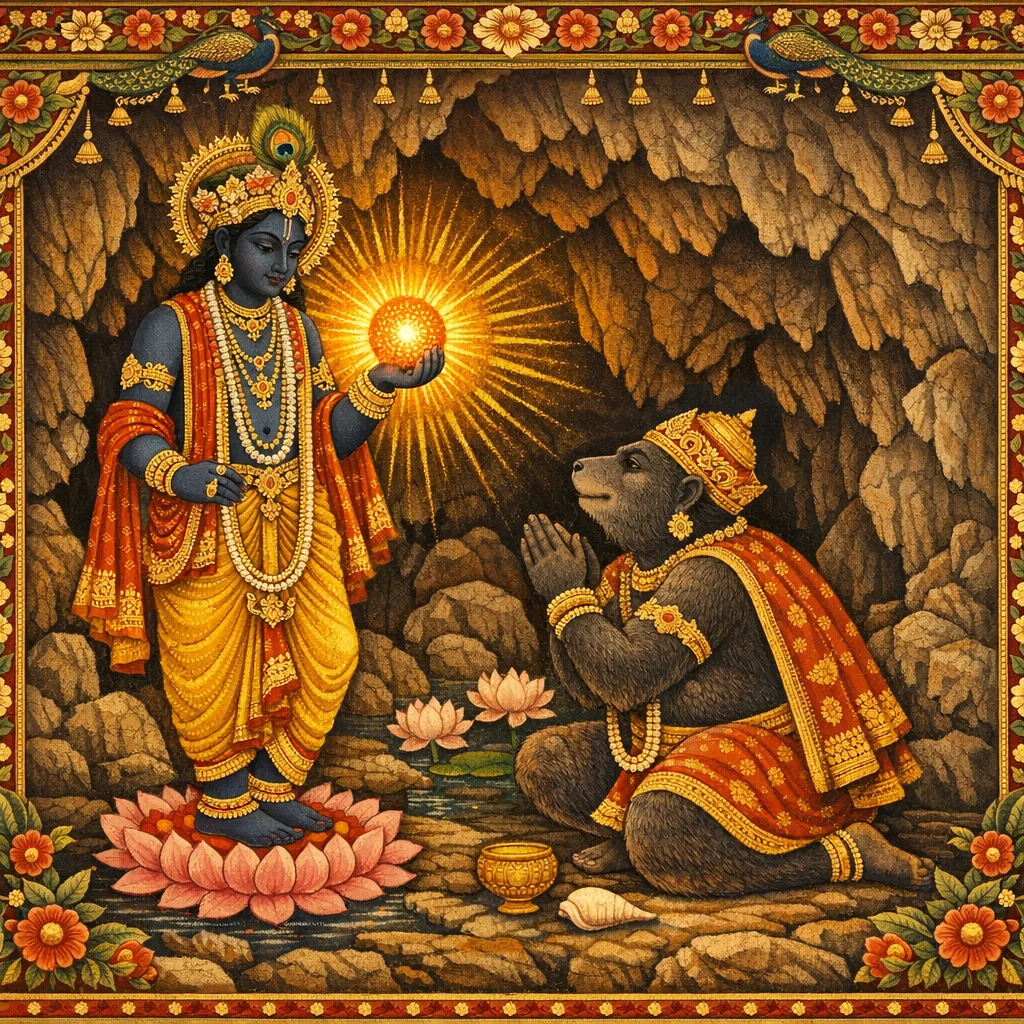
Continuing the Dvārakā-līlā milieu of royal politics and public perception, this chapter centers on the Syamantaka jewel—its divine origin, its social power, and the moral crisis it triggers. Satrājit receives the jewel from Sūrya and, intoxicated by its prosperity, refuses Kṛṣṇa’s request to place it under King Ugrasena’s custodianship, committing offense through greed. When Prasena dies and the jewel disappears, Satrājit’s suspicion and the city’s rumor wrongly stain Kṛṣṇa’s reputation. To establish satya and protect dharma, Kṛṣṇa retraces the path, discovers the chain of events leading to Jāmbavān’s cave, and enters alone. After a prolonged combat, Jāmbavān recognizes Kṛṣṇa as Viṣṇu, recalling Rāma-līlā, and offers both the jewel and his daughter Jāmbavatī. Kṛṣṇa returns, clears the accusation publicly, and returns the jewel to Satrājit, who atones by offering Satyabhāmā and the jewel. Kṛṣṇa marries her yet declines the gem, allowing Satrājit to keep it—closing the conflict while restoring social harmony and setting up subsequent Dvārakā developments around Satyabhāmā and the jewel’s political ramifications.
Shlokas
Verse 1
श्रीशुक उवाच सत्राजित: स्वतनयां कृष्णाय कृतकिल्बिष: । स्यमन्तकेन मणिना स्वयमुद्यम्य दत्तवान् ॥ १ ॥
Śukadeva Gosvāmī said: Having offended Lord Kṛṣṇa, Satrājit tried as best he could to atone by presenting Him with his daughter and the Syamantaka jewel.
Verse 2
श्रीराजोवाच सत्राजित: किमकरोद् ब्रह्मन् कृष्णस्य किल्बिष: । स्यमन्तक: कुतस्तस्य कस्माद् दत्ता सुता हरे: ॥ २ ॥
Mahārāja Parīkṣit inquired: O brāhmaṇa, what did King Satrājit do to offend Lord Kṛṣṇa? Where did he get the Syamantaka jewel, and why did he give his daughter to the Supreme Lord?
Verse 3
श्रीशुक उवाच आसीत् सत्राजित: सूर्यो भक्तस्य परम: सखा । प्रीतस्तस्मै मणिं प्रादात् स च तुष्ट: स्यमन्तकम् ॥ ३ ॥
Śukadeva Gosvāmī said: Sūrya, the sun-god, felt great affection for his devotee Satrājit. Acting as his greatest friend, the demigod gave him the jewel called Syamantaka as a token of his satisfaction.
Verse 4
स तं बिभ्रन् मणिं कण्ठे भ्राजमानो यथा रवि: । प्रविष्टो द्वारकां राजन् तेजसा नोपलक्षित: ॥ ४ ॥
Wearing the jewel on his neck, Satrājit entered Dvārakā. He shone as brightly as the sun itself, O King, and thus he went unrecognized because of the jewel’s effulgence.
Verse 5
तं विलोक्य जना दूरात्तेजसा मुष्टदृष्टय: । दीव्यतेऽक्षैर्भगवते शशंसु: सूर्यशङ्किता: ॥ ५ ॥
As the people looked at Satrājit from a distance, his brilliance blinded them. They presumed he was the sun-god, Sūrya, and went to tell Lord Kṛṣṇa, who was at that time playing at dice.
Verse 6
नारायण नमस्तेऽस्तु शङ्खचक्रगदाधर । दामोदरारविन्दाक्ष गोविन्द यदुनन्दन ॥ ६ ॥
[The residents of Dvārakā said:] Obeisances unto You, O Nārāyaṇa, O holder of the conch, disc and club, O lotus-eyed Dāmodara, O Govinda, O cherished descendant of Yadu!
Verse 7
एष आयाति सविता त्वां दिदृक्षुर्जगत्पते । मुष्णन् गभस्तिचक्रेण नृणां चक्षूंषि तिग्मगु: ॥ ७ ॥
Lord Savitā has come to see You, O Lord of the universe. He is blinding everyone’s eyes with his intensely effulgent rays.
Verse 8
नन्वन्विच्छन्ति ते मार्गं त्रिलोक्यां विबुधर्षभा: । ज्ञात्वाद्य गूढं यदुषु द्रष्टुं त्वां यात्यज: प्रभो ॥ ८ ॥
The most exalted demigods in the three worlds are certainly anxious to seek You out, O Lord, now that You have hidden Yourself among the Yadu dynasty. Thus the unborn sun-god has come to see You here.
Verse 9
श्रीशुक उवाच निशम्य बालवचनं प्रहस्याम्बुजलोचन: । प्राह नासौ रविर्देव: सत्राजिन्मणिना ज्वलन् ॥ ९ ॥
Śukadeva Gosvāmī continued: Hearing these innocent words, the lotus-eyed Lord smiled broadly and said, “This is not the sun-god, Ravi, but rather Satrājit, who is glowing because of his jewel.”
Verse 10
सत्राजित् स्वगृहं श्रीमत् कृतकौतुकमङ्गलम् । प्रविश्य देवसदने मणिं विप्रैर्न्यवेशयत् ॥ १० ॥
King Satrājit entered his opulent home, festively executing auspicious rituals. He had qualified brāhmaṇas install the Syamantaka jewel in the house’s temple room.
Verse 11
दिने दिने स्वर्णभारानष्टौ स सृजति प्रभो । दुर्भिक्षमार्यरिष्टानि सर्पाधिव्याधयोऽशुभा: । न सन्ति मायिनस्तत्र यत्रास्तेऽभ्यर्चितो मणि: ॥ ११ ॥
Each day the gem would produce eight bhāras of gold, my dear Prabhu, and the place in which it was kept and properly worshiped would be free of calamities such as famine or untimely death, and also of evils like snake bites, mental and physical disorders and the presence of deceitful persons.
Verse 12
स याचितो मणिं क्वापि यदुराजाय शौरिणा । नैवार्थकामुक: प्रादाद् याच्ञाभङ्गमतर्कयन् ॥ १२ ॥
On one occasion Lord Kṛṣṇa requested Satrājit to give the jewel to the Yadu king, Ugrasena, but Satrājit was so greedy that he refused. He gave no thought to the seriousness of the offense he committed by denying the Lord’s request.
Verse 13
तमेकदा मणिं कण्ठे प्रतिमुच्य महाप्रभम् । प्रसेनो हयमारुह्य मृगायां व्यचरद् वने ॥ १३ ॥
Once Satrājit’s brother, Prasena, having hung the brilliant jewel about his neck, mounted a horse and went hunting in the forest.
Verse 14
प्रसेनं सहयं हत्वा मणिमाच्छिद्य केशरी । गिरिं विशन् जाम्बवता निहतो मणिमिच्छता ॥ १४ ॥
A lion killed Prasena and his horse and took the jewel. But when the lion entered a mountain cave he was killed by Jāmbavān, who wanted the jewel.
Verse 15
सोऽपि चक्रे कुमारस्य मणिं क्रीडनकं बिले । अपश्यन् भ्रातरं भ्राता सत्राजित् पर्यतप्यत ॥ १५ ॥
Within the cave Jāmbavān let his young son have the Syamantaka jewel as a toy to play with. Meanwhile Satrājit, not seeing his brother return, became deeply troubled.
Verse 16
प्राय: कृष्णेन निहतो मणिग्रीवो वनं गत: । भ्राता ममेति तच्छ्रुत्वा कर्णे कर्णेऽजपन् जना: ॥ १६ ॥
He said, “Kṛṣṇa probably killed my brother, who went to the forest wearing the jewel on his neck.” The general populace heard this accusation and began whispering it in one another’s ears.
Verse 17
भगवांस्तदुपश्रुत्य दुर्यशो लिप्तमात्मनि । मार्ष्टुं प्रसेनपदवीमन्वपद्यत नागरै: ॥ १७ ॥
When Lord Kṛṣṇa heard this rumor, He wanted to remove the stain on His reputation. So He took some of Dvārakā’s citizens with Him and set out to retrace Prasena’s path.
Verse 18
हतं प्रसेनं अश्वं च वीक्ष्य केशरिणा वने । तं चाद्रिपृष्ठे निहतमृक्षेण ददृशुर्जना: ॥ १८ ॥
In the forest they found Prasena and his horse, both killed by the lion. Further on they found the lion dead on a mountainside, slain by Ṛkṣa [Jāmbavān].
Verse 19
ऋक्षराजबिलं भीममन्धेन तमसावृतम् । एको विवेश भगवानवस्थाप्य बहि: प्रजा: ॥ १९ ॥
The Lord stationed His subjects outside the terrifying, pitch-dark cave of the king of the bears, and then He entered alone.
Verse 20
तत्र दृष्ट्वा मणिप्रेष्ठं बालक्रीडनकं कृतम् । हर्तुं कृतमतिस्तस्मिन्नवतस्थेऽर्भकान्तिके ॥ २० ॥
There Lord Kṛṣṇa saw that the most precious of jewels had been made into a child’s plaything. Determined to take it away, He approached the child.
Verse 21
तमपूर्वं नरं दृष्ट्वा धात्री चुक्रोश भीतवत् । तच्छ्रुत्वाभ्यद्रवत् क्रुद्धो जाम्बवान् बलिनां वर: ॥ २१ ॥
The child’s nurse cried out in fear upon seeing that extraordinary person standing before them. Jāmbavān, strongest of the strong, heard her cries and angrily ran toward the Lord.
Verse 22
स वै भगवता तेन युयुधे स्वामिनात्मन: । पुरुषं प्राकृतं मत्वा कुपितो नानुभाववित् ॥ २२ ॥
Unaware of His true position and thinking Him an ordinary man, Jāmbavān angrily began fighting with the Supreme Lord, his master.
Verse 23
द्वन्द्वयुद्धं सुतुमुलमुभयोर्विजिगीषतो: । आयुधाश्मद्रुमैर्दोर्भि: क्रव्यार्थे श्येनयोरिव ॥ २३ ॥
The two fought furiously in single combat, each determined to win. Contending against each other with various weapons and then with stones, tree trunks and finally their bare arms, they struggled like two hawks battling over a piece of flesh.
Verse 24
आसीत्तदष्टाविंशाहमितरेतरमुष्टिभि: । वज्रनिष्पेषपरुषैरविश्रममहर्निशम् ॥ २४ ॥
The fight went on without rest for twenty-eight days, the two opponents striking each other with their fists, which fell like the cracking blows of lightning.
Verse 25
कृष्णमुष्टिविनिष्पातनिष्पिष्टाङ्गोरुबन्धन: । क्षीणसत्त्व: स्विन्नगात्रस्तमाहातीव विस्मित: ॥ २५ ॥
His bulging muscles pummeled by the blows of Lord Kṛṣṇa’s fists, his strength faltering and his limbs perspiring, Jāmbavān, greatly astonished, finally spoke to the Lord.
Verse 26
जाने त्वां सर्वभूतानां प्राण ओज: सहो बलम् । विष्णुं पुराणपुरुषं प्रभविष्णुमधीश्वरम् ॥ २६ ॥
[Jāmbavān said:] I know now that You are the life air and the sensory, mental and bodily strength of all living beings. You are Lord Viṣṇu, the original person, the supreme, all-powerful controller.
Verse 27
त्वं हि विश्वसृजां स्रष्टा सृष्टानामपि यच्च सत् । काल: कलयतामीश: पर आत्मा तथात्मनाम् ॥ २७ ॥
You are the ultimate creator of all creators of the universe, and of everything created You are the underlying substance. You are the subduer of all subduers, the Supreme Lord and Supreme Soul of all souls.
Verse 28
यस्येषदुत्कलितरोषकटाक्षमोक्षै- र्वर्त्मादिशत् क्षुभितनक्रतिमिङ्गलोऽब्धि: । सेतु: कृत: स्वयश उज्ज्वलिता च लङ्का रक्ष:शिरांसि भुवि पेतुरिषुक्षतानि ॥ २८ ॥
You are He who impelled the ocean to give way when His sidelong glances, slightly manifesting His anger, disturbed the crocodiles and timiṅgila fish within the watery depths. You are He who built a great bridge to establish His fame, who burned down the city of Laṅkā, and whose arrows severed the heads of Rāvaṇa, which then fell to the ground.
Verse 29
इति विज्ञातविज्ञानमृक्षराजानमच्युत: । व्याजहार महाराज भगवान् देवकीसुत: ॥ २९ ॥ अभिमृश्यारविन्दाक्ष: पाणिना शंकरेण तम् । कृपया परया भक्तं मेघगम्भीरया गिरा ॥ ३० ॥
[Śukadeva Gosvāmī continued:] O King, Lord Kṛṣṇa then addressed the king of the bears, who had understood the truth. The lotus-eyed Personality of Godhead, the son of Devakī, touched Jāmbavān with His hand, which bestows all blessings, and spoke to His devotee with sublime compassion, His grave voice deeply resounding like a cloud.
Verse 30
इति विज्ञातविज्ञानमृक्षराजानमच्युत: । व्याजहार महाराज भगवान् देवकीसुत: ॥ २९ ॥ अभिमृश्यारविन्दाक्ष: पाणिना शंकरेण तम् । कृपया परया भक्तं मेघगम्भीरया गिरा ॥ ३० ॥
[Śukadeva Gosvāmī continued:] O King, Lord Kṛṣṇa then addressed the king of the bears, who had understood the truth. The lotus-eyed Personality of Godhead, the son of Devakī, touched Jāmbavān with His hand, which bestows all blessings, and spoke to His devotee with sublime compassion, His grave voice deeply resounding like a cloud.
Verse 31
मणिहेतोरिह प्राप्ता वयमृक्षपते बिलम् । मिथ्याभिशापं प्रमृजन्नात्मनो मणिनामुना ॥ ३१ ॥
[Lord Kṛṣṇa said:] It is for this jewel, O lord of the bears, that we have come to your cave. I intend to use the jewel to disprove the false accusations against Me.
Verse 32
इत्युक्त: स्वां दुहितरं कन्यां जाम्बवतीं मुदा । अर्हणार्थं स मणिना कृष्णायोपजहार ह ॥ ३२ ॥
Thus addressed, Jāmbavān happily honored Lord Kṛṣṇa by offering Him his maiden daughter, Jāmbavatī, together with the jewel.
Verse 33
अदृष्ट्वा निर्गमं शौरे: प्रविष्टस्य बिलं जना: । प्रतीक्ष्य द्वादशाहानि दु:खिता: स्वपुरं ययु: ॥ ३३ ॥
After Lord Śauri had entered the cave, the people of Dvārakā who had accompanied Him had waited twelve days without seeing Him come out again. Finally they had given up and returned to their city in great sorrow.
Verse 34
निशम्य देवकी देवी रक्मिण्यानकदुन्दुभि: । सुहृदो ज्ञातयोऽशोचन् बिलात् कृष्णमनिर्गतम् ॥ ३४ ॥
When Devakī, Rukmiṇī-devī, Vasudeva and the Lord’s other relatives and friends heard that He had not come out of the cave, they all lamented.
Verse 35
सत्राजितं शपन्तस्ते दु:खिता द्वारकौकस: । उपतस्थुश्चन्द्रभागां दुर्गां कृष्णोपलब्धये ॥ ३५ ॥
Cursing Satrājit, the sorrowful residents of Dvārakā approached the Durgā deity named Candrabhāgā and prayed to her for Kṛṣṇa’s return.
Verse 36
तेषां तु देव्युपस्थानात् प्रत्यादिष्टाशिषा स च । प्रादुर्बभूव सिद्धार्थ: सदारो हर्षयन् हरि: ॥ ३६ ॥
When the citizens had finished worshiping the demigoddess, she spoke to them in response, promising to grant their request. Just then Lord Kṛṣṇa, who had achieved His purpose, appeared before them in the company of His new wife, filling them with joy.
Verse 37
उपलभ्य हृषीकेशं मृतं पुनरिवागतम् । सह पत्न्या मणिग्रीवं सर्वे जातमहोत्सवा: ॥ ३७ ॥
Seeing Lord Hṛṣīkeśa return as if from death, accompanied by His new wife and wearing the Syamantaka jewel on His neck, all the people were roused to jubilation.
Verse 38
सत्राजितं समाहूय सभायां राजसन्निधौ । प्राप्तिं चाख्याय भगवान् मणिं तस्मै न्यवेदयत् ॥ ३८ ॥
Lord Kṛṣṇa summoned Satrājit to the royal assembly. There, in the presence of King Ugrasena, Kṛṣṇa announced the recovery of the jewel and then formally presented it to Satrājit.
Verse 39
स चातिव्रीडितो रत्नं गृहीत्वावाङ्मुखस्तत: । अनुतप्यमानो भवनमगमत् स्वेन पाप्मना ॥ ३९ ॥
Hanging his head in great shame, Satrājit took the gem and returned home, all the while feeling remorse for his sinful behavior.
Verse 40
सोऽनुध्यायंस्तदेवाघं बलवद्विग्रहाकुल: । कथं मृजाम्यात्मरज: प्रसीदेद् वाच्युत: कथम् ॥ ४० ॥ किं कृत्वा साधु मह्यं स्यान्न शपेद् वा जनो यथा । अदीर्घदर्शनं क्षुद्रं मूढं द्रविणलोलुपम् ॥ ४१ ॥ दास्ये दुहितरं तस्मै स्त्रीरत्नं रत्नमेव च । उपायोऽयं समीचीनस्तस्य शान्तिर्न चान्यथा ॥ ४२ ॥
Pondering over his grievous offense and worried about the possibility of conflict with the Lord’s mighty devotees, King Satrājit thought, “How can I cleanse myself of my contamination, and how may Lord Acyuta become satisfied with me? What can I do to regain my good fortune and avoid being cursed by the populace for being so short-sighted, miserly, foolish and avaricious? I shall give my daughter, the jewel of all women, to the Lord, together with the Syamantaka jewel. That, indeed, is the only proper way to pacify Him.”
Verse 41
सोऽनुध्यायंस्तदेवाघं बलवद्विग्रहाकुल: । कथं मृजाम्यात्मरज: प्रसीदेद् वाच्युत: कथम् ॥ ४० ॥ किं कृत्वा साधु मह्यं स्यान्न शपेद् वा जनो यथा । अदीर्घदर्शनं क्षुद्रं मूढं द्रविणलोलुपम् ॥ ४१ ॥ दास्ये दुहितरं तस्मै स्त्रीरत्नं रत्नमेव च । उपायोऽयं समीचीनस्तस्य शान्तिर्न चान्यथा ॥ ४२ ॥
Pondering over his grievous offense and worried about the possibility of conflict with the Lord’s mighty devotees, King Satrājit thought, “How can I cleanse myself of my contamination, and how may Lord Acyuta become satisfied with me? What can I do to regain my good fortune and avoid being cursed by the populace for being so short-sighted, miserly, foolish and avaricious? I shall give my daughter, the jewel of all women, to the Lord, together with the Syamantaka jewel. That, indeed, is the only proper way to pacify Him.”
Verse 42
सोऽनुध्यायंस्तदेवाघं बलवद्विग्रहाकुल: । कथं मृजाम्यात्मरज: प्रसीदेद् वाच्युत: कथम् ॥ ४० ॥ किं कृत्वा साधु मह्यं स्यान्न शपेद् वा जनो यथा । अदीर्घदर्शनं क्षुद्रं मूढं द्रविणलोलुपम् ॥ ४१ ॥ दास्ये दुहितरं तस्मै स्त्रीरत्नं रत्नमेव च । उपायोऽयं समीचीनस्तस्य शान्तिर्न चान्यथा ॥ ४२ ॥
Pondering over his grievous offense and worried about the possibility of conflict with the Lord’s mighty devotees, King Satrājit thought, “How can I cleanse myself of my contamination, and how may Lord Acyuta become satisfied with me? What can I do to regain my good fortune and avoid being cursed by the populace for being so short-sighted, miserly, foolish and avaricious? I shall give my daughter, the jewel of all women, to the Lord, together with the Syamantaka jewel. That, indeed, is the only proper way to pacify Him.”
Verse 43
एवं व्यवसितो बुद्ध्या सत्राजित् स्वसुतां शुभाम् । मणिं च स्वयमुद्यम्य कृष्णायोपजहार ह ॥ ४३ ॥
Having thus intelligently made up his mind, King Satrājit personally arranged to present Lord Kṛṣṇa with his fair daughter and the Syamantaka jewel.
Verse 44
तां सत्यभामां भगवानुपयेमे यथाविधि । बहुभिर्याचितां शीलरूपौदार्यगुणान्विताम् ॥ ४४ ॥
The Lord married Satyabhāmā in proper religious fashion. Possessed of excellent behavior, along with beauty, broad-mindedness and all other good qualities, she had been sought by many men.
Verse 45
भगवानाह न मणिं प्रतीच्छामो वयं नृप । तवास्तां देवभक्तस्य वयं च फलभागिन: ॥ ४५ ॥
The Supreme Personality of Godhead told Satrājit: We do not care to take this jewel back, O King. You are the sun-god’s devotee, so let it stay in your possession. Thus We will also enjoy its benefits.
Frequently Asked Questions
Satrājit’s offense is rooted in lobha (greed) and disregard for dharmic kingship: when Kṛṣṇa requested the Syamantaka jewel be given to King Ugrasena (the rightful Yadu ruler) for public benefit and proper custodianship, Satrājit refused. This denial, coupled with later suspicion cast upon Kṛṣṇa, becomes aparādha because it prioritizes private gain and ego over righteous order and trust in the Lord.
Kṛṣṇa undertook a fact-finding journey with citizens, locating Prasena and the horse killed by a lion, then finding the lion slain by Jāmbavān. By entering the cave, recovering the jewel, and returning with it to the royal assembly before Ugrasena and Satrājit, Kṛṣṇa established a public, verifiable chain of evidence—removing the ‘stain’ of rumor and restoring social confidence in dharma.
Jāmbavān is the famed Ṛkṣa-king (bear-king), a great devotee associated with Rāma-līlā. After battling Kṛṣṇa for twenty-eight days, his strength collapses and realization dawns: the opponent is not an ordinary man but Viṣṇu Himself—the source of all strength and the Supreme Controller. His recognition is expressed through explicit theological praise and by offering the jewel and his daughter, indicating surrender and devotion.
Satrājit, remorseful and fearing further offense and social backlash, chooses a dharmic form of atonement: offering his daughter Satyabhāmā to Kṛṣṇa along with the Syamantaka jewel. The marriage resolves the conflict relationally and politically, while the jewel functions as the catalyst that reveals greed, rumor, and the need for righteous stewardship. Notably, Kṛṣṇa declines to keep the jewel, underscoring that His aim is dharma and reputation-restoration, not wealth.