Adhyaya 5
Nanda Mahārāja Celebrates Kṛṣṇa’s Birth; Vasudeva Warns of Danger
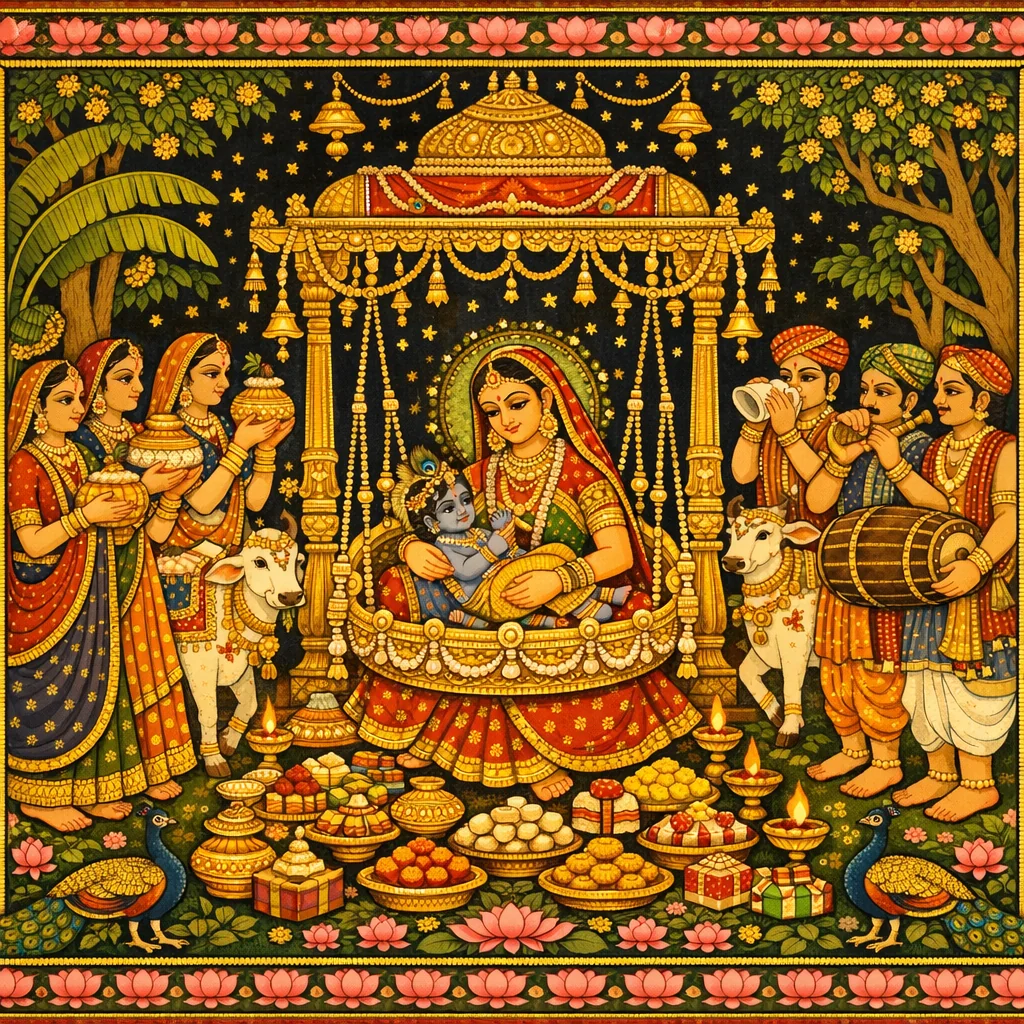
Continuing from the immediate aftermath of Kṛṣṇa’s appearance and His relocation to Gokula, this chapter depicts the public consolidation of the hidden divine event through social and Vedic rites. Nanda Mahārāja performs the jāta-karma and related maṅgala observances with mantra-vid brāhmaṇas, lavish dāna (cows, grain, ornaments), and communal celebration in Vrajapura. The narrative expands into a Vraja-wide festival: gopas and gopīs arrive with gifts and blessings, music resounds, and the community expresses vātsalya-bhāva toward the newborn who is in truth aja (unborn) and jagad-īśvara (Lord of the cosmos). The chapter then pivots from celebration to impending threat: Nanda travels to Mathurā to pay taxes to Kaṁsa, meets Vasudeva, and they exchange affectionate yet philosophically sobering reflections on destiny and separation. Vasudeva’s warning—anticipating disturbance in Gokula—creates narrative momentum into the next chapter’s protective and conflict-driven developments around Kaṁsa’s hostility and the demons sent toward Vraja.
Shlokas
Verse 1
श्रीशुक उवाच नन्दस्त्वात्मज उत्पन्ने जाताह्लादो महामना: । आहूय विप्रान् वेदज्ञान्स्नात: शुचिरलङ्कृत: ॥ १ ॥ वाचयित्वा स्वस्त्ययनं जातकर्मात्मजस्य वै । कारयामास विधिवत् पितृदेवार्चनं तथा ॥ २ ॥
Śukadeva Gosvāmī said: Nanda Mahārāja was naturally very magnanimous, and when Lord Śrī Kṛṣṇa appeared as his son, he was overwhelmed by jubilation. Therefore, after bathing and purifying himself and dressing himself properly, he invited brāhmaṇas who knew how to recite Vedic mantras. After having these qualified brāhmaṇas recite auspicious Vedic hymns, he arranged to have the Vedic birth ceremony celebrated for his newborn child according to the rules and regulations, and he also arranged for worship of the demigods and forefathers.
Verse 2
श्रीशुक उवाच नन्दस्त्वात्मज उत्पन्ने जाताह्लादो महामना: । आहूय विप्रान् वेदज्ञान्स्नात: शुचिरलङ्कृत: ॥ १ ॥ वाचयित्वा स्वस्त्ययनं जातकर्मात्मजस्य वै । कारयामास विधिवत् पितृदेवार्चनं तथा ॥ २ ॥
Śukadeva Gosvāmī said: Nanda Mahārāja was naturally very magnanimous, and when Lord Śrī Kṛṣṇa appeared as his son, he was overwhelmed by jubilation. Therefore, after bathing and purifying himself and dressing himself properly, he invited brāhmaṇas who knew how to recite Vedic mantras. After having these qualified brāhmaṇas recite auspicious Vedic hymns, he arranged to have the Vedic birth ceremony celebrated for his newborn child according to the rules and regulations, and he also arranged for worship of the demigods and forefathers.
Verse 3
धेनूनां नियुते प्रादाद् विप्रेभ्य: समलङ्कृते । तिलाद्रीन्सप्त रत्नौघशातकौम्भाम्बरावृतान् ॥ ३ ॥
Nanda Mahārāja gave two million cows, completely decorated with cloth and jewels, in charity to the brāhmaṇas. He also gave them seven hills of grain, covered with jewels and with cloth decorated with golden embroidery.
Verse 4
कालेन स्नानशौचाभ्यां संस्कारैस्तपसेज्यया । शुध्यन्ति दानै: सन्तुष्टया द्रव्याण्यात्मात्मविद्यया ॥ ४ ॥
O King, by the passing of time, land and other material possessions are purified; by bathing, the body is purified; and by being cleansed, unclean things are purified. By purificatory ceremonies, birth is purified; by austerity, the senses are purified; and by worship and charity offered to the brāhmaṇas, material possessions are purified. By satisfaction, the mind is purified; and by self-realization, or Kṛṣṇa consciousness, the soul is purified.
Verse 5
सौमङ्गल्यगिरो विप्रा: सूतमागधवन्दिन: । गायकाश्च जगुर्नेदुर्भेर्यो दुन्दुभयो मुहु: ॥ ५ ॥
The brāhmaṇas recited auspicious Vedic hymns, which purified the environment by their vibration. The experts in reciting old histories like the Purāṇas, the experts in reciting the histories of royal families, and general reciters all chanted, while singers sang and many kinds of musical instruments, like bherīs and dundubhis, played in accompaniment.
Verse 6
व्रज: सम्मृष्टसंसिक्तद्वाराजिरगृहान्तर: । चित्रध्वजपताकास्रक्चैलपल्लवतोरणै: ॥ ६ ॥
Vrajapura, the residence of Nanda Mahārāja, was fully decorated with varieties of festoons and flags, and in different places, gates were made with varieties of flower garlands, pieces of cloth, and mango leaves. The courtyards, the gates near the roads, and everything within the rooms of the houses were perfectly swept and washed with water.
Verse 7
गावो वृषा वत्सतरा हरिद्रातैलरूषिता: । विचित्रधातुबर्हस्रग्वस्त्रकाञ्चनमालिन: ॥ ७ ॥
The cows, the bulls and the calves were thoroughly smeared with a mixture of turmeric and oil, mixed with varieties of minerals. Their heads were bedecked with peacock feathers, and they were garlanded and covered with cloth and golden ornaments.
Verse 8
महार्हवस्त्राभरणकञ्चुकोष्णीषभूषिता: । गोपा: समाययू राजन् नानोपायनपाणय: ॥ ८ ॥
O King Parīkṣit, the cowherd men dressed very opulently with valuable ornaments and garments such as coats and turbans. Decorated in this way and carrying various presentations in their hands, they approached the house of Nanda Mahārāja.
Verse 9
गोप्यश्चाकर्ण्य मुदिता यशोदाया: सुतोद्भवम् । आत्मानं भूषयांचक्रुर्वस्त्राकल्पाञ्जनादिभि: ॥ ९ ॥
The gopī wives of the cowherd men were very pleased to hear that mother Yaśodā had given birth to a son, and they began to decorate themselves very nicely with proper dresses, ornaments, black ointment for the eyes, and so on.
Verse 10
नवकुङ्कुमकिञ्जल्कमुखपङ्कजभूतय: । बलिभिस्त्वरितं जग्मु: पृथुश्रोण्यश्चलत्कुचा: ॥ १० ॥
Their lotuslike faces extraordinarily beautiful, being decorated with saffron and newly grown kuṅkuma, the wives of the cowherd men hurried to the house of mother Yaśodā with presentations in their hands. Because of natural beauty, the wives had full hips and full breasts, which moved as they hurried along.
Verse 11
गोप्य: सुमृष्टमणिकुण्डलनिष्ककण्ठ्य- श्चित्राम्बरा: पथि शिखाच्युतमाल्यवर्षा: । नन्दालयं सवलया व्रजतीर्विरेजु- र्व्यालोलकुण्डलपयोधरहारशोभा: ॥ ११ ॥
In the ears of the gopīs were brilliantly polished jeweled earrings, and from their necks hung metal lockets. Their hands were decorated with bangles, their dresses were of varied colors, and from their hair, flowers fell onto the street like showers. Thus while going to the house of Mahārāja Nanda, the gopīs, their earrings, breasts and garlands moving, were brilliantly beautiful.
Verse 12
ता आशिष: प्रयुञ्जानाश्चिरं पाहीति बालके । हरिद्राचूर्णतैलाद्भि: सिञ्चन्त्योऽजनमुज्जगु: ॥ १२ ॥
Offering blessings to the newborn child, Kṛṣṇa, the wives and daughters of the cowherd men said, “May You become the King of Vraja and long maintain all its inhabitants.” They sprinkled a mixture of turmeric powder, oil and water upon the birthless Supreme Lord and offered their prayers.
Verse 13
अवाद्यन्त विचित्राणि वादित्राणि महोत्सवे । कृष्णे विश्वेश्वरेऽनन्ते नन्दस्य व्रजमागते ॥ १३ ॥
Now that the all-pervading, unlimited Lord Kṛṣṇa, the master of the cosmic manifestation, had arrived within the estate of Mahārāja Nanda, various types of musical instruments resounded to celebrate the great festival.
Verse 14
गोपा: परस्परं हृष्टा दधिक्षीरघृताम्बुभि: । आसिञ्चन्तो विलिम्पन्तो नवनीतैश्च चिक्षिपु: ॥ १४ ॥
In gladness, the cowherd men enjoyed the great festival by splashing one another’s bodies with a mixture of curd, condensed milk, butter and water. They threw butter on one another and smeared it on one another’s bodies.
Verse 15
नन्दो महामनास्तेभ्यो वासोऽलङ्कारगोधनम् । सूतमागधवन्दिभ्यो येऽन्ये विद्योपजीविन: ॥ १५ ॥ तैस्तै: कामैरदीनात्मा यथोचितमपूजयत् । विष्णोराराधनार्थाय स्वपुत्रस्योदयाय च ॥ १६ ॥
The great-minded Mahārāja Nanda gave clothing, ornaments and cows in charity to the cowherd men in order to please Lord Viṣṇu, and thus he improved the condition of his own son in all respects. He distributed charity to the sūtas, the māgadhas, the vandīs, and men of all other professions, according to their educational qualifications, and satisfied everyone’s desires.
Verse 16
नन्दो महामनास्तेभ्यो वासोऽलङ्कारगोधनम् । सूतमागधवन्दिभ्यो येऽन्ये विद्योपजीविन: ॥ १५ ॥ तैस्तै: कामैरदीनात्मा यथोचितमपूजयत् । विष्णोराराधनार्थाय स्वपुत्रस्योदयाय च ॥ १६ ॥
The great-minded Mahārāja Nanda gave clothing, ornaments and cows in charity to the cowherd men in order to please Lord Viṣṇu, and thus he improved the condition of his own son in all respects. He distributed charity to the sūtas, the māgadhas, the vandīs, and men of all other professions, according to their educational qualifications, and satisfied everyone’s desires.
Verse 17
रोहिणी च महाभागा नन्दगोपाभिनन्दिता । व्यचरद् दिव्यवासस्रक्कण्ठाभरणभूषिता ॥ १७ ॥
The most fortunate Rohiṇī, the mother of Baladeva, was honored by Nanda Mahārāja and Yaśodā, and thus she also dressed gorgeously and decorated herself with a necklace, a garland and other ornaments. She was busy wandering here and there to receive the women who were guests at the festival.
Verse 18
तत आरभ्य नन्दस्य व्रज: सर्वसमृद्धिमान् । हरेर्निवासात्मगुणै रमाक्रीडमभून्नृप ॥ १८ ॥
O Mahārāja Parīkṣit, the home of Nanda Mahārāja is eternally the abode of the Supreme Personality of Godhead and His transcendental qualities and is therefore always naturally endowed with the opulence of all wealth. Yet beginning from Lord Kṛṣṇa’s appearance there, it became the place for the pastimes of the goddess of fortune.
Verse 19
गोपान् गोकुलरक्षायां निरूप्य मथुरां गत: । नन्द: कंसस्य वार्षिक्यं करं दातुं कुरूद्वह ॥ १९ ॥
Śukadeva Gosvāmī continued: Thereafter, my dear King Parīkṣit, O best protector of the Kuru dynasty, Nanda Mahārāja appointed the local cowherd men to protect Gokula and then went to Mathurā to pay the yearly taxes to King Kaṁsa.
Verse 20
वसुदेव उपश्रुत्य भ्रातरं नन्दमागतम् । ज्ञात्वा दत्तकरं राज्ञे ययौ तदवमोचनम् ॥ २० ॥
When Vasudeva heard that Nanda Mahārāja, his very dear friend and brother, had come to Mathurā and already paid the taxes to Kaṁsa, he went to Nanda Mahārāja’s residence.
Verse 21
तं दृष्ट्वा सहसोत्थाय देह: प्राणमिवागतम् । प्रीत: प्रियतमं दोर्भ्यां सस्वजे प्रेमविह्वल: ॥ २१ ॥
When Nanda Mahārāja heard that Vasudeva had come, he was overwhelmed with love and affection, being as pleased as if his body had regained its life. Seeing Vasudeva suddenly present, he got up and embraced him with both arms.
Verse 22
पूजित: सुखमासीन: पृष्ट्वानामयमादृत: । प्रसक्तधी: स्वात्मजयोरिदमाह विशाम्पते ॥ २२ ॥
O Mahārāja Parīkṣit, having thus been received and welcomed by Nanda Mahārāja with honor, Vasudeva sat down very peacefully and inquired about his own two sons because of intense love for them.
Verse 23
दिष्टया भ्रात: प्रवयस इदानीमप्रजस्य ते । प्रजाशाया निवृत्तस्य प्रजा यत् समपद्यत ॥ २३ ॥
My dear brother Nanda Mahārāja, at an advanced age you had no son at all and were hopeless of having one. Therefore, that you now have a son is a sign of great fortune.
Verse 24
दिष्टया संसारचक्रेऽस्मिन् वर्तमान: पुनर्भव: । उपलब्धो भवानद्य दुर्लभं प्रियदर्शनम् ॥ २४ ॥
It is also by good fortune that I am seeing you. Having obtained this opportunity, I feel as if I have taken birth again. Even though one is present in this world, to meet with intimate friends and dear relatives in this material world is extremely difficult.
Verse 25
नैकत्र प्रियसंवास: सुहृदां चित्रकर्मणाम् । ओघेन व्यूह्यमानानां प्लवानां स्रोतसो यथा ॥ २५ ॥
Many planks and sticks, unable to stay together, are carried away by the force of a river’s waves. Similarly, although we are intimately related with friends and family members, we are unable to stay together because of our varied past deeds and the waves of time.
Verse 26
कच्चित् पशव्यं निरुजं भूर्यम्बुतृणवीरुधम् । बृहद्वनं तदधुना यत्रास्से त्वं सुहृद्वृत: ॥ २६ ॥
My dear friend Nanda Mahārāja, in the place where you are living with your friends, is the forest favorable for the animals, the cows? I hope there is no disease or inconvenience. The place must be full of water, grass and other plants.
Verse 27
भ्रातर्मम सुत: कच्चिन्मात्रा सह भवद्व्रजे । तातं भवन्तं मन्वानो भवद्भ्यामुपलालित: ॥ २७ ॥
My son Baladeva, being raised by you and your wife, Yaśodādevī, considers you His father and mother. Is He living very peacefully in your home with His real mother, Rohiṇī?
Verse 28
पुंसस्त्रिवर्गो विहित: सुहृदो ह्यनुभावित: । न तेषु क्लिश्यमानेषु त्रिवर्गोऽर्थाय कल्पते ॥ २८ ॥
When one’s friends and relatives are properly situated, one’s religion, economic development and sense gratification, as described in the Vedic literatures, are beneficial. Otherwise, if one’s friends and relatives are in distress, these three cannot offer any happiness.
Verse 29
श्रीनन्द उवाच अहो ते देवकीपुत्रा: कंसेन बहवो हता: । एकावशिष्टावरजा कन्या सापि दिवं गता ॥ २९ ॥
Nanda Mahārāja said: Alas, King Kaṁsa killed so many of your children, born of Devakī. And your one daughter, the youngest child of all, entered the heavenly planets.
Verse 30
नूनं ह्यदृष्टनिष्ठोऽयमदृष्टपरमो जन: । अदृष्टमात्मनस्तत्त्वं यो वेद न स मुह्यति ॥ ३० ॥
Every man is certainly controlled by destiny, which determines the results of one’s fruitive activities. In other words, one has a son or daughter because of unseen destiny, and when the son or daughter is no longer present, this also is due to unseen destiny. Destiny is the ultimate controller of everyone. One who knows this is never bewildered.
Verse 31
श्रीवसुदेव उवाच करो वै वार्षिको दत्तो राज्ञे दृष्टा वयं च व: । नेह स्थेयं बहुतिथं सन्त्युत्पाताश्च गोकुले ॥ ३१ ॥
Vasudeva said to Nanda Mahārāja: Now, my dear brother, since you have paid the annual taxes to Kaṁsa and have also seen me, do not stay in this place for many days. It is better to return to Gokula, since I know that there may be some disturbances there.
Verse 32
श्रीशुक उवाच इति नन्दादयो गोपा: प्रोक्तास्ते शौरिणा ययु: । अनोभिरनडुद्युक्तैस्तमनुज्ञाप्य गोकुलम् ॥ ३२ ॥
Śukadeva Gosvāmī said: After Vasudeva advised Nanda Mahārāja in this way, Nanda Mahārāja and his associates, the cowherd men, took permission from Vasudeva, yoked their bulls to the bullock carts, and started riding for Gokula.
Frequently Asked Questions
It shows how the Supreme Lord allows Himself to be approached within dharma and human society, enabling the devotees’ vātsalya-bhāva to mature naturally. The saṁskāra is not for purifying Kṛṣṇa (who is eternally pure) but for sanctifying the environment and the community’s relationship with Him, establishing Vraja as the stage for bhakti-rasa and poṣaṇa (the Lord’s protection of devotees) in the chapters that follow.
The verse outlines a graded śuddhi: time purifies possessions, bathing purifies the body, saṁskāras purify birth, tapas purifies senses, and dāna/worship offered to brāhmaṇas purifies wealth; the mind is purified by satisfaction, and the self is purified by self-realization—explicitly identified as Kṛṣṇa consciousness. The hierarchy culminates in bhakti as the deepest purification because it addresses the root identity (ātman) rather than only external conditions.
Vasudeva understands Kaṁsa’s paranoia and the likelihood of disturbances aimed at the child connected to Devakī. Although Kṛṣṇa is concealed in Gokula, the atmosphere around Kaṁsa is charged with fear and violence. The warning functions as narrative foreshadowing: Vraja will soon face demonic attacks, and the devotees’ protection (poṣaṇa) will be displayed through Kṛṣṇa’s forthcoming līlās.
They are traditional professional reciters and bards: sūtas narrate histories and Purāṇic accounts, māgadhas praise royal lineages and compose eulogies, and vandīs offer formal glorification. Their inclusion in Nanda’s charity highlights the Vedic social ecosystem of remembrance and kīrtana-like celebration, where sacred history and praise support communal dharma and devotion.