Adhyaya 43
Kṛṣṇa Slays Kuvalayāpīḍa and Enters Kaṁsa’s Wrestling Arena
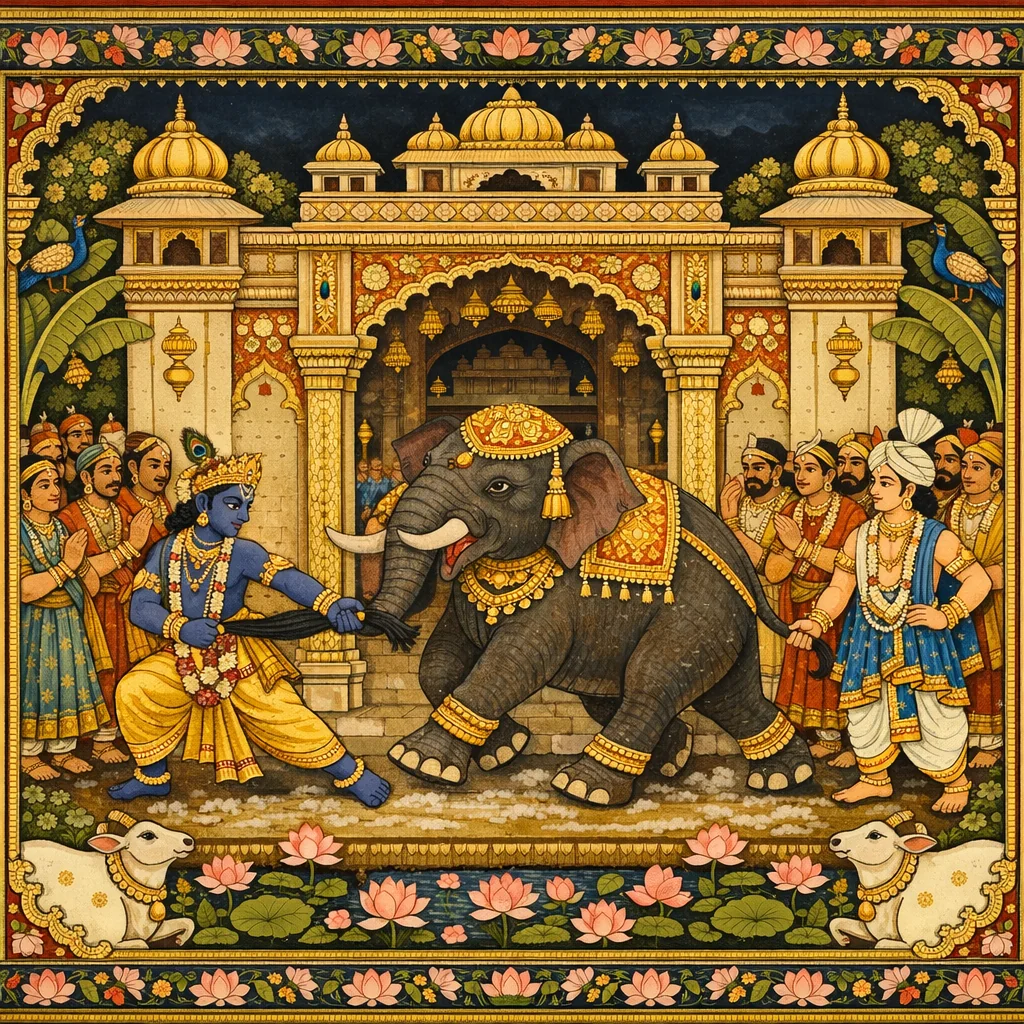
After arriving in Mathurā and completing customary purificatory acts, Kṛṣṇa and Balarāma hear the festive kettledrums from Kaṁsa’s wrestling arena and proceed to see the spectacle. At the gate, Kaṁsa’s agent blocks their entry with the royal elephant Kuvalayāpīḍa. Kṛṣṇa warns the keeper to move aside; when provoked, the elephant charges. In a display that is simultaneously playful (līlā) and judicial (dharma-restoration), Kṛṣṇa evades the elephant’s attacks, drags him by the tail, topples him, and finally kills both elephant and keepers, taking a tusk as His weapon. The brothers enter the arena carrying tusks, radiating splendor that different audiences interpret according to their inner disposition—wrestlers, citizens, women, devotees, impious rulers, yogīs, and Kaṁsa each “see” a different Kṛṣṇa. Public discussion recalls Kṛṣṇa’s earlier demon-slayings and divine protections, heightening Kaṁsa’s fear. The chapter culminates as Cāṇūra challenges the brothers, setting the immediate narrative bridge into the formal wrestling bouts and Kaṁsa’s impending downfall in the next sequence.
Shlokas
Verse 1
श्रीशुक उवाच अथ कृष्णश्च रामश्च कृतशौचौ परन्तप । मल्लदुन्दुभिनिर्घोषं श्रुत्वा द्रष्टुमुपेयतु: ॥ १ ॥
Śukadeva Gosvāmī said: O chastiser of enemies, Kṛṣṇa and Balarāma, having executed all necessary purification, then heard the kettledrums resounding at the wrestling arena, and They went there to see what was happening.
Verse 2
रङ्गद्वारं समासाद्य तस्मिन् नागमवस्थितम् । अपश्यत्कुवलयापीडं कृष्णोऽम्बष्ठप्रचोदितम् ॥ २ ॥
When Lord Kṛṣṇa reached the entrance to the arena, He saw the elephant Kuvalayāpīḍa blocking His way at the urging of his keeper.
Verse 3
बद्ध्वा परिकरं शौरि: समुह्य कुटिलालकान् । उवाच हस्तिपं वाचा मेघनादगभीरया ॥ ३ ॥
Securely binding up His clothes and tying back His curly locks, Lord Kṛṣṇa addressed the elephant-keeper with words as grave as the rumbling of a cloud.
Verse 4
अम्बष्ठाम्बष्ठ मार्गं नौ देह्यपक्रम मा चिरम् । नो चेत् सकुञ्जरं त्वाद्य नयामि यमसादनम् ॥ ४ ॥
[Lord Kṛṣṇa said:] O driver, driver, move aside at once and let Us pass! If you don’t, this very day I will send both you and your elephant to the abode of Yamarāja!
Verse 5
एवं निर्भर्त्सितोऽम्बष्ठ: कुपित: कोपितं गजम् । चोदयामास कृष्णाय कालान्तकयमोपमम् ॥ ५ ॥
Thus threatened, the elephant-keeper became angry. He goaded his furious elephant, who appeared equal to time, death and Yamarāja, into attacking Lord Kṛṣṇa.
Verse 6
करीन्द्रस्तमभिद्रुत्य करेण तरसाग्रहीत् । कराद्विगलित: सोऽमुं निहत्याङ्घ्रिष्वलीयत ॥ ६ ॥
The lord of the elephants charged Kṛṣṇa and violently seized Him with his trunk. But Kṛṣṇa slipped away, struck him a blow and disappeared from his view among his legs.
Verse 7
सङ्क्रुद्धस्तमचक्षाणो घ्राणदृष्टि: स केशवम् । परामृशत् पुष्करेण स प्रसह्य विनिर्गत: ॥ ७ ॥
Infuriated at being unable to see Lord Keśava, the elephant sought Him out with his sense of smell. Once again Kuvalayāpīḍa seized the Lord with the end of his trunk, only to have the Lord forcefully free Himself.
Verse 8
पुच्छे प्रगृह्यातिबलं धनुष: पञ्चविंशतिम् । विचकर्ष यथा नागं सुपर्ण इव लीलया ॥ ८ ॥
Lord Kṛṣṇa then grabbed the powerful Kuvalayāpīḍa by the tail and playfully dragged him twenty-five bow-lengths as easily as Garuḍa might drag a snake.
Verse 9
स पर्यावर्तमानेन सव्यदक्षिणतोऽच्युत: । बभ्राम भ्राम्यमाणेन गोवत्सेनेव बालक: ॥ ९ ॥
As Lord Acyuta held on to the elephant’s tail, the animal tried to twist away to the left and to the right, making the Lord swerve in the opposite direction, as a young boy would swerve when pulling a calf by the tail.
Verse 10
ततोऽभिमुखमभ्येत्य पाणिनाहत्य वारणम् । प्राद्रवन् पातयामास स्पृश्यमान: पदे पदे ॥ १० ॥
Kṛṣṇa then came face to face with the elephant and slapped him and ran away. Kuvalayāpīḍa pursued the Lord, managing to touch Him again and again with each step, but Kṛṣṇa outmaneuvered the elephant and made him trip and fall.
Verse 11
स धावन् क्रीडया भूमौ पतित्वा सहसोत्थित: । तं मत्वा पतितं क्रुद्धो दन्ताभ्यां सोऽहनत्क्षितिम् ॥ ११ ॥
As Kṛṣṇa dodged about, He playfully fell on the ground and quickly got up again. The raging elephant, thinking Kṛṣṇa was down, tried to gore Him with his tusks but struck the earth instead.
Verse 12
स्वविक्रमे प्रतिहते कुञ्जरेन्द्रोऽत्यमर्षित: । चोद्यमानो महामात्रै: कृष्णमभ्यद्रवद् रुषा ॥ १२ ॥
His prowess foiled, the lordly elephant Kuvalayāpīḍa went into a frenzied rage out of frustration. But the elephant-keepers goaded him on, and he furiously charged Kṛṣṇa once again.
Verse 13
तमापतन्तमासाद्य भगवान् मधुसूदन: । निगृह्य पाणिना हस्तं पातयामास भूतले ॥ १३ ॥
The Supreme Lord, killer of the demon Madhu, confronted the elephant as he attacked. Seizing his trunk with one hand, Kṛṣṇa threw him to the ground.
Verse 14
पतितस्य पदाक्रम्य मृगेन्द्र इव लीलया । दन्तमुत्पाट्य तेनेभं हस्तिपांश्चाहनद्धरि: ॥ १४ ॥
Lord Hari then climbed onto the elephant with the ease of a mighty lion, pulled out a tusk, and with it killed the beast and his keepers.
Verse 15
मृतकं द्विपमुत्सृज्य दन्तपाणि: समाविशत् । अंसन्यस्तविषाणोऽसृङ्मदबिन्दुभिरङ्कित: । विरूढस्वेदकणिकावदनाम्बुरुहो बभौ ॥ १५ ॥
Leaving the dead elephant aside, Lord Kṛṣṇa held on to the tusk and entered the wrestling arena. With the tusk resting on His shoulder, drops of the elephant’s blood and sweat sprinkled all over Him, and His lotus face covered with fine drops of His own perspiration, the Lord shone with great beauty.
Verse 16
वृतौ गोपै: कतिपयैर्बलदेवजनार्दनौ । रङ्गं विविशतू राजन् गजदन्तवरायुधौ ॥ १६ ॥
My dear King, Lord Baladeva and Lord Janārdana, each carrying one of the elephant’s tusks as His chosen weapon, entered the arena with several cowherd boys.
Verse 17
मल्लानामशनिर्नृणां नरवर: स्त्रीणां स्मरो मूर्तिमान्गोपानां स्वजनोऽसतां क्षितिभुजां शास्ता स्वपित्रो: शिशु: । मृत्युर्भोजपतेर्विराडविदुषां तत्त्वं परं योगिनांवृष्णीनां परदेवतेति विदितो रङ्गं गत: साग्रज: ॥ १७ ॥
The various groups of people in the arena regarded Kṛṣṇa in different ways when He entered it with His elder brother. The wrestlers saw Kṛṣṇa as a lightning bolt, the men of Mathurā as the best of males, the women as Cupid in person, the cowherd men as their relative, the impious rulers as a chastiser, His parents as their child, the King of the Bhojas as death, the unintelligent as the Supreme Lord’s universal form, the yogīs as the Absolute Truth and the Vṛṣṇis as their supreme worshipable Deity.
Verse 18
हतं कुवलयापीडं दृष्ट्वा तावपि दुर्जयौ । कंसो मनस्यपि तदा भृशमुद्विविजे नृप ॥ १८ ॥
When Kaṁsa saw that Kuvalayāpīḍa was dead and the two brothers were invincible, he was overwhelmed with anxiety, O King.
Verse 19
तौ रेजतू रङ्गगतौ महाभुजौविचित्रवेषाभरणस्रगम्बरौ । यथा नटावुत्तमवेषधारिणौमन: क्षिपन्तौ प्रभया निरीक्षताम् ॥ १९ ॥
Arrayed with variegated ornaments, garlands and garments, just like a pair of excellently costumed actors, the two mighty-armed Lords shone splendidly in the arena. Indeed, They overpowered the minds of all onlookers with Their effulgences.
Verse 20
निरीक्ष्य तावुत्तमपूरुषौ जनामञ्चस्थिता नागरराष्ट्रका नृप । प्रहर्षवेगोत्कलितेक्षणानना:पपुर्न तृप्ता नयनैस्तदाननम् ॥ २० ॥
O King, as the citizens of the city and the people from outlying districts gazed upon those two Supreme Personalities from their seats in the galleries, the force of the people’s happiness caused their eyes to open wide and their faces to blossom. They drank in the vision of the Lords’ faces without becoming satiated.
Verse 21
पिबन्त इव चक्षुर्भ्यां लिहन्त इव जिह्वया । जिघ्रन्त इव नासाभ्यां श्लिष्यन्त इव बाहुभि: ॥ २१ ॥ ऊचु: परस्परं ते वै यथादृष्टं यथाश्रुतम् । तद्रूपगुणमाधुर्यप्रागल्भ्यस्मारिता इव ॥ २२ ॥
The people seemed to be drinking Kṛṣṇa and Balarāma with their eyes, licking Them with their tongues, smelling Them with their nostrils and embracing Them with their arms. Reminded of the Lords’ beauty, character, charm and bravery, the members of the audience began describing these features to one another according to what they had seen and heard.
Verse 22
पिबन्त इव चक्षुर्भ्यां लिहन्त इव जिह्वया । जिघ्रन्त इव नासाभ्यां श्लिष्यन्त इव बाहुभि: ॥ २१ ॥ ऊचु: परस्परं ते वै यथादृष्टं यथाश्रुतम् । तद्रूपगुणमाधुर्यप्रागल्भ्यस्मारिता इव ॥ २२ ॥
The people seemed to be drinking Kṛṣṇa and Balarāma with their eyes, licking Them with their tongues, smelling Them with their nostrils and embracing Them with their arms. Reminded of the Lords’ beauty, character, charm and bravery, the members of the audience began describing these features to one another according to what they had seen and heard.
Verse 23
एतौ भगवत: साक्षाद्धरेर्नारायणस्य हि । अवतीर्णाविहांशेन वसुदेवस्य वेश्मनि ॥ २३ ॥
[The people said:] These two boys are certainly expansions of the Supreme Lord Nārāyaṇa who have descended to this world in the home of Vasudeva.
Verse 24
एष वै किल देवक्यां जातो नीतश्च गोकुलम् । कालमेतं वसन् गूढो ववृधे नन्दवेश्मनि ॥ २४ ॥
This one [Kṛṣṇa] took birth from mother Devakī and was brought to Gokula, where He has remained concealed all this time, growing up in the house of King Nanda.
Verse 25
पूतनानेन नीतान्तं चक्रवातश्च दानव: । अर्जुनौ गुह्यक: केशी धेनुकोऽन्ये च तद्विधा: ॥ २५ ॥
He made Pūtanā and the whirlwind demon meet with death, pulled down the twin Arjuna trees, and killed Śaṅkhacūḍa, Keśī, Dhenuka and similar demons.
Verse 26
गाव: सपाला एतेन दावाग्ने: परिमोचिता: । कालियो दमित: सर्प इन्द्रश्च विमद: कृत: ॥ २६ ॥ सप्ताहमेकहस्तेन धृतोऽद्रिप्रवरोऽमुना । वर्षवाताशनिभ्यश्च परित्रातं च गोकुलम् ॥ २७ ॥
He saved the cows and the cowherds from a forest fire and subdued the serpent Kāliya. He removed Lord Indra’s false pride by holding up the best of mountains with one hand for an entire week, thus protecting the inhabitants of Gokula from rain, wind and hail.
Verse 27
गाव: सपाला एतेन दावाग्ने: परिमोचिता: । कालियो दमित: सर्प इन्द्रश्च विमद: कृत: ॥ २६ ॥ सप्ताहमेकहस्तेन धृतोऽद्रिप्रवरोऽमुना । वर्षवाताशनिभ्यश्च परित्रातं च गोकुलम् ॥ २७ ॥
He saved the cows and the cowherds from a forest fire and subdued the serpent Kāliya. He removed Lord Indra’s false pride by holding up the best of mountains with one hand for an entire week, thus protecting the inhabitants of Gokula from rain, wind and hail.
Verse 28
गोप्योऽस्य नित्यमुदितहसितप्रेक्षणं मुखम् । पश्यन्त्यो विविधांस्तापांस्तरन्ति स्माश्रमं मुदा ॥ २८ ॥
The gopīs overcame all kinds of distress and experienced great happiness by seeing His face, which is always cheerful with smiling glances and ever free of fatigue.
Verse 29
वदन्त्यनेन वंशोऽयं यदो: सुबहुविश्रुत: । श्रियं यशो महत्वं च लप्स्यते परिरक्षित: ॥ २९ ॥
It is said that under His full protection the Yadu dynasty will become extremely famous and attain wealth, glory and power.
Verse 30
अयं चास्याग्रज: श्रीमान्राम: कमललोचन: । प्रलम्बो निहतो येन वत्सको ये बकादय: ॥ ३० ॥
This lotus-eyed elder brother of His, Lord Balarāma, is the proprietor of all transcendental opulences. He has killed Pralamba, Vatsaka, Baka and other demons.
Verse 31
जनेष्वेवं ब्रुवाणेषु तूर्येषु निनदत्सु च । कृष्णरामौ समाभाष्य चाणूरो वाक्यमब्रवीत् ॥ ३१ ॥
While the people talked in this way and the musical instruments resounded, the wrestler Cāṇūra addressed Kṛṣṇa and Balarāma with the following words.
Verse 32
हे नन्दसूनो हे राम भवन्तौ वीरसम्मतौ । नियुद्धकुशलौ श्रुत्वा राज्ञाहूतौ दिदृक्षुणा ॥ ३२ ॥
[Cāṇūra said:] O son of Nanda, O Rāma, You two are well respected by courageous men and are both skillful at wrestling. Having heard of Your prowess, the King has called You here, wanting to see for himself.
Verse 33
प्रियं राज्ञ: प्रकुर्वत्य: श्रेयो विन्दन्ति वै प्रजा: । मनसा कर्मणा वाचा विपरीतमतोऽन्यथा ॥ ३३ ॥
Subjects of the King who try to please him with their thoughts, acts and words are sure to achieve good fortune, but those who fail to do so will suffer the opposite fate.
Verse 34
नित्यं प्रमुदिता गोपा वत्सपाला यथास्फुटम् । वनेषु मल्लयुद्धेन क्रीडन्तश्चारयन्ति गा: ॥ ३४ ॥
It is well known that cowherd boys are always joyful as they tend their calves, and that the boys playfully wrestle with each other while grazing their animals in the various forests.
Verse 35
तस्माद् राज्ञ: प्रियं यूयं वयं च करवाम हे । भूतानि न: प्रसीदन्ति सर्वभूतमयो नृप: ॥ ३५ ॥
Therefore let’s do what the King wants. Everyone will be pleased with us, for the king embodies all living beings.
Verse 36
तन्निशम्याब्रवीत्कृष्णो देशकालोचितं वच: । नियुद्धमात्मनोऽभीष्टं मन्यमानोऽभिनन्द्य च ॥ ३६ ॥
Hearing this, Lord Kṛṣṇa, who liked to wrestle and welcomed the challenge, replied with words appropriate to the time and place.
Verse 37
प्रजा भोजपतेरस्य वयं चापि वनेचरा: । करवाम प्रियं नित्यं तन्न: परमनुग्रह: ॥ ३७ ॥
[Lord Kṛṣṇa said:] Although forest-dwellers, We are also subjects of the Bhoja king. We must gratify his desires, for such behavior will confer upon Us the greatest benefit.
Verse 38
बाला वयं तुल्यबलै: क्रीडिष्यामो यथोचितम् । भवेन्नियुद्धं माधर्म: स्पृशेन्मल्ल सभासद: ॥ ३८ ॥
We are just young boys and should play with those of equal strength. The wrestling match must go on properly so that irreligion does not taint the respectable members of the audience.
Verse 39
चाणूर उवाच न बालो न किशोरस्त्वं बलश्च बलिनां वर: । लीलयेभो हतो येन सहस्रद्विपसत्त्वभृत् ॥ ३९ ॥
Cāṇūra said: You aren’t really a child or even a young man, and neither is Balarāma, the strongest of the strong. After all, You playfully killed an elephant who had the strength of a thousand other elephants.
Verse 40
तस्माद्भवद्भ्यां बलिभिर्योद्धव्यं नानयोऽत्र वै । मयि विक्रम वार्ष्णेय बलेन सह मुष्टिक: ॥ ४० ॥
Therefore You two should fight powerful wrestlers. There’s certainly nothing unfair about that. You, O descendant of Vṛṣṇi, can show Your prowess against me, and Balarāma can fight with Muṣṭika.
Frequently Asked Questions
Śāstrically, the episode shows the Lord removing an engineered obstacle placed by Kaṁsa, establishing that adharma cannot bar the Lord’s purpose. Symbolically, the royal elephant represents brute state power and intoxicated pride; Kṛṣṇa’s effortless victory demonstrates Bhagavān’s supremacy and His poṣaṇa—He clears the path for the protection and reassurance of devotees in Mathurā. The tusk becomes a ‘chosen weapon,’ indicating that the Lord converts the instruments of oppression into instruments of justice.
The Bhāgavata teaches darśana-bheda: perception corresponds to one’s bhāva (inner disposition) and adhikāra (spiritual capacity). Kṛṣṇa is nondual reality (advaya-jñāna) manifest personally; therefore He reciprocates with each observer’s orientation—devotees see their worshipable Lord, the fearful see death approaching, sense-enjoyers see irresistible beauty, and yogīs see the tattva they seek. This verse is a compact theology of reciprocity (ye yathā māṁ prapadyante) expressed through narrative.