Adhyaya 5
Vīrabhadra Destroys Dakṣa’s Sacrifice (Dakṣa-yajña-vināśa)
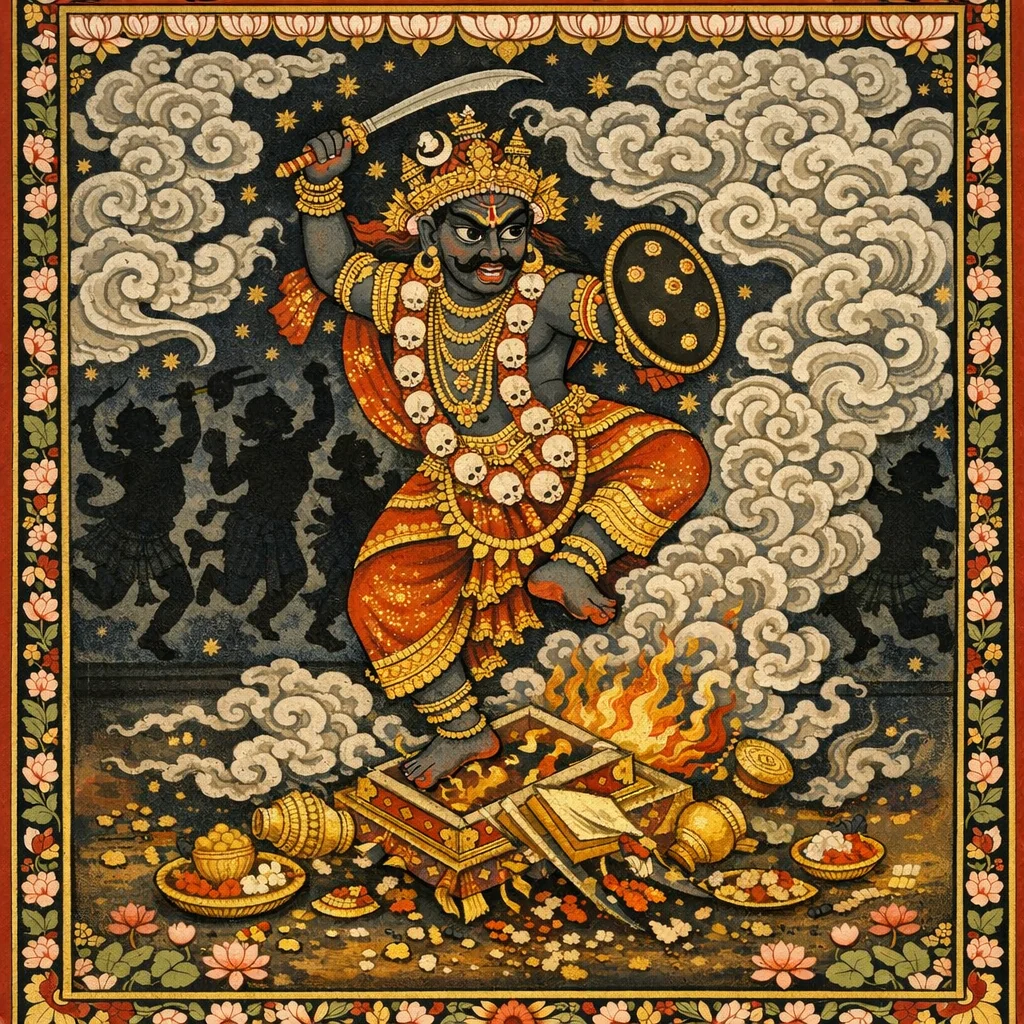
Hearing from Nārada of Satī’s death and the humiliation inflicted by Dakṣa, Lord Śiva erupts in controlled cosmic fury. From a blazing lock of his hair he manifests Vīrabhadra—an embodiment of wrath—commissioned to punish Dakṣa and disrupt the sacrificial assembly. As Vīrabhadra and Śiva’s gaṇas approach, ominous darkness and dust overwhelm the arena; the participants interpret the portents as dissolution-like catastrophe and Prasūti recognizes the crisis as the karmic consequence of Dakṣa’s offense against Satī and Śiva. The gaṇas storm the venue, dismantling the ritual infrastructure, terrorizing the assembly, and subduing key officiants and devas. Vīrabhadra humiliates Bhṛgu, blinds Bhaga, breaks the teeth of Dakṣa and Pūṣā, and finally beheads Dakṣa using the sacrificial apparatus itself—turning yajña’s instruments into the means of retribution. Dakṣa’s head is offered into the southern fire, the arena is burned, and Śiva’s party returns to Kailāsa—setting the stage for later reconciliation, restoration, and the theological resolution of offense, forgiveness, and the proper purpose of sacrifice.
Shlokas
Verse 1
मैत्रेय उवाच भवो भवान्या निधनं प्रजापते- रसत्कृताया अवगम्य नारदात् । स्वपार्षदसैन्यं च तदध्वरर्भुभि- र्विद्रावितं क्रोधमपारमादधे ॥ १ ॥
Maitreya said: When Lord Śiva heard from Nārada that Satī, his wife, was now dead because of Prajāpati Dakṣa’s insult to her and that his soldiers had been driven away by the Ṛbhu demigods, he became greatly angry.
Verse 2
क्रुद्ध: सुदष्टौष्ठपुट: स धूर्जटि- र्जटां तडिद्वह्निसटोग्ररोचिषम् । उत्कृत्य रुद्र: सहसोत्थितो हसन् गम्भीरनादो विससर्ज तां भुवि ॥ २ ॥
Thus Lord Śiva, being extremely angry, pressed his lips with his teeth and immediately snatched from his head a strand of hair which blazed like electricity or fire. He stood up at once, laughing like a madman, and dashed the hair to the ground.
Verse 3
ततोऽतिकायस्तनुवा स्पृशन्दिवं सहस्रबाहुर्घनरुक् त्रिसूर्यदृक् । करालदंष्ट्रो ज्वलदग्निमूर्धज: कपालमाली विविधोद्यतायुध: ॥ ३ ॥
A fearful black demon as high as the sky and as bright as three suns combined was thereby created, his teeth very fearful and the hairs on his head like burning fire. He had thousands of arms, equipped with various weapons, and he was garlanded with the heads of men.
Verse 4
तं किं करोमीति गृणन्तमाह बद्धाञ्जलिं भगवान् भूतनाथ: । दक्षं सयज्ञं जहि मद्भटानां त्वमग्रणी रुद्र भटांशको मे ॥ ४ ॥
When that gigantic demon asked with folded hands, “What shall I do, my lord?” Lord Śiva, who is known as Bhūtanātha, directly ordered, “Because you are born from my body, you are the chief of all my associates. Therefore, kill Dakṣa and his soldiers at the sacrifice.”
Verse 5
आज्ञप्त एवं कुपितेन मन्युना स देवदेवं परिचक्रमे विभुम् । मेने तदात्मानमसङ्गरंहसा महीयसां तात सह: सहिष्णुम् ॥ ५ ॥
Maitreya continued: My dear Vidura, that black person was the personified anger of the Supreme Personality of Godhead, and he was prepared to execute the orders of Lord Śiva. Thus, considering himself capable of coping with any power offered against him, he circumambulated Lord Śiva.
Verse 6
अन्वीयमान: स तु रुद्रपार्षदै- र्भृशं नदद्भिर्व्यनदत्सुभैरवम् । उद्यम्य शूलं जगदन्तकान्तकं सम्प्राद्रवद् घोषणभूषणाङ्घ्रि: ॥ ६ ॥
Many other soldiers of Lord Śiva followed the fierce personality in a tumultuous uproar. He carried a great trident, fearful enough to kill even death, and on his legs he wore bangles which seemed to roar.
Verse 7
अथर्त्विजो यजमान: सदस्या: ककुभ्युदीच्यां प्रसमीक्ष्य रेणुम् । तम: किमेतत्कुत एतद्रजोऽभू- दिति द्विजा द्विजपत्न्यश्च दध्यु: ॥ ७ ॥
At that time, all the persons assembled in the sacrificial arena — the priests, the chief of the sacrificial performance, and the brāhmaṇas and their wives — wondered where the darkness was coming from. Later they could understand that it was a dust storm, and all of them were full of anxiety.
Verse 8
वाता न वान्ति न हि सन्ति दस्यव: प्राचीनबर्हिर्जीवति होग्रदण्ड: । गावो न काल्यन्त इदं कुतो रजो लोकोऽधुना किं प्रलयाय कल्पते ॥ ८ ॥
Conjecturing on the origin of the storm, they said: There is no wind blowing, and no cows are passing, nor is it possible that this dust storm could be raised by plunderers, for there is still the strong King Barhi, who would punish them. Where is this dust storm blowing from? Is the dissolution of the planet now to occur?
Verse 9
प्रसूतिमिश्रा: स्त्रिय उद्विग्नचित्ता ऊचुर्विपाको वृजिनस्यैव तस्य । यत्पश्यन्तीनां दुहितृणां प्रजेश: सुतां सतीमवदध्यावनागाम् ॥ ९ ॥
Prasūti, the wife of Dakṣa, along with the other women assembled, became very anxious and said: This danger has been created by Dakṣa because of the death of Satī, who, even though completely innocent, quit her body as her sisters looked on.
Verse 10
यस्त्वन्तकाले व्युप्तजटाकलाप: स्वशूलसूच्यर्पितदिग्गजेन्द्र: । वितत्य नृत्यत्युदितास्त्रदोर्ध्वजान् उच्चाट्टहासस्तनयित्नुभिन्नदिक् ॥ १० ॥
At the time of dissolution, Lord Śiva’s hair is scattered, and he pierces the rulers of the different directions with his trident. He laughs and dances proudly, scattering their hands like flags, as thunder scatters the clouds all over the world.
Verse 11
अमर्षयित्वा तमसह्यतेजसं मन्युप्लुतं दुर्निरीक्ष्यं भ्रुकुट्या । करालदंष्ट्राभिरुदस्तभागणं स्यात्स्वस्ति किं कोपयतो विधातु: ॥ ११ ॥
The gigantic black man bared his fearful teeth. By the movements of his brows he scattered the luminaries all over the sky, and he covered them with his strong, piercing effulgence. Because of the misbehavior of Dakṣa, even Lord Brahmā, Dakṣa’s father, could not have been saved from the great exhibition of anger.
Verse 12
बह्वेवमुद्विग्नदृशोच्यमाने जनेन दक्षस्य मुहुर्महात्मन: । उत्पेतुरुत्पाततमा: सहस्रशो भयावहा दिवि भूमौ च पर्यक् ॥ १२ ॥
While all the people talked amongst themselves, Dakṣa saw dangerous omens from all sides, from the earth and from the sky.
Verse 13
तावत्स रुद्रानुचरैर्महामखो नानायुधैर्वामनकैरुदायुधै: । पिङ्गै: पिशङ्गैर्मकरोदराननै: पर्याद्रवद्भिर्विदुरान्वरुध्यत ॥ १३ ॥
My dear Vidura, all the followers of Lord Śiva surrounded the arena of sacrifice. They were of short stature and were equipped with various kinds of weapons; their bodies appeared to be like those of sharks, blackish and yellowish. They ran all around the sacrificial arena and thus began to create disturbances.
Verse 14
केचिद्बभञ्जु: प्राग्वंशं पत्नीशालां तथापरे । सद आग्नीध्रशालां च तद्विहारं महानसम् ॥ १४ ॥
Some of the soldiers pulled down the pillars which were supporting the pandal of sacrifice, some of them entered the female quarters, some began destroying the sacrificial arena, and some entered the kitchen and the residential quarters.
Verse 15
रुरुजुर्यज्ञपात्राणि तथैकेऽग्नीननाशयन् । कुण्डेष्वमूत्रयन् केचिद्बिभिदुर्वेदिमेखला: ॥ १५ ॥
They broke all the pots made for use in the sacrifice, and some of them began to extinguish the sacrificial fire. Some tore down the boundary line of the sacrificial arena, and some passed urine on the arena.
Verse 16
अबाधन्त मुनीनन्ये एके पत्नीरतर्जयन् । अपरे जगृहुर्देवान् प्रत्यासन्नान् पलायितान् ॥ १६ ॥
Some blocked the way of the fleeing sages, some threatened the women assembled there, and some arrested the demigods who were fleeing the pandal.
Verse 17
भृगुं बबन्ध मणिमान् वीरभद्र: प्रजापतिम् । चण्डेश: पूषणं देवं भगं नन्दीश्वरोऽग्रहीत् ॥ १७ ॥
Maṇimān, one of the followers of Lord Śiva, arrested Bhṛgu Muni, and Vīrabhadra, the black demon, arrested Prajāpati Dakṣa. Another follower, who was named Caṇḍeśa, arrested Pūṣā. Nandīśvara arrested the demigod Bhaga.
Verse 18
सर्व एवर्त्विजो दृष्ट्वा सदस्या: सदिवौकस: । तैरर्द्यमाना: सुभृशं ग्रावभिर्नैकधाद्रवन् ॥ १८ ॥
There was a continuous shower of stones, and all the priests and other members assembled at the sacrifice were put into immense misery. For fear of their lives, they dispersed in different directions.
Verse 19
जुह्वत: स्रुवहस्तस्य श्मश्रूणि भगवान् भव: । भृगोर्लुलुञ्चे सदसि योऽहसच्छ्मश्रु दर्शयन् ॥ १९ ॥
Vīrabhadra tore off the mustache of Bhṛgu, who was offering the sacrificial oblations with his hands in the fire.
Verse 20
भगस्य नेत्रे भगवान् पातितस्य रुषा भुवि । उज्जहार सदस्थोऽक्ष्णा य: शपन्तमसूसुचत् ॥ २० ॥
Vīrabhadra immediately caught Bhaga, who had been moving his eyebrows during Bhṛgu’s cursing of Lord Śiva, and out of great anger thrust him to the ground and forcibly put out his eyes.
Verse 21
पूष्णो ह्यपातयद्दन्तान् कालिङ्गस्य यथा बल: । शप्यमाने गरिमणि योऽहसद्दर्शयन्दत: ॥ २१ ॥
Just as Baladeva knocked out the teeth of Dantavakra, the King of Kaliṅga, during the gambling match at the marriage ceremony of Aniruddha, Vīrabhadra knocked out the teeth of both Dakṣa, who had shown them while cursing Lord Śiva, and Pūṣā, who by smiling sympathetically had also shown his teeth.
Verse 22
आक्रम्योरसि दक्षस्य शितधारेण हेतिना । छिन्दन्नपि तदुद्धर्तुं नाशक्नोत् त्र्यम्बकस्तदा ॥ २२ ॥
Then Vīrabhadra, the giantlike personality, sat on the chest of Dakṣa and tried to separate his head from his body with sharp weapons, but was unsuccessful.
Verse 23
शस्त्रैरस्त्रान्वितैरेवमनिर्भिन्नत्वचं हर: । विस्मयं परमापन्नो दध्यौ पशुपतिश्चिरम् ॥ २३ ॥
He tried to cut the head of Dakṣa with hymns as well as weapons, but still it was hard to cut even the surface of the skin of Dakṣa’s head. Thus Vīrabhadra was exceedingly bewildered.
Verse 24
दृष्ट्वा संज्ञपनं योगं पशूनां स पतिर्मखे । यजमानपशो: कस्य कायात्तेनाहरच्छिर: ॥ २४ ॥
Then Vīrabhadra saw the wooden device in the sacrificial arena by which the animals were to have been killed. He took the opportunity of this facility to behead Dakṣa.
Verse 25
साधुवादस्तदा तेषां कर्म तत्तस्य पश्यताम् । भूतप्रेतपिशाचानां अन्येषां तद्विपर्यय: ॥ २५ ॥
Upon seeing the action of Vīrabhadra, the party of Lord Śiva was pleased and cried out joyfully, and all the bhūtas, ghosts and demons that had come made a tumultuous sound. On the other hand, the brāhmaṇas in charge of the sacrifice cried out in grief at the death of Dakṣa.
Verse 26
जुहावैतच्छिरस्तस्मिन्दक्षिणाग्नावमर्षित: । तद्देवयजनं दग्ध्वा प्रातिष्ठद् गुह्यकालयम् ॥ २६ ॥
Vīrabhadra then took the head and with great anger threw it into the southern side of the sacrificial fire, offering it as an oblation. In this way the followers of Lord Śiva devastated all the arrangements for sacrifice. After setting fire to the whole arena, they departed for their master’s abode, Kailāsa.
Frequently Asked Questions
Śiva manifests Vīrabhadra after learning that Satī gave up her body due to Dakṣa’s grievous insult and that Śiva’s attendants were driven away. Vīrabhadra functions as the instrument of cosmic justice: to chastise sacrificial arrogance and protect the dignity of a great devotee (Śiva). The episode teaches that offenses to exalted beings and to sacred relationships destabilize ritual merit and invite severe reaction.
The chapter portrays yajña as spiritually hollow when driven by pride and disregard for devotees. Although Dakṣa’s rite is externally elaborate, it collapses under the weight of aparādha; the very structure of sacrifice—pillars, fires, and implements—becomes a theater for moral reckoning. Bhāgavata theology thereby prioritizes devotion, humility, and honoring Vaiṣṇavas/Śaivas over mere ritual performance.
Vīrabhadra targets figures implicated in the assembly’s complicity: Bhṛgu is humiliated for his role in the sacrificial antagonism; Bhaga is blinded for his expressive participation during censure of Śiva; Pūṣā loses his teeth for smiling in support; and Dakṣa is ultimately beheaded as the principal offender. The narrative frames these punishments as proportional responses to collective endorsement of insult and sectarian contempt.
Casting Dakṣa’s head into the southern side of the fire symbolizes the inversion of a pride-based yajña: the performer becomes the oblation. It underscores that ritual power is not autonomous; it is subordinate to dharma and divine oversight. The act also dramatizes how adharmic sacrifice can devolve into a parody of itself, requiring later rectification and restoration.