Adhyaya 10
Dhruva’s War with the Yakṣas and the Protection of the Holy Name
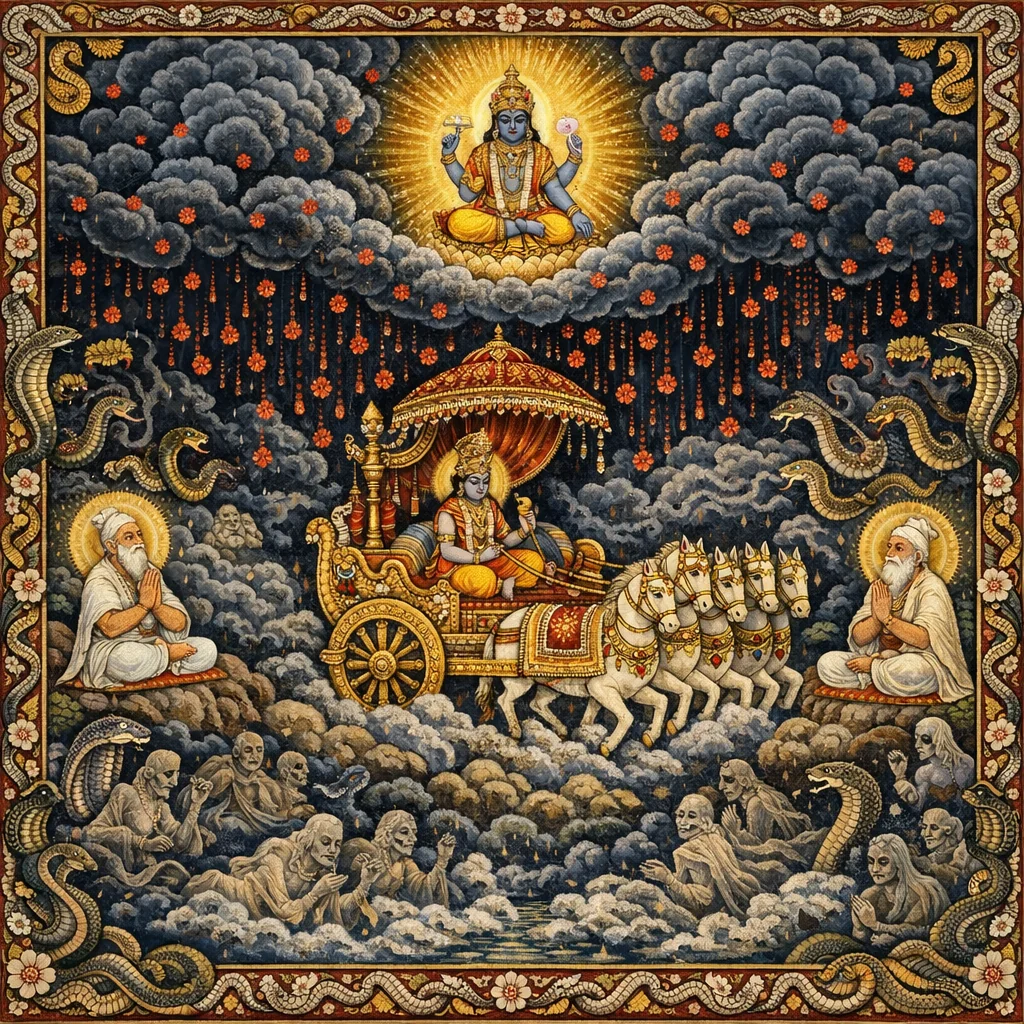
Following Dhruva’s earlier establishment as an exalted devotee-king, this chapter opens by situating him in gṛhastha life through marriage and progeny, extending the vaṁśa narrative. The plot turns when his younger brother Uttama is killed by a Yakṣa during a Himalayan hunt, and Suruci dies thereafter, intensifying Dhruva’s grief and wrath. Dhruva marches to Alakāpurī, the Yakṣa city associated with Śiva’s followers, and initiates battle with his conchshell. He devastates the Yakṣa forces despite their massive numbers and weapon-shower, reasserting kṣatriya prowess. When the surviving Yakṣas resort to māyā—illusory storms, bloody rains, falling bodies, serpents, beasts, and a cosmic-dissolution-like ocean—Dhruva is portrayed as challenged not merely militarily but psychologically and spiritually. Sages then intervene with auspicious instruction: invoke Śārṅgadhanvā (Viṣṇu) and rely on the holy name, which protects devotees from fearful death. The chapter thus bridges toward the next stage: Dhruva’s restraint and reorientation under saintly counsel, transforming vengeance into devotion-guided action.
Shlokas
Verse 1
मैत्रेय उवाच प्रजापतेर्दुहितरं शिशुमारस्य वै ध्रुव: । उपयेमे भ्रमिं नाम तत्सुतौ कल्पवत्सरौ ॥ १ ॥
The great sage Maitreya said: My dear Vidura, thereafter Dhruva Mahārāja married the daughter of Prajāpati Śiśumāra, whose name was Bhrami, and two sons named Kalpa and Vatsara were born of her.
Verse 2
इलायामपि भार्यायां वायो: पुत्र्यां महाबल: । पुत्रमुत्कलनामानं योषिद्रत्नमजीजनत् ॥ २ ॥
The greatly powerful Dhruva Mahārāja had another wife, named Ilā, who was the daughter of the demigod Vāyu. By her he begot a son named Utkala and a very beautiful daughter.
Verse 3
उत्तमस्त्वकृतोद्वाहो मृगयायां बलीयसा । हत: पुण्यजनेनाद्रौ तन्मातास्य गतिं गता ॥ ३ ॥
Dhruva Mahārāja’s younger brother Uttama, who was still unmarried, once went on a hunting excursion and was killed by a powerful Yakṣa in the Himālaya Mountains. Along with him, his mother, Suruci, also followed the path of her son [she died].
Verse 4
ध्रुवो भ्रातृवधं श्रुत्वा कोपामर्षशुचार्पित: । जैत्रं स्यन्दनमास्थाय गत: पुण्यजनालयम् ॥ ४ ॥
When Dhruva Mahārāja heard of the killing of his brother Uttama by the Yakṣas in the Himālaya Mountains, being overwhelmed with lamentation and anger, he got on his chariot and went out for victory over the city of the Yakṣas, Alakāpurī.
Verse 5
गत्वोदीचीं दिशं राजा रुद्रानुचरसेविताम् । ददर्श हिमवद्द्रोण्यां पुरीं गुह्यकसङ्कुलाम् ॥ ५ ॥
Dhruva Mahārāja went to the northern direction of the Himālayan range. In a valley he saw a city full of ghostly persons who were followers of Lord Śiva.
Verse 6
दध्मौ शङ्खं बृहद्बाहु: खं दिशश्चानुनादयन् । येनोद्विग्नदृश: क्षत्तरुपदेव्योऽत्रसन्भृशम् ॥ ६ ॥
Maitreya continued: My dear Vidura, as soon as Dhruva Mahārāja reached Alakāpurī, he immediately blew his conchshell, and the sound reverberated throughout the entire sky and in every direction. The wives of the Yakṣas became very much frightened. From their eyes it was apparent that they were full of anxiety.
Verse 7
ततो निष्क्रम्य बलिन उपदेवमहाभटा: । असहन्तस्तन्निनादमभिपेतुरुदायुधा: ॥ ७ ॥
O hero Vidura, the greatly powerful heroes of the Yakṣas, unable to tolerate the resounding vibration of the conchshell of Dhruva Mahārāja, came forth from their city with weapons and attacked Dhruva.
Verse 8
स तानापततो वीर उग्रधन्वा महारथ: । एकैकं युगपत्सर्वानहन् बाणैस्त्रिभिस्त्रिभि: ॥ ८ ॥
Dhruva Mahārāja, who was a great charioteer and certainly a great bowman also, immediately began to kill them by simultaneously discharging arrows three at a time.
Verse 9
ते वै ललाटलग्नैस्तैरिषुभि: सर्व एव हि । मत्वा निरस्तमात्मानमाशंसन् कर्म तस्य तत् ॥ ९ ॥
When the heroes of the Yakṣas saw that all their heads were being thus threatened by Dhruva Mahārāja, they could very easily understand their awkward position, and they concluded that they would certainly be defeated. But, as heroes, they lauded the action of Dhruva.
Verse 10
तेऽपि चामुममृष्यन्त: पादस्पर्शमिवोरगा: । शरैरविध्यन् युगपद् द्विगुणं प्रचिकीर्षव: ॥ १० ॥
Just like serpents, who cannot tolerate being trampled upon by anyone’s feet, the Yakṣas, being intolerant of the wonderful prowess of Dhruva Mahārāja, threw twice as many arrows — six from each of their soldiers — and thus they very valiantly exhibited their prowess.
Verse 11
तत: परिघनिस्त्रिंशै: प्रासशूलपरश्वधै: । शक्त्यृष्टिभिर्भुशुण्डीभिश्चित्रवाजै: शरैरपि ॥ ११ ॥ अभ्यवर्षन् प्रकुपिता: सरथं सहसारथिम् । इच्छन्तस्तत्प्रतीकर्तुमयुतानां त्रयोदश ॥ १२ ॥
The Yakṣa soldiers were 130,000 strong, all greatly angry and all desiring to defeat the wonderful activities of Dhruva Mahārāja. With full strength they showered upon Mahārāja Dhruva, along with his chariot and charioteer, various types of feathered arrows, parighas [iron bludgeons], nistriṁśas [swords], prāsaśūlas [tridents], paraśvadhas [lances], śaktis [pikes], ṛṣṭis [spears] and bhuśuṇḍī weapons.
Verse 12
तत: परिघनिस्त्रिंशै: प्रासशूलपरश्वधै: । शक्त्यृष्टिभिर्भुशुण्डीभिश्चित्रवाजै: शरैरपि ॥ ११ ॥ अभ्यवर्षन् प्रकुपिता: सरथं सहसारथिम् । इच्छन्तस्तत्प्रतीकर्तुमयुतानां त्रयोदश ॥ १२ ॥
The Yakṣa soldiers were 130,000 strong, all greatly angry and all desiring to defeat the wonderful activities of Dhruva Mahārāja. With full strength they showered upon Mahārāja Dhruva, along with his chariot and charioteer, various types of feathered arrows, parighas [iron bludgeons], nistriṁśas [swords], prāsaśūlas [tridents], paraśvadhas [lances], śaktis [pikes], ṛṣṭis [spears] and bhuśuṇḍī weapons.
Verse 13
औत्तानपादि: स तदा शस्त्रवर्षेण भूरिणा । न एवादृश्यताच्छन्न आसारेण यथा गिरि: ॥ १३ ॥
Dhruva Mahārāja was completely covered by an incessant shower of weapons, just as a mountain is covered by incessant rainfall.
Verse 14
हाहाकारस्तदैवासीत्सिद्धानां दिवि पश्यताम् । हतोऽयं मानव: सूर्यो मग्न: पुण्यजनार्णवे ॥ १४ ॥
All the Siddhas from the higher planetary systems were observing the fight from the sky, and when they saw that Dhruva Mahārāja had been covered by the incessant arrows of the enemy, they roared tumultuously, “The grandson of Manu, Dhruva, is now lost!” They cried that Dhruva Mahārāja was just like the sun and that now he had set within the ocean of the Yakṣas.
Verse 15
नदत्सु यातुधानेषु जयकाशिष्वथो मृधे । उदतिष्ठद्रथस्तस्य नीहारादिव भास्कर: ॥ १५ ॥
The Yakṣas, being temporarily victorious, exclaimed that they had conquered Dhruva Mahārāja. But in the meantime Dhruva’s chariot suddenly appeared, just as the sun suddenly appears from within foggy mist.
Verse 16
धनुर्विस्फूर्जयन्दिव्यं द्विषतां खेदमुद्वहन् । अस्त्रौघं व्यधमद्बाणैर्घनानीकमिवानिल: ॥ १६ ॥
Dhruva Mahārāja’s bow and arrows twanged and hissed, causing lamentation in the hearts of his enemies. He began to shoot incessant arrows, shattering all their different weapons, just as the blasting wind scatters the assembled clouds in the sky.
Verse 17
तस्य ते चापनिर्मुक्ता भित्त्वा वर्माणि रक्षसाम् । कायानाविविशुस्तिग्मा गिरीनशनयो यथा ॥ १७ ॥
The sharp arrows released from the bow of Dhruva Mahārāja pierced the shields and bodies of the enemy, like the thunderbolts released by the King of heaven, which dismantle the bodies of the mountains.
Verse 18
भल्लै: सञ्छिद्यमानानां शिरोभिश्चारुकुण्डलै: । ऊरुभिर्हेमतालाभैर्दोर्भिर्वलयवल्गुभि: ॥ १८ ॥ हारकेयूरमुकुटैरुष्णीषैश्च महाधनै: । आस्तृतास्ता रणभुवो रेजुर्वीरमनोहरा: ॥ १९ ॥
The great sage Maitreya continued: My dear Vidura, the heads of those who were cut to pieces by the arrows of Dhruva Mahārāja were decorated very beautifully with earrings and turbans. The legs of their bodies were as beautiful as golden palm trees, their arms were decorated with golden bracelets and armlets, and on their heads there were very valuable helmets bedecked with gold. All these ornaments lying on that battlefield were very attractive and could bewilder the mind of a hero.
Verse 19
भल्लै: सञ्छिद्यमानानां शिरोभिश्चारुकुण्डलै: । ऊरुभिर्हेमतालाभैर्दोर्भिर्वलयवल्गुभि: ॥ १८ ॥ हारकेयूरमुकुटैरुष्णीषैश्च महाधनै: । आस्तृतास्ता रणभुवो रेजुर्वीरमनोहरा: ॥ १९ ॥
The great sage Maitreya continued: My dear Vidura, the heads of those who were cut to pieces by the arrows of Dhruva Mahārāja were decorated very beautifully with earrings and turbans. The legs of their bodies were as beautiful as golden palm trees, their arms were decorated with golden bracelets and armlets, and on their heads there were very valuable helmets bedecked with gold. All these ornaments lying on that battlefield were very attractive and could bewilder the mind of a hero.
Verse 20
हतावशिष्टा इतरे रणाजिराद् रक्षोगणा: क्षत्रियवर्यसायकै: । प्रायो विवृक्णावयवा विदुद्रुवु- र्मृगेन्द्रविक्रीडितयूथपा इव ॥ २० ॥
The remaining Yakṣas who somehow or other were not killed had their limbs cut to pieces by the arrows of the great warrior Dhruva Mahārāja. Thus they began to flee, just as elephants flee when defeated by a lion.
Verse 21
अपश्यमान: स तदाततायिनं महामृधे कञ्चन मानवोत्तम: । पुरीं दिदृक्षन्नपि नाविशद्द्विषां न मायिनां वेद चिकीर्षितं जन: ॥ २१ ॥
Dhruva Mahārāja, the best of human beings, observed that in that great battlefield not one of the opposing soldiers was left standing with proper weapons. He then desired to see the city of Alakāpurī, but he thought to himself, “No one knows the plans of the mystic Yakṣas.”
Verse 22
इति ब्रुवंश्चित्ररथ: स्वसारथिं यत्त: परेषां प्रतियोगशङ्कित: । शुश्राव शब्दं जलधेरिवेरितं नभस्वतो दिक्षु रजोऽन्वदृश्यत ॥ २२ ॥
In the meantime, while Dhruva Mahārāja, doubtful of his mystic enemies, was talking with his charioteer, they heard a tremendous sound, as if the whole ocean were there, and they found that from the sky a great dust storm was coming over them from all directions.
Verse 23
क्षणेनाच्छादितं व्योम घनानीकेन सर्वत: । विस्फुरत्तडिता दिक्षु त्रासयत्स्तनयित्नुना ॥ २३ ॥
Within a moment the whole sky was overcast with dense clouds, and severe thundering was heard. There was glittering electric lightning and severe rainfall.
Verse 24
ववृषू रुधिरौघासृक्पूयविण्मूत्रमेदस: । निपेतुर्गगनादस्य कबन्धान्यग्रतोऽनघ ॥ २४ ॥
My dear faultless Vidura, in that rainfall there was blood, mucus, pus, stool, urine and marrow falling heavily before Dhruva Mahārāja, and there were trunks of bodies falling from the sky.
Verse 25
तत: खेऽदृश्यत गिरिर्निपेतु: सर्वतोदिशम् । गदापरिघनिस्त्रिंशमुसला: साश्मवर्षिण: ॥ २५ ॥
Next, a great mountain was visible in the sky, and from all directions hailstones fell, along with lances, clubs, swords, iron bludgeons and great pieces of stone.
Verse 26
अहयोऽशनिनि:श्वासा वमन्तोऽग्निं रुषाक्षिभि: । अभ्यधावन् गजा मत्ता: सिंहव्याघ्राश्च यूथश: ॥ २६ ॥
Dhruva Mahārāja also saw many big serpents with angry eyes, vomiting forth fire and coming to devour him, along with groups of mad elephants, lions and tigers.
Verse 27
समुद्र ऊर्मिभिर्भीम: प्लावयन् सर्वतो भुवम् । आससाद महाह्राद: कल्पान्त इव भीषण: ॥ २७ ॥
Then, as if it were the time of the dissolution of the whole world, the fierce sea with foaming waves and great roaring sounds came forward before him.
Verse 28
एवंविधान्यनेकानि त्रासनान्यमनस्विनाम् । ससृजुस्तिग्मगतय आसुर्या माययासुरा: ॥ २८ ॥
The demon Yakṣas are by nature very heinous, and by their demoniac power of illusion they can create many strange phenomena to frighten one who is less intelligent.
Verse 29
ध्रुवे प्रयुक्तामसुरैस्तां मायामतिदुस्तराम् । निशम्य तस्य मुनय: शमाशंसन् समागता: ॥ २९ ॥
When the great sages heard that Dhruva Mahārāja was overpowered by the illusory mystic tricks of the demons, they immediately assembled to offer him auspicious encouragement.
Verse 30
मुनय ऊचु: औत्तानपाद भगवांस्तव शार्ङ्गधन्वा देव: क्षिणोत्ववनतार्तिहरो विपक्षान् । यन्नामधेयमभिधाय निशम्य चाद्धा लोकोऽञ्जसा तरति दुस्तरमङ्ग मृत्युम् ॥ ३० ॥
All the sages said: Dear Dhruva, O son of King Uttānapāda, may the Supreme Personality of Godhead known as Śārṅgadhanvā, who relieves the distresses of His devotees, kill all your threatening enemies. The holy name of the Lord is as powerful as the Lord Himself. Therefore, simply by chanting and hearing the holy name of the Lord, many men can be fully protected from fierce death without difficulty. Thus a devotee is saved.
Frequently Asked Questions
Dhruva attacks because his brother Uttama is killed by a Yakṣa during a Himalayan hunt, and Dhruva becomes overwhelmed by lamentation and anger. The narrative presents a realistic kṣatriya response to perceived injustice, while simultaneously setting up the Bhāgavata’s corrective theme: power and retaliation must be checked by devotion and saintly guidance so that duty does not degrade into adharma.
Yakṣas are a class of powerful beings often associated with wealth, guardianship, and in some contexts fierce or demoniac conduct. In this episode they function as formidable opponents skilled in mystic deception. Alakāpurī is their city in the Himalayan region, depicted as a stronghold populated by ghostly persons and followers linked with Lord Śiva’s sphere, emphasizing the atmosphere of occult power and illusion.
When direct combat fails, the Yakṣas project terrifying illusory phenomena: dust storms, thunderclouds, unnatural rainfall containing blood and impurities, falling body parts, hail and weapons from the sky, fire-breathing serpents, predatory beasts, and an ocean-like deluge resembling cosmic dissolution. The purpose is to destabilize Dhruva’s mind and frighten a less intelligent opponent, showing māyā as a weapon that targets perception and courage.
The sages’ counsel frames the decisive protection (rakṣā) not as mere martial superiority but as surrender to Bhagavān through nāma. They affirm that the Lord’s name is non-different from the Lord in potency, and that chanting and hearing can protect devotees even in life-threatening conditions. Theologically, this reinforces poṣaṇa—the Lord’s special care for His devotee—and redirects Dhruva’s crisis from anger-driven action to bhakti-centered refuge.
Śārṅgadhanvā is a name of Lord Viṣṇu, “He who holds the Śārṅga bow.” The sages invoke Him because Dhruva is facing both physical assault and illusionary threats; Viṣṇu is celebrated as the reliever of devotee distress and the ultimate protector. The epithet also resonates with the battlefield context—divine sovereignty over all weapons and all forms of fear.