
Bhagavad Gita — Shraddhatraya Vibhaga Yoga, Shloka 8
Shraddhatraya Vibhaga Yoga
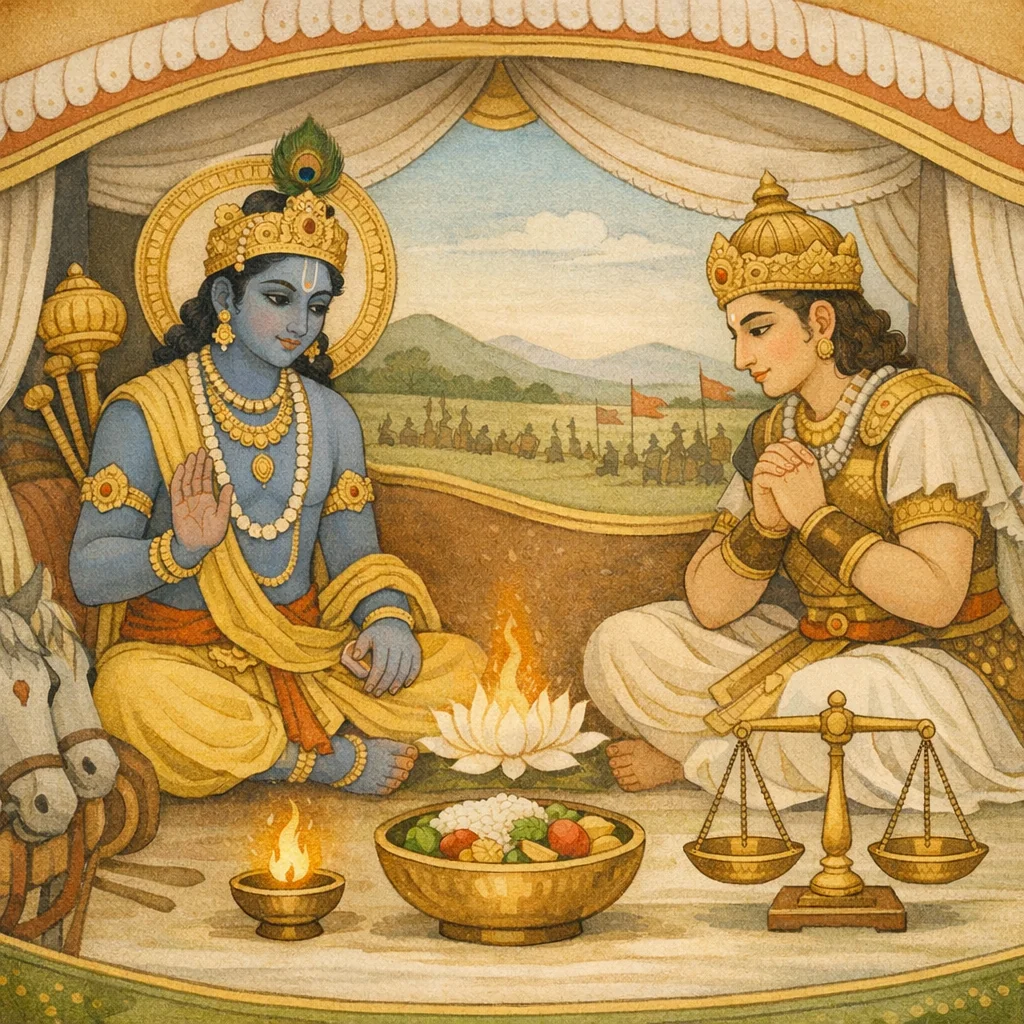
आयुःसत्त्वबलारोग्यसुखप्रीतिविवर्धनाः । रस्याः स्निग्धाः स्थिरा हृद्या आहाराः सात्त्विकप्रियाः ॥ १७.८ ॥
āyuḥ-sattva-balārogya-sukha-prīti-vivardhanāḥ | rasyāḥ snigdhāḥ sthirā hṛdyā āhārāḥ sāttvika-priyāḥ || 17.8 ||

Foods that increase longevity, purity (sattva), strength, health, happiness, and gladness—juicy, unctuous, nourishing, and pleasing to the heart—are dear to those of sattva.
जो भोजन आयु, सत्त्व, बल, आरोग्य, सुख और प्रीति को बढ़ाने वाले, रसीले, स्निग्ध, स्थिर और हृदय को प्रिय लगने वाले होते हैं, वे सात्त्विक पुरुषों को प्रिय हैं।
Foods that increase longevity, clarity/mental poise, strength, health, comfort, and contentment—tasty, unctuous, substantial, and pleasing—are preferred by those of sattva.
‘Sattva’ is variously rendered as purity, clarity, or lucidity; ‘sthira’ may be read as ‘substantial/steadying’ rather than merely ‘non-perishable.’ The verse is descriptive (typology of preference) rather than a universal dietary rule.
FAQs
The verse links dietary patterns with mental steadiness and contentment, suggesting that nourishing and agreeable foods support a calmer, clearer disposition.
Within the guṇa model, food participates in prakṛti’s modalities and conditions the mind; sattvic food is associated with lucidity that supports contemplative and ethical life.
It begins the threefold dietary classification (17.8–17.10) that parallels later classifications of sacrifice, austerity, and giving.
It may be applied as a general principle of choosing foods that promote health, stability, and emotional balance, while recognizing cultural and individual variation.