
Bhagavad Gita — Moksha Sannyasa Yoga, Shloka 74
Moksha Sannyasa Yoga
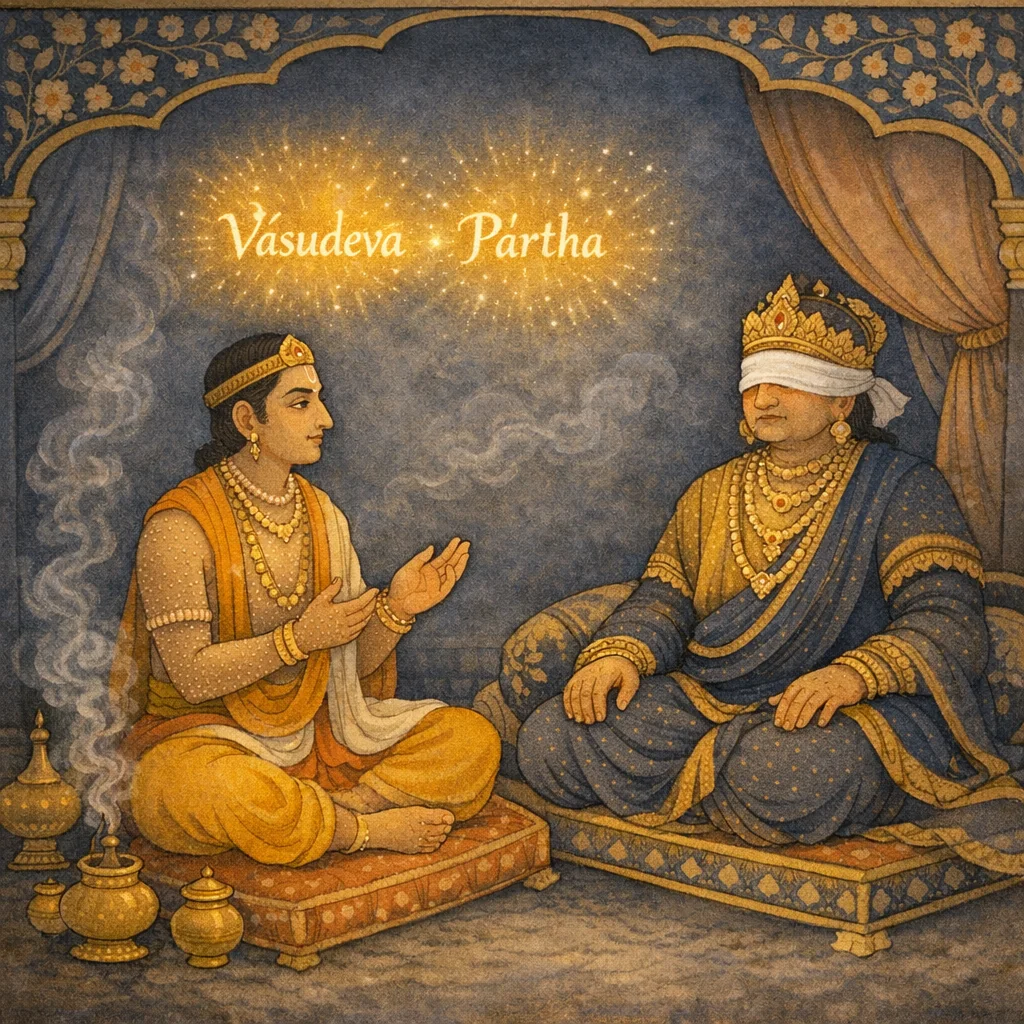
संजय उवाच । इत्यहं वासुदेवस्य पार्थस्य च महात्मनः संवादमिममश्रौषमद्भुतं रोमहर्षणम् ॥ १८.७४ ॥
sañjaya uvāca | ity ahaṁ vāsudevasya pārthasya ca mahātmanaḥ | saṁvādam imam aśrauṣam adbhutaṁ roma-harṣaṇam || 18.74 ||

Sañjaya said: Thus I heard this wondrous, hair-raising dialogue between Vāsudeva and the great-souled Pārtha.
संजय ने कहा—इस प्रकार मैंने वासुदेव और महात्मा पार्थ का यह अद्भुत, रोमांचकारी संवाद सुना।
Sañjaya said: Thus I heard this wondrous dialogue of Vāsudeva and the great-souled son of Pṛthā—hair-raising (thrilling).
‘Roma-harṣaṇa’ is idiomatic: translated as ‘thrilling/rapturous’ rather than literal physiology; it signals awe at the discourse’s significance.
FAQs
Sañjaya’s reaction models the affective power of meaning-making: profound insight can evoke awe that reinforces memory and commitment.
The verse supports the Gita’s self-presentation as a discourse with exceptional status, mediated through a trusted narrator within the epic frame.
It returns to the Mahābhārata frame: Sañjaya reports to the king, marking closure of the central dialogue.
In scholarship and teaching, note how framing devices (who reports to whom) shape authority and reception of philosophical texts.