
Bhagavad Gita — Moksha Sannyasa Yoga, Shloka 72
Moksha Sannyasa Yoga
कच्चिदेतच्छ्रुतं पार्थ त्वयैकाग्रेण चेतसा । कच्चिदज्ञानसंमोहः प्रनष्टस्ते धनंजय ॥ १८.७२ ॥
kaccid etac chrutaṁ pārtha tvayaikāgreṇa cetasā | kaccid ajñāna-sammohaḥ pranaṣṭas te dhanañjaya || 18.72 ||

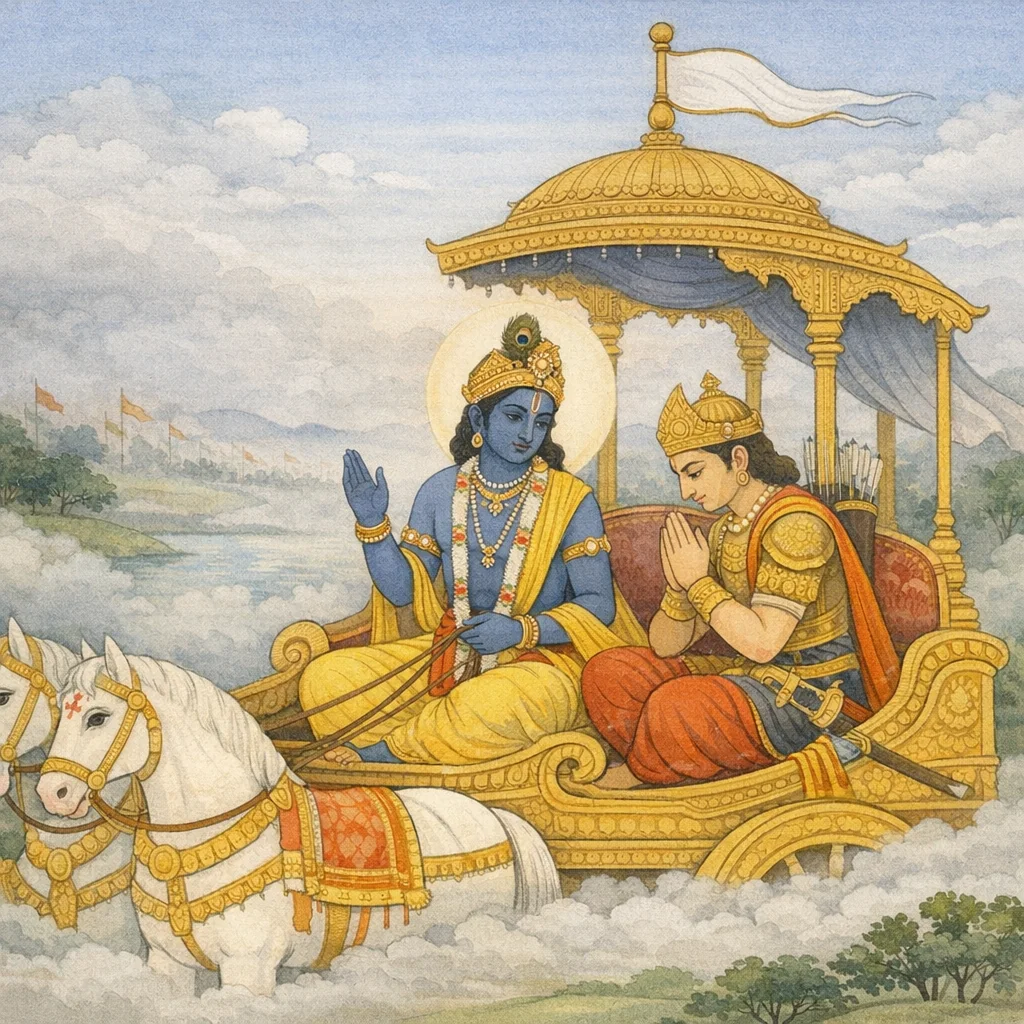
O Pārtha, has this been heard by you with a one-pointed mind? O Dhanañjaya, has your delusion born of ignorance been destroyed?
हे पार्थ! क्या यह (उपदेश) तुमने एकाग्र चित्त से सुना? हे धनंजय! क्या तुम्हारा अज्ञानजन्य मोह नष्ट हो गया?
Have you heard this, O Pārtha, with a one-pointed mind? Has your delusion born of ignorance been destroyed, O Dhanañjaya?
No major doctrinal variant; translation nuance concerns ‘eka-agra’ as sustained attention versus meditative one-pointedness.
FAQs
It functions as a comprehension check: focused attention is presented as prerequisite for insight, and the goal is reduction of confusion and indecision.
‘Delusion born of ignorance’ gestures to the Gita’s epistemic soteriology: liberation is tied to corrected understanding of self, action, and ultimate reality.
This is Krishna’s concluding question to Arjuna, signaling the end of instruction and transition back to action grounded in clarity.
After learning, explicitly assess whether confusion has decreased and whether attention was sustained—useful for education, therapy, and self-reflection.