
Bhagavad Gita — Moksha Sannyasa Yoga, Shloka 6
Moksha Sannyasa Yoga
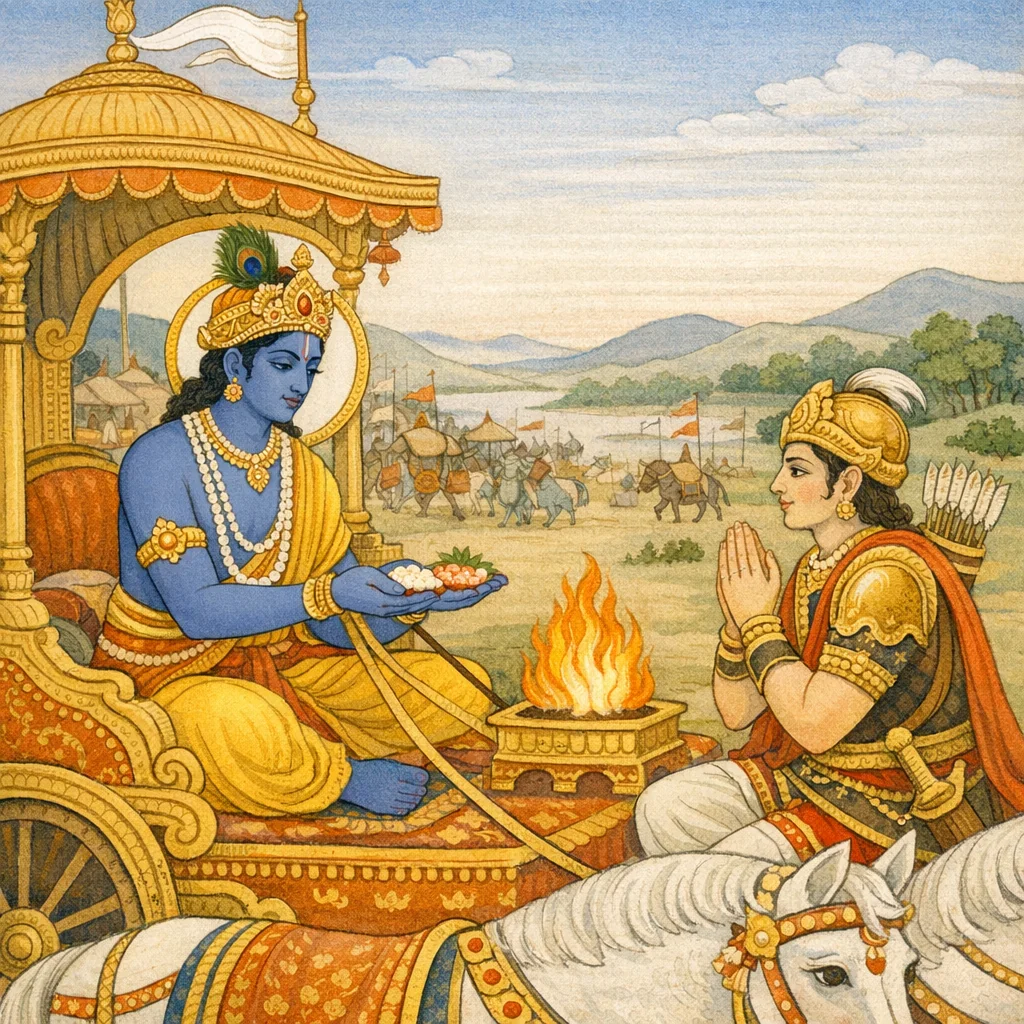
एतान्यपि तु कर्माणि सङ्गं त्यक्त्वा फलानि च । कर्तव्यानीति मे पार्थ निश्चितं मतमुत्तमम् ॥ १८.६ ॥
etāny api tu karmāṇi saṅgaṃ tyaktvā phalāni ca | kartavyānīti me pārtha niścitaṃ matam uttamam || 18.6 ||

But, O Partha, even these actions should be performed, having abandoned attachment and also the fruits; this is My firm and highest conviction.
परन्तु हे पार्थ! इन कर्मों को भी आसक्ति और फल का त्याग करके करना चाहिए— यही मेरा निश्चित उत्तम मत है।
But even these actions should be done, having abandoned attachment and the fruits—this is my settled, highest view, O Pārtha.
The verse integrates earlier karma-yoga teaching into the renunciation discussion: continuation of purifying practices is affirmed, while the internal stance (non-attachment to results) is made decisive.
FAQs
The teaching targets outcome-fixation as a source of distress; relinquishing fruit-attachment can reduce rumination and performance anxiety while preserving responsible action.
Non-appropriation of results supports a view of the self as not the ultimate owner of action’s fruits, aligning agency with a broader order (dharma/guṇa dynamics/Īśvara, depending on interpretation).
This is Krishna’s normative resolution of the earlier debate: do not abandon purifying duties, but perform them in the mode of tyāga.
It can be used as a principle for ethical work: commit to quality and responsibility, while letting go of compulsive need for reward, praise, or control over outcomes.