
Bhagavad Gita — Moksha Sannyasa Yoga, Shloka 30
Moksha Sannyasa Yoga
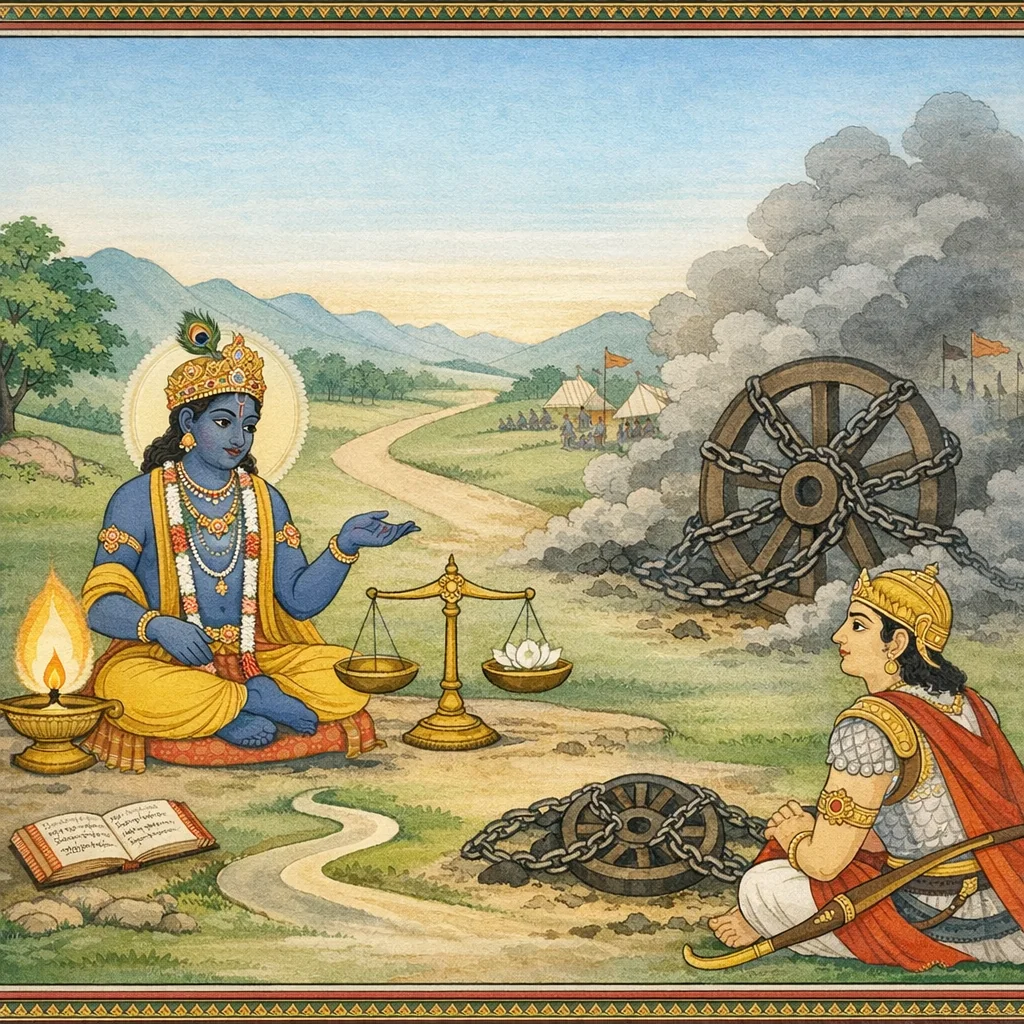
प्रवृत्तिं च निवृत्तिं च कार्याकार्ये भयाभये । बन्धं मोक्षं च या वेत्ति बुद्धिः सा पार्थ सात्त्विकी ॥ १८.३० ॥
pravṛttiṃ ca nivṛttiṃ ca kāryākārye bhayābhaye | bandhaṃ mokṣaṃ ca yā vetti buddhiḥ sā pārtha sāttvikī || 18.30 ||

That intellect is sattvic, O Pārtha, which knows rightly activity and withdrawal, what ought to be done and what ought not, fear and fearlessness, bondage and liberation.
That intellect is sattvic, O Pārtha, which knows activity and withdrawal, what ought to be done and what ought not, fear and fearlessness, bondage and liberation.
Sattvic is that intellect, O Pārtha, which discerns engagement and disengagement, the to-be-done and the not-to-be-done, the fearful and the non-fearful, and bondage and release.
pravṛtti/nivṛtti can be read as (1) worldly engagement vs renunciant withdrawal, or (2) initiating vs restraining impulses. “Fear/fearlessness” is often interpreted ethically (appropriate caution vs clarity) rather than as mere emotion.
FAQs
Sattvic cognition is portrayed as integrative discernment: it distinguishes healthy engagement from restraint, recognizes appropriate vs inappropriate tasks, and differentiates paralyzing fear from clear-sighted caution.
The verse links clarity of intellect to liberation: understanding what binds (bandha) versus what frees (mokṣa) is a cognitive prerequisite for spiritual release in the Gītā’s framework.
In the chapter’s three-guṇa analysis, this defines the “best” form of buddhi as one aligned with dharma and oriented toward mokṣa, setting up contrasts with rajasic and tamasic intellect.
It supports decision-making practices that separate impulse from considered action: clarifying goals, assessing consequences, and identifying which choices reinforce compulsive patterns versus foster autonomy.