
Bhagavad Gita — Moksha Sannyasa Yoga, Shloka 3
Moksha Sannyasa Yoga
त्याज्यं दोषवदित्येके कर्म प्राहुर्मनीषिणः । यज्ञदानतपःकर्म न त्याज्यमिति चापरे ॥ १८.३ ॥
tyājyaṃ doṣavad ity eke karma prāhur manīṣiṇaḥ | yajñadānatapaḥkarma na tyājyam iti cāpare || 18.3 ||

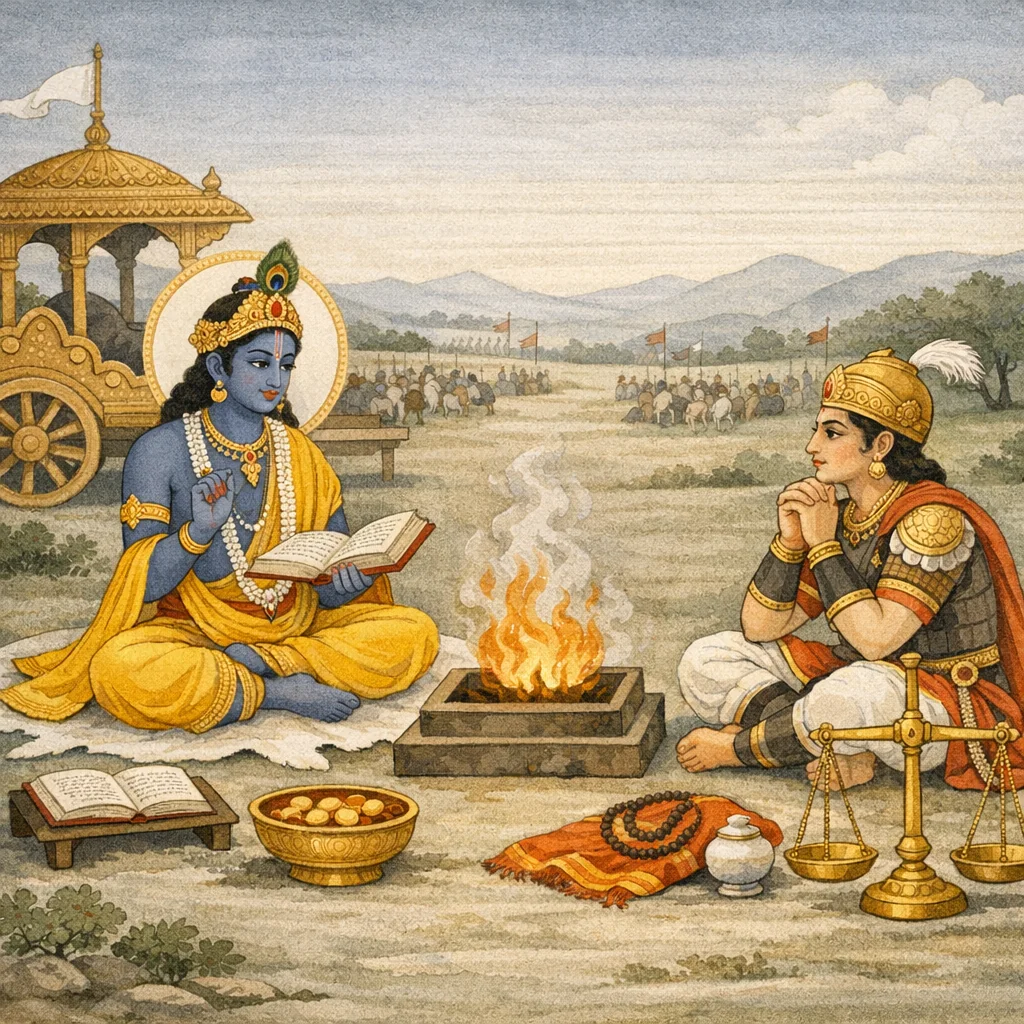
Some thinkers declare action to be abandoned as tainted with fault; others say that acts of sacrifice, charity, and austerity are not to be abandoned.
कुछ मनीषी कर्म को दोषयुक्त मानकर त्याज्य कहते हैं; और दूसरे कहते हैं कि यज्ञ, दान और तप के कर्म त्याज्य नहीं हैं।
Some thinkers say action should be abandoned as flawed; others say the actions of sacrifice, giving, and austerity should not be abandoned.
The verse neutrally reports competing positions within Indic debates on action and renunciation. Traditional readings often identify the first view with radical quietism; the second with a dharma-centered ritual-ethical stance.
FAQs
The reported disagreement mirrors a common mental split: seeing all duties as burdensome or compromised versus seeing certain disciplines as inherently purifying and stabilizing.
The ‘action is flawed’ view can reflect concerns about bondage through causality and desire; the counterview implies that some actions can be structured to reduce ego and refine consciousness.
Krishna introduces the spectrum of views before offering his own determination about which actions to continue and how to perform them.
It parallels debates about disengagement versus principled engagement: whether to withdraw from imperfect systems or to participate through ethically framed, service-oriented practices.