Dashati 2
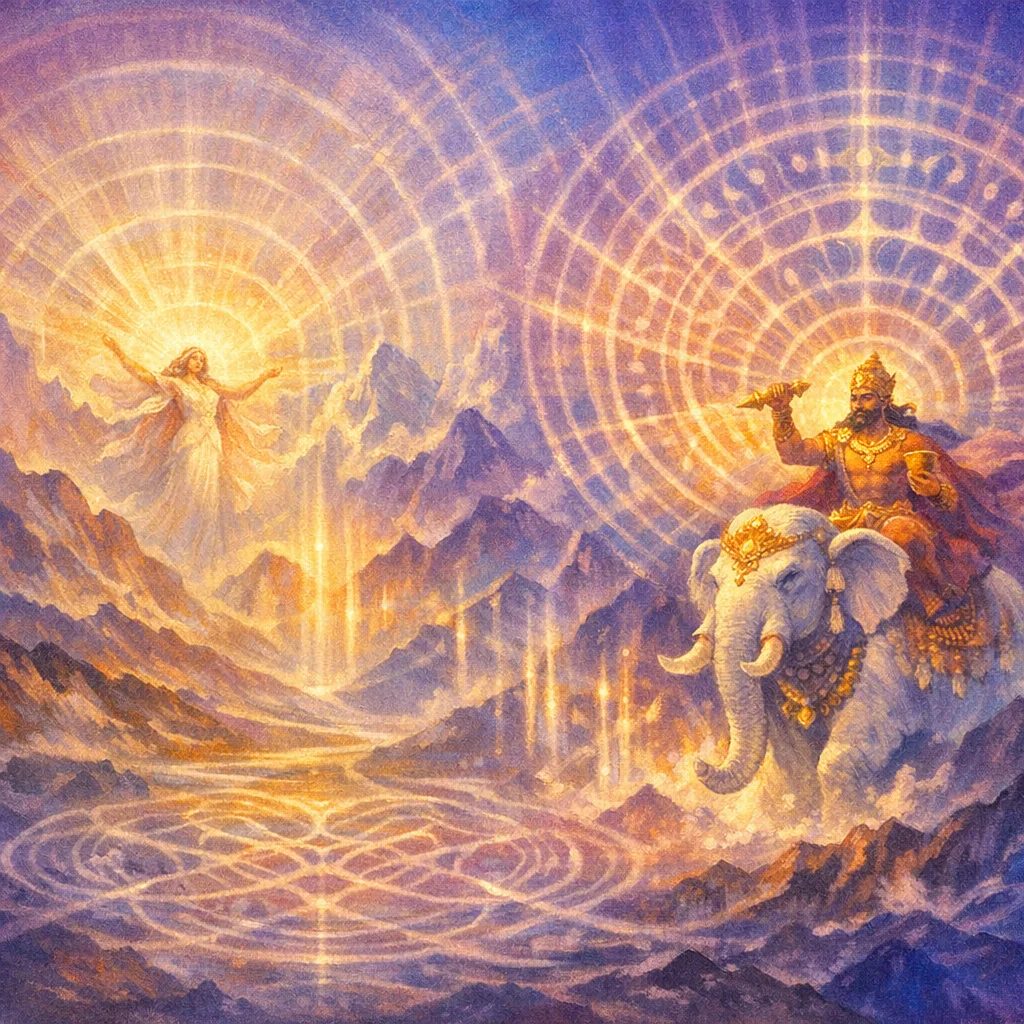
Uṣas (Dawn) revealing light and opening the rite, leading into Indra’s arrival for Soma
Indra
Bright awakening and forward-driving—moving from serene illumination to vigorous summons and praise
R̥ṣi and chandas are not supplied in the input; identification requires Rigvedic concordance/anukramaṇī for these mantra sources.
本组以乌莎斯(黎明)为先导:她如“天之女”揭开光明,驱散黑暗,使清晨祭仪具备可行与清明之境;水与晨显相应,令供献得以展开。继而转入因陀罗的召请:催促苏摩的榨取与流注,迎请因陀罗乘驾系轭的黄骠马前来饮苏摩、护持祭祀,并以无所不遍、不可拘束的胜力显现,使祭献得闻而成就。整体由自然神显(黎明)推进至苏摩神显(因陀罗临祭)。
Mantras
Mantra 1
प्रत्यु अदर्श्यायत्यू3च्छन्ती दुहिता दिवः अपो मही वृणुते चक्षुषा तमो ज्योतिष्कृणोति सूनरि
她已显现,向我等而来,灿然升起——天之女;那美丽的曙光,广大无边,取纳诸水;以其目光造就光明,驱散黑暗——善丽者。
Mantra 2
इमा उ वां दिविष्टय उस्रा हवन्ते अश्विना अयं वामह्वे ऽवसे शचीवसू विशंविशं हि गच्छथः
这些居于天界的赤红光辉呼唤你们,阿湿毗那(Aśvinā);我亦为护佑而呼唤你们,具神力与富饶者(śacīvasū)。因为你们走向每一族群、每一居处,赐下援助。
Mantra 3
कु ष्ठः को वामश्विना तपानो देवा मर्त्यः घ्नता वामश्मया क्षपमाणोंशुनेत्थमु आदुन्यथा
你们立于何处?谁在寻求你们,阿湿毗那(Aśvinā),诸天者?哪一受苦的凡人、日渐消瘦者在呼唤——使你们以石击病、以光束驱除,如此赐他舒解?
Mantra 4
अयं वां मधुमत्तमः सुतः सोमो दिविष्टिषु तमश्विना पिबतं तिरो अह्न्यं धत्तं रत्नानि दाशुषे
此为你二位之苏摩(Soma),最为甘美,已榨取并陈设于天仪祭事之中;阿湿毗那(Aśvins)啊,请饮那白昼之饮;并赐予献供者珍宝。
Mantra 5
आ त्वा सोमस्य गल्दया सदा याचन्नहं ज्या भूर्णिं मृगं न सवनेषु चुक्रुधं क ईशानं न याचिषत्
以苏摩(Soma)的galda之力,我恒常祈求;在榨取祭(savaneṣu)中我呼唤汝,如追逐迅疾的野兽一般;有谁不向主宰(Īśāna)恳求呢?
Mantra 6
अध्वर्यो द्रावया त्वं सोममिन्द्रः पिपासति उपो नूनं युयुजे वृष्णा हरी आ च जगाम वृत्रहा
噢Adhvaryu祭官,使苏摩(Soma)流淌吧;因陀罗(Indra)渴求它。如今他确已套上雄健的黄褐双马;屠伏特罗者(Vṛtrahā)已然来到。
Mantra 7
अभी षतस्तदा भरेन्द्र ज्यायः कनीयसः पुरूवसुर्हि मघवन्बभूविथ भरेभरे च हव्यः
因陀罗啊,赐我援助以抗众多;汝大于小者。噢Maghavan,汝已具足丰厚财宝;在每一场争战中,汝皆配受供献而被呼请。
Mantra 8
यदिन्द्र यावतस्त्वमेतावदहमीशीय स्तोतारमिद्दधिषे रदावसो न पापत्वाय रंसिषम्
因陀罗啊,汝之所及,愿我亦得如是之力;赐财者啊,汝安立赞歌之人。我不愿为作恶而欢喜。
Mantra 9
त्वमिन्द्र प्रतूर्तिष्वभि विश्वा असि स्पृधः अशस्तिहा जनिता वृत्रतूरसि त्वं तूर्य तरुष्यतः
因陀罗啊,于一切交锋中,汝直面诸争竞;汝灭除诋毁,汝生起胜利,汝为摧伏弗栗陀罗者;汝为抗击来犯者之勇冠军。
Mantra 10
प्र यो रिरिक्ष ओजसा दिवः सदोभ्यस्परि न त्वा विव्याच रज इन्द्र पार्थिवमति विश्वं ववक्षिथ
以威力之力,汝自天上座处前进;因陀罗啊,无一境域能围限汝。越过尘世诸界,汝伸展而遍覆一切。
Frequently Asked Questions
Uṣas marks the ritual and cosmic ‘opening’—light makes the morning rite possible—after which the focus naturally turns to Indra, the chief Soma-drinker, who is summoned and praised for arriving and empowering the sacrifice.
It is a direct injunction to the Adhvaryu to make the Soma flow—i.e., expedite pressing/straining and readiness of the offering—because Indra is ‘thirsting’ and is to be received promptly.
The hymn praises Indra’s vyāpti (pervasion): no realm confines him, so he can come from any divine seat to the sacrifice, protect it, and grant victory and fulfillment.