Adhyaya 31
Vītahavya’s Attainment of Brāhmaṇya (Vītahavya–Vipratva) | वीतहव्यस्य ब्राह्मण्यप्राप्तिः
Upa-parva: Vītahavya–Vipratva (Bhr̥gu-āśrama Episode) — Anuśāsana-parva Adhyāya 31
Yudhiṣṭhira questions Bhīṣma about the reputed difficulty of attaining brāhmaṇya, citing precedents such as Viśvāmitra and the king Vītahavya. Bhīṣma narrates a dynastic and political background: from Manu’s line through Śaryāti arise rulers including Hehaya and Tālajaṅgha; the Hehayas expand, while in Kāśī the ruler Haryaśva is slain by Vītahavya’s heirs. Successive Kāśī rulers—Sudeva and then Divodāsa—face repeated Hehaya pressure; Divodāsa establishes Vārāṇasī under Indra’s ordinance but is eventually weakened and seeks refuge with Bharadvāja. Bharadvāja performs a putrakāmya iṣṭi, producing Pratardana, who rapidly matures, masters Veda and dhanurveda, and restores Kāśī’s strategic position by defeating and eliminating Vītahavya’s sons. Vītahavya flees to Bhṛgu’s hermitage and receives protection. Pratardana arrives demanding Vītahavya’s surrender; Bhṛgu responds that no kṣatriya resides in the āśrama—only dvijas—thereby shielding the refugee. Pratardana accepts the hermitage norm, interprets the outcome as Vītahavya’s abandonment of kṣatriya identity, and departs. By Bhṛgu’s utterance alone, Vītahavya attains brahmarṣi status and becomes a progenitor of a Brahmin lineage, beginning with Gṛtsamada and continuing through a recorded genealogy (including Pramati, Ruru, Śunaka, and Śaunaka). Bhīṣma concludes by stating that the lineage has been related in detail and invites further inquiry.
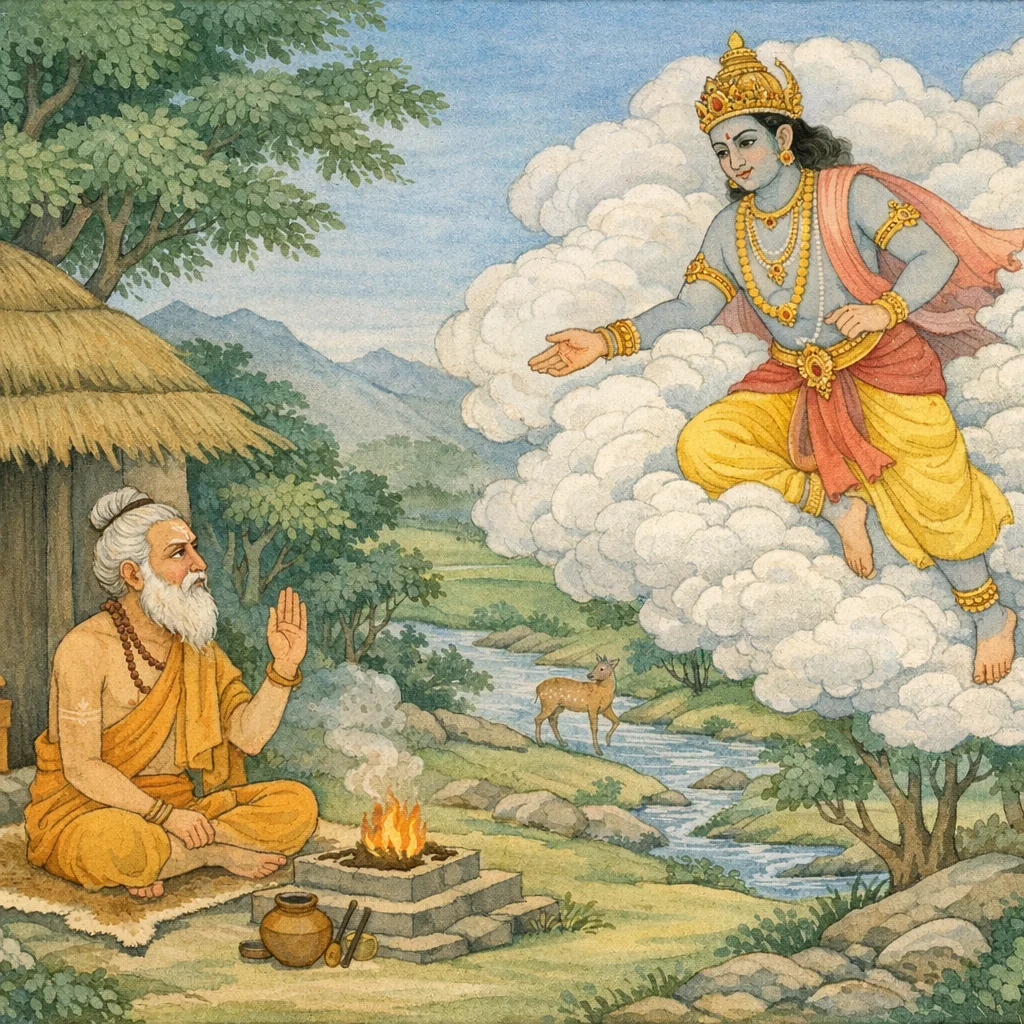
Chapter Arc: Bhishma, speaking to Yudhishthira, opens a didactic tale: the ascetic Matanga presses Indra for the supreme boon—Brahmanhood—believing tapas alone can vault him into the highest varna. → Indra returns and warns him repeatedly: Brahmanatva is exceedingly rare and not seized by sheer insistence. He cautions Matanga that craving this ‘parama sthāna’ through obstinacy will ruin him, and that such audacity is not his dharma-path. Indra then lays out a long, grinding ladder of transformation—centuries of births and slow inner refinement—showing how difficult true spiritual eligibility is. → Indra’s decisive admonition lands: ‘Matanga, I told you this after due reflection—choose another boon; Brahmanhood is very hard to obtain.’ The climax is not a weapon’s strike but a moral strike: the shattering of Matanga’s assumption that desire + austerity equals entitlement. → The narrative resolves into instruction: spiritual status is not a prize to be demanded; it ripens through sustained purification, right conduct, and the conquest of inner enemies. Matanga is urged to abandon the perilous insistence and accept a boon aligned with his rightful path.
Shlokas
Verse 1
अफ्-#-राल जा अष्टाविशोश् ध्याय: ब्राह्मणत्व प्राप्त करनेका आग्रह छोड़कर दूसरा वर मॉगनेके लिये इन्द्रका मनड़को समझाना भीष्म उवाच एवमुक्तो मतड़स्तु संशितात्मा यतव्रत: । अतिष्ठदेकपादेन वर्षाणां शतमच्युत:
毗湿摩说道:“大王,因陀罗如此对他说后,摩当伽的心志反而更加坚定。他自持克己,誓愿不移,单足而立整整一百年,以坚忍之力毫不动摇。”
Verse 2
तमुवाच तत: शक्र: पुनरेव महायशा: । ब्राह्मण्यं दुर्लभ तात प्रार्थयानो न लप्स्यसे,तब महायशस्वी इन्द्रने पुनः आकर उससे कहा--'तात! ब्राह्मणत्व दुर्लभ है। उसे माँगनेपर भी पा न सकोगे
随后,声名显赫的释迦(因陀罗)又对他说:“孩子啊,真正的婆罗门之道极难得;纵使你苦苦祈求,也终究得不到。”
Verse 3
मतज् परमं स्थान प्रार्थयन् विनशिष्यसि । मा कृथा: साहसं पुत्र नैष धर्मपथस्तव,मतंग! तुम इस उत्तम स्थानको माँगते-माँगते मर जाओगे। बेटा! दुःसाहस न करो। तुम्हारे लिये यह धर्मका मार्ग नहीं है
毗湿摩说道:“摩当伽啊,你若执意不断祈求那至高之位,终将自取灭亡。孩子,不可鲁莽;这并非属于你的法之道路。”
Verse 4
न हि शबक््यं त्वया प्राप्तुं ब्राह्मण्यमिह दुर्मते । अप्राप्यं प्रार्थथानो हि नचिराद् विनशिष्यसि
毗湿摩说道:“愚迷之人啊,在此生之中你并无能力成就真正婆罗门的地位与行持。你若贪求并哀求那本不可得之物,不久便将走向毁灭。”
Verse 5
मतड़ परम स्थानं वार्यमाणो5सकृन्मया । चिकीर्षस्येव तपसा सर्वथा न भविष्यसि
毗湿摩说道:“摩当伽啊,我屡次劝阻,你却仍执意以苦行求取那至上之境。若你如此继续下去,你将不复如故——连你的存在本身也将被熄灭。”
Verse 6
तिर्यग्योनिगत: सर्वो मानुष्यं यदि गच्छति । स जायते पुल्कसो वा चण्डालो वाप्यसंशय:
毗湿摩说:凡堕入禽兽之胎者,若后来得人身,必先生为“普尔迦沙”(Pulkaśa)或“旃陀罗”(Caṇḍāla)——对此毫无疑问。
Verse 7
पुल्कस: पापयोनिर्वा यः कश्चिदिह लक्ष्यते स तस्यामेव सुचिरं मतड़ परिवर्तते,“मतंग! पुल्कस या जो कोई भी पापयोनि पुरुष यहाँ दिखायी देता है वह सुदीर्घधकालतक अपनी उसी योनिमें चक्कर लगाता रहता है
毗湿摩说:“噢,摩唐伽(Mataṅga),凡在此被见为‘普尔迦沙’,或任何生于罪恶之胎者,都会在那同一出生境况中长久轮转不息。”
Verse 8
ततो दशशते काले लभते शूद्रतामपि । शूद्रयोनावपि ततो बहुश: परिवर्तते,“तदनन्तर एक हजार वर्ष बीतनेपर वह चाण्डाल या पुल्कस शूद्रयोनिमें जन्म लेता है और उसमें भी अनेक जन्मोंतक चक्कर लगाता रहता है
毗湿摩说:其后,待“十百年”(千年)之期过去,他才得以获得首陀罗(Śūdra)的身分。即便入了首陀罗之胎,他仍要在其中多次轮回辗转。
Verse 9
ततस्त्रिंशद्गुणे काले लभते वैश्यतामपि । वैश्यतायां चिरं कालं तत्रैव परिवर्तते,“तत्पश्चात् तीसगुना समय बीतनेपर वह वैश्य-योनिमें आता है और चिरकालतक उसीमें चक्कर काटता रहता है
毗湿摩说:其后,待“三十倍之期”过去,他才得以生于吠舍(Vaiśya)之中。既为吠舍,仍将久居其位,在那同一境况里反复轮转。
Verse 10
ततः षष्टिगुणे काले राजन्यो नाम जायते । ततः षष्टिगुणे काले लभते ब्रह्मबन्धुताम्
毗湿摩说:“随后,待‘六十倍之期’过去,他便生于刹帝利(Kṣatriya)之列。再其后,又经‘六十倍之期’,他得生于‘梵亲(brahma-bandhu)’之家——血统为婆罗门,却已堕失婆罗门之行。”
Verse 11
ब्रह्मबन्धुश्चिरं कालं॑ ततस्तु परिवर्तते । ततस्तु द्विशते काले लभते काण्डपृष्ठताम्
毗湿摩说道:“在漫长的时日里,他只是‘婆罗门之亲’(brahmabandhu)——徒有婆罗门之名,而无婆罗门之行。随后,当其境况转变,历经二百时量之后,便得‘杖背者’(kāṇḍapṛṣṭha)之位:也就是投生于以兵刃武器为生计的婆罗门之家。”
Verse 12
काण्डपृष्ठिश्चिरं काल॑ तत्रैव परिवर्तते । ततस्तु त्रिशते काले लभते जपतामपि
毗湿摩说道:“他在彼处久长徘徊,仍在那同一胎藏中辗转。待三百年过去,便投生于行持持诵(japa)的婆罗门之家——纵然只是诵念伽雅特丽(Gāyatrī)亦然。”
Verse 13
तं च प्राप्य चिरं काल॑ तत्रैव परिवर्तते | ततश्चतुःशते काले श्रोत्रियो नाम जायते । श्रोत्रियत्वे चिरं काल॑ तत्रैव परिवर्तते
毗湿摩说道:“得此一生之后,他仍久长地只在那一境况中轮转,生而复死,死而复生。待四百年过去,他便生于婆罗门家族,成为‘闻持者’(śrotriya)——通晓吠陀之人;然而即便在闻持者之位,他也仍将久长地在同一存在领域中往来轮回。”
Verse 14
तदेवं शोकहर्षो तु कामद्वेषौ च पुत्रक | अतिमानातिवादौ च प्रविशेते द्विजाधमम्,बेटा! इस प्रकार शोक-हर्ष, राग-द्वेष, अतिमान और अतिवाद आदि दोषोंका अधम द्विजके भीतर प्रवेश होता है
毗湿摩说道:“因此啊,孩子,哀与喜、欲与憎,以及过度的傲慢与过分的争辩夸言——这些过失便会侵入那卑劣的婆罗门(dvijādhama)之心。”
Verse 15
तांश्ेज्जयति शत्रून् स तदा प्राप्नोति सद्गतिम् । अथ ते वै जयन्त्येनं तालाग्रादिव पात्यते
毗湿摩说道:“若他能战胜这些仇敌,便得善趣(sadgati)。若反被这些仇敌所胜,他便会被摔落下去,如同棕榈树顶坠下的果实一般。”
Verse 16
मतज़ सम्प्रधार्यवं यदहं त्वामचूचुदम् । वृणीष्व कामम-्यं त्वं ब्राह्मुण्यं हि सुदुर्लभम्
毗湿摩说道:“噢,摩当伽,我如此思量之后,便对你说:‘你当另择所愿之恩赐;因为真正的婆罗门之身分,确实极其难得。’”
Verse 27
इस प्रकार श्रीमह्याभारत अनुशासनपर्वके अन्तर्गत दानधर्मपर्वमें इन्द्र और मतंगका संवादविषयक सत्ताईसवाँ अध्याय पूरा हुआ
至此,《圣摩诃婆罗多》之《阿奴沙娑那篇》内《施法品》中,叙述因陀罗与摩当伽对话的第二十七章告终。此结语为卷末题记,标示一段教诲的完成,其旨在阐明布施之伦理,以及衡量真实功德的准则。
Verse 28
इति श्रीमहाभारते अनुशासनपर्वणि दानधर्मपर्वणि इन्द्रमतड्रसंवादे अष्टाविंशोडध्याय:
“此为《圣摩诃婆罗多》之《阿奴沙娑那篇》内《施法品》中,关于因陀罗与摩达陀罗娑(Mataḍrasa)之对话的第二十八章终。”(此乃章末题记,用以标示章终,并非人物所说的教义偈颂。)
Frequently Asked Questions
The dilemma concerns competing duties: a ruler’s pursuit of retributive justice against an enemy versus the inviolability of hermitage asylum and the ethical constraint imposed by ṛṣi jurisdiction.
The chapter teaches that social-religious authority (brāhmaṇya) is validated through recognized ascetic-ritual legitimacy and ethical comportment, and that refuge under a ṛṣi reconfigures the moral landscape of pursuit and retaliation.
No explicit phalaśruti is stated; instead, the closing meta-commentary is genealogical and archival—Bhīṣma marks the lineage as fully narrated and positions the account as sufficient proof for the claimed transformation and its normative implications.