Adhyaya 138
Adhyāya 138: Vāyu’s Exempla on Brāhmaṇa-Prabhāva and a Cosmological Clarification
Upa-parva: Brahmaṇa-Māhātmya / Brāhmaṇa-Prabhāva (episodic discourse on the authority of brāhmaṇas)
This chapter presents Vāyu addressing a ruler (vocative ‘rājan’) with a sequence of exempla asserting the exceptional efficacy of brāhmaṇas and great ascetics. Vāyu cites episodes where ṛṣis stabilize or transform the world-order: Kaśyapa ‘supports’ the earth when it is said to have faltered through rivalry; Aṅgiras is described as consuming waters through tapas and then replenishing the earth; Vāyu himself withdraws in fear of Aṅgiras’ wrath, underscoring ascetic potency. Further examples include Indra (Purandara) being cursed by Gautama in the Ahalyā episode, the ocean becoming saline through a brāhmaṇa’s curse, and a fire (or ritual fire-form) losing auspicious qualities when cursed by Aṅgiras. The maruts are also depicted as afflicted by a twice-born’s imprecation. The didactic pivot follows: the king is told he is not ‘equal’ to the twice-born and should know their superiority; even sovereign power is framed as revering brāhmaṇas ‘even in the womb’ (a hyperbolic marker of precedence). Historical exempla of kingdoms destroyed by brāhmaṇic agency (Daṇḍaka; Tālajaṅgha by Aurva) reinforce the caution. The chapter closes by attributing the king’s own prosperity to Dattātreya’s grace and by moving into a compact cosmological argument: Vāyu challenges a simplistic ‘Brahmā born from an egg’ claim, proposing instead an ākāśa-maṇḍa (space-egg/etheric sphere) and introducing ahaṃkāra as a foundational principle, concluding with ‘there is no egg; there is Brahmā’ as world-sustainer—after which Vāyu resumes speaking when the interlocutor falls silent.
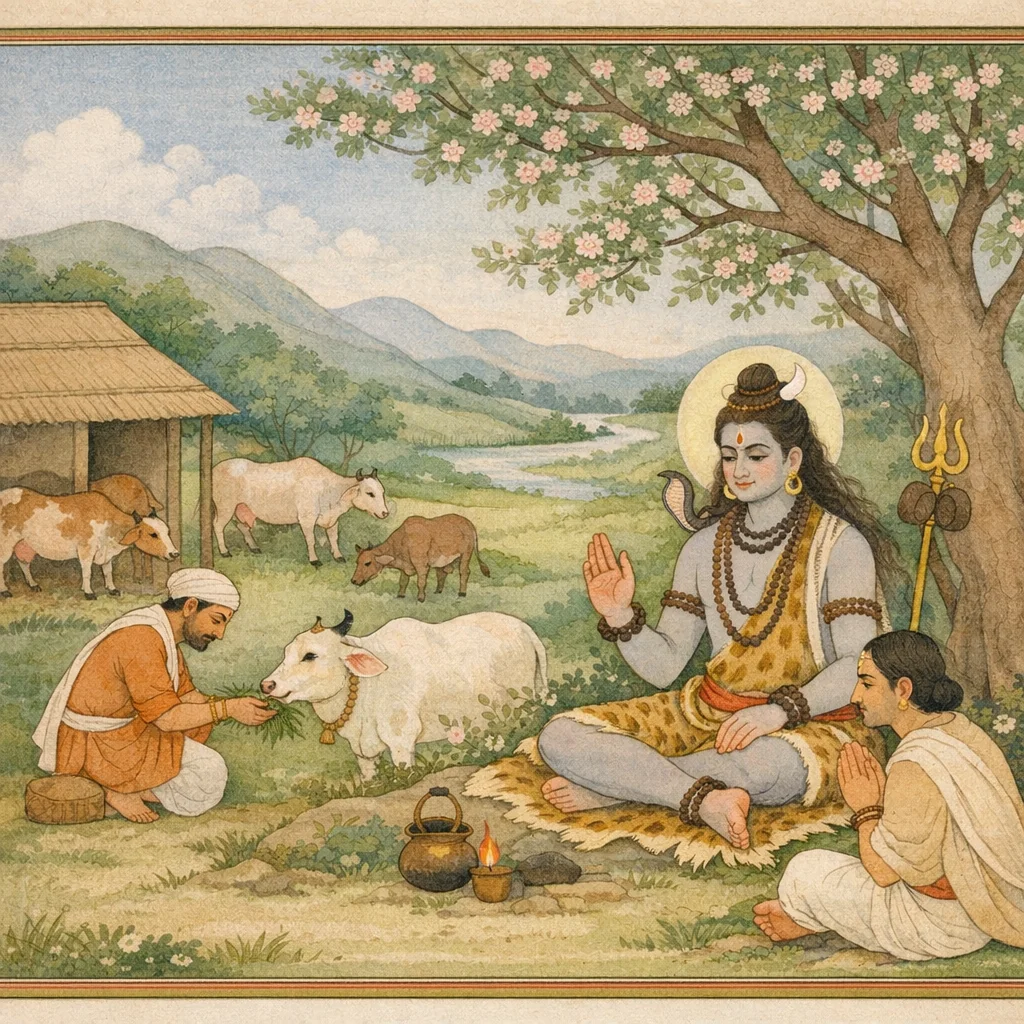
Chapter Arc: धर्म-रहस्य के अधिकारी कौन हैं—यह उद्घोष होता है: जिनकी बुद्धि धर्म में स्थित है और जो श्रद्धावान हैं, उन्हीं को यह ‘सरहस्य’ उपदेश देना चाहिए। → उपदेश का केंद्र ‘गवाद्विक’ (गौ-सेवा/गौ-दान का विधान) बनता है—एक मास तक प्रतिदिन गौ को भोजन देना, स्वयं एकभक्त रहना, और सेवा को ‘अहन्यहनि धर्मेण’ जोड़ना। साधारण कर्म के भीतर छिपे महाफल का रहस्य धीरे-धीरे उभरता है। → गौओं की ब्रह्माण्ड-धारक महिमा का चरम कथन आता है—वे परम पवित्र, महाभागा हैं और देवासुरमानुष सहित तीनों लोकों को धारण करती हैं; उपासित होने पर वरदायिनी बनकर सर्वकर्मों के फल को अनुमोदित/समर्थ करती हैं। → महादेव-रहस्य के रूप में यह निष्कर्ष स्थिर होता है कि गौ-सेवा केवल दान नहीं, लोक-धारण करने वाली पवित्र शक्ति की आराधना है; इसलिए गौएँ सदा पूज्या हैं और उनकी शुश्रूषा महापुण्यदायिनी है।
Shlokas
Verse 1
इस प्रकार श्रीमह्याभारत अनुशासनपर्वके अन्तर्गत दानधर्मपर्वमें दिग्गजोंका धर्मसम्बन रहस्यविषयक एक सौ बत्तीसवाँ अध्याय पूरा हुआ ॥/ १३२ ॥। न२9्च्स्स्ज्स्ि्स्सि ह्य ४-3 त्रयस्त्रिंशर्दाधिकशततमो< ध्याय: महादेवजीका धर्मसम्बन्धी रहस्य महेश्वर उवाच सारमुद्धृत्य युष्माभि: साधुधर्म उदाह्नत: । धर्मगुहामिदं मत्त: शुणुध्व॑ सर्व एव ह
大自在天(摩醯首罗)说道:“你们已提炼其精髓,阐明了高贵的法(达摩)之道。如今你们众人,当从我这里聆听这达摩深藏的内秘。”
Verse 2
येषां धर्मश्िता बुद्धि: श्रद्दधानाश्च ये नराः । तेषां स्यादुपरदेष्टव्य: सरहस्यो महाफल:
大自在天说道:“唯有那些心智恒常安住于达摩、并具深厚信心之人,才应受此达摩教诲;因为此教诲果报广大,且含有神圣的内秘之义。”
Verse 3
निरुद्धिग्नस्तु यो दद्यान्मासमेकं गवाह्विकम् | एकभक्तं तथाश्नीयाच्छुयतां तस्य यत् फलम्
大自在天说道:“当听那人所得之报:其心不惊不扰,离于忧恼;满一月之中,日日供给母牛应得之食养,而自身一日仅食一次。听此有节之施与克己所结之果。”
Verse 4
इमा गावो महाभागा: पवित्र परम॑ स्मृता: । त्रील्लॉकान् धारयन्ति सम सदेवासुरमानुषान्,ये गौएँ परम सौभाग्यशालिनी और अत्यन्त पवित्र मानी गयी हैं। ये देवता, असुर और मनुष्योंसहित तीनों लोकोंको धारण करती हैं
大自在天说道:“这些母牛福德殊胜,常被忆念为至极清净。她们支撑三界——连同诸天、阿修罗与人类。”
Verse 5
तासु चैव महापुण्यं शुश्रूषा च महाफलम् । अहन्यहनि धर्मेण युज्यते वै गवाह्विक:
侍奉这些母牛本身即是大功德,能结大果。那人若日日以正法供养牛群,便恒常积聚广大之达摩。
Verse 6
मया होता हानुज्ञाता: पूर्वमासन् कृते युगे | ततो5हमनुनीतो वै ब्रह्मणा पच्मययोनिना,मैंने पहले सत्ययुगमें गौओंको अपने पास रहनेकी आज्ञा दी थी। पद्मयोनि ब्रह्माजीने इसके लिये मुझसे बहुत अनुनय-विनय की थी
大自在天(摩醯首罗)说道:“在克利多时代(Kṛta Yuga)之初,我曾允准群牛留在我身边。其后,莲华所生的梵天(Brahmā)恳切再三地向我哀请(愿我放还诸牛/使其归于应有之处)。”
Verse 7
तस्माद् व्रजस्थानगतस्तिष्ठत्युपरि मे वृष: । रमे5हं सह गोभिश्व तस्मात् पूज्या: सदैव ता:
因此,那居于我牛群牧处的公牛(vṛṣa),立于我之上——安置在我战车的旗幡之巅。我在与群牛相伴之中常得恒久之乐;故此诸牛当恒常受人敬奉礼拜。
Verse 8
महाप्रभावा वरदा वरं दद्युरुपासिता: । ता गावोअस्यानुमन्यन्ते सर्वकर्मसु यत् फलम्
大自在天说道:“诸牛具无量灵威,能施恩赐福。若人敬奉供养,便得所愿之福。在一切事业之中,人所求之果报为何,诸牛皆予许可——施以恩佑,使所愿之果得以成就。”
Verse 9
तस्य तत्र चतुर्भागो यो ददाति गवाद्विकम्
大自在天说道:“于此事中,若有人恒常施食于一牛,便得持续奉事群牛之功德四分之一。盖诸牛具无量灵威,慈惠能施福赐;若人礼拜供养,诸牛即赐所愿之果,并予认可扶持,使诸业之果得以圆成。”
Verse 133
इति श्रीमहाभारते अनुशासनपर्वणि दानधर्मपर्वणि महादेवरहस्ये त्रयस्त्रिंशयदधिकशततमो<ध्याय:
至此,《圣摩诃婆罗多》之《教诫篇》(Anuśāsana Parva)中“施与之法”一段所载《大天秘义》之第一百三十三章告终。
Frequently Asked Questions
The dilemma is royal self-conception: whether a king may claim parity with the twice-born. The chapter argues against such parity, presenting deference to brāhmaṇas/ṛṣis as a governance necessity with tangible consequences.
Ethical order is portrayed as grounded in spiritual discipline and knowledge: tapas and dharma-based authority can redirect even cosmic and political conditions, so rulers should cultivate humility and protect the institutions of learning and ritual.
No explicit phalāśruti formula appears in the provided passage; instead, the chapter uses consequential exempla (prosperity by Dattātreya’s grace; destruction of kingdoms by brāhmaṇic agency) as an implicit commentary on the results of reverence versus transgression.