Dashati 3
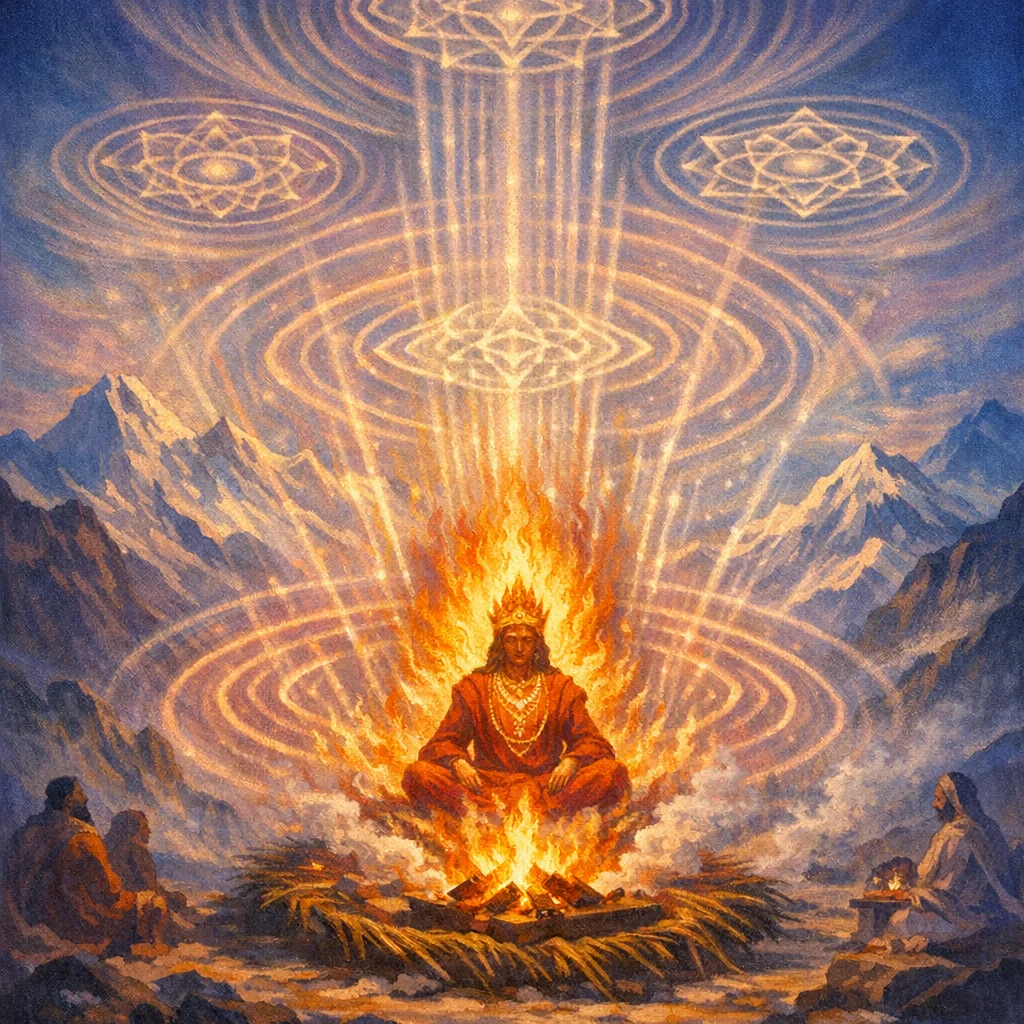
Agni as the gracious ritual guest—kindled, seated on the barhis, and invoked to grant welfare and carry offerings
Agni
Invocatory and reverent with a bright kindling-like uplift
Most attributions are unspecified in the provided data; one verse explicitly names Gopavana as the seer/voice. Rigvedic anukramaṇī confirmation would be needed for full rishi-family mapping.
Primarily applicable to Soma-yajña settings where Agni is established and invoked as the offering-bearer; also suitable in associated fire-kindling and invitation moments.
Mantras
Mantra 1
अग्निं वो वृधन्तमध्वराणां पुरूतमम् अच्छा नप्त्रे सहस्वते
Agni, whom ye augment in (your) sacrifices, the most bountiful, come hither; (come) to the mighty descendant, to him who is endowed with strength.
Mantra 2
अग्निस्तिग्मेन शोचिषा यंसद्विश्वं न्या3त्रिणम् अग्निर्नो वंसते रयिम्
May Agni, with his keen-flaming lustre, restrain every consuming assailant; may Agni be gracious unto us for the bestowal of wealth.
Mantra 3
अग्ने मृड महां अस्यय आ देवयुं जनम् इयेथ बर्हिरासदम्
Agni, be gracious; thou art great: come hither; approach the god-seeking people, taking thy seat upon the sacred grass.
Mantra 4
अग्ने रक्षा णो अंहसः प्रति स्म देव रीषतः तपिष्ठैरजरो दह
Agni, protect us from sin; and, O divine (Agni), do thou, the undecaying, with thy most burning (flames), consume the injurers.
Mantra 5
अग्ने युङ्क्ष्वा हि ये तवाश्वासो देव साधवः अरं वहन्त्याशवः
Agni, yoke, for verily thy horses, O god, the good and the swift, duly bear (the oblation).
Mantra 6
नि त्वा नक्ष्य विश्पते द्युमन्तं धीमहे वयम् सुवीरमग्न आहुत
We, O lord of the people, attain thee; we establish (thee), the radiant, the giver of excellent heroes: O Agni, to whom oblation is presented, be thou (here) for our rite.
Mantra 7
अग्निर्मूर्धा दिवः ककुत्पतिः पृथिव्या अयम् अपां रेतांसि जिन्वति
Agni, the head of heaven, the lord of the summit, (and) of the earth,—this (Agni), quickeneth the generative essences of the waters.
Mantra 8
इममू षु त्वमस्माकं सनिं गायत्रं नव्यांसम् अग्ने देवेषु प्र वोचः
Verily now, do thou, Agni, proclaim among the gods this our newly-framed Gāyatra, the means of acquisition (of the sacrificial reward).
Mantra 9
तं त्वा गोपवनो गिरा जनिष्ठदग्ने अङ्गरः स पावक श्रुधी हवम्
Him, thee, hath Gopavana, with his hymn, generated, O Agni, as a glowing ember; do thou, that purifier, hearken to the invocation.
Mantra 10
परि वाजपतिः कविरग्निर्हव्यान्यक्रमीत् दधद्रत्नानि दाशुषे
Agni, the wise, the lord of sustenance, hath advanced on every side unto the oblations, bearing treasures for the worshipper who presents the offering.
Mantra 11
उदु त्यं जातवेदसं देवं वहन्ति केतवः दृशे विश्वाय सूर्यम्
Up, verily, do the radiant beams bear that divine Jātavedas, the Sun, to be seen of all.
Mantra 12
कविमग्निमुप स्तुहि सत्यधर्माणमध्वरे देवममीवचातनम्
Praise, in the sacrifice, Agni the sage, whose ordinances are true; the god who drives away disease and every injurious visitation.
Mantra 13
शं नो देवीरभिष्टये शं नो भवन्तु पीतये शं योरभि स्रवन्तु नः
May the goddesses be auspicious to us for the attainment of our desire; may they be auspicious to us for the draught; may they stream towards us, bringing welfare and health.
Mantra 14
कस्य नूनं परीणसि धियो जिन्वसि सत्पते जोषाता यस्य ते गिरः
Of whom, now, dost thou wholly take charge; whose devout thoughts dost thou animate, O lord of the good; thou who art the accepter of him whose praises are addressed to thee?
Frequently Asked Questions
It centers on inviting Agni—gracious and great—to come, sit on the sacred grass, hear the call, purify the rite, and make the offering effective; it also gestures toward Indra’s granting of favor in the Soma-session.
The language is primarily ritual: Agni is ‘made to be born’ when the āhavanīya fire is kindled (agnijanana). The “ember” (aṅgara) image highlights his visible, glowing presence in the sacrifice.
Sāmavedic groupings can pivot from the fire-principle that enables offering to the Soma-lord who receives and rewards it. The Indra verse frames divine patronage—whose praise and intention Indra accepts and strengthens.