Adhyaya 23
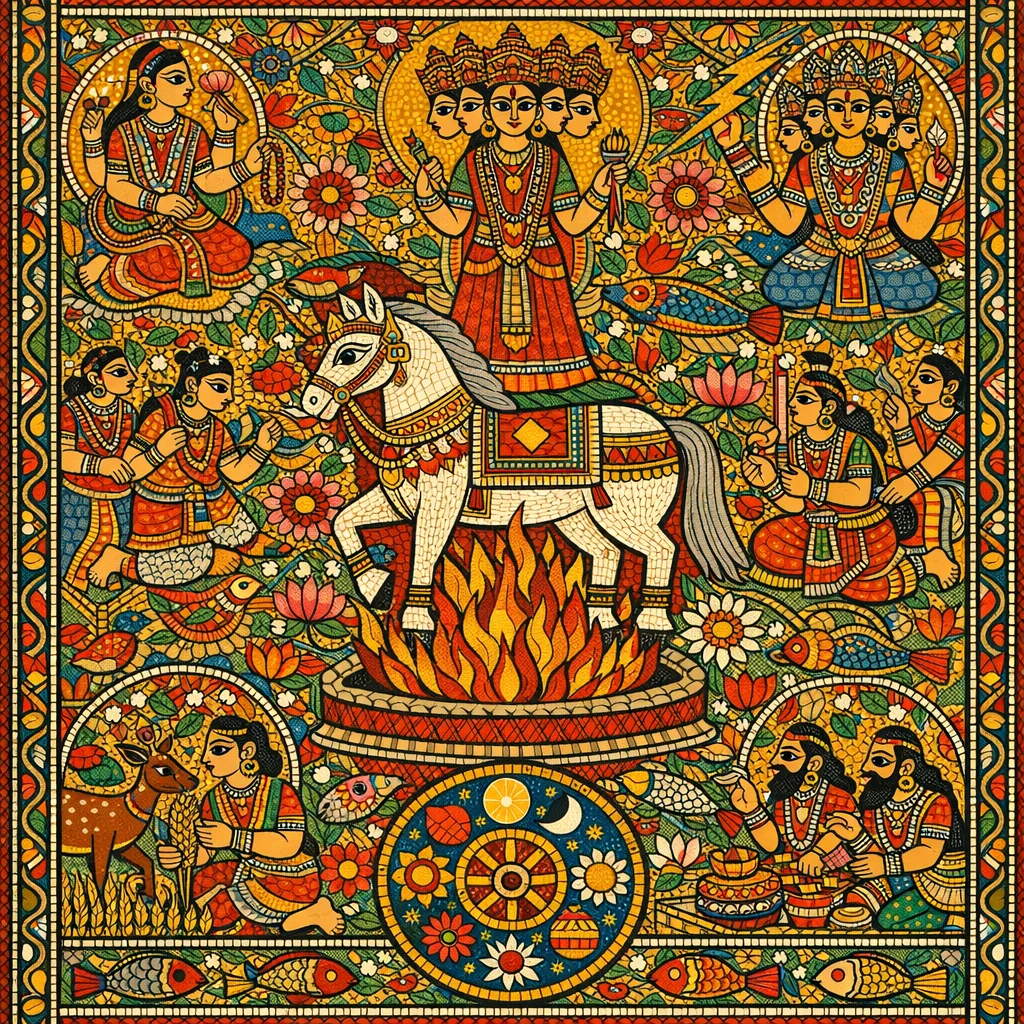
Ashvamedha continuation.
Mantras
Mantra 1
हि॒र॒ण्य॒ग॒र्भः सम॑वर्त॒ताग्रे॑ भू॒तस्य॑ जा॒तः पति॒रेक॑ आसीत् । स दा॑धार पृथि॒वीं द्यामु॒तेमां कस्मै॑ दे॒वाय॑ ह॒विषा॑ विधेम
Hiraṇyagarbha arose in the beginning; when born, he was the one lord of all that is. He upheld this earth and yonder heaven: to what god shall we offer worship with oblation?
Mantra 2
उ॒प॒या॒मगृ॑हीतोऽसि प्र॒जाप॑तये त्वा॒ जुष्टं॑ गृह्णाम्ये॒ष ते॒ योनि॒: सूर्य॑स्ते महि॒मा । यस्तेऽह॑न्त्संवत्स॒रे म॑हि॒मा स॑म्ब॒भूव॒ यस्ते॑ वा॒याव॒न्तरि॑क्षे महि॒मा स॑म्ब॒भूव॒ यस्ते॑ दि॒वि सूर्ये॑ महि॒मा स॑म्ब॒भूव॒ तस्मै॑ ते महि॒म्ने प्र॒जाप॑तये॒ स्वाहा॑ दे॒वेभ्य॑:
Thou art taken with the Upayāma; for Prajāpati do I take thee, acceptable. This is thy womb: the Sun is thy majesty—thy majesty that came to be in the day within the year; thy majesty that came to be in the wind, in the mid-air; thy majesty that came to be in heaven, in the sun: to that thy majesty, to Prajāpati, Svāhā! (for the Gods).
Mantra 3
यः प्रा॑ण॒तो नि॑मिष॒तो म॑हि॒त्वैक॒ इद्राजा॒ जग॑तो ब॒भूव॑ । य ईशे॑ अ॒स्य द्वि॒पद॒श्चतु॑ष्पदः॒ कस्मै॑ दे॒वाय॑ ह॒विषा॑ विधेम
He who by his greatness became the one king of the breathing and the blinking world; he who rules over this—over bipeds and quadrupeds: to what god shall we offer worship with oblation?
Mantra 4
उ॒प॒या॒मगृ॑हीतोऽसि प्र॒जाप॑तये त्वा॒ जुष्टं॑ गृह्णाम्ये॒ष ते॒ योनि॑श्च॒न्द्रमा॑स्ते महि॒मा । यस्ते॒ रात्रौ॑ संवत्स॒रे म॑हि॒मा स॑म्ब॒भूव॒ यस्ते॑ पृथि॒व्याम॒ग्नौ म॑हि॒मा स॑म्ब॒भूव॒ यस्ते॒ नक्ष॑त्रेषु च॒न्द्रम॑सि महि॒मा स॑म्ब॒भूव॒ तस्मै॑ ते महि॒म्ने प्र॒जाप॑तये दे॒वेभ्य॒: स्वाहा॑
Thou art taken with the Upayāma; for Prajāpati do I take thee, acceptable. This is thy womb: the Moon is thy majesty—thy majesty that came to be in the night within the year; thy majesty that came to be in Agni on the earth; thy majesty that came to be among the stars, in the moon: to that thy majesty, to Prajāpati, for the Gods, Svāhā!
Mantra 5
यु॒ञ्जन्ति॑ ब्र॒ध्नम॑रु॒षं चर॑न्तं॒ परि॑ त॒स्थुष॑ः । रोच॑न्ते रोच॒ना दि॒वि
They yoke the tawny, the ruddy one, that moveth on; round about him stand the powers: the shining regions shine forth in heaven.
Mantra 6
यु॒ञ्जन्त्य॑स्य॒ काम्या॒ हरी॒ विप॑क्षसा॒ रथे॑ । शोणा॑ धृ॒ष्णू नृ॒साह॑सा
They yoke for him the desired two bays, wide-flanked, upon the car—ruddy, bold, of man-subduing might.
Mantra 7
यद्वातो॑ अ॒पो अ॑गनीगन्प्रि॒यामिन्द्र॑स्य त॒न्व॒म् । ए॒तᳪ स्तो॑तर॒नेन॑ प॒था पुन॒रश्व॒माव॑र्तयासि नः
When the Wind led on the Waters, dear as Indra’s very body,—by this path of laudation thou bringest back again the horse unto us.
Mantra 8
वस॑वस्त्वाञ्जन्तु गाय॒त्रेण॒ छन्द॑सा रु॒द्रास्त्वा॑ञ्जन्तु॒ त्रैष्टु॑भेन॒ छन्द॑सा ऽऽदि॒त्यास्त्वा॑ञ्जन्तु॒ जाग॑तेन॒ छन्द॑सा । भूर्भुव॒: स्वर्ला॒जी३ञ्छा॒ची३न्यव्ये॒ गव्य॑ ए॒तदन्न॑मत्त देवा ए॒तदन्न॑मद्धि प्रजापते
May the Vasus anoint thee with the Gāyatrī metre; may the Rudras anoint thee with the Triṣṭubh metre; may the Ādityas anoint thee with the Jagatī metre. Earth, air, and sky—parched grains, abundant, for sheep and for cattle: of this food eat, O gods; of this food eat thou, O Prajāpati.
Mantra 9
कः स्वि॑देका॒की च॑रति॒ क उ॑ स्विज्जायते॒ पुन॑ः । किᳪ स्वि॑द्धि॒मस्य॑ भेष॒जं किम्वा॒वप॑नं म॒हत्
Who, pray, goeth solitary on his way? who, indeed, is born again? What, pray, is the remedy for this cold? what, moreover, is the great sowing?
Mantra 10
सूर्य॑ एका॒की च॑रति च॒न्द्रमा॑ जायते॒ पुन॑: । अ॒ग्निर्हि॒मस्य॑ भेष॒जं भूमि॑रा॒वप॑नं म॒हत्
The Sun goeth forth alone; the Moon is born again. Agni, verily, is the remedy of cold; and Earth is the great place of strewing (and sowing).
Mantra 11
का स्वि॑दासीत्पू॒र्वचि॑त्ति॒: किᳪ स्वि॑दासीद् बृ॒हद्वय॑: । का स्वि॑दासीत्पिलिप्पि॒ला का स्वि॑दासीत्पिशङ्गि॒ला
What, indeed, was the first intelligence? What, indeed, was the great bird? What, indeed, was Pilippilā? What, indeed, was Piśaṅgilā?
Mantra 12
द्यौरा॑सीत्पू॒र्वचि॑त्ति॒रश्व॑ आसीद् बृ॒हद्वय॑: । अवि॑रासीत्पिलिप्पि॒ला रात्रि॑रासीत्पिशङ्गि॒ला
Heaven was the first intelligence; the Horse was the great bird. The Ewe was Pilippilā; Night was Piśaṅgilā.
Mantra 13
वा॒युष्ट्वा॑ पच॒तैर॑व॒त्वसि॑तग्रीव॒श्छागै॑र्न्य॒ग्रोध॑श्चम॒सैः श॑ल्म॒लिर्वृद्ध्या॑ । ए॒ष स्य रा॒थ्यो वृषा॑ प॒ड्भिश्च॒तुर्भि॒रेद॑गन्ब्र॒ह्मा कृ॑ष्णश्च नोऽवतु॒ नमो॒ऽग्नये॑
May Vāyu protect thee with the cookers; may the black-necked (goat) with goats; the Nyagrodha with the cups; the Śalmali with increase. This chariot-bull hath gone with four feet: may the black Brahman also protect us. Obeisance unto Agni.
Mantra 14
सᳪशि॑तो र॒श्मिना॒ रथ॒: सᳪशि॑तो र॒श्मिना॒ हय॑: । सᳪशि॑तो अ॒प्स्व॒प्सु॒जा ब्र॒ह्मा सोम॑पुरोगवः
Whetted with the rein is the chariot; whetted with the rein is the steed. Whetted is the water-born (power): the Brahman, with Soma as his forerunner.
Mantra 15
स्व॒यं वा॑जिँस्त॒न्वं॒ कल्पयस्व स्व॒यं य॑जस्व स्व॒यं जु॑षस्व । म॒हि॒मा ते॒ऽन्येन॒ न स॒न्नशे॑
Of thine own might, O prize-winning one, compose thy proper body; of thine own self sacrifice; of thine own self take delight (in the oblation). Thy majesty is not impaired by any other.
Mantra 16
न वा उ॑ ए॒तन्म्रि॑यसे॒ न रि॑ष्यसि दे॒वाँ२ इदे॑षि प॒थिभि॑: सु॒गेभि॑: । यत्रास॑ते सु॒कृतो॒ यत्र॒ ते य॒युस्तत्र॑ त्वा दे॒वः स॑वि॒ता द॑धातु
Verily thou diest not hereby, nor art thou harmed: even to the gods thou goest by paths of happy passage. Where the well-doers sit, whither thy forefathers have gone—there may the god Savitar set thee.
Mantra 17
अ॒ग्निः प॒शुरा॑सी॒त्तेना॑यजन्त॒ स ए॒तँल्लो॒कम॑जय॒द्यस्मि॑न्न॒ग्निः स ते॑ लो॒को भ॑विष्यति॒ तं जे॑ष्यसि॒ पिबै॒ता अ॒पः । वा॒युः प॒शुरा॑सी॒त्तेना॑यजन्त॒ स ए॒तँल्लो॒कम॑जय॒द्यस्मि॑न्वा॒युः स ते॑ लो॒को भ॑विष्यति॒ तं जे॑ष्यसि॒ पिबै॒ता अ॒पः । सूर्य॑: प॒शुरा॑सी॒त्तेना॑यजन्त॒ स ए॒तँल्लो॒कम॑जय॒द्यस्मि॒न्त्सूर्य॒: स ते॑ लो॒को भ॑विष्यति॒ तं जे॑ष्यसि॒ पिबै॒ता अ॒पः
Agni once was the victim; with him they sacrificed; thereby he won this world wherein Agni is: that world shall be thine; thou shalt win it—drink thou these waters. Vāyu once was the victim; with him they sacrificed; thereby he won this world wherein Vāyu is: that world shall be thine; thou shalt win it—drink thou these waters. Sūrya once was the victim; with him they sacrificed; thereby he won this world wherein Sūrya is: that world shall be thine; thou shalt win it—drink thou these waters.
Mantra 18
प्रा॒णाय॒ स्वाहा॑ ऽपा॒नाय॒ स्वाहा॑ व्या॒नाय॒ स्वाहा॑ । अम्बे॒ अम्बि॒केऽम्बा॑लिके॒ न मा॑ नयति॒ कश्च॒न । सस॑स्त्यश्व॒कः सुभ॑द्रिकां काम्पीलवा॒सिनी॑म्
To Prāṇa hail! to Apāna hail! to Vyāna hail! O mother, O kindly mother, O little mother—no one, verily, shall lead me away. The horseman praises Subhadrikā, the dweller in Kāmpīla.
Mantra 19
ग॒णानां॑ त्वा ग॒णप॑तिᳪ हवामहे प्रि॒याणां॑ त्वा प्रि॒यप॑तिᳪ हवामहे नि॒धीनां॑ त्वा॑ निधि॒पति॑ᳪ हवामहे वसो मम । आहम॑जानि गर्भ॒धमा त्वम॑जासि गर्भ॒धम्
Thee, as Lord of hosts, of hosts we invoke; thee, as Lord of what is dear, of what is dear we invoke; thee, as Lord of treasures, of treasures we invoke—O Vasu, be thou mine. I have known the womb-holder; thou hast begotten the womb-holder.
Mantra 20
ता उ॒भौ च॒तुर॑ः प॒दः सं॒प्रसा॑रयाव स्व॒र्गे लो॒के प्रोर्णु॑वाथां॒ वृषा॑ वा॒जी रे॑तो॒धा रेतो॑ दधातु
Do ye, those twain, extend the four steps; do ye spread yourselves forth in the heavenly world. May the Bull, the vigorous Seed-bearer, bestow seed.
Mantra 21
उत्स॑क्थ्या॒ अव॑ गु॒दं धे॑हि॒ सम॒ञ्जिं चा॑रया वृषन् । य स्त्री॒णां जी॑व॒भोज॑नः
From the upper thighs set down the hinder part; apply and spread the unguent, O Bull,—thou who art the living sustenance of women.
Mantra 22
य॒कास॒कौ श॑कुन्ति॒काऽऽहल॒गिति॒ वञ्च॑ति । आह॑न्ति ग॒भे पसो॒ निग॑ल्गलीति॒ धार॑का
‘Yakāsakau!’—the little bird, crying ‘Āhalagiti,’ flits about; the bearers smite the embryo in the womb, crying ‘Nigalgalī!’
Mantra 23
य॒को॒ऽस॒कौ श॑कुन्त॒क आ॒हल॒गिति॒ वञ्च॑ति । विव॑क्षत इव ते॒ मुख॒मध्व॑र्यो॒ मा न॒स्त्वम॒भि भा॑षथाः
‘Yakō’sakau!’—the little bird, crying ‘Āhalagiti,’ flits about. As though it would speak is thy mouth: ‘O Adhvaryu, speak thou not against us!’
Mantra 24
मा॒ता च॑ ते पि॒ता च॒ तेऽग्रं॑ वृ॒क्षस्य॑ रोहतः । प्रति॑ला॒मीति॑ ते पि॒ता ग॒भे मु॒ष्टिम॑तᳪसयत्
Thy mother and thy father, even they, climb to the tree’s top. ‘I will make counter-claim,’—so said thy father; within the womb he pressed a fist.
Mantra 25
मा॒ता च॑ ते पि॒ता च॒ तेऽग्रे॑ वृ॒क्षस्य॑ क्रीडतः । विव॑क्षत इव ते॒ मुखं॒ ब्रह्म॒न्मा त्वं व॑दो ब॒हु
Thy mother and thy father, sporting, are in front of the tree. As though it would speak is thy mouth: O Brahman, speak thou not overmuch.
Mantra 26
ऊ॒र्ध्वमे॑ना॒मुच्छ्रा॑पय गि॒रौ भा॒रᳪ हर॑न्निव । अथा॑स्यै॒ मध्य॑मेधताᳪ शी॒ते वाते॑ पु॒नन्नि॑व
Raise her upward, as one that beareth a burden on a mountain. Then let her middle thrive, as though one were cleansing her in the cold wind.
Mantra 27
ऊ॒र्ध्वमे॑न॒मुच्छ्र॑यताद्गि॒रौ भा॒रᳪ हर॑न्निव । अथा॑स्य॒ मध्य॑मेजतु शी॒ते वाते॑ पु॒नन्नि॑व
Raise him upward, as one that beareth a burden on a mountain. Then let his middle stir, as though one were cleansing him in the cold wind.
Mantra 28
यद॑स्या अᳪहु॒भेद्या॑: कृ॒धु स्थू॒लमु॒पात॑सत् । मु॒ष्काविद॑स्या एजतो गोश॒फे श॑कु॒लावि॑व
When, being to be freed from straitness, make thou it stout as it presseth near; the two testicles indeed of her/him, moving, are as two birds by a cow’s hoof.
Mantra 29
यद्दे॒वासो॑ ल॒लाम॑गुं॒ प्र वि॑ष्टी॒मिन॒मावि॑षुः । स॒क्थ्ना दे॑दिश्यते॒ नारी॑ स॒त्यस्या॑क्षि॒भुवो॒ यथा॑
When the Gods made manifest the marked and distinguished one, the woman is shown by the thigh, even as the brows of Truth are at the eyes.
Mantra 30
यद्ध॑रि॒णो यव॒मत्ति॒ न पु॒ष्टं प॒शु मन्य॑ते । शू॒द्रा यदर्य॑जारा॒ न पोषा॑य धनायति
When the deer eateth barley, he deemeth not the well-nourished beast (as his own); even so the Śūdras, when they become the paramours of an Ārya (woman), seek not prosperity, but are greedy for mere gain.
Mantra 31
यद्ध॑रि॒णो यव॒मत्ति॒ न पु॒ष्टं ब॒हु मन्य॑ते । शू॒द्रो यदर्या॑यै जा॒रो न पोष॒मनु॑ मन्यते
When the deer eateth barley, he counteth not the thriving (beast) as abundant wealth; even so the Śūdra, when he is paramour to an Ārya woman, doth not set his mind in accordance with prosperity.
Mantra 32
द॒धि॒क्राव्णो॑ अकारिषं जि॒ष्णोरश्व॑स्य वा॒जिन॑: । सु॒र॒भि नो॒ मुखा॑ कर॒त्प्र ण॒ आयू॑ᳪषि तारिषत्
A hymn have I wrought for Dadhikrāvan, for the victorious prize-winning Steed: may he make our mouth fragrant, and may he bear forward our life-spans unto safety.
Mantra 33
गा॒य॒त्री त्रि॒ष्टुब्जग॑त्यनु॒ष्टुप्प॒ङ्क्त्या स॒ह । बृ॒ह॒त्युष्णिहा॑ क॒कुप्सू॒चीभि॑: शम्यन्तु त्वा
Gāyatrī, Triṣṭubh, Jagatī, Anuṣṭubh, together with Paṅkti; Bṛhatī, Uṣṇih, and Kakubh—may these, with their needles, compose and set thee firm.
Mantra 34
द्विप॑दा॒ याश्चतु॑ष्पदा॒स्त्रिप॑दा॒ याश्च॒ षट्प॑दाः । विच्छ॑न्दा॒ याश्च॒ सच्छ॑न्दाः सू॒चीभि॑: शम्यन्तु त्वा
The two-footed and the four-footed, the three-footed and those of six feet; the irregular-measured and the well-measured—may they, with their needles, compose and set thee firm.
Mantra 35
म॒हाना॑म्न्यो रे॒वत्यो॒ विश्वा॒ आशा॑ः प्र॒भूव॑रीः । मैघी॑र्वि॒द्युतो॒ वाच॑ः सू॒चीभि॑ः शम्यन्तु त्वा
May the Great-named, the splendid, all the ruling Quarters; may the cloud-born lightnings, the Voices, with their needles, compose and set thee in due order.
Mantra 36
नार्य॑स्ते॒ पत्न्यो॒ लोम॒ विचि॑न्वन्तु मनी॒षया॑ । दे॒वानां॒ पत्न्यो॒ दिश॑ः सू॒चीभि॑ः शम्यन्तु त्वा
May thy women, thy consorts, with thoughtful skill pick out the hair; may the gods’ consorts, the Quarters, with their needles, compose and set thee in due order.
Mantra 37
र॒ज॒ता हरि॑णी॒ः सीसा॒ युजो॑ युज्यन्ते॒ कर्म॑भिः । अश्व॑स्य वा॒जिन॑स्त्व॒चि सिमा॑ः शम्यन्तु॒ शम्य॑न्तीः
Silvery, tawny, and leaden yokes are fitted on by ritual operations; upon the skin of the swift steed may the seams, the boundaries, be smoothed—yea, smoothed into quiet order.
Mantra 38
कु॒विद॒ङ्ग यव॑मन्तो॒ यव॑ञ्चि॒द्यथा॒ दान्त्य॑नुपू॒र्वं वि॒यूय॑ । इ॒हेहै॑षां कृणुहि॒ भोज॑नानि॒ ये ब॒र्हिषो॒ नम॑ उक्तिं॒ यज॑न्ति
Whether, forsooth, those that have barley do indeed, as men give barley, apportion it in due succession after dividing it—here, even here, do thou make for these their portions of food, for them that with reverence and with uttered praise worship at the Barhis.
Mantra 39
कस्त्वा छ्य॑ति॒ कस्त्वा॒ विशा॑स्ति॒ कस्ते॒ गात्रा॑णि शम्यति । क उ॑ ते शमि॒ता क॒विः
Who cutteth thee? who shapeth thee? who setteth thy members in order? who, pray, is thy arranger, the sage?
Mantra 40
ऋ॒तव॑स्त ऋतु॒था पर्व॑ शमि॒तारो॒ वि शा॑सतु । सं॒व॒त्स॒रस्य॒ तेज॑सा श॒मीभि॑: शम्यन्तु त्वा
Let the Seasons, in their several order, as the joints (of time), the pacifiers, duly dispose and rule thee; by the splendour of the Year may they, with their auspicious pacifications, compose and settle thee.
Mantra 41
अ॒र्ध॒मा॒साः परू॑ᳪषि ते॒ मासा॒ आ च्छ्य॑न्तु॒ शम्य॑न्तः । अ॒हो॒रा॒त्राणि॑ म॒रुतो॒ विलि॑ष्टᳪ सूदयन्तु ते
Let the Fortnights be thy joints; let the Months, pacifying, cover and sheath them; and let the Days and Nights, the Maruts, drive together for thee what is loosened and ill-set.
Mantra 42
दैव्या॑ अध्व॒र्यव॒स्त्वा च्छ्य॑न्तु॒ वि च॑ शासतु । गात्रा॑णि पर्व॒शस्ते॒ सिमा॑: कृण्वन्तु॒ शम्य॑न्तीः
May the divine Adhvaryus cover thee and duly dispose thee; may they, pacifying, make for thee, limb by limb, the proper boundaries and measures.
Mantra 43
द्यौ॑स्ते पृथि॒व्यन्तरि॑क्षं वा॒युश्छि॒द्रं पृ॑णातु ते । सूर्य॑स्ते॒ नक्ष॑त्रैः स॒ह लो॒कं कृ॑णोतु साधु॒या
Heaven and Earth and the Mid-air are thine: let Wind fill up for thee the fissure; and let the Sun, together with the Stars, duly make for thee a world, a settled place.
Mantra 44
शं ते॒ परे॑भ्यो॒ गात्रे॑भ्य॒: शम॒स्त्वव॑रेभ्यः । शम॒स्थभ्यो॑ म॒ज्जभ्य॒: शम्व॑स्तु त॒न्वै तव॑
Weal be to thy upper members, and weal to thy lower; weal to thy bones and to thy marrow; weal be unto thy body, unto thy whole person.
Mantra 45
कः स्वि॑देका॒की च॑रति॒ क उ॑ स्विज्जायते॒ पुन॑: । किᳪ स्वि॑द्धि॒मस्य॑ भेष॒जं किम्वा॒वप॑नं म॒हत्
Who, pray, goeth solitary on his course? and who, indeed, is born again and yet again? What, pray, is the remedy for this cold? and what, forsooth, is the great sowing-ground?
Mantra 46
सूर्य॑ एका॒की च॑रति च॒न्द्रमा॑ जायते॒ पुन॑: । अ॒ग्निर्हि॒मस्य॑ भेष॒जं भूमि॑रा॒वप॑नं म॒हत्
The Sun goeth solitary on his course; the Moon is born again and yet again. Agni is the remedy for this cold; the Earth is the great sowing-ground.
Mantra 47
किᳪ स्वि॒त्सूर्य॑समं॒ ज्योति॒: किᳪ स॑मु॒द्रस॑म॒ᳪ सर॑: । किᳪ स्वि॑त्पृथि॒व्यै वर्षी॑य॒: कस्य॒ मात्रा॒ न वि॑द्यते
What light, pray, is like unto the Sun? what pool is like unto the ocean? what is greater than the Earth? of whom is no measure found?
Mantra 48
ब्रह्म॒ सूर्य॑समं॒ ज्योति॒र्द्यौः स॑मु॒द्रस॑म॒ᳪ सर॑: । इन्द्र॑: पृथिव्यै॒ वर्षी॑या॒न् गोस्तु मात्रा॒ न वि॑द्यते
Brahman is the light that is like unto the Sun; Heaven is the pool that is like unto the ocean. Indra is greater than the Earth; but of the Cow, forsooth, no measure is found.
Mantra 49
पृ॒च्छामि॑ त्वा चि॒तये॑ देवसख॒ यदि॒ त्वमत्र॒ मन॑सा ज॒गन्थ॑ । येषु॒ विष्णु॑स्त्रि॒षु प॒देष्वेष्ट॒स्तेषु॒ विश्वं॒ भुव॑न॒मा वि॑वेशा३
I ask thee for understanding, O friend of the gods, if thou hast here attained it in thy mind: in those three steps wherein Viṣṇu is worshipped, into them the whole world of being hath entered.
Mantra 50
अपि॒ तेषु॑ त्रि॒षु प॒देष्व॑स्मि॒ येषु॒ विश्वं॒ भुव॑नमा वि॒वेश॑ । स॒द्यः पर्ये॑मि पृथि॒वीमु॒त द्यामेके॒नाङ्गे॑न दि॒वो अ॒स्य पृ॒ष्ठम्
Even in those three steps am I, wherein the whole world of being hath entered. Forthwith I encompass earth and also heaven; with one member I touch the back of yonder sky.
Mantra 51
केष्व॒न्तः पुरु॑ष॒ आ वि॑वेश॒ कान्य॒न्तः पुरु॑षे॒ अर्पि॑तानि । ए॒तद्ब्र॑ह्म॒न्नुप॑ वल्हामसि त्वा॒ किᳪ स्वि॑न्न॒: प्रति॑ वोचा॒स्यत्र॑
Into what, within, hath the Person entered, and what things are within the Person fastened? This, O Brahman, we draw near to ask of thee: what, pray, wilt thou here declare in answer unto us?
Mantra 52
प॒ञ्चस्व॒न्तः पुरु॑ष॒ आ वि॑वेश॒ तान्य॒न्तः पुरु॑षे॒ अर्पि॑तानि । ए॒तत्त्वात्र॑ प्रतिमन्वा॒नो अ॑स्मि॒ न मा॒यया॑ भव॒स्युत्त॑रो॒ मत्
Within the five hath the Person entered; those things are within the Person fastened. Thus here I recognise thee: by guile be thou not higher than I.
Mantra 53
का स्वि॑दासीत्पू॒र्वचि॑त्ति॒: किᳪ स्वि॑दासीद् बृ॒हद्वय॑: । का स्वि॑दासीत्पिलिप्पि॒ला का स्वि॑दासीत्पिशङ्गि॒ला
What, pray, was the prime intelligence, and what, pray, was the great winged one? What, pray, was Pilippilā, and what, pray, was Piśaṅgilā?
Mantra 54
द्यौ॑रासीत्पू॒र्वचि॑त्ति॒रश्व॑ आसीद् बृ॒हद्वय॑: । अवि॑रासीत्पिलिप्पि॒ला रात्रि॑रासीत्पिशङ्गि॒ला
Heaven was the prime intelligence; the Horse was the great winged one. The Sheep was Pilippilā; Night was Piśaṅgilā.
Mantra 55
का ई॑मरे पिशङ्गि॒ला का ईं॑ कुरुपिशङ्गि॒ला । क ई॑मा॒स्कन्द॑मर्षति॒ क ईं॒ पन्थां॒ वि स॑र्पति
Who, prithee, is the tawny-speckled one? who, indeed, the Kuru-tawny-speckled? Who is it that rusheth at the onset, and who it is that creepeth along the path?
Mantra 56
अ॒जारे॑ पिशङ्गि॒ला श्वा॒वित्कु॑रुपिशङ्गि॒ला । श॒श आ॒स्कन्द॑मर्ष॒त्यहि॒: पन्थां॒ वि स॑र्पति
O Unaging, the tawny-speckled; the porcupine, the Kuru-tawny-speckled. The hare rusheth at the onset; the serpent creepeth along the path.
Mantra 57
कत्य॑स्य वि॒ष्ठाः कत्य॒क्षरा॑णि॒ कति॒ होमा॑सः कति॒धा समि॑द्धः । य॒ज्ञस्य॑ त्वा वि॒दथा॑ पृच्छ॒मत्र॒ कति॒ होता॑र ऋतु॒शो य॑जन्ति
How many are his stations, how many his syllables? how many his oblations, and in how many ways is he kindled? Of the sacrifice’s ordinances I ask thee here: how many Hotṛs, in seasonal order, offer worship?
Mantra 58
षड॑स्य वि॒ष्ठाः श॒तम॒क्षरा॑ण्यशी॒तिर्होमा॑: स॒मिधो॑ ह ति॒स्रः । य॒ज्ञस्य॑ ते वि॒दथा॒ प्र ब्र॑वीमि स॒प्त होता॑र ऋतु॒शो य॑जन्ति
Six are his stations; a hundred are his syllables; eighty his oblations; his kindlings, indeed, are three. The sacrifice’s ordinances I declare to thee: seven Hotṛs, in seasonal order, offer worship.
Mantra 59
को अ॒स्य वे॑द॒ भुव॑नस्य॒ नाभिं॒ को द्यावा॑पृथि॒वी अ॒न्तरि॑क्षम् । कः सूर्य॑स्य वेद बृह॒तो ज॒नित्रं॒ को वे॑द च॒न्द्रम॑सं यतो॒जाः
Who knoweth here the navel of the world? who Heaven and Earth, who the mid-air? Who knoweth the birth-place of the great Sun; who knoweth the Moon, from what source he is born?
Mantra 60
वेदा॒हम॒स्य भुव॑नस्य॒ नाभिं॒ वेद॒ द्यावा॑पृथि॒वी अ॒न्तरि॑क्षम् । वेद॒ सूर्य॑स्य बृह॒तो ज॒नित्र॒मथो॑ वेद च॒न्द्रम॑सं यतो॒जाः
I know the navel of this world; I know Heaven and Earth, I know the mid-air. I know the birth-place of the great Sun; and I know also the Moon, from what source it is born.
Mantra 61
पृ॒च्छामि॑ त्वा॒ पर॒मन्तं॑ पृथि॒व्याः पृ॒च्छामि॒ यत्र॒ भुव॑नस्य॒ नाभि॑: । पृ॒च्छामि॑ त्वा॒ वृष्णो॒ अश्व॑स्य॒ रेत॑: पृ॒च्छामि॑ वा॒चः प॑र॒मं व्यो॑म
I ask thee of the utmost end of the earth; I ask where is the navel of the world. I ask thee of the seed of the vigorous Horse; I ask of Speech, what is her highest heaven.
Mantra 62
इ॒यं वेदि॒: परो॒ अन्त॑: पृथि॒व्या अ॒यं य॒ज्ञो भुव॑नस्य॒ नाभि॑: । अ॒यᳪ सोमो॒ वृष्णो॒ अश्व॑स्य॒ रेतो॑ ब्र॒ह्मायं वा॒चः प॑र॒मं व्यो॑म
This altar is the farther end of the earth; this sacrifice is the navel of the world. This Soma is the seed of the vigorous Horse; this holy power is the highest heaven of Speech.
Mantra 63
सु॒भूः स्व॑य॒म्भूः प्र॑थ॒मोऽन्तर्म॑ह॒त्य॒र्ण॒वे । द॒धे ह॒ गर्भ॑मृ॒त्वियं॒ यतो॑ जा॒तः प्र॒जाप॑तिः
Auspicious, self-existent, first within the mighty flood, he verily placed the ritual embryo, whence Prajāpati was born.
Mantra 64
होता॑ यक्षत्प्र॒जाप॑ति॒ᳪ सोम॑स्य महि॒म्नः । जु॒षतां॒ पिब॑तु॒ सोम॒ᳪ होत॒र्यज॑
Let the Hotṛ worship Prajāpati by reason of Soma’s greatness. Let him accept with favour; let him drink the Soma: O Hotṛ, sacrifice!
Frequently Asked Questions
It continues the Aśvamedha by protecting and empowering the horse’s journey, securing auspicious victory and territorial sovereignty while keeping the rite free from injury and disorder.
Chandas are treated as living cosmic-form powers that ‘set firm’ and correctly compose the ritual work, ensuring stability, proper structure, and efficacy of what is being fashioned.
They reinforce social-ritual boundaries and warn against misreading entitlement or desire, aligning prosperity (puṣṭi) with dharma so the sacrificial order is not violated.