Dashati 19
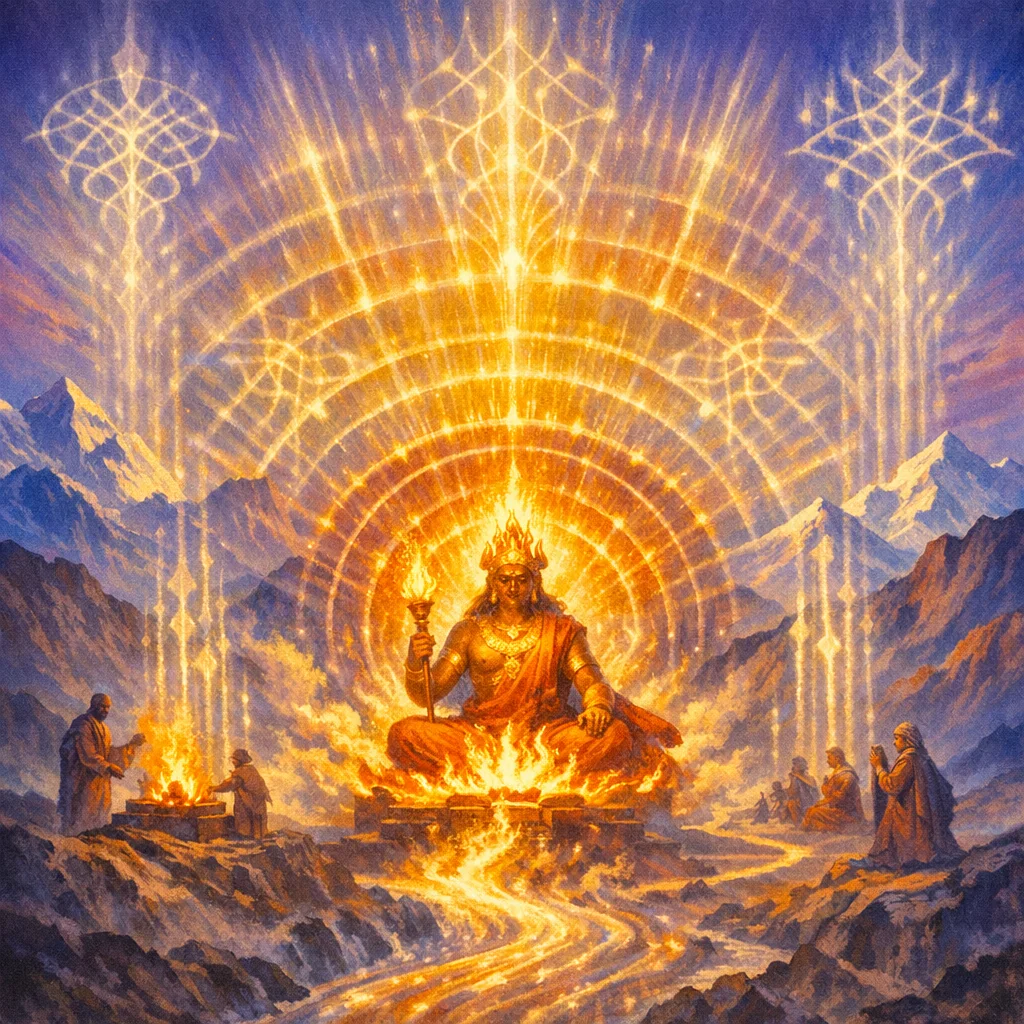
Vaiśvānara-Agni as the embodiment of ṛta who illumines and carries the sacrifice
Agni Vaiśvānara
Majestic and solar-bright (tejas-driven) with a steady authoritative lift
Rṣi not identified from the supplied data; the verses function as Agneya/Vaiśvānara stuti typical of Uttarārcika usage rather than a clearly marked single-family hymn here.
อัคนีไวศวานระคือรูปปรากฏของฤตะ ผู้เป็นเจ้าแห่งแสงศักดิ์สิทธิ์และความร้อนรุ่งโรจน์ ส่องสว่างและอุ้มพายัญให้ก้าวสูงขึ้นสู่สวรรค์ ด้วยการกำกับฤดูกาลและกาลพิธีอย่างถูกต้อง ทรงอำนาจให้ผลแก่พิธีทั้งในอดีตและอนาคต และสถิตสุกสว่างในธามะอันเป็นที่รักของพระองค์
Mantras
Mantra 1
ऋतावानं वैश्वानरमृतस्य ज्योतिषस्पतिम् अजस्रं घर्ममीमहे
เราบูชาไวศวานระ (Vaiśvānara) ผู้สถิตในṛta ผู้เป็นเจ้าแห่งแสงแห่งระเบียบศักดิ์สิทธิ์; เรานอบน้อมต่อความร้อนเรืองรองอันไม่ขาดสาย (gharma).
Mantra 2
य इदं प्रतिपप्रथे यज्ञस्य स्वरुत्तिरन् ऋतूनुत्सृजते वशी
พระองค์ผู้ทรงแผ่พิธีนี้ไว้ก่อนเรา—ผู้ยกยัญญะขึ้นสู่สวรรค์; ผู้ทรงอำนาจอิสระ ผู้ทรงให้ฤดูกาล (ṛtú, กาลอันกำหนด) เคลื่อนไหลไป.
Mantra 3
अग्निः प्रियेषु धामसु कामो भूतस्य भव्यस्य सभ्राडेको वि राजति
อัคนี (Agni) ในสถานที่อันเป็นที่รักของท่าน—ผู้เป็นที่ปรารถนา ผู้บันดาลสิ่งที่เป็นอยู่และสิ่งที่จะเป็น—ส่องประกายรุ่งโรจน์ โดดเดี่ยวก็ยังเจิดจ้า.
Frequently Asked Questions
Vaiśvānara is Agni understood as the universal fire—present in the rite and aligned with cosmic order (ṛta), shining as the lord of sacred light.
“Jyotiṣas-pati” means ‘lord of light’—Agni as the master of radiant sacrificial brilliance. “Gharma” is ‘heat/splendour’ and also echoes the Pravargya ‘gharma’ vessel/rite, emphasizing intense ritual tejas.
It presents Agni as the sovereign regulator of appointed times (ṛtus)—both cosmic seasons and ritual calendars—so the sacrifice proceeds in right order and reaches its heavenly goal.