Dashati 12
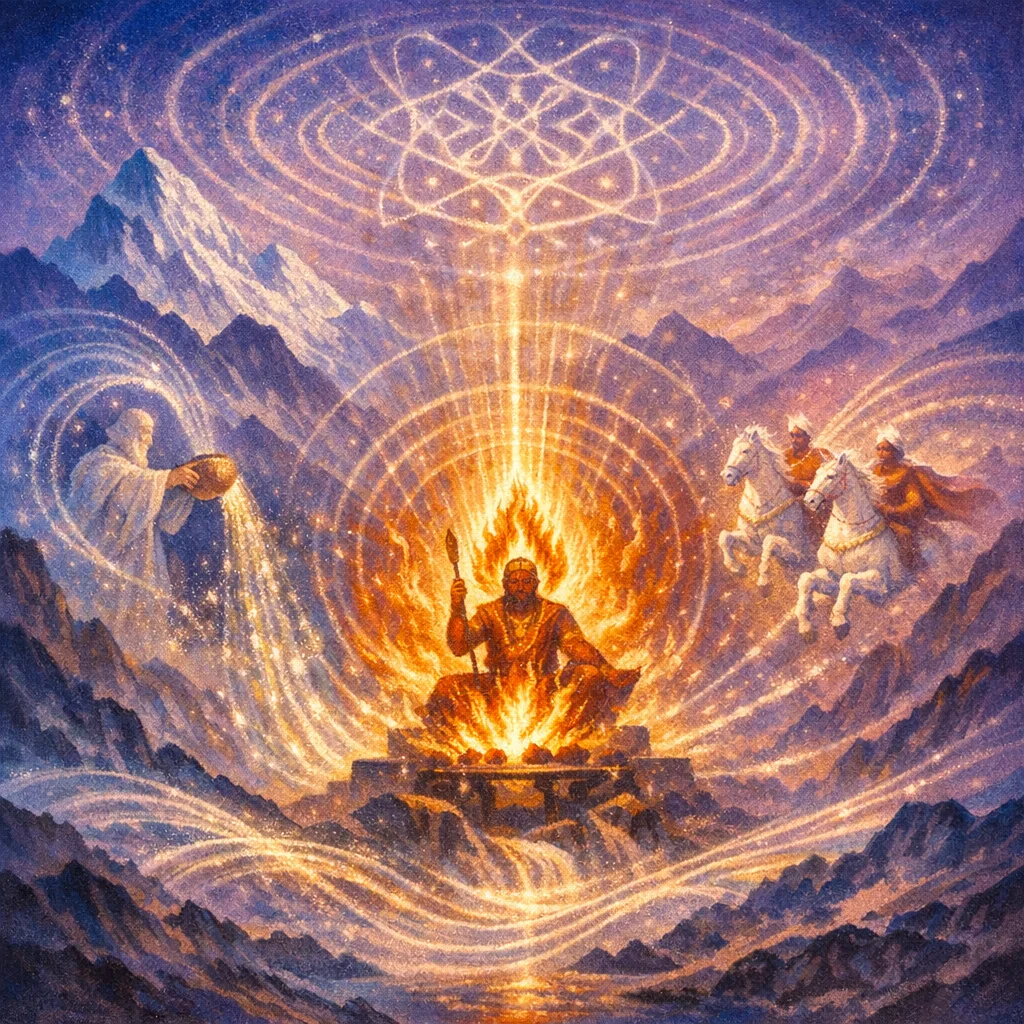
Agni’s empowering protection within the Soma-yajña, expanding to allied divine aid (Soma and the Aśvins)
Agni
Vigorous and propitiatory—strength-seeking praise with a forward-driving sacrificial urgency
R̥ṣi not specified in the provided data; identification would require Rigveda cross-reference for each mantra source and its traditional attribution.
ทศตีนี้สรรเสริญอัคนีผู้ประทานโอชัสและความคุ้มครองในพิธีโสมยัชญะ ให้กำราบศัตรูและขจัดอุปสรรคแห่งพิธีกรรม จากนั้นกล่าวถึงโสมปวะมานะที่ถูกกรองให้บริสุทธิ์และก่อความรื่นเริงแห่งพลังชีวิต แล้วเชื้อเชิญอัศวินทั้งสองให้เสด็จมาโดยเร็ว ประทานรัตนะและความช่วยเหลือ โดยทรงพอพระทัยรับสโตตราเป็นเครื่องยืนยันความสำเร็จของบูชา
Mantras
Mantra 1
प्रति प्रियतमं रथं वृशणं वसुवाहनम् स्तोता वामश्विनावृषि स्तोमेभिर्भूषति प्रति माध्वी मम श्रुतं हवम् .
เพื่อบูชารถศึกอันเป็นที่รักยิ่งของท่าน—รถผู้ทรงพลังและบรรทุกทรัพย์—ผู้สรรเสริญเอ๋ย โอ อัศวิน (Aśvinā) ย่อมประดับท่านด้วยบทสโตตระ; ขอท่านจงสดับคำเชิญอันหวานดุจน้ำผึ้งของข้าพเจ้า (mādhvī…havam).
Mantra 2
अत्यायातमश्विना तिरो विश्वा अहं सना दस्रा हिरण्यवर्त्तनी सुषुम्णा सिन्धुवाहसा माध्वी मम श्रुतं हवम् .
จงเร่งมาที่นี่เถิด โอ อัศวิน (Aśvinā) ข้ามผ่านสรรพแดนทั้งปวง ดุจดังแต่โบราณ; ผู้กระทำอัศจรรย์ ผู้มีวิถีทองคำ ผู้เปี่ยมกรุณายิ่ง เคลื่อนเร็วประหนึ่งถูกสายน้ำพา; ขอจงสดับคำเชิญอันหวานดุจน้ำผึ้งของข้าพเจ้า (mādhvī…havam).
Mantra 3
आ नो रत्नानि बिभ्रतावश्विना गच्छतं युवम् रुद्रा हिरण्यवर्त्तनी जुषाणा वाजिनीवसू माध्वी मम श्रुतं हवम्
โอ อัศวินทั้งสอง จงมาหาเราพร้อมทรัพย์รัตนะเถิด; ผู้ทรงฤทธิ์ ผู้ดำเนินด้วยวิถีทองคำ ผู้ยินดีในพิธีบูชาของเรา ผู้ครอบครองม้าและความมั่งคั่ง—ขอจงสดับคำเชื้อเชิญ (háva) อันหวานดุจน้ำผึ้งของข้าพเจ้า.
Frequently Asked Questions
In Agneya groupings, Agni functions as the sacrificial power that protects the rite and conveys offerings; other deities (like Soma and the Aśvins) appear as allied forces whose gifts are sought within that Agni-led sacrificial frame.
It means “crusher of foes.” Traditional interpretation includes both external enemies and internal obstacles to the sacrifice (antarāya), so the verse asks Agni’s ojas to remove anything that blocks ritual success.
It describes Soma being purified through woollen strainers while priests accompany the flow with Ṛk-recitation; this matches the pavamāna setting where the clarified Soma is prepared to become effective and invigorating in the yajña.