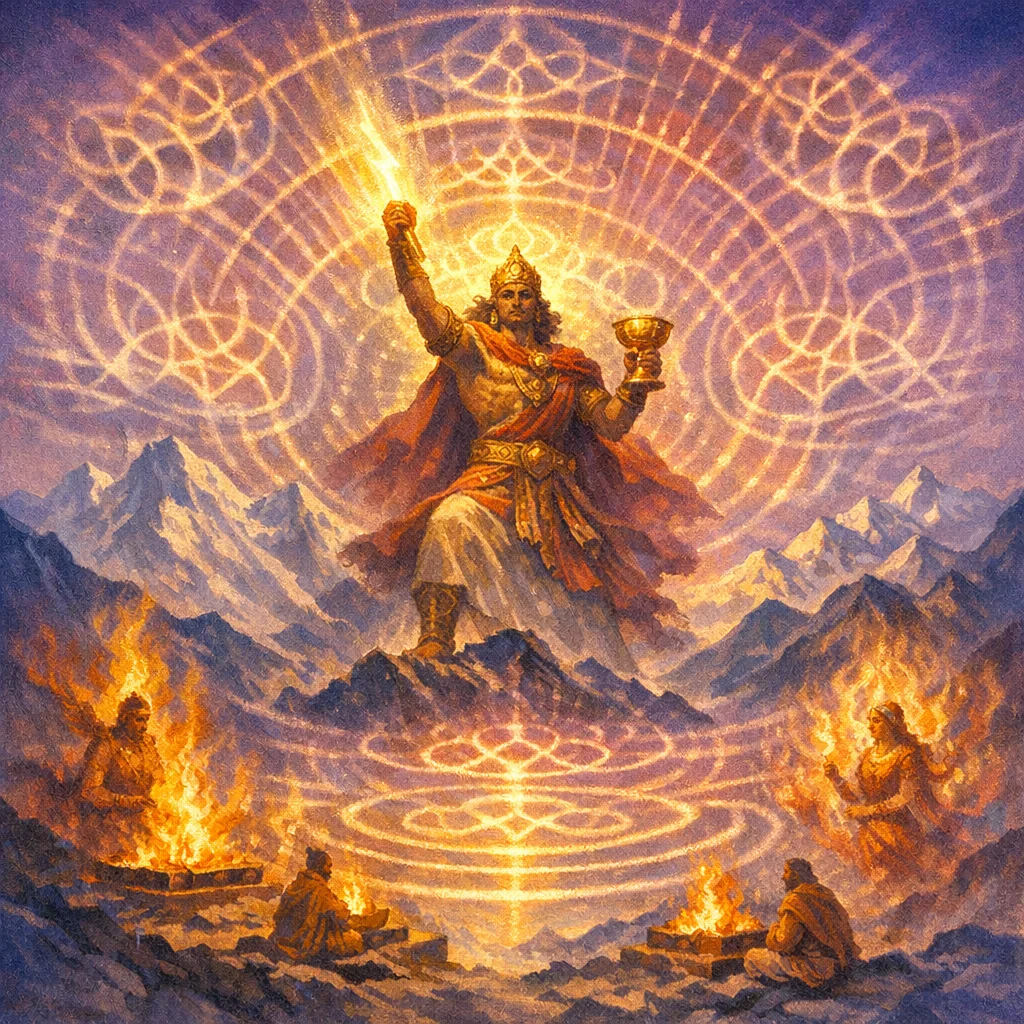
Dashati 2
Aindra invocation for victory and ritual success through Soma-offering and laudation
Indra
Uplifting forceful and martial—suited to Indra’s vīrya and victory-granting presence
The verses reflect an Indra-stuti (and allied Agni/Indrāgnī) tradition; precise ṛṣi attribution requires mapping each mantra to its Ṛgvedic source for this arcikā/prapāṭhaka sequence.
บทสรรเสริญเชิญพระอินทร์เพื่อชัยชนะและความสำเร็จแห่งพิธี ด้วยการถวายโสมและฮวิสในสามสวนนะ พร้อมพราหมณ์มนต์นำเทพให้เสด็จมา พระอินทร์ผู้พิฆาตวฤตระประทานพลังและชัยในศึก ส่วนอัคนีและอินทราคนีเป็นผู้จุดไฟและเป็นปากแห่งเครื่องบูชา คุ้มครองที่นั่งและทางเข้า นำเครื่องบูชาไปถึงและให้การบรรลุผลแห่งพิธีสำเร็จสมบูรณ์
Mantras
Mantra 1
प्र वामर्चन्त्युक्थिनो नीथाविदो जरितारः इन्द्राग्नी इष आ वृणे
เหล่าผู้สาธยายอุกถะ (uktha) ผู้รู้ทางนำพิธี ผู้สรรเสริญทั้งหลาย ขับร้องยกย่องท่านทั้งสอง; อินทระและอัคนี (Agni) ข้าขอเลือกท่านเพื่อความหล่อเลี้ยง.
Mantra 2
इन्द्राग्नी नवतिं पुरो दासपत्नीरधूनुतम् साकमेकेन कर्मणा
อินทระและอัคนีเอ๋ย ท่านทั้งสองร่วมกัน ด้วยวีรกรรมเดียว ได้สั่นสะเทือนให้พังลงซึ่งป้อมปราการเก้าสิบแห่ง อันอยู่ใต้การครอบครองของดาสะ (Dāsa).
Mantra 3
इन्द्राग्नी अपसस्पर्युप प्र यन्ति धीतयः ऋतस्य पथ्या ऽ ऽ3 अनु
โอ อินทระและอัคนี พิธีกรรมอันไม่ขาดสาย และความดำริอันศรัทธา (dhīti) ทั้งหลาย ก้าวไปสู่ท่านทั้งสอง ตามทางแห่ง ṛta—ระเบียบอันเที่ยงธรรม.
Mantra 4
इन्द्राग्नी तविषाणी वां सधस्थानि प्रयांसि च युवोरप्तूर्यं हितम्
โอ้ อินทระและอัคนี ผู้ทรงฤทธิ์ทั้งสอง เพื่อท่านได้กำหนดที่ประทับและหนทางเข้าเฝ้าไว้แล้ว; และการเกื้อหนุนของท่านเพื่อให้ถึงความสำเร็จ ได้สถาปนาไว้ในพิธีบูชา
Frequently Asked Questions
To summon Indra to the Soma pressings (savanāni) with effective prayers (brahmāṇi), so he accepts the offering and grants victory and strength.
Agni is the kindled power that carries offerings, and Indrāgnī together represent coordinated might and proper ‘seating/approach’ in the rite—supporting Indra’s reception of Soma and the rite’s completion.
It points to contests or struggles—ritual and worldly—where Indra’s help is sought for overcoming obstacles and gaining success, wealth, and victory.