Dashati 12
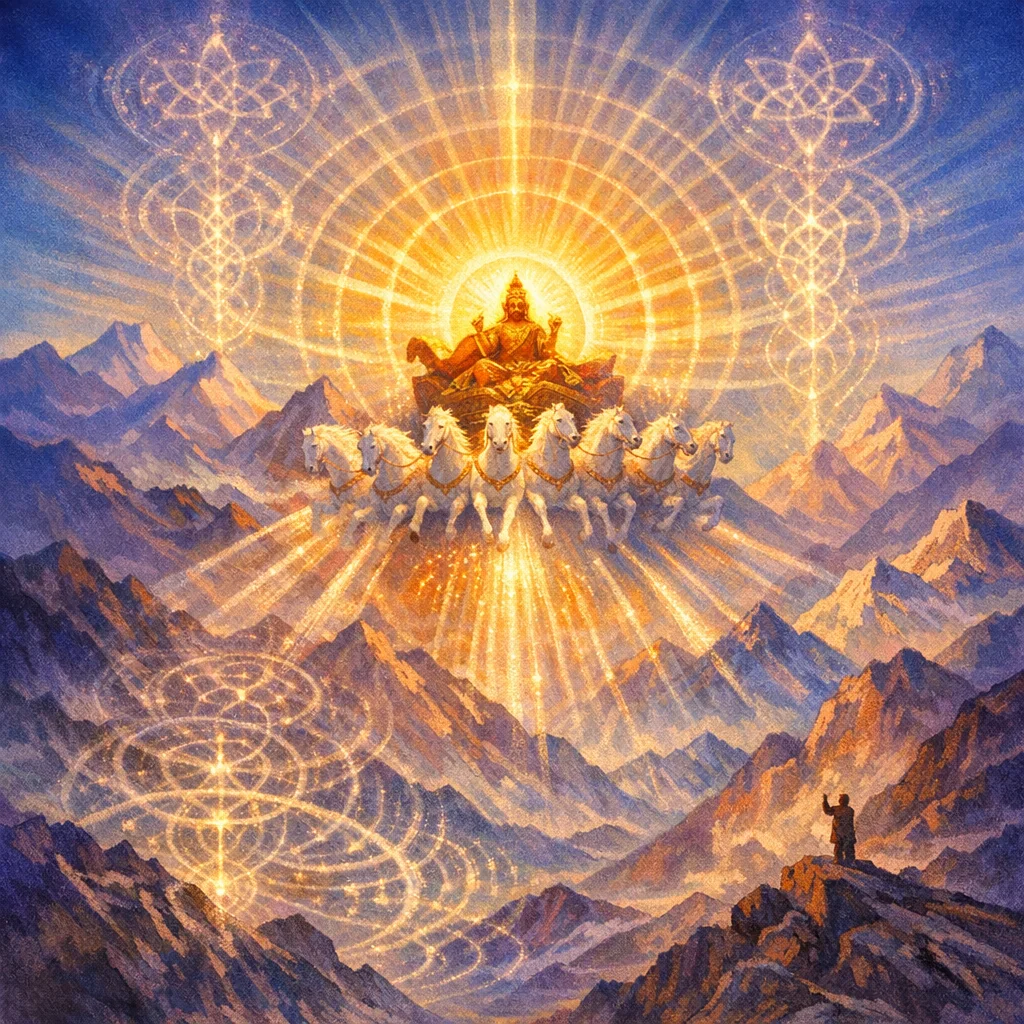
Sūrya as Bradhna/Aruṇa—solar yoking, radiant order, and epiphany
Sūrya/Āditya (Bradhna/Aruṇa)
Radiant forward-moving and proclamatory (epiphany/illumination tone)
Attribution is uncertain in the provided material; the diction aligns with common RV solar-hymn and praise-petition styles with an Indra-stuti insertion suggesting compilation by thematic (Sūrya/ketu) and ritual utility rather than a single fixed family.
สุริยะ/อาทิตยะในนามบรัธนะ–อรุณะถูกอัญเชิญให้เทียมและนำพารถแห่งแสง ดำเนินอย่างมั่นคงเพื่อสถาปนาและยืนยันระเบียบจักรวาลอันสว่างไสว ให้ปรากฏแดนสวรรค์อันรุ่งโรจน์ (rocanāḥ) และให้ “เกตุ” (ธงสัญญาณ) กับ “เปศัส” (รูปอันมองเห็นได้) เผยสิ่งที่เร้นลับให้เป็นที่ประจักษ์ จากนั้นจึงวอนขอความคุ้มครองและที่พึ่ง (śaraṇā) โดยเฉพาะต่ออินทระ ผู้เป็นที่ลี้ภัยและผู้ประทานทรัพย์ ให้ส่วนแบ่ง (bhāga) และความมั่งคั่ง/ทาน (rādhas) แก่ผู้บูชาเป็นผลแห่งการสรรเสริญ
Mantras
Mantra 1
त्वमिन्द्र यशा अस्यृजीषी शवसस्पतिः त्वं वृत्राणि हंस्यप्रतीन्येक इत्पुर्वनुत्तश्चर्षणीधृतिः
โอ้ อินทรา ผู้รุ่งโรจน์ ผู้ถือวัชระ (vajra) เจ้าแห่งพลัง; พระองค์ผู้เดียวผู้ต้านทานมิได้ ทรงสังหารเหล่าวฤตระ (Vṛtra) ทั้งหลาย—ทรงถูกเร้าให้เกื้อกูลมาตั้งแต่กาลก่อน—ผู้ค้ำจุนหมู่ชนมนุษย์.
Mantra 2
तमु त्वा नूनमसुर प्रचेतसं राधो भागमिवेमहे महीव कृत्तिः शरणा त इन्द्र प्र ते सुम्ना नो अश्नवन्
ขอเราทั้งหลายวอนขอพระองค์—พระองค์เองในบัดนี้—โอ้ อินทราผู้ทรงฤทธิ์และทรงปรีชา เพื่อทรัพย์สมบัติ ดุจขอส่วนแบ่งที่พึงได้. พระองค์ดุจผืนคลุมอันใหญ่ เป็นที่พึ่งพิง; ขอพระกรุณาของพระองค์จงมาถึงเรา และขอให้เราบรรลุเถิด.
Mantra 3
केतुं कृण्वन्नकेतवे पेशो मर्या अपेशसे समुषद्भिरजायथाः
ทรงทำเครื่องหมายแก่ผู้ไร้เครื่องหมาย ทรงทำความงามแก่ผู้ไร้เครื่องประดับ; โอ วีรชนหนุ่มเอ๋ย ท่านได้ปรากฏพร้อมกับหมู่ปุโรหิตที่ชุมนุมและนั่งร่วมกัน
Frequently Asked Questions
Bradhna/Aruṇa is a solar epithet: the tawny-bright Sūrya whose movement and radiance illuminate the heavenly regions (rocanāḥ) and stabilize the worlds.
Ketu means a visible sign or ensign—radiance that makes the deity recognizable. The verse contrasts “without a sign/without adornment” to show the deity’s power to manifest clarity from obscurity.
In Sāman collections, verses can be grouped by ritual usefulness as well as theme. Indra’s verse supplies the petitionary element—refuge, favour, and wealth—complementing the solar verses that establish luminous order.