Dashati 7
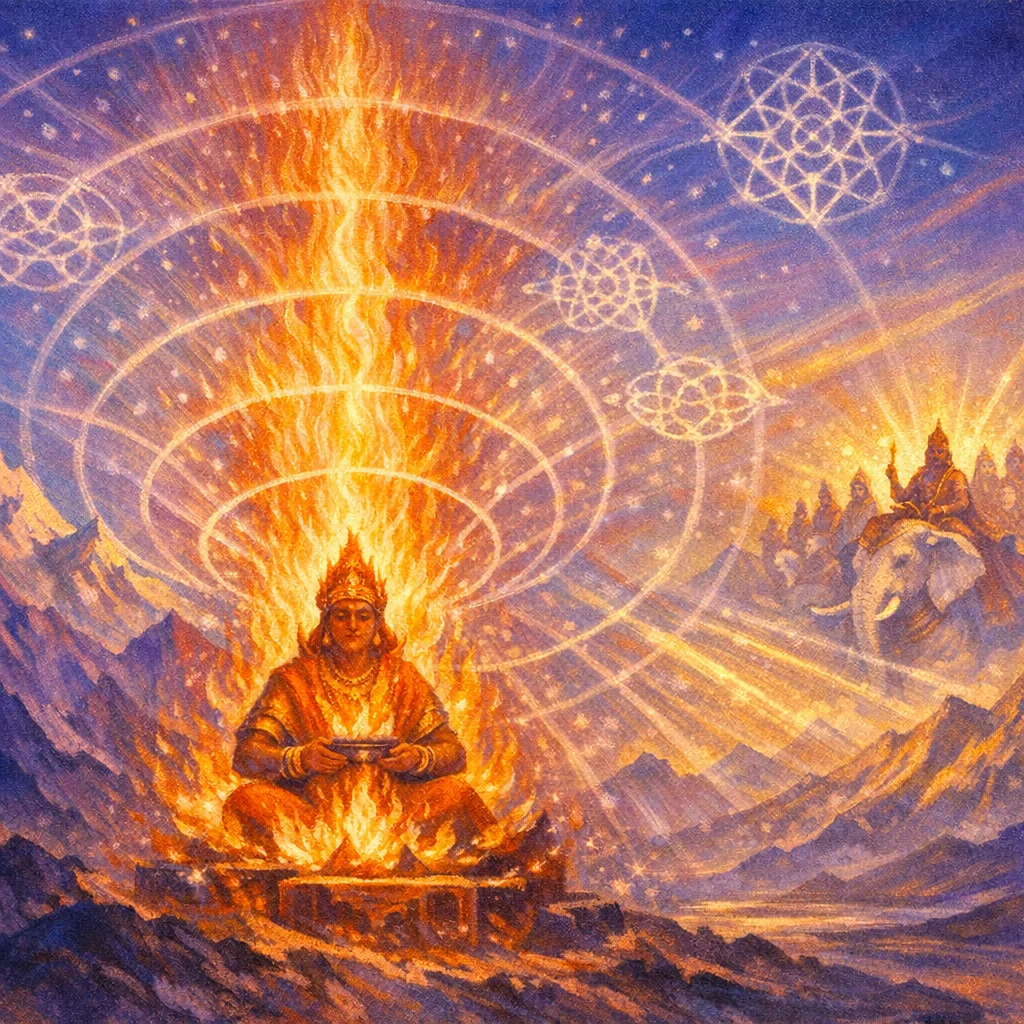
Agni as the manifest, wise carrier of oblations, leading the rite toward Indra’s universal sovereignty
Agni
Bright forward-driving and declarative—moving from kindling/manifestation to royal affirmation
R̥ṣi attribution is not provided in the input; identification requires concordance with the underlying Ṛgvedic sources for these mantras and the Sāmavedic anukramaṇī tradition.
อัคนีผู้ปรากฏเด่น เป็นผู้รู้แจ้งและเป็นพาหะนำเครื่องบูชา (หวิส) ไปถึงเทพทั้งหลายโดยปลอดภัย ดุจราชรถแห่งพิธีกรรม; การสรรเสริญและการถวายถูกวางให้ถูกต้องแก่ผู้รับอันสมควร—อินทระพร้อมด้วยวิศเวเทวะทั้งปวง—และลงท้ายด้วยถ้อยประกาศหนักแน่นถึงความเป็นกษัตริย์และอำนาจครอบคลุมสากลของอินทระ ผู้ประทานชัยชนะ อธิปไตย และความอุดมสมบูรณ์แก่ยัญพิธี
Mantras
Mantra 1
अचेत्यग्निश्चिकितिर्हव्यवाड्न सुमद्रथः
อัคนี (Agni)—ผู้รู้แจ้งไม่หลงลืม—ได้ปรากฏแล้ว; ผู้แบกหอบเครื่องบูชา (havyavāḍ) เพื่อเรา ทรงมีคำปรึกษาดี และทรงจัดพร้อมดีเพื่อการนำส่ง (เครื่องบูชา).
Mantra 2
अग्ने त्वं नो अन्तम उत त्राता शिवो भुवो वरूथ्यः
โอ้อัคนี พระองค์ทรงเป็นมิตรผู้ใกล้ที่สุดของเรา และทรงเป็นผู้คุ้มครองด้วย; ผู้เป็นมงคล พระองค์ทรงเป็นที่พึ่งอันกำบังในโลกแห่งสรรพชีวิต.
Mantra 3
भगो न चित्रो अग्निर्महोनां दधाति रत्नम्
อัคนี (Agni) ผู้รุ่งเรืองดุจภคะ (Bhaga) ประทานรัตนะ—แม้ทรัพย์แห่งมหาบุรุษทั้งหลาย—แก่ผู้บูชาและขับสวดในพิธี.
Mantra 4
विश्वस्य प्र स्तोभ पुरो वा सन्यदि वेह नूनम्
บัดนี้ ณ ที่นี้ ขอให้สโตภะ (stobha) ออกนำหน้าเพื่อพิธีทั้งปวง ประสานบทขับกับการกระทำ เป็นบทนำแห่งพิธี.
Mantra 5
उषा अप स्वसुष्टमः सं वर्त्तयति वर्त्तनिं सुजातता
อุษา (Uṣā, อรุณรุ่ง)—ผู้เลิศในรูปงามของตน ผู้บังเกิดโดยมงคล—ให้วิถีเริ่มเคลื่อนไหว และบัดนี้ขับเคลื่อนให้ดำเนินไปข้างหน้า (เพื่อพิธี).
Mantra 6
इमा नु कं भुवना सीषधेमेन्द्रश्च विश्वे च देवाः
บัดนี้ ในหมู่โลกทั้งหลาย เราควรตั้งถวายเครื่องบูชาและบทสรรเสริญเหล่านี้แก่ผู้ใดโดยชอบ?—แด่อินทรา (Indra) และแด่เทพทั้งปวง.
Mantra 7
वि स्रुतयो यथा पथ इन्द्र त्वद्यन्तु रातयः
ดุจหนทางที่แผ่ไปเป็นหลายสาย โอ้อินทรา (Indra) ขอทานทั้งหลายจงไหลออกจากท่านมาสู่เรา.
Mantra 8
अया वाजं देवहितं सनेम मदेम शतहिमाः सुवीराः
ด้วยบทขับนี้ ขอให้เราบรรลุรางวัลแห่งพลังที่เทพกำหนดไว้; ขอให้เราชื่นบาน มีอายุยืนผ่านร้อยฤดูหนาว และอุดมด้วยบุตรผู้ประเสริฐ.
Mantra 9
ऊर्जा मित्रो वरुणः पिन्वतेडाः पीवरीमिषं कृणुही न इन्द्र
ด้วยพลังอันค้ำจุน มิตระและวรุณะทำให้อิḍā (เครื่องบูชาเป็นอาหาร) พองเต็ม; โอ้อินทระ ขอท่านจงบันดาลอาหารและโภชนาการอันอุดมแก่พวกเราเถิด.
Mantra 10
इन्द्रो विश्वस्य राजति
อินทระทรงเป็นราชาเหนือสรรพสิ่ง ทรงครองทั่วทิศและส่องประกายไพศาล
Frequently Asked Questions
It links the rite’s success to Agni, who becomes manifest and carries the offering, and then confirms Indra (with the All-Gods) as the chief recipient and ruler over all.
The question frames correct ritual orientation—offerings and praise must be ‘placed’ with the proper divine recipients, resolved here as Indra and the Viśve Devāḥ.
It serves as a compact climax: a strong, memorable affirmation that Indra reigns over all, sealing the preceding invocations with a statement of universal lordship.