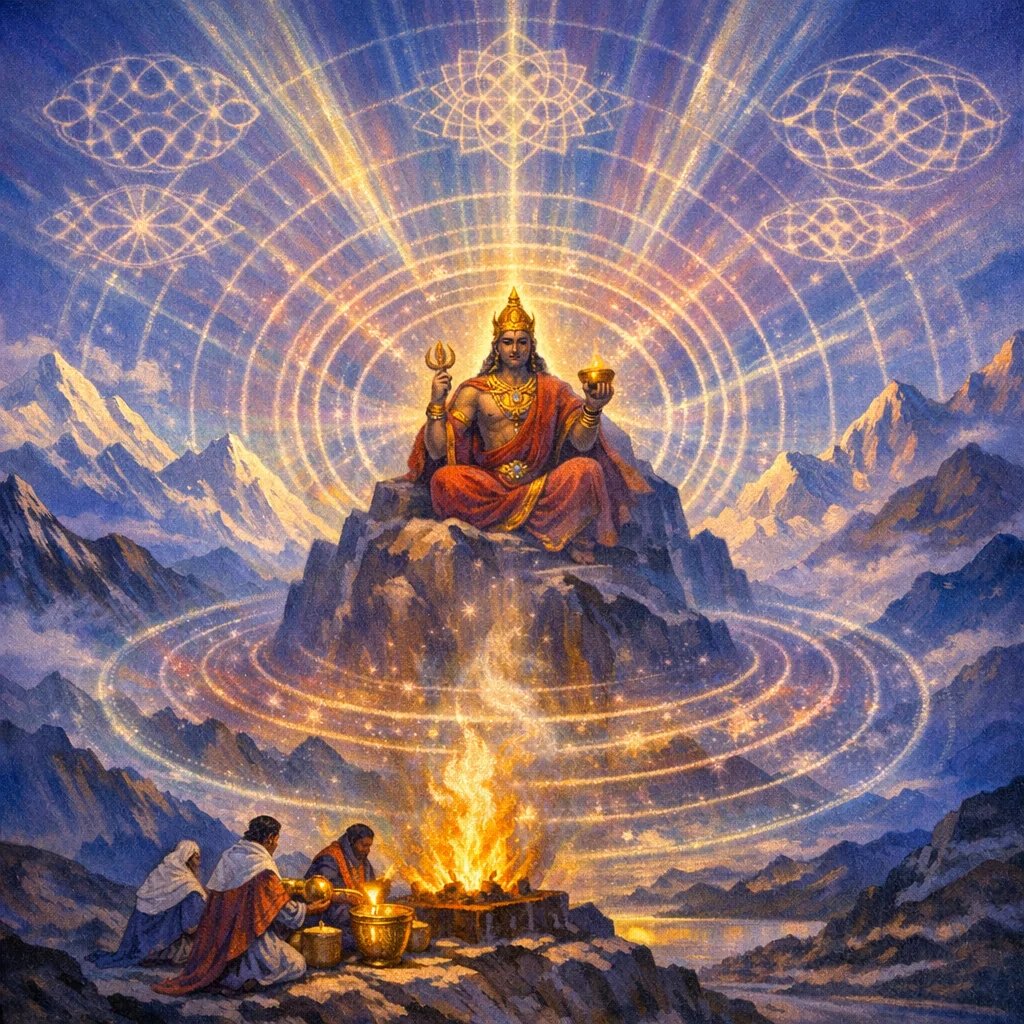
Dashati 3
Aindra Soma-invocation: summoning Indra to the pressed Soma and affirming ṛta-guided protection that stabilizes the sacrifice
Indra
Invitatory and triumphant with a steady ‘pressing-and-offering’ urgency that turns to solemn assurance of order and protection
R̥ṣi attributions are not supplied in the input; identification would require concordance with the corresponding Ṛgvedic sources for these mantras.
ทศตีนี้ว่าด้วยการอัญเชิญอินทราให้เสด็จมารับโสมที่คั้นแล้ว และยืนยันว่าการคุ้มครองซึ่งนำโดยฤตะ (ระเบียบสัจธรรม) ทำให้พิธีบูชายัญมั่นคง โสมบูชาเป็นการกระทำชี้ขาดที่ดึงอินทราผู้ทรงพลังและผู้ประทานชัยชนะ/วาชะ (vāja) ผู้เป็นศตกรตุ (śatakratu) ให้มาสนับสนุนผู้บูชา พร้อมกันนั้น มิตร–วรุณะและอริยมันถูกวิงวอนให้ “นำไปโดยทางตรง” ตามฤตะและความประพฤติที่ถูกต้อง และระลึกถึงวิษณุผู้สถาปนาสามก้าว/สามสถานี อันเป็นฐานของระเบียบจักรวาลที่รองรับพิธีกรรมและผู้ประกอบพิธี
Mantras
Mantra 1
आ व इन्द्र कृविं यथा वाजयन्तः शतक्रतुम् मंहिष्ठं सिञ्च इन्दुभिः
จงเสด็จมาเถิด อินทรา ดุจผู้มุ่งไปหาผู้กิน; เราทั้งหลายผู้มุ่งชัยชนะ รดพรมด้วยหยดโสมะ (Soma) แด่ผู้มีฤทธิ์ร้อยประการ (śatakratu) ผู้เอื้อเฟื้อยิ่งนัก.
Mantra 2
अतश्चिदिन्द्र न उपा याहि शतवाजया इषा सहस्रवाजया
แม้จากที่นี่เอง อินทราเอ๋ย จงเข้ามาใกล้เราเถิด: พร้อมด้วยชัยชนะร้อยเท่า พร้อมด้วยโภชนาการ (iṣā) พร้อมด้วยชัยชนะพันเท่า.
Mantra 3
आ बुन्दं वृत्रहा ददे जातः पृच्छद्वि मातरम् क उग्राः के ह शृण्विरे
ผู้สังหารวฤตระ (Vṛtrahā) นำเครื่องดื่มที่รวบรวมไว้มา ณ ที่นี้; ครั้นปรากฏกำเนิดแล้ว จึงถามมารดาว่า “ผู้เกรียงไกรเหล่านั้นคือใคร? ใครเล่าฟังบทขับขานนี้โดยแท้?”
Mantra 4
बृबदुक्थं हवामहे सृप्रकरस्नमूतये साधः कृण्वन्तमवसे
เราขอเชื้อเชิญพระอินทระ (Indra) ด้วยบทสรรเสริญอันยิ่งใหญ่—ผู้ทรงหัตถ์อันแข็งแกร่ง—เพื่อขอความเกื้อกูล; ขอเชื้อเชิญพระองค์ผู้ทรงทำให้ยัชญะ (yajña) สำเร็จสมบูรณ์ เพื่อเป็นที่พึ่งคุ้มครองของเรา.
Mantra 5
ऋजुनीती नो वरुणो मित्रो नयति विद्वान् अर्यमा देवैः सजोषाः
ด้วยการนำทางอันเที่ยงตรง วรุณะ (Varuṇa) และมิตระ (Mitra) ทรงนำเราไป; อริยมัน (Aryaman) ผู้ทรงปรีชาก็เช่นกัน ทรงพร้อมเพรียงกับเหล่าเทพทั้งหลาย.
Mantra 6
दूरादिहेव यत्सतो ऽरुणप्सुरशिश्वितत् वि भानुं विश्वथातनत्
จากแดนไกลจนถึงที่นี่ เมื่อพระองค์เสด็จดำเนินมา พลังผู้มีม้าแดงก็ทอประกาย; พระองค์แผ่รัศมีออกไปทุกทิศทุกทาง.
Mantra 7
आ नो मित्रावरुणा घृतैर्गव्यूतिमुक्षतम् मध्वा रजांसि सुक्रतू
โอ มิตระและวรุณะ จงเสด็จมาหาเราเถิด; ด้วยฆี (เนยใส) จงพรมน้ำค้างให้ทางแห่งความอุดมสมบูรณ์; ด้วยความหวานดุจโสมะ จงชุ่มชื้นแด่ภูมิภาคทั้งปวง—ผู้ทรงธรรมบัญญัติอันดีงาม.
Mantra 8
उदु त्ये सूनवो गिरः काष्ठा यज्ञेष्वत्नत वाश्रा अभिज्ञु यातवे
เสียงเหล่านั้น—ดุจบุตรแห่งพิธี—พุ่งขึ้นสู่เบื้องบน; ในยัญญะทั้งหลายยืดไปสู่ทิศทั้งปวง กึกก้องกังวาน เพื่อให้ถึง (เหล่าเทพ) ผู้กำลังเสด็จมาใกล้.
Mantra 9
इदं विष्णुर्वि चक्रमे त्रेधा नि दधे पदम् समूढमस्य पांसुले
นี่คือวิษณุ ผู้ก้าวย่างกว้างไกล; พระองค์ทรงตั้งที่ประทับแห่งบาทไว้มั่นคงเป็นสามส่วน—รอยก้าวอันเร้นลับของพระองค์ในแดนธุลีแห่งปฐพี.
Frequently Asked Questions
Because the verses center on inviting Indra—‘the hundred-powered’—to come to the Soma offering and to grant strength, bounty, and winning-power to the sacrificer.
They represent ṛta (truth, right order) and ‘straight guidance’ (ṛjunīti), ensuring the rite is performed correctly and that the sacrificer is led and protected in harmony with the gods.
It reinforces the cosmic foundation of the sacrifice: Viṣṇu’s three stations establish and secure the ordered world in which the Soma rite can be effective.