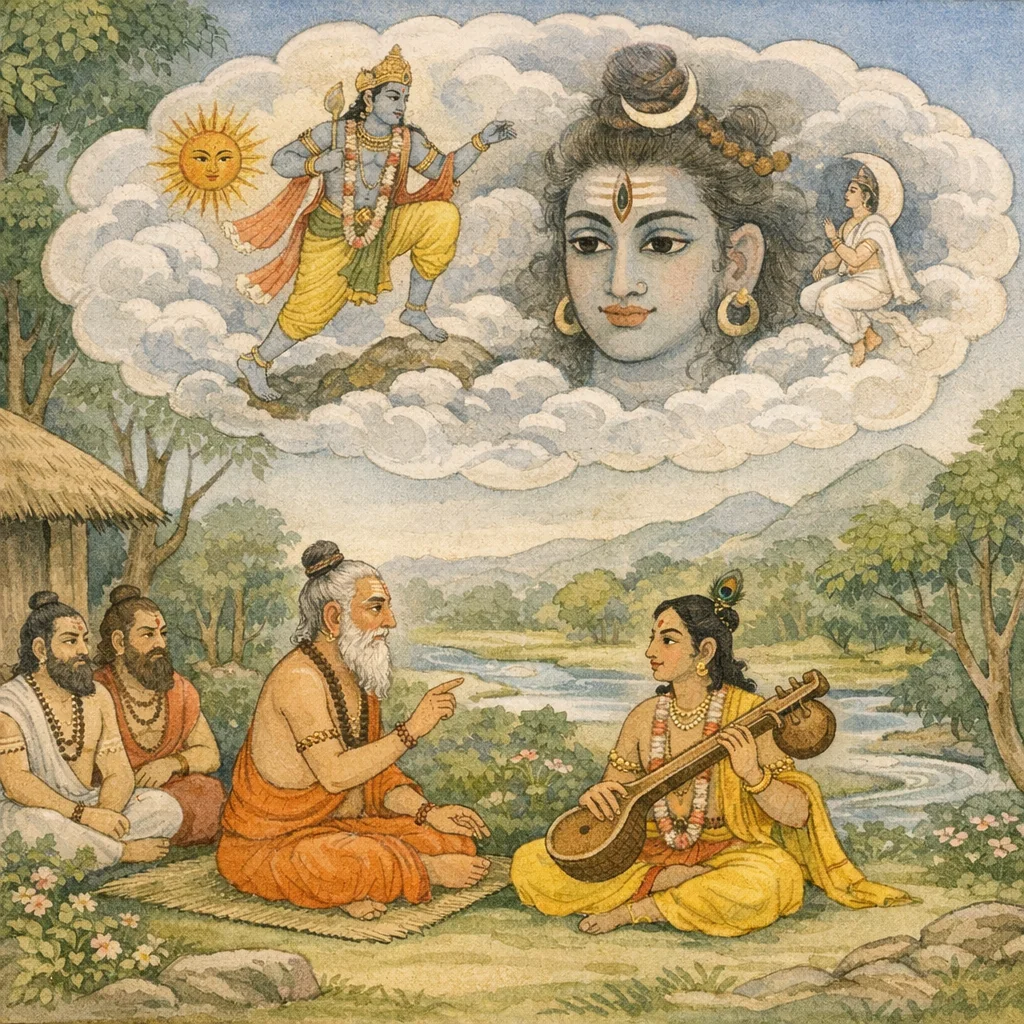
Adhyaya 60: The Second Sin-Destroying Hymn (Pāpaśamana Stava) and the Syncretic Praise of Hari-Hara
द्वितीय-पापशमन-स्तवः (Dvitīya-Pāpaśamana-Stavaḥ)
Papasamana Stava
పులస్త్య–నారద సంభాషణలో ఈ అధ్యాయంలో ‘ద్వితీయ పాపశమన-స్తవం’ ప్రస్తావించబడింది. పులస్త్యుడు విధివిధానంగా పఠనం, అధ్యయనం చేస్తే పాపనాశం కలుగుతుందని, శ్రవణం–స్మరణం–సంకీర్తనం శుద్ధికర శక్తిని ప్రత్యేకంగా బోధిస్తాడు. స్తవంలో వైష్ణవ, శైవ చిహ్నాల సమన్విత నమస్కారమాల ఉంది—మత్స్య, కూర్మ, త్రివిక్రమ, నారాయణ, గరుడాసన రూపాలతో పాటు శివుని నీలకంఠ, కపర్దిన్, త్రినయన, రుద్రదేవేశ వంటి నామాలు కూడా, హరి-హర సమన్వయ తత్త్వాన్ని వెల్లడిస్తాయి. సూర్య, శశి, ధ్రువ వంటి లోకదీపాలు, అగస్త్య, కపిలాది ఋషులకూ స్తుతి ఉంది. చివరలో దీనిని అగస్త్యప్రోక్త ‘పరమ పురాణం’గా పేర్కొని, పఠనం–స్మరణం–సావధాన శ్రవణం ద్వారా యశస్సు ప్రసాదించి అనేక పాపాలను నశింపజేస్తుందని ప్రకటిస్తుంది।
Divine Beings
Mortal & Asura Figures
Key Content Points
- Pulastya instructs Nārada in a ‘second’ pāpaśamana-stava, asserting that proper study/recitation leads to pāpa-nāśa (sin-destruction).
- A sustained syncretic litany merges Vaiṣṇava and Śaiva iconographic descriptions (e.g., Trivikrama/Garuḍāsana with Nīlakaṇṭha/Trinayana/Kapardin), functioning as a Hari-Hara style theological synthesis.
- The hymn’s purificatory economy is explicitly tied to saṅkīrtana, smaraṇa, and śravaṇa, and it closes by attributing the purāṇic teaching to Agastya and praising its yaśas-generating, bahu-pāpa-nāśana power.
Shlokas in Adhyaya 60
Verse 1
इति श्रीवामनपुराणे एकोनषष्टितमो ऽध्यायः पुलस्त्य उवाच नमस्ते ऽस्तु जगन्नाथ देवदेवं नमो ऽस्तु ते वासुदेव नमस्ते ऽस्तु बहुरूप नमो ऽस्तु ते
ఇట్లు శ్రీ వామనపురాణములో ఏకోనషష్టితమ అధ్యాయము సమాప్తమైంది. పులస్త్యుడు పలికెను— హే జగన్నాథా, నీకు నమస్కారం; హే దేవదేవా, నీకు నమస్కారం. హే వాసుదేవా, నీకు నమస్కారం; హే బహురూపా, నీకు నమస్కారం.
Verse 2
एकशृङ्ग नमस्तुभ्यं नमस्तुभ्यं वृषाकपे श्रीनिवास नमस्ते ऽस्तु नमस्ते भूतभावन
[{"question": "What is the significance of Akhaṇḍaparvata in this verse?", "answer": "Akhaṇḍaparvata is presented as an ‘āśraya’—a protective sacred landmark. In Purāṇic geography, mountains often function as both physical refuge and spiritual stronghold, anchoring nearby tīrthas, āśramas, and ritual routes."}, {"question": "Why are the sages afraid of Asuras here?", "answer": "Purāṇas frequently depict periods when Asuras disrupt sacrifice, ascetic practice, or settlement. The sages’ fear sets the narrative condition for either (a) relocation to a sanctified site, or (b) divine protection that further sacralizes the geography."}, {"question": "Does ‘vane’ indicate a specific forest?", "answer": "Not by name in this verse. However, the chapter’s subsequent verses often specify rivers, mountains, and named groves; ‘vane’ here establishes the ecological setting that later becomes mapped through named features like Akhaṇḍaparvata and Kālinḍī."}]
Verse 4
यज्ञध्वज नमस्तुभ्यं धर्मध्वज नमो ऽस्तु ते तालध्वज नमस्ते ऽस्तु नमस्ते गरुहध्वज
{"location": "Avanti (Ujjayinī region)", "location_type": "tirtha", "region": "Mālava (Central-West India)", "sacred_significance": "Avanti is a major sacred region; here it is marked by Viṣṇu’s presence and protective prasāda making it inaccessible to great asuras—tīrtha as a fortified dharma-zone.", "cosmic_realm": "bhuloka"}
Verse 6
कृतावर्तद महावर्त महादेव नमो ऽस्तु ते अनाद्याद्यन्त मध्यान्त नमस्ते पद्मजप्रिय
ఓ మహాదేవా! కృతావర్తదాత, మహావర్తస్వరూపా, నీకు నమస్కారం. నీవు అనాది; ఆది-అంత, మధ్య-అంతలకు అతీతుడు; పద్మజుడు (బ్రహ్మ) ప్రియుడా, నీకు ప్రణామం.
Verse 7
पुरञ्जय नमस्तुभ्यं शत्रुञ्जय नमो ऽस्तु ते शुभञ्जय नमस्ते ऽस्तु नमस्ते ऽस्तु धनञ्जय
{"location": null, "location_type": null, "region": null, "sacred_significance": "Mahāyajña arena (likely a royal śrauta setting); the sanctified space becomes the moral stage for the Vāmana–Bali dharma test.", "cosmic_realm": "bhuloka"}
Verse 13
आर्चिषेण महासेन नमस्ते ऽस्तु पुरुष्टुत वहुकल्प महाकल्प नमस्ते कल्पनामुख
Salutations to You—O Ārciṣeṇa, O Mahāsena—praised by many men. O You of many kalpas, O Great Kalpa; salutations to You, the very source/front (mukha) of the kalpas.
Verse None explicitly mentioned in this verse (no rivers, lakes, forests, or tīrthas named)
59
“त्वं कृपां कुरु, धर्मज्ञ, मय्यनुक्रोशमावह; यथा मे पापापनोदः भवति, हे आर्य, तथा कुरु।”
Verse 25
मूलं ते ब्राह्मणा ब्रह्मन् स्कन्धस्ते क्षत्रियोर्दिशः नाभ्या ह्यभूदन्तरिक्षं शशाङ्को मनसस्तव
హే బ్రహ్మన్! బ్రాహ్మణులు నీ మూలము; క్షత్రియులు దిశలవలె నీ స్కంధము (కాండము). నీ నాభి నుండి అంతరిక్షము ఉద్భవించింది; నీ మనస్సు నుండి శశాంకుడు (చంద్రుడు) ప్రదర్శితుడయ్యాడు.
Verse 33
नमस्ते यज्ञपुरुष यज्ञभागभुजे नमः नमः सहस्रधाराय शतधाराय ते नमः
{"primary_rasa": "shanta", "secondary_rasa": "adbhuta", "intensity": 5, "emotional_arc": "assurance of instruction leads into anticipatory wonder about enumerated holy abodes", "mood_keywords": ["didactic", "calm", "promissory", "sacred", "attentive", "expansive"]}
Verse 59 iti śrīvāmanapurāṇe dviṣaṣṭitamo 'dhyāyaḥ śrībhagavānuvāca ādyaṃ mātsyaṃ mahadrupaṃ saṃsthitaṃ mānase hrade sarvapāpakṣayakaraṃ kīrtanasparśanādibhiḥ
होता होमश्च हव्यं च हूयमानश्चहव्यावाट् पाता पोता च पुतश्च पावनीयश्च ॐ नमः
{"bali_present": false, "generosity_display": null, "daana_type": null, "shukracharya_interaction": null, "devotion_quality": null, "patala_reference": false}
Verse 39
स्रुक्स्रुवौ परधामासि कपालोलूखलो ऽरणिः यज्ञपात्राणेयस्त्वमेकधा बहुधा त्रिधा
నీవే స్రుక్ మరియు స్రువ; నీవే పరమధామము. నీవే కపాలము, ఊఖలము, అరణి. నీవే యజ్ఞపాత్రములు—ఒకటిగా ఉండి కూడా అనేకంగా, త్రివిధంగా కూడా.
Verse 46
अश्ववक्त्रो महामेधाः शंभुः शक्रः प्रभञ्जनः मित्रावरुणमूर्तिस्त्वममूर्तिरनघः परः
You are horse-faced and of great intelligence; you are Śambhu, Śakra (Indra), and Prabhañjana (the Wind). You are embodied as Mitra and Varuṇa—yet you are also formless, stainless, and supreme.
Verse 50
केशवस्याग्रतो गत्वा स्नात्वा तीर्थे सितोदके उपशान्तस्तथा जातो रुद्रः पापवशात् ततः
కేశవుని సన్నిధికి వెళ్లి, ‘సితోదక’ అనే తీర్థంలోని తెల్లని నీటిలో స్నానం చేసి అతడు శాంతుడయ్యాడు; ఆపై పాపవశాత్ ప్రేరితుడైన రుద్రుడూ అక్కడ అలాగే ప్రసన్నుడై (శాంతుడై) నిలిచాడు.
Verse 51
एतत् पवित्रं त्रिपुरध्नभाषितं पठन् नरो विष्णुपरो महर्षे विमुक्तपापो ह्युपशान्तमूर्ति संपूज्यते देववरैः प्रसिद्धैः
హే మహర్షీ, త్రిపురవధకుడు పలికిన ఈ పవిత్ర స్తవాన్ని విష్ణుపరాయణుడైన మనిషి పఠిస్తే, అతడు పాపముల నుండి విముక్తుడై శాంతమూర్తిగా మారి, ప్రసిద్ధ దేవశ్రేష్ఠులచే పూజింపబడతాడు।
Frequently Asked Questions
By structuring the stava as a single uninterrupted sequence of namas-kāras that alternates and overlaps Vaiṣṇava and Śaiva epithets (e.g., Trivikrama/Garuḍāsana alongside Nīlakaṇṭha/Trinayana/Kapardin), the chapter performs syncretic theology ritually: devotion is directed to a shared sacral sovereignty rather than a sect-exclusive deity.
This adhyāya is not organized as a tīrtha-māhātmya and does not name specific rivers, forests, or pilgrimage sites; its sanctifying focus is primarily liturgical (stotra-recitation) rather than topographical sanctification.
Pulastya foregrounds the efficacy of the stava when ‘samyag-adhīta’ (properly learned/recited) and explicitly praises purification through saṅkīrtana (recitation), smaraṇa (remembrance), and śravaṇa (hearing), presenting these as the operative modes of pāpaśamana.