Dashati 9
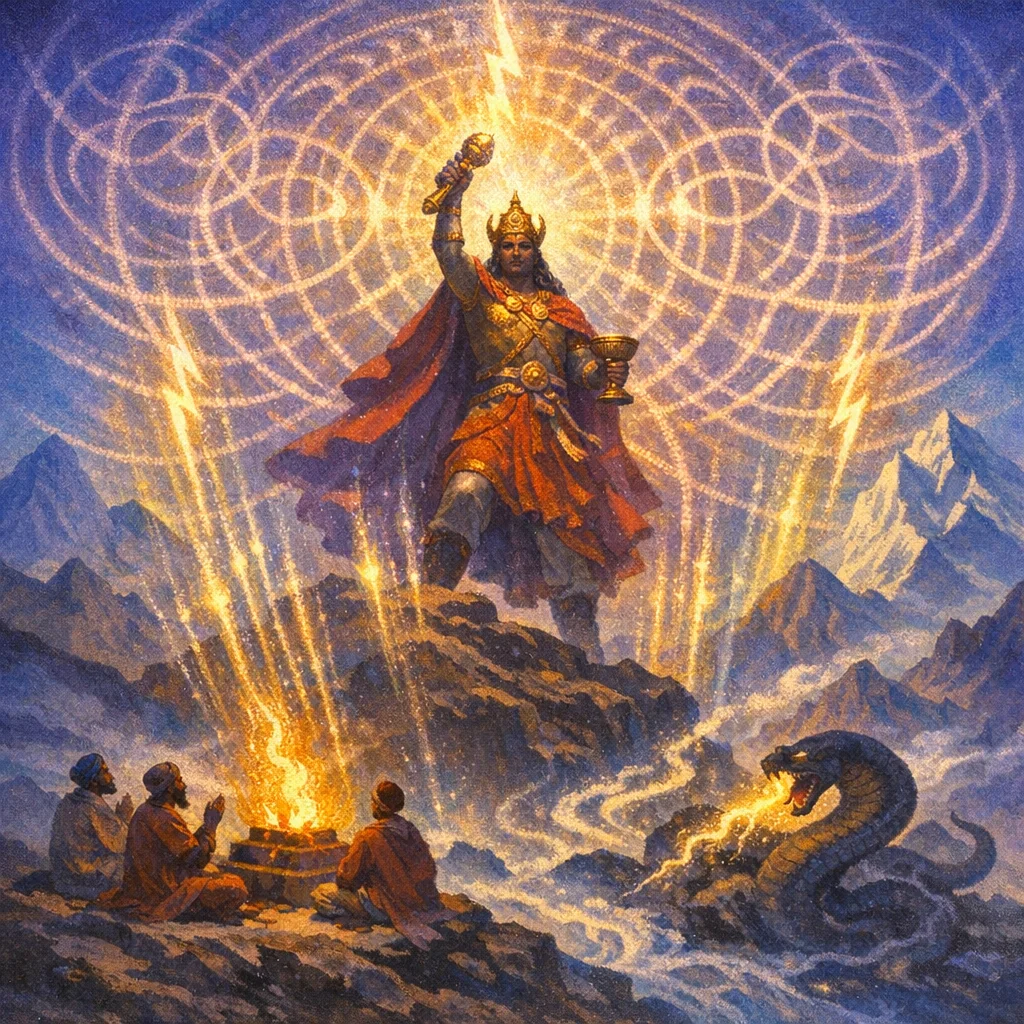
Aindra invocation: Indra’s manifest presence at the rite and his vṛtra-slaying power securing success for the sacrificers
Indra
Invitational and energizing with a heroic (vīrya) tone suited to Indra
R̥ṣi attribution is not provided here; identification normally requires Rigveda concordance for the source hymns used in this Aindra daśati.
ఇంద్రుని ఆహ్వానించే ఐంద్ర గీతసారము: శ్రుతి ఆధారిత మంత్రాచరణను నిష్ఠగా కొనసాగిస్తూ, యజ్ఞసభ/సదస్సుకు ఇంద్రుని ‘ఇక్కడికి రమ్ము’ అని పిలిచి, ఆయన ప్రత్యక్ష సన్నిధిని స్థాపిస్తారు. వృత్రహనుడైన ఇంద్రుడు అర్పణను మరియు గాయకులను మహత్తర సహాయాలతో (ఊతులు) బలపరచి, సువీర్యం—ఉత్తమ పరాక్రమం, బలం, విజయం—ప్రదానం చేసి, అడ్డంకులను తొలగించుగాక; దేవతల సమూహమైన విశ్వేదేవులకు కూడా ఇంద్రకేంద్రిత పూజావ్యవస్థలో సమష్టి నమస్కారం అర్పించబడుతుంది, దైవారాధన నిర్లక్ష్యం కాకుండా ఉండుగాక.
Mantras
Mantra 1
ईङ्खयन्तीरपस्युव इन्द्रं जातमुपासते वन्वानासः सुवीर्यम्
క్రియాశీలులు, యజ్ఞాభిలాషులు అయిన ఉపాసకులు తమ సేవాక్రియల్లో చలించి కదులుతూ, నూతనంగా ప్రకాశించిన ఇంద్రుని ఉపాసిస్తారు; వారు ఉత్తమ సువీర్యం (శ్రేష్ఠ పరాక్రమం) కోరుకుంటారు.
Mantra 2
न कि देवा इनीमसि न क्या योपयामसि मन्त्रश्रुत्यं चरामसि
హే దేవులారా, మేము ఏ విధంగానూ మీ ఆరాధనను నిర్లక్ష్యం చేయము; ఏ విధంగానూ మీ సమీపానికి రాకుండా ఉండము; మంత్ర-శ్రుతి ప్రకారం విధిని యథావిధిగా ఆచరిస్తాము।
Mantra 3
दोषो आगाद्बृहद्गाय द्युमद्गामन्नाथर्वण स्तुहि देवं सवितारम्
సాయంకాలం వచ్చెను; దీప్తిమంత-గామి (సవితా)కు బృహద్గానం పాడుడి; ఓ అథర్వణా, దేవుడు సవితారాన్ని స్తుతించుము।
Mantra 4
एषो उषा अपूर्व्या व्युच्छति प्रिया दिवः स्तुषे वामश्विना बृहत्
ఇది ఉషా—అపూర్వం, నిత్యనవీనము—వెలిసి ప్రకాశిస్తుంది; దివ్యలోకానికి ప్రియమైనది. హే అశ్వినౌ, బృహత్ అయిన ఉదాత్త స్తుతితో మిమ్మల్ని నేను గానముగా స్తుతిస్తున్నాను.
Mantra 5
इन्द्रो दधीचो अस्थभिर्वृत्राण्यप्रतिष्कुतः जघान नवतीर्नव
అప్రతిష్కుతుడు, అజేయుడు ఇంద్రుడు దధీచి అస్తులతో (వజ్రం చేసి) తొంభై తొమ్మిది—‘నవతీర్ నవ’—వృత్రులను సంహరించాడు.
Mantra 6
इन्द्रेहि मत्स्यन्धसो विश्वेभिः सोमपर्वभिः महां अभिष्टिरोजसा
హే ఇంద్రా, రా; అన్ని సోమ-పర్వాలలో పిండిన సోమరసంతో ‘మత్స్యంద’—ఉల్లసించు. నీ తేజోబలంతో నీ మహత్తర అభిష్టి (సహాయం) అత్యంత బలమైనది.
Mantra 7
आ तू न इन्द्र वृत्रहन्नस्माकमर्धमा गहि महान्महीभिरूतिभिः
వృత్రహన్ ఇంద్రా! ఇప్పుడు మా వద్దకు ఇక్కడికి రా; మా అర్ధం (సభ/యజ్ఞ-సమాగమం) లోనికి రా. నీవు మహాన్వి; మహతీ ఊతులతో (బలమైన సహాయాలతో) వచ్చెదవు గాక.
Mantra 8
ओजस्तदस्य तित्विष उभे यत्समवर्तयत् इन्द्रश्चर्मेव रोदसी
అతని ఉగ్ర తిత్విష (తేజోమయ ఉద్ధృతి) యొక్క ఓజస్సు అటువంటిదే—దానితో ఇంద్రుడు రెండు లోకాలను, చర్మం (తోలు) తో కప్పినట్లు, ఆవరించాడు: ద్యౌ మరియు పృథివీ.
Mantra 9
अयमु ते समतसि कपोत इव गर्भधिम् वचस्तच्चिन्न ओहसे
ఇది నీకే నిశ్చయంగా సముచితం; గర్భంలో (తన పిల్లను) ధరించే కపోతంలా ఈ వాక్యం; మరియు నీవు, ఆ వచనాన్నికూడా, ఓజస్సుకోసం, తిరస్కరించవు.
Mantra 10
वात आ वातु बेषजं शम्भु मयोभु नो हृदे प्र न अयूंषि तारिषत्
వాతుడు (వాయువు) మా వద్దకు ఔషధరూపమైన చికిత్సను ఇక్కడికి ఊదివచ్చునుగాక—శివం, మంగళకరం, ఆనందప్రదం—మా హృదయానికి; మరియు మా ఆయుష్షక్తులను (ప్రాణబలాన్ని) సురక్షితంగా ముందుకు తరలించుగాక.
Frequently Asked Questions
It centers on calling Indra to the ritual assembly and relying on his Vṛtra-slaying power to remove obstacles and grant strength (suvīrya) to the worshippers.
It teaches that correct, tradition-grounded performance is essential: the deity is approached through the properly heard and transmitted formula, and the sacrifice gains authority through that fidelity.
In this context it is understood as the sacrificer’s ‘party/assembly’ (the ritual session in the sadas) or the ‘share’ of worship—asking Indra to come to the worshippers’ appointed place and portion.