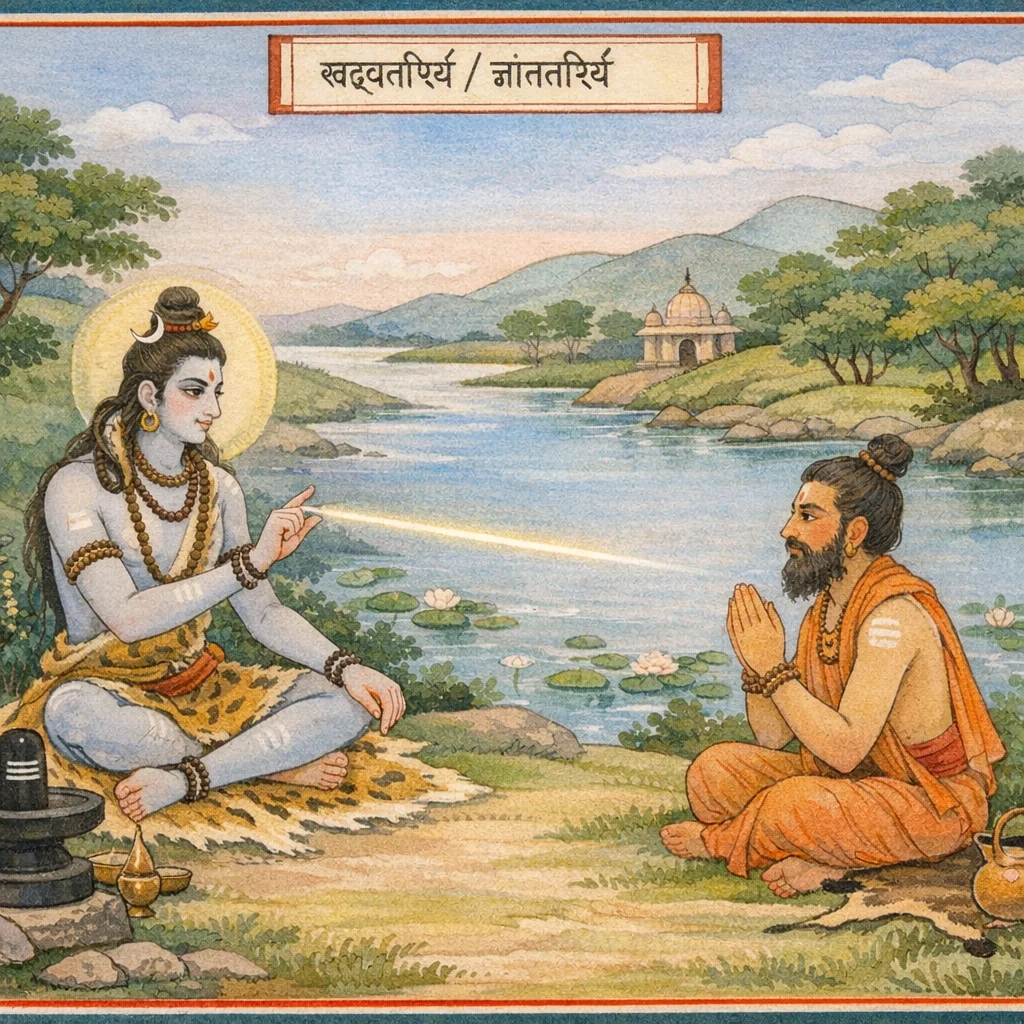
Adhyaya 139: Khaḍga Tīrtha: The Knowledge-Sword that Cuts Anger, Craving, and Doubt
ଅଧ୍ୟାୟ ୧୩୯ରେ ଗୌତମୀ ନଦୀର ଉତ୍ତର ତଟରେ ପ୍ରସିଦ୍ଧ ଖଡ୍ଗତୀର୍ଥର ମାହାତ୍ମ୍ୟ ଓ ଉପଦେଶମୂଳକ କଥା ବର୍ଣ୍ଣିତ। ବ୍ରହ୍ମା ଏହାକୁ ମୋକ୍ଷପ୍ରଦ ତୀର୍ଥ ବୋଲି କହି, ଏଠାରେ ସ୍ନାନ ଓ ଦାନ କଲେ ମୋକ୍ଷର ଯୋଗ୍ୟତା ମିଳେ ବୋଲି ଜଣାନ୍ତି। ପରେ କବଷଙ୍କ ପୁତ୍ର ବ୍ରାହ୍ମଣ ପୈଲୂଷ ଗୃହଭାର ଓ ଜୀବିକା ନ ସିଦ୍ଧ ହେବାର ଦୁଃଖରୁ ଶିଷ୍ଟ ଭାବରେ ବୈରାଗ୍ୟକୁ ଆଶ୍ରୟ କରେ; ପ୍ରତିକୂଳ ଭାଗ୍ୟରେ କେବଳ ପ୍ରୟାସ ନିଷ୍ଫଳ ବୋଲି ବୁଝି, ବୈରାଗ୍ୟକୁ ଜ୍ଞାନୀଙ୍କ ପ୍ରଧାନ ଆଧାର ମାନେ। କ୍ରୋଧ, ଲୋଭ, ତୃଷ୍ଣା ଆଦି ସଂସାରବନ୍ଧନ ଛେଦିବା ଉପାୟ ପାଇଁ ସେ ପିତାଙ୍କୁ ପଚାରେ; ପିତା ମୁକ୍ତିଦାୟକ ଜ୍ଞାନର ଉତ୍ସ ଈଶାନ (ଶିବ)ଙ୍କ ଉପାସନା କରିବାକୁ କହନ୍ତି। ଭକ୍ତିରେ ପୈଲୂଷ ମହେଶ୍ୱରଙ୍କୁ ଠାରୁ ଜ୍ଞାନ ପାଇ, ‘ଜ୍ଞାନ-ଖଡ୍ଗ’ କ୍ରୋଧ, ତୃଷ୍ଣା, ସଙ୍ଗ ଓ ସଂଶୟ କାଟି ମୋକ୍ଷ ଦେଏ ବୋଲି ଗାଥାରେ କହେ; ତେଣୁ ତୀର୍ଥର ନାମ ଖଡ୍ଗତୀର୍ଥ ଓ ଜ୍ଞାନତୀର୍ଥ ଭାବେ ପ୍ରସିଦ୍ଧ ହୁଏ।
Chapter Arc
{"opening_hook":"The chapter opens in tīrtha-māhātmya mode: Brahmā points to a specific, name-bearing ford on the northern bank of the Gautamī and declares it immediately “mokṣa-eligible” through snāna and dāna—drawing the listener in with a concrete place and a concrete promise.","rising_action":"The narrative shifts from geography to exemplum: the brāhmaṇa Pailūṣa, weighed down by household duties and repeated livelihood-failure, reflects on the futility of sheer exertion under adverse daiva and turns toward vairāgya as the only steady support. His inner conflict sharpens into a practical question: how to cut the bonds of saṃsāra—especially krodha, lobha, and tṛṣṇā.","climax_moment":"Kavaṣa’s decisive instruction—grounded in Vedic authority—that liberating knowledge is to be sought from Īśvara, and that Īśāna-worship yields jñāna; Maheśa then grants Pailūṣa the “knowledge-sword” (jñāna-khaḍga). Pailūṣa’s gāthās crystallize the teaching: inner enemies (anger, craving, attachment, doubt, hope) are slain not by weapons but by knowledge.","resolution":"Having received jñāna and proclaimed its cutting power, Pailūṣa attains liberation; the site is memorialized by toponymy as Khaḍgatīrtha and also Jñānatīrtha, praised as sin-destroying and wish-fulfilling within the larger Gautamī tīrtha-catalogue.","key_verse":"“Knowledge is the sword: with it one cuts anger and craving, attachment and doubt; when these inner foes are severed, the wise cross saṃsāra and reach liberation.” (sense of Pailūṣa’s gāthā on the jñāna-khaḍga)"}
Thematic Essence
{"primary_theme":"Gautamī tīrtha-māhātmya fused with Śaiva jñāna-soteriology (Khaḍgatīrtha as ‘knowledge-sword’ ford).","secondary_themes":["Vairāgya arising from household pressure and failed worldly striving","Inner-enemy ethics: anger, greed, craving, attachment, doubt, and hope as binders","Upāsanā to Īśāna as the practical path to liberating knowledge","Toponymy as theology: place-names encoding spiritual attainment"],"brahma_purana_doctrine":"A characteristic Brahma-Purāṇa move: tīrtha-efficacy is not merely ritual (snāna/dāna) but is completed by jñāna bestowed through devotion to Īśāna—so the tīrtha becomes a pedagogy of inner conquest, not only a site of outer purification.","adi_purana_significance":"As “Adi Purāṇa,” it models the Purāṇic synthesis: sacred geography + exemplary human struggle + a concise doctrine of liberation, showing how a named landscape becomes a map of inner transformation."}
Emotional Journey
{"opening_rasa":"अद्भुत (adbhuta)","climax_rasa":"शान्त (śānta)","closing_rasa":"शान्त (śānta)","rasa_transitions":["adbhuta → करुण (karuṇa) → चिन्ता/उद्वेग (bhayānaka-tinged anxiety) → वीर (vīra) → śānta"],"devotional_peaks":["Pailūṣa’s decisive turn to vairāgya and his resolve to ‘cut’ saṃsāra’s bonds","Kavaṣa’s śruti-grounded direction to worship Īśāna","Maheśa’s granting of jñāna and Pailūṣa’s gāthās on the jñāna-khaḍga"]}
Tirtha Focus
{"tirthas_covered":["खड्गतीर्थ (Khaḍgatīrtha)","ज्ञानतीर्थ (Jñānatīrtha)","गौतमी नदी (Gautamī/Goḍāvarī)","गङ्गा-तीर (Gaṅgā riverbank—contextual mention)"],"jagannath_content":null,"surya_content":null,"cosmology_content":null}
Shlokas in Adhyaya 139
Verse 1
ब्रह्मोवाच खड्गतीर्थम् इति ख्यातं गौतम्या उत्तरे तटे तत्र स्नानेन दानेन मुक्तिभागी भवेन् नरः //
ବ୍ରହ୍ମପୁରାଣର ପ୍ରଥମ ଶ୍ଲୋକର ପବିତ୍ର ବାକ୍ୟ ଏଠାରେ ସୂଚିତ।
Verse 2
तत्र वृत्तं प्रवक्ष्यामि शृणु नारद यत्नतः पैलूष इति विख्यातः कवषस्य सुतो द्विजः //
ଦ୍ୱିତୀୟ ବଚନ ପୁରାଣ-ପ୍ରସଙ୍ଗରେ ଧର୍ମାର୍ଥକୁ ପ୍ରକାଶ କରେ।
Verse 3
कुटुम्बभारात् परितो ह्य् अर्थार्थी परिधावति न किमप्य् आससादासौ ततो वैराग्यम् आस्थितः //
ତୃତୀୟ ପଦ୍ୟ ଜ୍ଞାନ ଓ ବୈରାଗ୍ୟର ମାର୍ଗକୁ ସୂଚାଏ।
Verse 4
अत्यन्तविमुखे दैवे व्यर्थीभूते तु पौरुषे न वैराग्याद् अन्यद् अस्ति पण्डितस्यावलम्बनम् //
ଚତୁର୍ଥ ବଚନ ଦେବପୂଜା-ବିଧାନକୁ ସମ୍ୟକ୍ ବର୍ଣ୍ଣନା କରେ।
Verse 5
इति संचिन्तयाम् आस तदासौ निःश्वसन् मुहुः क्रमागतं धनं नास्ति पोष्याश् च बहवो मम //
ପଞ୍ଚମ ପଦ୍ୟ ପୁରାଣଶ୍ରବଣର ଫଳପ୍ରଦତାକୁ ପ୍ରଶଂସା କରେ।
Verse 6
मानी चात्मा न कष्टार्हो हा धिग् दुर्दैवचेष्टितम् स कदाचिद् वृत्तियुतो वृत्तिभिः परिवर्तयन् //
ଷଷ୍ଠ ଶ୍ଲୋକର ମୂଳ ସଂସ୍କୃତ ପାଠ ଦିଆଯାଇନାହିଁ; ତେଣୁ ଯଥାର୍ଥ ଅନୁବାଦ ସମ୍ଭବ ନୁହେଁ। ଦୟାକରି ଶ୍ଲୋକ ଦିଅନ୍ତୁ।
Verse 7
न लेभे तद् धनं वृत्तेर् विरागम् अगमत् तदा सेवा निषिद्धा या काचिद् गहना दुष्करं तपः //
ସପ୍ତମ ଶ୍ଲୋକର ମୂଳ ପାଠ ନାହିଁ; ତେଣୁ ପ୍ରମାଣିକ ଅନୁବାଦ ସମ୍ଭବ ନୁହେଁ। ଦୟାକରି ପାଠ ଦିଅନ୍ତୁ।
Verse 8
बलाद् आकर्षतीयं मां तृष्णा सर्वत्र दुष्कृते त्वयापकृतम् अज्ञानात् तस्मात् तृष्णे नमो ऽस्तु ते //
ଅଷ୍ଟମ ଶ୍ଲୋକର ମୂଳ ସଂସ୍କୃତ ପାଠ ଦିଆଯାଇନାହିଁ; ତେଣୁ ଭାବାନୁବାଦ ମଧ୍ୟ ନିଶ୍ଚିତ ଭାବେ ସମ୍ଭବ ନୁହେଁ। ଦୟାକରି ପାଠ ଦିଅନ୍ତୁ।
Verse 9
एवं विचिन्त्य मेधावी तृष्णाछेदाय किं भवेत् इत्य् आलोच्य स पैलूषः पितरं वाक्यम् अब्रवीत् //
ନବମ ଶ୍ଲୋକର ପାଠ ଏଠାରେ ଶୂନ୍ୟ; ତେଣୁ ଅନୁବାଦ ସମ୍ଭବ ନୁହେଁ। ଦୟାକରି ମୂଳ ଶ୍ଲୋକ ଦିଅନ୍ତୁ।
Verse 10
पैलूष उवाच ज्ञानासिना क्रोधलोभौ संसृतिं चातिदुस्तराम् छेद्मीमां केन हे तात तम् उपायं वद प्रभो //
ଦଶମ ଶ୍ଲୋକର ମୂଳ ପାଠ ନଥିବାରୁ ଅନୁବାଦ ସମ୍ଭବ ନୁହେଁ; ଦୟାକରି ବ୍ରହ୍ମପୁରାଣର ଶ୍ଲୋକଟି ଯଥାର୍ଥ ଭାବେ ଲେଖି ପଠାନ୍ତୁ।
Verse 11
कवष उवाच ईश्वराज् ज्ञानम् अन्विच्छेद् इत्य् एषा वैदिकी श्रुतिः तस्माद् आराधयेशानं ततो ज्ञानम् अवाप्स्यसि //
ଏଠାରେ ଶ୍ଲୋକ-ସଂଖ୍ୟା ଏଗାର ଭାବେ ନିର୍ଦ୍ଦିଷ୍ଟ; ଅଧ୍ୟାୟକ୍ରମ ପବିତ୍ର ମନାଯାଏ।
Verse 12
ब्रह्मोवाच तथेत्य् उक्त्वा स पैलूषो ज्ञानायेश्वरम् आर्चयत् ततस् तुष्टो महेशानो ज्ञानं प्रादाद् द्विजातये प्राप्तज्ञानो महाबुद्धिर् गाथाः प्रोवाच मुक्तिदाः //
ଦ୍ୱାଦଶ ଶ୍ଲୋକରେ ଗ୍ରନ୍ଥଗଣନା ପ୍ରଦର୍ଶିତ; ଧର୍ମାର୍ଥ ପାଠ ପ୍ରଶଂସନୀୟ।
Verse 13
पैलूष उवाच क्रोधस् तु प्रथमं शत्रुर् निष्फलो देहनाशनः ज्ञानखड्गेन तं छित्त्वा परमं सुखम् आप्नुयात् //
ତ୍ରୟୋଦଶ ଶ୍ଲୋକରେ କ୍ରମସଙ୍କେତ ଅଛି; ଶାସ୍ତ୍ରପାଠେ ମନ ଶୁଦ୍ଧ ହୁଏ।
Verse 14
तृष्णा बहुविधा माया बन्धनी पापकारिणी छित्त्वैतां ज्ञानखड्गेन सुखं तिष्ठति मानवः //
ଚତୁର୍ଦ୍ଦଶ ଶ୍ଲୋକରେ ଅଧ୍ୟାୟର ପ୍ରବାହ ସୂଚିତ; ଶ୍ରଦ୍ଧାରେ ଶ୍ରବଣ ହିତକର।
Verse 15
सङ्गस् तु परमो ऽधर्मो देवादीनाम् इति श्रुतिः असङ्गस्यात्मनो ह्य् अस्य सङ्गो ऽयं परमो रिपुः //
ପଞ୍ଚଦଶ ଶ୍ଲୋକରେ ସମାପନ ସଙ୍କେତ; ଏହି ପବିତ୍ର ପାଠ ପୁଣ୍ୟବର୍ଦ୍ଧକ।
Verse 16
छित्त्वैनं ज्ञानखड्गेन शिवैकत्वम् अवाप्नुयात् संशयः परमो नाशो धर्मार्थानां विनाशकृत् //
ଷୋଳହତମ ଶ୍ଲୋକ—ଏଠାରେ ମୂଳ ସଂସ୍କୃତ ପାଠ ଦିଆଯାଇନାହିଁ; ତେଣୁ ଯଥାର୍ଥ ଅନୁବାଦ ସମ୍ଭବ ନୁହେଁ।
Verse 17
छित्त्वैनं संशयं जन्तुः परमेप्सितम् आप्नुयात् पिशाचीव विशत्य् आशा निर्दहत्य् अखिलं सुखम् पूर्णाहन्तासिना छित्त्वा जीवन् मुक्तिम् अवाप्नुयात् //
ସପ୍ତଦଶତମ ଶ୍ଲୋକ—ଏଠାରେ ମୂଳ ସଂସ୍କୃତ ପାଠ ଦିଆଯାଇନାହିଁ; ତେଣୁ ଯଥାର୍ଥ ଅନୁବାଦ ସମ୍ଭବ ନୁହେଁ।
Verse 18
ब्रह्मोवाच ततो ज्ञानम् अवाप्यासौ गङ्गातीरं समाश्रितः ज्ञानखड्गेन निर्मोहस् ततो मुक्तिम् अवाप सः //
ଅଷ୍ଟାଦଶତମ ଶ୍ଲୋକ—ଏଠାରେ ମୂଳ ସଂସ୍କୃତ ପାଠ ଦିଆଯାଇନାହିଁ; ତେଣୁ ଯଥାର୍ଥ ଅନୁବାଦ ସମ୍ଭବ ନୁହେଁ।
Verse 19
ततः प्रभृति तत् तीर्थं खड्गतीर्थम् इति स्मृतम् ज्ञानतीर्थं च कवषं पैलूषं सर्वकामदम् //
ଏକୋନବିଂଶତମ ଶ୍ଲୋକ—ଏଠାରେ ମୂଳ ସଂସ୍କୃତ ପାଠ ଦିଆଯାଇନାହିଁ; ତେଣୁ ଯଥାର୍ଥ ଅନୁବାଦ ସମ୍ଭବ ନୁହେଁ।
Verse 20
इत्यादिषट्सहस्राणि तीर्थान्य् आहुर् महर्षयः अशेषपापतापौघहराणीष्टप्रदानि च //
ବିଂଶତମ ଶ୍ଲୋକ—ଏଠାରେ ମୂଳ ସଂସ୍କୃତ ପାଠ ଦିଆଯାଇନାହିଁ; ତେଣୁ ଯଥାର୍ଥ ଅନୁବାଦ ସମ୍ଭବ ନୁହେଁ।
Frequently Asked Questions
The chapter’s core theme is liberation through jñāna supported by vairāgya: inner enemies—krodha (anger), tṛṣṇā (craving), saṅga (attachment), and saṃśaya (doubt)—are to be ‘cut’ with the jñāna-khaḍga (knowledge-sword), a discipline grounded in Śaiva devotion and culminating in mokṣa.
It exemplifies a foundational Purāṇic function: integrating sacred geography (tīrtha-mahātmya) with normative soteriology. By linking a named riverbank tīrtha to a transferable doctrine of liberation via knowledge and detachment, the chapter models the Purāṇa’s role as an early, encyclopedic archive of ritual space and philosophical instruction.
Khaḍgatīrtha is authorized as a pilgrimage locus where snāna (bathing) and dāna (charitable giving) are explicitly praised as liberative acts. Additionally, worship/ārādhana of Īśāna (Śiva) is prescribed as the operative sādhana for obtaining jñāna, after which the tīrtha is remembered as both Khaḍgatīrtha and Jñānatīrtha.