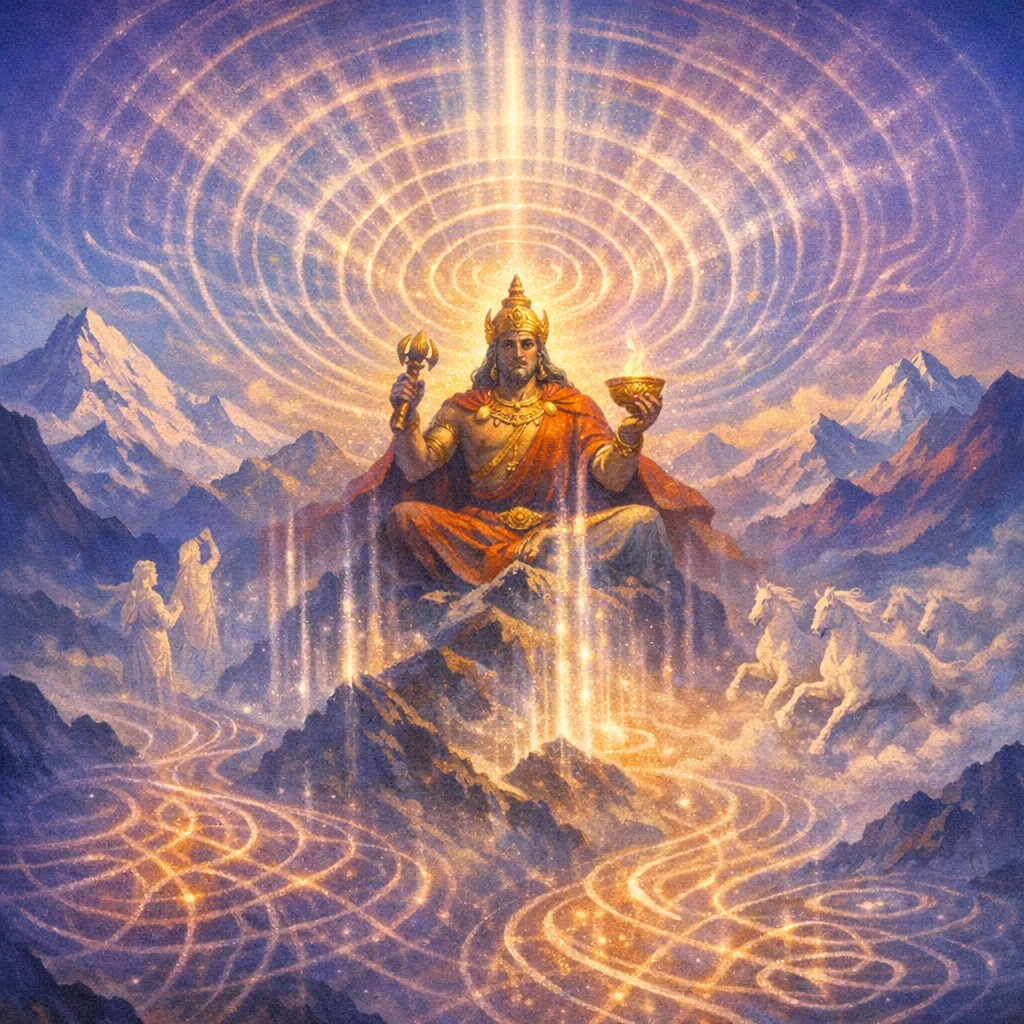
Dashati 4
Aindra Soma-invitation and confirmation of Indra’s readiness to grant boons
Indra
Invitatory and energizing with a tone of eager expectation turning into confident affirmation
Rṣi not provided in the input; identification requires concordance with the underlying Ṛgvedic sources for these mantras.
Soma-pressing context: invitation to drink the expressed Soma (sutam) at the sacrificer’s offering (rāti)
Mantras
Mantra 1
अतीहि मन्युषाविणं सुषुवांसमुपेरय अस्य रातौ सुतं पिब
Come hither, O impetuous (Indra); approach the Soma-presser: at his gift drink the expressed (juice).
Mantra 2
कदु प्रचेतसे महे वचो देवाय शस्यते तदिध्यस्य वर्धनम्
How is the hymn proclaimed unto the wise, the mighty god? for that verily is his augmentation.
Mantra 3
उक्थं च न शस्यमानं नागो रयिरा चिकेत न गायत्रं गीयमानम्
And our uktha, when it is recited, (bringeth) no fault; wealth taketh note (of it): nor (is there fault in) the Gāyatra when it is sung.
Mantra 4
इन्द्र उक्थेभिर्मन्दिष्ठो वाजानां च वाजपतिः हरिवान्त्सुतानां सखा
Indra, most exhilarated by the hymns, the lord also of (all) viands and of the sacrificial prize, possessed of tawny steeds, is the friend of the expressed (Soma).
Mantra 5
आ याह्युप नः सुतं वाजेभिर्मा हृणीयथाः महां इव युवजानिः
Come hither, approach our expressed (Soma) with (bestowing) viands and strength; be not averse (to us), but (come) like a mighty one, vigorous in youth.
Mantra 6
कदा वसो स्तोत्रं हर्यत आ अव श्मशा रुधद्वाः दीर्घं सुतम् वाताप्याय
When, O opulent (Indra), wilt thou (accept) the praise that is grateful (to thee), coming down hither—(no longer) with doors made fast (against us)—to be invigorated by the long-pressed (Soma)?
Mantra 7
ब्राह्मणादिन्द्र राधसः पिबा सोममृतूं रनु तवेदं सख्यमस्तृतम्
Drink, Indra, the Soma, (this) bounty from the Brāhmaṇa (portion); rejoice in the due seasons (of the rite): this thy friendship (with us) is unbroken.
Mantra 8
वयं घा ते अपि स्मसि स्तोतार इन्द्र गिर्वणः त्वं नो जिन्व सोमपाः
We, verily, are also thine, O Indra, delighting in praise, (we) thy eulogists; do thou, Soma-drinker, invigorate us.
Mantra 9
एन्द्र पृक्षु कासु चिन्नृम्णं तनूषु धेहि नः सत्राजिदुग्र पौंस्यम्
O Indra, in whatsoever conflicts, bestow upon our persons manly might—(thou) ever-victorious, formidable—(bestow) prowess.
Mantra 10
एवा ह्यसि वीरयुरेवा शूर उत स्थिरः एवा ते राध्यं मनः
For such indeed art thou—desirous (and bestower) of heroes; such indeed art thou, valiant and steadfast; such is thy mind, to be propitiated (and to grant favour).
Frequently Asked Questions
It calls Indra to come quickly to the Soma-pressing, accept the praise, drink the expressed Soma, and grant bounty—strength, success, and heroic prosperity—to the sacrificer.
The question expresses ritual urgency and longing: it presses for Indra’s prompt arrival and removes the sense of obstruction (“doors fastened”) that symbolizes delay or non-bestowal.
The repeated “evā” confirms Indra’s established nature—hero-giving, valiant, steadfast—and affirms that his mind can be won by worship, resulting in favour and gifts (rādhas).