Dashati 11
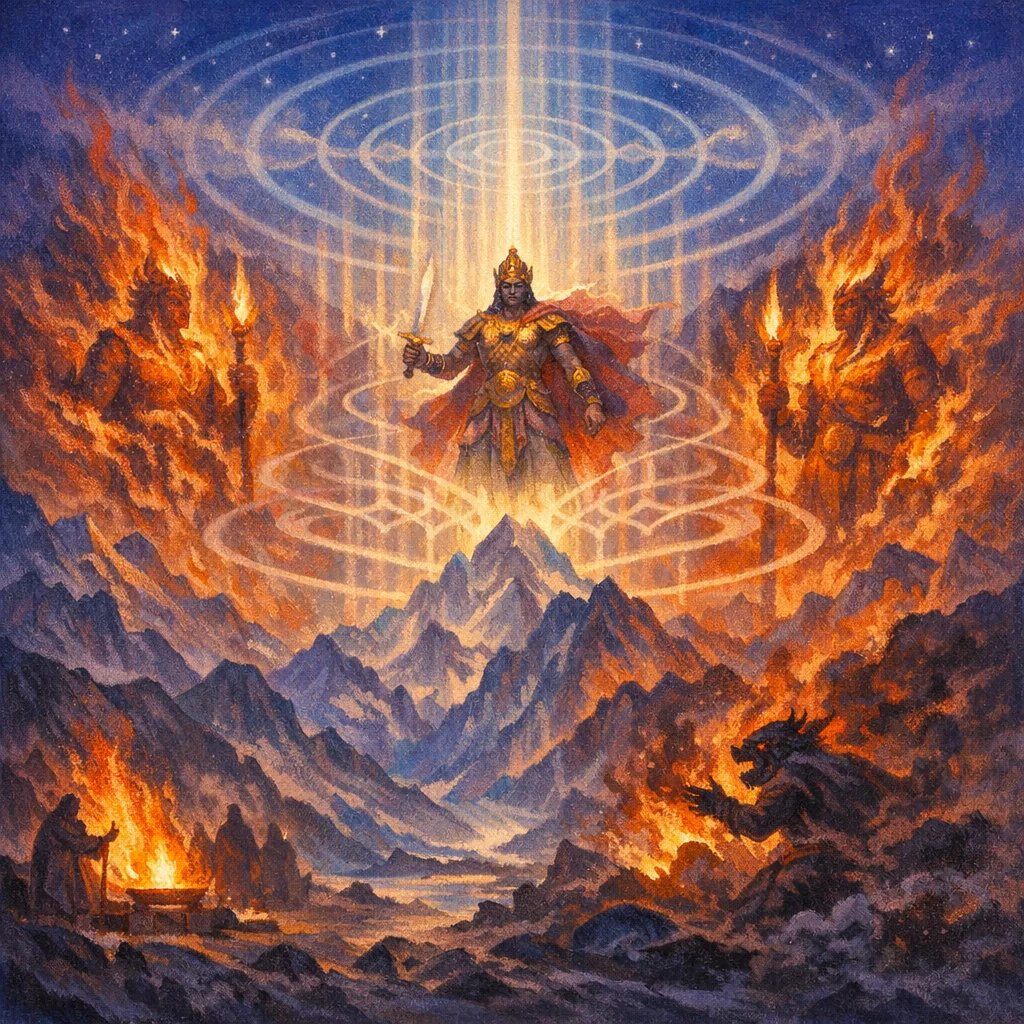
Aindra prosperity-prayer supported by Agni’s protective, Rakṣas-burning guardianship of the rite
Indra
Invocatory and martial-protective moving from boon-seeking to obstacle-clearing assurance
Rṣi attribution is not provided in the input; the diction aligns with common RV-style Aindra petitions and Agni-protective formulas used in Sāman adaptation.
ഇന്ദ്രനെ ലക്ഷ്യമാക്കിയ സമൃദ്ധി-പ്രാർത്ഥന: യജമാനന്റെ ധീ (യജ്ഞസങ്കൽപം/സ്തുതി) ജയകരമായി ഗോ, അശ്വ, വാജ (പുരസ്കാരം/പോഷകശക്തി), നൃ (പുരുഷ-പിന്തുണ) എന്നീ ദൃശ്യഫലങ്ങൾ നൽകാൻ ഇന്ദ്രനെ ആഹ്വാനം ചെയ്യുന്നു. അതോടൊപ്പം അഗ്നിയെ യജ്ഞത്തിന്റെ കാവൽക്കാരനായി—യജ്ഞഭൂമിയിലുടനീളം വ്യാപിച്ച്, ദിവ്യാശ്രയത്തിൽ നിലകൊണ്ട്, രാത്രി-പ്രഭാതങ്ങളിൽ ഹോമത്തെ തടസ്സപ്പെടുത്തുന്ന രക്ഷസ്സുകളെ ദഹിപ്പിച്ച് തടസ്സങ്ങൾ നീക്കുന്നവനായി—സ്തുതിക്കുന്നു. ശരിയായി രൂപപ്പെട്ട ധിയും നന്നായി പരിപാലിച്ച അഗ്നിയും ഇന്ദ്രന്റെ വിജയംയും അഗ്നിയുടെ സംരക്ഷണവും യജ്ഞത്തിൽ സ്പഷ്ടമായ അനുഗ്രഹങ്ങളാക്കി മാറ്റുന്നു.
Mantras
Mantra 1
अग्ने वाजस्य गोमत ईशानः सहसो यहो अस्मे देहि जातवेदो महि श्रवः
ഹേ അഗ്നേ, ഗോമയമായ വാജ (പുരസ്കാരം)യുടെ ഈശാന, ഹേ സഹസന്റെ യഹോ (പരാക്രമശാലി), ഹേ ജാതവേദസ്, ഞങ്ങൾക്ക് മഹത് ശ്രവഃ (യശസ്) നല്കുക.
Mantra 2
स इधानो वसुष्कविरग्निरीडेन्यो गिरा रेवदस्मभ्यं पुर्वणीक दीदिहि
പ്രജ്വലിതനായ അഗ്നി—വസുദാതാവായ കവി, ആരാധനാർഹൻ—ഞങ്ങളുടെ ഗീതത്താൽ സ്തുതിക്കപ്പെട്ട്, ഹേ മുൻനിരനായ നേതാവേ, ധനസമൃദ്ധിയോടെ ഞങ്ങളിലേയ്ക്ക് പ്രകാശിക്കു.
Mantra 3
क्षपो राजन्नुत त्मनाग्ने वस्तोरुतोषसः स तिग्मजम्भ रक्षसो दह प्रति
ഹേ രാജൻ അഗ്നേ, രാത്രികളിലും, സ്വയം ഉഷസ്സുകളുടെ വാസസ്ഥാനത്തിലും, ഹേ തീക്ഷ്ണ-ജംഭ, രാക്ഷസന്മാരെ പ്രതിദഹ—പിന്നോട്ടടിപ്പിച്ച് ദഹിപ്പിക്കു.
Frequently Asked Questions
To make the sacrificer’s dhī (ritual prayer/formulation) effective—bringing cattle, horses, prizes, and supporters—while securing the sacrifice through Agni’s protective power.
Agni is the guardian of the yajña: he spreads through the altar-space, stands in ‘heavenly shelter,’ and drives away Rakṣasas (obstacle-forces), ensuring Indra’s offering proceeds without disruption.
It is an apotropaic request: Agni is asked to repel and neutralize all forces that spoil the rite—fear, impurity, mistakes, or hostile influences—especially during vulnerable times like night and dawn.