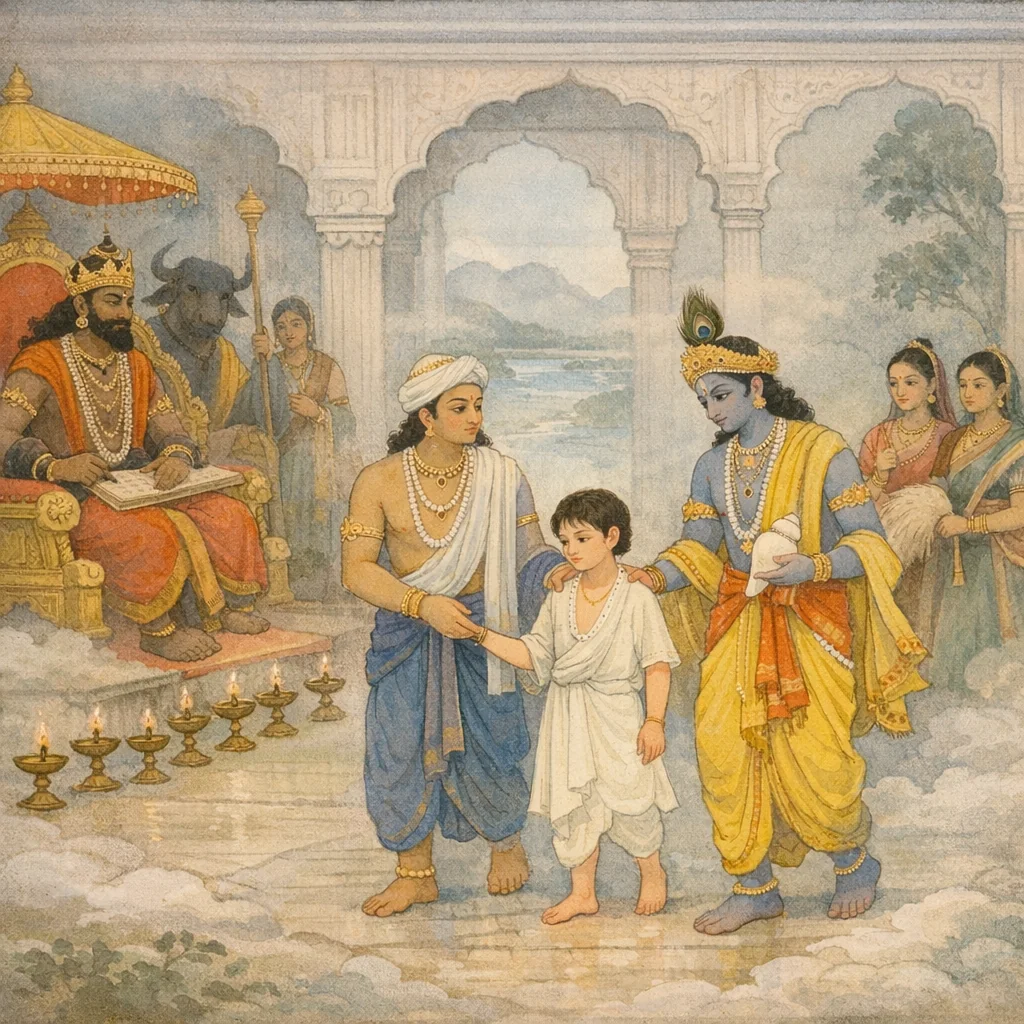
Adhyaya 194: Krishna Restores Dynastic Order: Ugrasena’s Coronation and the Retrieval of Sandipani’s Son
ഈ അധ്യായത്തിൽ കംസവധത്തിനു ശേഷം മഥുരയിൽ ധർമ്മവും രാഷ്ട്രീയക്രമവും പുനഃസ്ഥാപിക്കുന്നതു വിവരിക്കുന്നു. ശ്രീഹരി ദേവകി–വസുദേവരുടെ ആശയക്കുഴപ്പം നീക്കി തന്റെ ദിവ്യത്വം വെളിപ്പെടുത്തി, മാതാപിതാക്കൾ, ഗുരു, ദ്വിജവൃദ്ധർ എന്നിവർക്കുള്ള ആദരം അനിവാര്യധർമ്മമാണെന്ന് ഉപദേശിക്കുന്നു; അവഗണന ആത്മീയമായി നിഷ്ഫലവും സാമൂഹ്യവ്യവസ്ഥയെ കലുഷിതമാക്കുന്നതുമാണെന്ന് പറയുന്നു. തുടർന്ന് കംസന്റെ ഭാര്യമാരും മാതാക്കളും വിലപിക്കുമ്പോൾ ശ്രീകൃഷ്ണൻ അവരെ ആശ്വസിപ്പിച്ച് പരാജിതരോടും കരുണ കാണിക്കുന്നു. ഉഗ്രസേനനെ തടവിൽ നിന്ന് മോചിപ്പിച്ച് വീണ്ടും രാജാവായി അഭിഷേകം ചെയ്യുന്നു; ഹതരുടെ അന്ത്യകർമ്മങ്ങൾ വിധിപൂർവ്വം നടത്തപ്പെടുന്നു, കൃഷ്ണൻ ധർമ്മസമ്മത രാജത്വത്തിന്റെ സേവകനായി തന്നെ പൊതുവിൽ സ്ഥാപിക്കുന്നു. വായുവിലൂടെ ഇന്ദ്രനോട് അപേക്ഷിച്ച് ദിവ്യ സുദർമാ സഭാമണ്ഡപം ഉഗ്രസേനയ്ക്ക് ലഭ്യമാക്കുന്നു—യാദവ ഭരണത്തിന് ദൈവാനുമോദനത്തിന്റെ ചിഹ്നമായി. അവസാനം കൃഷ്ണനും ബലരാമനും സാന്ദീപനിയുടെ ആശ്രമത്തിൽ ശിഷ്യരായി വേഗത്തിൽ ശസ്ത്രവിദ്യകൾ അഭ്യസിച്ച്, ഗുരുദക്ഷിണയായി ഗുരുവിന്റെ മരിച്ച പുത്രനെ തിരിച്ചുകൊണ്ടുവരുന്നു—സമുദ്രദൈത്യൻ പഞ്ചജനനെ വധിച്ച് പാഞ്ചജന്യ ശംഖം കൈവശമാക്കി, യമലോകത്തിൽ ചെന്നു ബാലനെ മോചിപ്പിച്ച് ആനന്ദിതമായ മഥുരയിലേക്ക് മടങ്ങുന്നു।
Chapter Arc
{"opening_hook":"Kaṃsa’s fall has occurred, yet the chapter opens not with triumph but with a moral reckoning: Kṛṣṇa discloses his divine agency to dissolve Devakī–Vasudeva’s bewilderment and immediately pivots to dharma—how neglect of parents, gurus, elders, and dvijas renders all other acts barren.","rising_action":"Public and private order are rebuilt in widening circles: the grief of Kaṃsa’s women is heard and met with Kṛṣṇa’s consolation; Ugrasena is released and reinstated; funerary rites for the slain are performed; and Kṛṣṇa deliberately frames himself as a servant of rightful kingship. The political sacralization intensifies when Vāyu is sent as envoy to Indra to obtain Sudharmā for the Yādava court.","climax_moment":"The ethical and mythic peaks converge in the guru-bhakti episode: Kṛṣṇa and Baladeva, having mastered the sciences under Sāṃdīpani, choose an impossible guru-dakṣiṇā—recovering the teacher’s lost son—slay Pañcajana in the ocean, take the Pāñcajanya conch, enter Yama’s realm, and compel the return of the boy, demonstrating that dharma (reverence) is stronger than death’s finality.","resolution":"They return with the restored child to Sāṃdīpani and then to a rejoicing Mathurā, where kingship, ritual propriety, and social harmony stand re-established under Ugrasena, with Kṛṣṇa’s divinity expressed as disciplined service to dharma rather than mere conquest.","key_verse":"“मातृ-पितृ-गुरु-द्विज-वृद्धानां पूजनं परम् ।\nतद्-विहीनं तपो दानं निष्फलं परिकीर्तितम् ॥\n(‘Supreme is the honoring of mother, father, guru, dvijas, and elders; austerity and charity devoid of that reverence are declared fruitless.’)\""}
Thematic Essence
{"primary_theme":"Dharma restored through reverence (mātṛ–pitṛ–guru–vṛddha–dvija-pūjā) and legitimate kingship (rājadharma) after tyranny.","secondary_themes":["Compassion toward the defeated (consoling Kaṃsa’s women) as a mark of sattvic victory","Sacral legitimation of polity via Sudharmā’s transfer from heaven to Mathurā","Ideal discipleship and guru-dakṣiṇā culminating in the recovery-from-death motif","Ritual closure: funerary rites as social healing after violence"],"brahma_purana_doctrine":"The chapter foregrounds a Brahma Purāṇa-style dharma hierarchy: personal piety (tapas/dāna) is explicitly subordinated to relational reverence (parents/guru/dvija/elders), and political order is shown as valid only when ritually and ethically aligned—symbolized by Sudharmā’s heavenly endorsement.","adi_purana_significance":"As ‘Ādi Purāṇa,’ it models the primordial template of dharma-samsthāpana: victory is incomplete without reconciliation, rites, rightful coronation, and guru-bhakti—presenting a foundational Purāṇic ethic where cosmic authority, social duty, and devotion cohere."}
Emotional Journey
{"opening_rasa":"शान्त (śānta)","climax_rasa":"अद्भुत (adbhuta)","closing_rasa":"हर्ष (hāsya/harṣa as joyful uplift; closest: हर्ष within śṛṅgāra/hasya spectrum)","rasa_transitions":["śānta → करुण (karuṇa) → वीर (vīra) → अद्भुत (adbhuta) → शान्त (śānta) → हर्ष (joyful closure)"],"devotional_peaks":["Kṛṣṇa’s explicit teaching that reverence to parents and guru is the root of all merit","The public humility of Kṛṣṇa positioning himself as servant of rightful kingship under Ugrasena","The guru-dakṣiṇā episode: crossing ocean and underworld as an act of pure guru-bhakti, culminating in the boy’s restoration"]}
Tirtha Focus
{"tirthas_covered":["मथुरा","अवन्तिपुर (उज्जयिनी-क्षेत्र/अवन्ति-देश)","प्रभास","लवणार्णव/लवणोदधि (समुद्र-तीर)"],"jagannath_content":null,"surya_content":null,"cosmology_content":null}
Shlokas in Adhyaya 194
Verse 1
व्यास उवाच तौ समुत्पन्नविज्ञानौ भगवत्कर्मदर्शनात् देवकीवसुदेवौ तु दृष्ट्वा मायां पुनर् हरिः //
ഇത് ബ്രഹ്മപുരാണത്തിൽ നിർദ്ദേശിച്ച ആദ്യത്തെ പവിത്ര ശ്ലോകമാണ്।
Verse 2
मोहाय यदुचक्रस्य विततान स वैष्णवीम् उवाच चाम्ब भोस् तात चिराद् उत्कण्ठितेन तु //
ഇത് രണ്ടാം വചനം; ധർമ്മാർത്ഥം ശ്രദ്ധയോടെ പാരായണം ചെയ്യേണ്ടത്।
Verse 3
भवन्तौ कंसभीतेन दृष्टौ संकर्षणेन च कुर्वतां याति यः कालो मातापित्रोर् अपूजनम् //
ഇത് മൂന്നാം പദ്യം; പുരാണാർത്ഥം വ്യക്തമായി പ്രകാശിപ്പിക്കുന്നു।
Verse 4
स वृथा क्लेशकारी वै साधूनाम् उपजायते गुरुदेवद्विजातीनां मातापित्रोश् च पूजनम् //
ഇത് നാലാം വചനം; ശാസ്ത്രസമ്മതവും ഹിതകരവും ആകുന്നു।
Verse 5
कुर्वतः सफलं जन्म देहिनस् तात जायते तत् क्षन्तव्यम् इदं सर्वम् अतिक्रमकृतं पितः कंसवीर्यप्रतापाभ्याम् आवयोः परवश्ययोः //
ഇത് അഞ്ചാം പദ്യം; ഭക്തിയോടെ ജപിക്കേണ്ടതും ജ്ഞാനവർധകവുമാണ്।
Verse 6
व्यास उवाच इत्य् उक्त्वाथ प्रणम्योभौ यदुवृद्धान् अनुक्रमात् पादानतिभिः सस्नेहं चक्रतुः पौरमानसम् //
ആറാം ശ്ലോകത്തിന്റെ മൂല സംസ്കൃത പാഠം നൽകിയിട്ടില്ല; അതിനാൽ യഥാർത്ഥ വിവർത്തനം സാധ്യമല്ല. ദയവായി ശ്ലോകം നൽകുക.
Verse 7
कंसपत्न्यस् ततः कंसं परिवार्य हतं भुवि विलेपुर् मातरश् चास्य शोकदुःखपरिप्लुताः //
ഏഴാം ശ്ലോകത്തിന്റെ മൂല പാഠം ലഭ്യമല്ല; അതിനാൽ അർത്ഥവിവർത്തനം സാധ്യമല്ല. ദയവായി ശ്ലോകപാഠം നൽകുക.
Verse 8
बहुप्रकारम् अस्वस्थाः पश्चात्तापातुरा हरिः ताः समाश्वासयाम् आस स्वयम् अस्राविलेक्षणः //
എട്ടാം ശ്ലോകത്തിന്റെ മൂല പാഠം നൽകിയിട്ടില്ല; അതിനാൽ ശാസ്ത്രസമ്മത വിവർത്തനം സാധ്യമല്ല. ദയവായി ശ്ലോകം എഴുതുക.
Verse 9
उग्रसेनं ततो बन्धान् मुमोच मधुसूदनः अभ्यषिञ्चत् तथैवैनं निजराज्ये हतात्मजम् //
ഒൻപതാം ശ്ലോകത്തിന്റെ മൂലാക്ഷരങ്ങൾ ലഭ്യമല്ല; അതിനാൽ വിവർത്തനം സാധ്യമല്ല. ദയവായി മൂലപാഠം നൽകുക.
Verse 10
राज्ये ऽभिषिक्तः कृष्णेन यदुसिंहः सुतस्य सः चकार प्रेतकार्याणि ये चान्ये तत्र घातिताः //
പത്താം ശ്ലോകത്തിന്റെ മൂലശ്ലോകം ലഭ്യമല്ല; അതിനാൽ പവിത്രാർത്ഥം യഥാവത്തായി വിവർത്തനം ചെയ്യാൻ സാധ്യമല്ല. ദയവായി ശ്ലോകം നൽകുക.
Verse 11
कृतोर्ध्वदैहिकं चैनं सिंहासनगतं हरिः उवाचाज्ञापय विभो यत् कार्यम् अविशङ्कया //
ഇവിടെ 194.11 ശ്ലോകത്തിന്റെ മൂല സംസ്കൃത പാഠം നൽകിയിട്ടില്ല; അതിനാൽ കൃത്യമായ വിവർത്തനം സാധ്യമല്ല. ദയവായി ശ്ലോകം നൽകുക.
Verse 12
ययातिशापाद् वंशो ऽयम् अराज्यार्हो ऽपि सांप्रतम् मयि भृत्ये स्थिते देवान् आज्ञापयतु किं नृपैः //
194.12 ശ്ലോകത്തിന്റെ മൂല സംസ്കൃത പാഠം ലഭ്യമല്ല; അതിനാൽ ഉറപ്പായ അർത്ഥത്തോടെ വിവർത്തനം ചെയ്യാൻ കഴിയില്ല. ദയവായി ശ്ലോകം നൽകുക.
Verse 13
इत्य् उक्त्वा चोग्रसेनं तु वायुं प्रति जगाद ह नृवाचा चैव भगवान् केशवः कार्यमानुषः //
194.13 നുള്ള സംസ്കൃത പാഠം നൽകിയിട്ടില്ല; അതിനാൽ ഭക്തിഭാവത്തോടെ കൃത്യമായ വിവർത്തനം സാധ്യമല്ല. ദയവായി പാഠം അയയ്ക്കുക.
Verse 14
श्रीकृष्ण उवाच गच्छेन्द्रं ब्रूहि वायो त्वम् अलं गर्वेण वासव दीयताम् उग्रसेनाय सुधर्मा भवता सभा //
194.14 ശ്ലോകത്തിന്റെ മൂല സംസ്കൃതം ഇവിടെ കാണുന്നില്ല; അതിനാൽ ശാസ്ത്രീയ വിവർത്തനം സാധ്യമല്ല. ദയവായി ശ്ലോകം എഴുതുക.
Verse 15
कृष्णो ब्रवीति राजार्हम् एतद् रत्नम् अनुत्तमम् सुधर्माख्या सभा युक्तम् अस्यां यदुभिर् आसितुम् //
194.15 ശ്ലോകപാഠം ലഭ്യമല്ല; അതിനാൽ അർത്ഥവിവർത്തനം ചെയ്യാൻ കഴിയില്ല. ദയവായി മൂലപാഠം നൽകുക.
Verse 16
व्यास उवाच इत्य् उक्तः पवनो गत्वा सर्वम् आह शचीपतिम् ददौ सो ऽपि सुधर्माख्यां सभां वायोः पुरंदरः //
ഈ ശ്ലോകത്തിന്റെ മൂല സംസ്കൃത പാഠം നൽകിയിട്ടില്ല; അതിനാൽ കൃത്യമായ വിവർത്തനം സാധ്യമല്ല. ദയവായി പാഠം നൽകുക.
Verse 17
वायुना चाहृतां दिव्यां ते सभां यदुपुंगवाः बुभुजुः सर्वरत्नाढ्यां गोविन्दभुजसंश्रयाः //
ഈ ശ്ലോകത്തിന്റെ മൂല സംസ്കൃത പാഠം ലഭ്യമല്ല; അതിനാൽ ശരിയായ വിവർത്തനം സാധ്യമല്ല. ദയവായി പാഠം അയയ്ക്കുക.
Verse 18
विदिताखिलविज्ञानौ सर्वज्ञानमयाव् अपि शिष्याचार्यक्रमं वीरौ ख्यापयन्तौ यदूत्तमौ //
ഇവിടെ ശ്ലോകത്തിന്റെ സംസ്കൃത മൂലപാഠം നൽകിയിട്ടില്ല; അതിനാൽ ഭാവാനുവാദവും ഉറപ്പായി സാധ്യമല്ല. ദയവായി ശ്ലോകം എഴുതുക.
Verse 19
ततः सांदीपनिं काश्यम् अवन्तिपुरवासिनम् अस्त्रार्थं जग्मतुर् वीरौ बलदेवजनार्दनौ //
ശ്ലോകത്തിന്റെ സംസ്കൃത പാഠമില്ലെങ്കിൽ വിവർത്തനം പ്രാമാണികമാകില്ല. ദയവായി മൂല ശ്ലോകം നൽകുക.
Verse 20
तस्य शिष्यत्वम् अभ्येत्य गुरुवृत्तिपरौ हि तौ दर्शयां चक्रतुर् वीराव् आचारम् अखिले जने //
ഇവിടെ മൂല ശ്ലോകം കാണുന്നില്ല; അതിനാൽ പവിത്രാർത്ഥം യഥാവത് വിവർത്തനം ചെയ്യാൻ സാധ്യമല്ല. ദയവായി പാഠം നൽകുക.
Verse 21
सरहस्यं धनुर्वेदं ससंग्रहम् अधीयताम् अहोरात्रैश् चतुःषष्ट्या तद् अद्भुतम् अभूद् द्विजाः //
ഇത് ഇരുപത്തൊന്നാം ശ്ലോകം—മൂല സംസ്കൃത പാഠം നൽകിയിട്ടില്ല; അതിനാൽ യഥാർത്ഥ വിവർത്തനം സാധ്യമല്ല.
Verse 22
सांदीपनिर् असंभाव्यं तयोः कर्मातिमानुषम् विचिन्त्य तौ तदा मेने प्राप्तौ चन्द्रदिवाकरौ //
ഇത് ഇരുപത്തിരണ്ടാം ശ്ലോകം—മൂല പാഠം ഇല്ലാത്തതിനാൽ യഥാർത്ഥ വിവർത്തനം ചെയ്യാൻ കഴിയില്ല.
Verse 23
अस्त्रग्रामम् अशेषं च प्रोक्तमात्रम् अवाप्य तौ ऊचतुर् व्रियतां या ते दातव्या गुरुदक्षिणा //
ഇത് ഇരുപത്തിമൂന്നാം ശ്ലോകം—ഇവിടെ സംഖ്യ മാത്രം കാണുന്നു; അർത്ഥനിർണ്ണയം സാധ്യമല്ല.
Verse 24
सो ऽप्य् अतीन्द्रियम् आलोक्य तयोः कर्म महामतिः अयाचत मृतं पुत्रं प्रभासे लवणार्णवे //
ഇത് ഇരുപത്തിനാലാം ശ്ലോകം—മൂല ശ്ലോകപാഠം ഇല്ലാതെ വിവർത്തനം സിദ്ധമാകില്ല.
Verse 25
गृहीतास्त्रौ ततस् तौ तु गत्वा तं लवणोदधिम् ऊचुतुश् च गुरोः पुत्रो दीयताम् इति सागरम् //
ഇത് ഇരുപത്തിയഞ്ചാം ശ്ലോകം—ദയവായി മൂല സംസ്കൃത പാഠം നൽകുക; തുടർന്ന് പവിത്രവും യഥാർത്ഥവുമായ വിവർത്തനം ചെയ്യും.
Verse 26
कृताञ्जलिपुटश् चाब्धिस् ताव् अथ द्विजसत्तमाः उवाच न मया पुत्रो हृतः सांदीपनेर् इति //
ഇത് ഇരുപത്താറാം ശ്ലോകം—മൂല സംസ്കൃത പാഠം നൽകിയിട്ടില്ല; അതിനാൽ യഥാർത്ഥ വിവർത്തനം സാധ്യമല്ല.
Verse 27
दैत्यः पञ्चजनो नाम शङ्खरूपः स बालकम् जग्राह सो ऽस्ति सलिले ममैवासुरसूदन //
ഇത് ഇരുപത്തേഴാം ശ്ലോകം—മൂല ശ്ലോകം ഇല്ലാത്തതിനാൽ അർത്ഥവിവർത്തനം ചെയ്യാൻ കഴിയില്ല.
Verse 28
इत्य् उक्तो ऽन्तर् जलं गत्वा हत्वा पञ्चजनं तथा कृष्णो जग्राह तस्यास्थिप्रभवं शङ्खम् उत्तमम् //
ഇത് ഇരുപത്തെട്ടാം ശ്ലോകം—പാഠം ഇല്ലാത്തതിനാൽ പുരാണാർത്ഥം നിർണ്ണയിക്കാൻ സാധ്യമല്ല.
Verse 29
यस्य नादेन दैत्यानां बलहानिः प्रजायते देवानां वर्धते तेजो यात्य् अधर्मश् च संक्षयम् //
ഇത് ഇരുപത്തൊമ്പതാം ശ്ലോകം—മൂലപാഠമില്ലാതെ വിവർത്തനവും വ്യാഖ്യാനവും ശരിയായി വരില്ല.
Verse 30
तं पाञ्चजन्यम् आपूर्य गत्वा यमपुरीं हरिः बलदेवश् च बलवाञ् जित्वा वैवस्वतं यमम् //
ഇത് മുപ്പതാം ശ്ലോകം—ദയവായി മൂല ശ്ലോകം നൽകുക; തുടർന്ന് ഭക്തിയോടെ യഥാവത് വിവർത്തനം ചെയ്യും.
Verse 31
तं बालं यातनासंस्थं यथापूर्वशरीरिणम् पित्रे प्रदत्तवान् कृष्णो बलश् च बलिनां वरः //
മുപ്പത്തൊന്നാം ശ്ലോകം—ഇവിടെ മൂല സംസ്കൃത പാഠം നൽകിയിട്ടില്ല; ദയവായി പൂർണ്ണ ശ്ലോകം നൽകുക, അപ്പോൾ കൃത്യമായ വിവർത്തനം ചെയ്യാം।
Verse 32
मथुरां च पुनः प्राप्ताव् उग्रसेनेन पालिताम् प्रहृष्टपुरुषस्त्रीकाव् उभौ रामजनार्दनौ //
മുപ്പത്തിരണ്ടാം ശ്ലോകം—മൂല ശ്ലോകം ഇവിടെ ലഭ്യമല്ല; ദയവായി പൂർണ്ണ സംസ്കൃത പാഠം നൽകുക, അപ്പോൾ വിവർത്തനം സാധ്യം।
Frequently Asked Questions
The chapter foregrounds dharma as reverence and obligation—especially the honoring of parents (mātṛ-pitṛ), gurus, elders, and dvijas—presented as the condition for a ‘fruitful’ human life. It pairs this with compassion toward the grieving (Kaṃsa’s family) and the restoration of social order through rightful kingship.
By preserving a normative template for Puranic ethics and polity—legitimate enthronement, public rites for the dead, and the exemplary model of guru-disciple conduct—the chapter functions as archival dharma-instruction embedded in narrative. This aligns with the Adi-Purāṇa impulse to ground later ritual and social ideals in authoritative mythic precedent.
Rather than founding a new tīrtha-vrata, the chapter emphasizes established dharmic practices: (1) proper pūjā toward parents, gurus, and dvijas; (2) pretakārya/ūrdhvadaihika (funerary rites) performed for the slain; and (3) guru-dakṣiṇā as a formal obligation of discipleship, dramatized through the retrieval of Sāṃdīpani’s son.