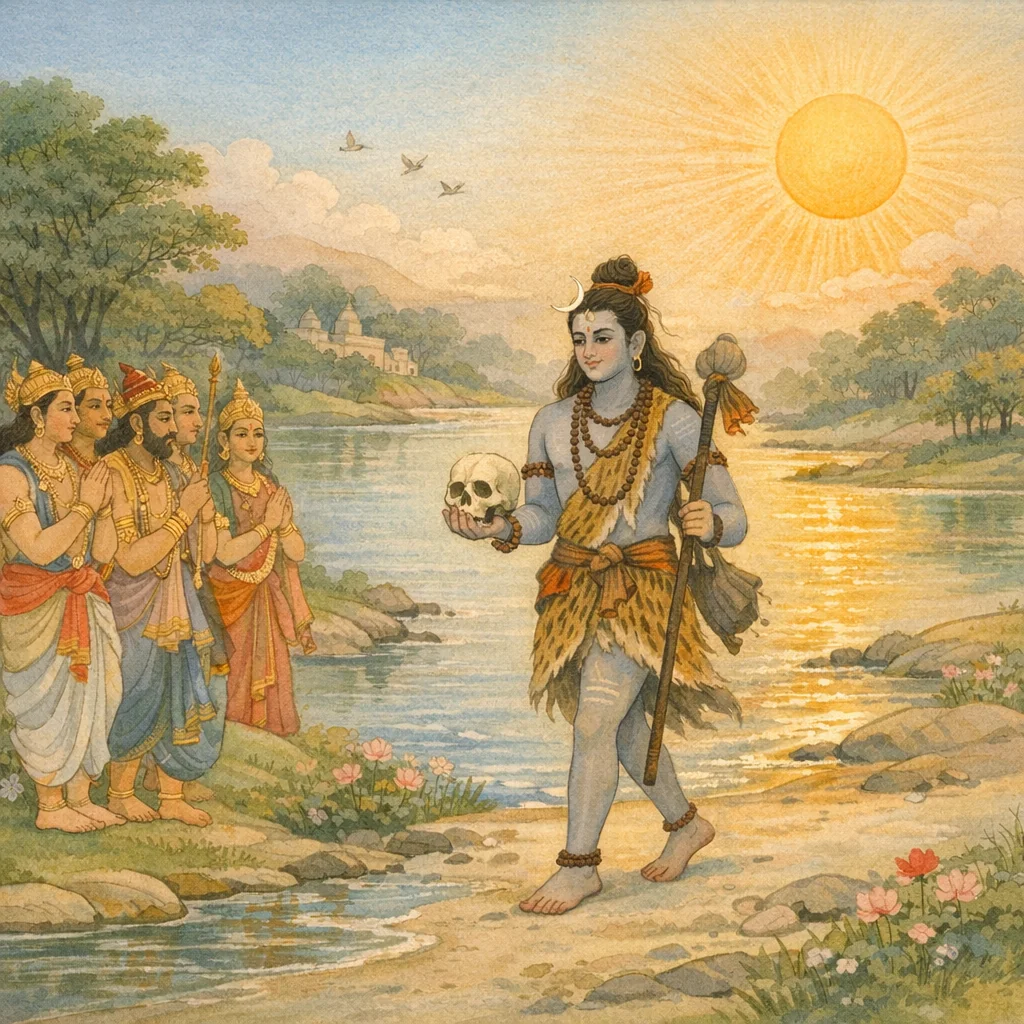
Adhyaya 113: Brahmatirtha, Rudratirtha, and Sauryatirtha: The Sanctification of Brahma’s Severed Fifth Head
അധ്യായം 113 ബ്രഹ്മതീർത്ഥത്തിന്റെ ഉദ്ഭവവും മഹാത്മ്യവും വിവരിക്കുന്നു. ദേവന്മാർക്കുപോലും ദുർലഭമായ, ഭുക്തിയും മുക്തിയും നൽകുന്ന തീർത്ഥസ്ഥലത്തെ ബ്രഹ്മാവ് സ്തുതിക്കുന്നു. കഥയിൽ ബ്രഹ്മാവിന്റെ കഴുതാമുഖമുള്ള ഭയങ്കരമായ അഞ്ചാം ശിരസ് ദേവഗണങ്ങൾക്ക് ഭീഷണിയാകുന്നു; അവർ വിഷ്ണുവിനോട് സഹായം തേടുന്നു. ആ ശിരഛേദത്തിൽ നിന്നുള്ള കർമഭാരം ത്രിനേത്രനായ ശിവൻ ധരിക്കാതെ പോയാൽ അനർത്ഥം സംഭവിക്കുമെന്ന് വിഷ്ണു പറയുന്നു. ലോകാനുകമ്പയാൽ ദേവന്മാർ ശിവനെ അപേക്ഷിക്കുമ്പോൾ, ശിവൻ ആലോചിച്ച് ഛിന്നശിരസ്സിന്റെ ഭാരം ഏറ്റെടുക്കുന്നു. അതിനാൽ സ്ഥലം ബ്രഹ്മബന്ധത്താൽ ബ്രഹ്മതീർത്ഥം, ശിവകൃത്യത്താൽ രുദ്രതീർത്ഥം, സൂര്യന്റെ പ്രത്യക്ഷ സാന്നിധ്യത്താൽ സൗര്യതീർത്ഥം എന്നിങ്ങനെ ത്രിവിധ പവിത്രത നേടുന്നു. അവസാനം അവിമുക്തക്ഷേത്രത്തിലെ ഗൗതമീതീരത്ത് ആ ശിരസോ പവിത്ര കപാലമോ ദർശിച്ചാൽ പാപശുദ്ധിയും പരമഗതിയും ലഭിക്കും എന്ന് പ്രസ്താവിക്കുന്നു.
Chapter Arc
{"opening_hook":"Brahmā proclaims a tīrtha on the Gautamī’s bank in Avimukta-kṣetra as “rare even for the gods,” immediately promising the double fruit of bhukti (worldly fulfillment) and mukti (liberation), which draws the listener into a māhātmya framed as both map and myth.","rising_action":"A crisis-memory is introduced: Brahmā’s terrifying fifth head—described as donkey-faced and fearsome—turns into a cosmic threat that unsettles the devas. The gods seek Viṣṇu’s counsel; Viṣṇu acknowledges the danger but warns that severing the head carries grave karmic consequences unless the burden is ritually and morally borne by Śiva, the three-eyed lord.","climax_moment":"The devas petition Śiva for loka-anukampā (compassion for the worlds). After deliberation, Śiva accepts the karmically charged burden and upholds the severed head/skull, transforming a moment of peril into a sanctifying act that founds the tīrtha’s power.","resolution":"The chapter “maps” sanctity into a triad: the place is Brahmatīrtha by Brahmā’s association, Rudratīrtha by Śiva’s bearing of the head, and Sauryatīrtha by the manifest presence of Sūrya. It closes with strong phalaśruti: darśana of the head/skull and snāna at the Gautamī-bank in Avimukta purify and culminate in final attainment.","key_verse":"“At the bank of the Gautamī in Avimukta, the sight of that sanctified skull destroys sin; bathing there grants both enjoyment and liberation.” (memorable teaching; chapter’s phalaśruti summarized in translation)"}
Thematic Essence
{"primary_theme":"गौतमी-माहात्म्य (Gautamī tīrtha-māhātmya): the origin and exaltation of Brahmatīrtha through a mythic crisis and its sanctifying resolution.","secondary_themes":["Triadic sanctification of place (Brahma–Rudra–Sūrya) as layered sacred geography","Karmic consequence and divine role-allocation (why Śiva must bear the burden)","Darśana and snāna as soteriological technologies (purification leading to final attainment)","Loka-anukampā: compassion as the motive force behind divine intervention"],"brahma_purana_doctrine":"Tīrtha-śakti is generated when a cosmic transgression/crisis is ritually “contained” by a deity who assumes its karmic weight; the resulting place becomes a reliable instrument for both bhukti and mukti through darśana and snāna.","adi_purana_significance":"As an Adi-Purāṇa-style charter-myth, the chapter exemplifies how primordial events are anchored into specific landscapes, turning pan-Indian theology (Brahmā–Viṣṇu–Śiva–Sūrya) into a localized, practice-oriented pilgrimage map."}
Emotional Journey
{"opening_rasa":"अद्भुत (adbhuta)","climax_rasa":"भयानक (bhayānaka) → वीर (vīra)","closing_rasa":"शान्त (śānta)","rasa_transitions":["adbhuta → bhayānaka → cintā (anxiety-toned) → vīra → śānta"],"devotional_peaks":["The devas’ supplication to Śiva framed explicitly as loka-anukampā (world-compassion)","The naming of the triad—Brahmatīrtha, Rudratīrtha, Sauryatīrtha—as a liturgical moment of sacral mapping","The concluding phalaśruti promising purification and final attainment through darśana/snānā at Gautamī’s bank"]}
Tirtha Focus
{"tirthas_covered":["ब्रह्मतीर्थ (Brahmatīrtha)","रुद्रतीर्थ (Rudratīrtha)","सौर्यतीर्थ (Sauryatīrtha)","गौतमी-तट (Gautamī river bank)","अविमुक्त-क्षेत्र (Avimukta-kṣetra)"],"jagannath_content":null,"surya_content":"Sūrya is explicitly integrated into the site’s holiness as Sauryatīrtha, implying solar darśana as a purifier and merit-multiplier within the Gautamī pilgrimage network.","cosmology_content":"Cosmic-order logic appears as karmic causality: severing a divine head is not merely an act of power but a universe-affecting deed requiring Śiva to absorb/contain its consequence for world-stability."}
Shlokas in Adhyaya 113
Verse 1
ब्रह्मोवाच इदम् अप्य् अपरं तीर्थं देवानाम् अपि दुर्लभम् ब्रह्मतीर्थम् इति ख्यातं भुक्तिमुक्तिप्रदं नृणाम् //
പ്രഥമ ശ്ലോകം—ഇവിടെ പവിത്ര പുരാണവചനത്തിന്റെ പ്രവാഹം ആരംഭിക്കുന്നു।
Verse 2
स्थितेषु देवसैन्येषु प्रविष्टेषु रसातलम् दैत्येषु च मुनिश्रेष्ठ तथा मातृषु तान् अनु //
ദ്വിതീയ ശ്ലോകം—ധർമ്മത്തിനും ജ്ഞാനവൃദ്ധിക്കും വേണ്ടി ഈ വിവരണം ആരംഭിക്കുന്നു।
Verse 3
मदीयं पञ्चमं वक्त्रं गर्दभाकृति भीषणम् तद् वक्त्रं देवसैन्येषु मयि तिष्ठत्य् उवाच ह //
തൃതീയ ശ്ലോകം—ഇത് ശ്രദ്ദയോടെ ശ്രവിക്കയും മനസ്സിൽ ധ്യാനിച്ച് മനനം ചെയ്യുകയും വേണം।
Verse 4
हे दैत्याः किं पलायन्ते न भयं वो ऽस्तु सत्वरम् आगच्छन्तु सुरान् सर्वान् भक्षयिष्ये क्षणाद् इति //
ചതുർത്ഥ ശ്ലോകം—ഇത് വായിക്കുന്നവനും കേൾക്കുന്നവനും പുണ്യഫലം പ്രാപിക്കും।
Verse 5
निवारयन्तं माम् एवं भक्षणायोद्यतं तथा तं दृष्ट्वा विबुधाः सर्वे वित्रस्ता विष्णुम् अब्रुवन् //
പഞ്ചമ ശ്ലോകം—ഈ പുരാണം ലോകഹിതത്തിനും ധർമ്മസ്ഥാപനത്തിനുമായി പ്രസ്താവിക്കപ്പെടുന്നു।
Verse 6
त्राहि विष्णो जगन्नाथ ब्रह्मणो ऽस्य मुखं लुन चक्रधृग् विबुधान् आह च्छेद्मि चक्रेण वै शिरः //
ഇത് ആറാം ശ്ലോകം—പുരാണാർത്ഥത്തിന്റെ സംഗ്രഹം; ധർമ്മ-അർത്ഥ-കാമ-മോക്ഷങ്ങളെ ഉപദേശിക്കുന്ന വചനം।
Verse 7
किं तु तच् छिन्नम् एवेदं संहरेत् सचराचरम् मन्त्रं ब्रूमो ऽत्र विबुधाः श्रूयतां सर्वम् एव हि //
ഇത് ഏഴാം ശ്ലോകം—ശ്രദ്ധയോടെ പാരായണം ചെയ്തും ശ്രവിച്ചും ഉള്ളത് പുണ്യപ്രദവും ജ്ഞാനവർധകവും ആകുന്നു।
Verse 8
त्रिनेत्रः कशिरश् छेत्ता स च धत्ते न संशयः मया च शंभुः सर्वैश् च स्तुतः प्रोक्तस् तथैव च //
ഇത് എട്ടാം ശ്ലോകം—സത്സംഗം മൂലം മനസ്സ് ശുദ്ധിയാകുകയും ധർമ്മമാർഗത്തിൽ സ്ഥിരത ഉണ്ടാകുകയും ചെയ്യുന്നു।
Verse 9
यागः क्षणी दृष्टफले ऽसमर्थः स नैव कर्तुः फलतीति मत्वा फलस्य दाने प्रतिभूर् जटीति निश्चित्य लोकः प्रतिकर्म यातः
ഇത് ഒൻപതാം ശ്ലോകം—ശാസ്ത്രാർത്ഥം മനസ്സിൽ ധരിക്കുന്നവൻ ലോകത്തിൽ മാന്യത നേടുന്നു।
Verse 10
ततः सुरेशः संतुष्टो देवानां कार्यसिद्धये लोकानाम् उपकारार्थं तथेत्य् आह सुरान् प्रति //
ഇത് പത്താം ശ്ലോകം—ധർമ്മത്തിൽ നിലകൊണ്ട് പരമശാന്തി പ്രാപിച്ച്, അവസാനം മോക്ഷം കൈവരിക്കുന്നു।
Verse 11
तद्वक्त्रं पापरूपं यद् भीषणं लोमहर्षणम् निकृत्य नखशस्त्रैश् च क्व स्थाप्यं चेत्य् अथाब्रवीत् //
പതിനൊന്നാം ശ്ലോകം—ഈ പുരാണത്തിൽ പവിത്ര ധർമ്മതത്ത്വം സംക്ഷേപമായി നിരൂപിക്കുന്നു।
Verse 12
तत्रेला विबुधान् आह नाहं वोढुं शिरः क्षमा रसातलम् अथो यास्ये उदधिश् चाप्य् अथाब्रवीत् //
പന്ത്രണ്ടാം ശ്ലോകം—ശ്രദ്ധയോടെ ശ്രവണം ചെയ്താൽ ജനങ്ങൾ പുണ്യഫലം പ്രാപിക്കുന്നു।
Verse 13
शोषं यास्ये क्षणाद् एव पुनश् चोचुः शिवं सुराः त्वयैवैतद् ब्रह्मशिरो धार्यं लोकानुकम्पया //
പതിമൂന്നാം ശ്ലോകം—ധർമ്മത്തിന്റെ അംശങ്ങൾ: സത്യം, ദയ, ശൗചം, തപസ്, സ്വാധ്യായം।
Verse 14
अच्छेदे जगतां नाशश् छेदे दोषश् च तादृशः एवं विमृश्य सोमेशो दधार कशिरस् तदा //
പതിനാലാം ശ്ലോകം—ഇവ പാലിച്ചാൽ ലോകത്തിൽ ശാന്തിയും സുഖവും വർധിക്കുന്നു।
Verse 15
तद् दृष्ट्वा दुष्करं कर्म गौतमीं प्राप्य पावनीम् अस्तुवञ् जगताम् ईशं प्रणयाद् भक्तितः सुराः //
പതിനഞ്ചാം ശ്ലോകം—ഇങ്ങനെ ഈ ധർമ്മോപദേശം ബ്രഹ്മപുരാണത്തിൽ ബ്രഹ്മാവ് പ്രസ്താവിച്ചു।
Verse 16
देवेष्व् अमित्रं कशिरो ऽतिभीमं तान् भक्षणायोपगतं निकृत्य नखाग्रसूच्या शकलेन्दुमौलिस् त्यागे ऽपि दोषात् कृपयानुधत्ते
പതിനാറാം ശ്ലോകം—ഇവിടെ മൂല സംസ്കൃത പാഠം നൽകിയിട്ടില്ല; അതിനാൽ യഥാർത്ഥ വിവർത്തനം സാധ്യമല്ല. ദയവായി ശ്ലോകം നൽകുക.
Verse 17
तत्र ते विबुधाः सर्वे स्थिता ये ब्रह्मणो ऽन्तिके तुष्टुवुर् विबुधेशानं कर्म दृष्ट्वातिदैवतम् //
പതിനേഴാം ശ്ലോകം—ഇവിടെ മൂല ശ്ലോകം ലഭ്യമല്ല; അതിനാൽ പ്രാമാണിക വിവർത്തനം സാധ്യമല്ല. ദയവായി പാഠം നൽകുക.
Verse 18
ततः प्रभृति तत् तीर्थं ब्रह्मतीर्थम् इति श्रुतम् अद्यापि ब्रह्मणो रूपं चतुर्मुखम् अवस्थितम् //
പതിനെട്ടാം ശ്ലോകം—മൂല പാഠമില്ലാതെ അർത്ഥനിർണ്ണയം സാധ്യമല്ല; ദയവായി ശ്ലോകം ശരിയായി നൽകുക.
Verse 19
शिरोमात्रं तु यः पश्येत् स गच्छेद् ब्रह्मणः पदम् यत्र स्थित्वा स्वयं रुद्रो लूनवान् ब्रह्मणः शिरः //
പത്തൊമ്പതാം ശ്ലോകം—ഇവിടെ ശ്ലോകപാഠം കാണുന്നില്ല; അതിനാൽ വിവർത്തനം യുക്തമല്ല. ദയവായി മൂലം എഴുതുക.
Verse 20
रुद्रतीर्थं तद् एव स्यात् तत्र साक्षाद् दिवाकरः देवानां च स्वरूपेण स्थितो यस्मात् तद् उत्तमम् //
ഇരുപതാം ശ്ലോകം—മൂല ശ്ലോകമില്ലാതെ പൗരാണിക അർത്ഥം വ്യക്തമാകില്ല; ദയവായി ശ്ലോകം നൽകി വിവർത്തനം അഭ്യർത്ഥിക്കുക.
Verse 21
सौर्यं तीर्थं तद् आख्यातं सर्वक्रतुफलप्रदम् तत्र स्नात्वा रविं दृष्ट्वा पुनर्जन्म न विद्यते //
ഇത് 113.21 ശ്ലോകം; എന്നാൽ മൂല സംസ്കൃത പാഠം നൽകിയിട്ടില്ല. അതിനാൽ കൃത്യമായ വിവർത്തനം സാധ്യമല്ല. ദയവായി ശ്ലോകം നൽകുക.
Verse 22
महादेवेन यच् छिन्नं ब्रह्मणः पञ्चमं शिरः क्षेत्रे ऽविमुक्ते संस्थाप्य देवतानां हितं कृतम् //
ഇത് 113.22 ശ്ലോകം; എന്നാൽ മൂല സംസ്കൃത പാഠം ലഭ്യമല്ല. അതിനാൽ പ്രാമാണിക വിവർത്തനം സാധ്യമല്ല. ദയവായി ശ്ലോകപാഠം അയയ്ക്കുക.
Verse 23
ब्रह्मतीर्थे शिरोमात्रं यो दृष्ट्वा गौतमीतटे क्षेत्रे ऽविमुक्ते तस्यैव स्थापितं यो ऽनुपश्यति कपालं ब्रह्मणः पुण्यं ब्रह्महा पूततां व्रजेत् //
ഇത് 113.23 ശ്ലോകം; മൂലപാഠമില്ലാതെ വിവർത്തനം ചെയ്യുന്നത് യുക്തമല്ല. ദയവായി ബ്രഹ്മപുരാണത്തിലെ ശ്ലോകപാഠം നൽകുക.
Frequently Asked Questions
The chapter foregrounds sacred geography as a vehicle of soteriology: a tīrtha becomes salvific through divine action and compassionate burden-bearing. Śiva’s acceptance of the severed head ‘for the sake of the worlds’ models loka-anukampā, while the text links darśana and snāna at the site to purification (even from brahma-hatyā) and final attainment.
Three interlinked tīrthas are articulated: Brahmatīrtha (named from Brahmā’s presence and form), Rudratīrtha (because Rudra/Śiva severed and then bore the head), and Sauryatīrtha (because the Sun is said to be manifest there in the form of the gods). Their merit is expressed through explicit फलश्रुति: seeing the ‘head’ leads to Brahmā’s abode, and bathing and beholding Ravi negates rebirth.
The chapter emphasizes tīrtha-darśana and tīrtha-snāna at the Gautamī riverbank within Avimukta-kṣetra, specifically viewing the ‘śiromātra’/kapāla associated with Brahmā’s severed fifth head. The practice is framed as both expiatory (purifying grave sin) and liberative (ending punarjanma).