Dashati 6
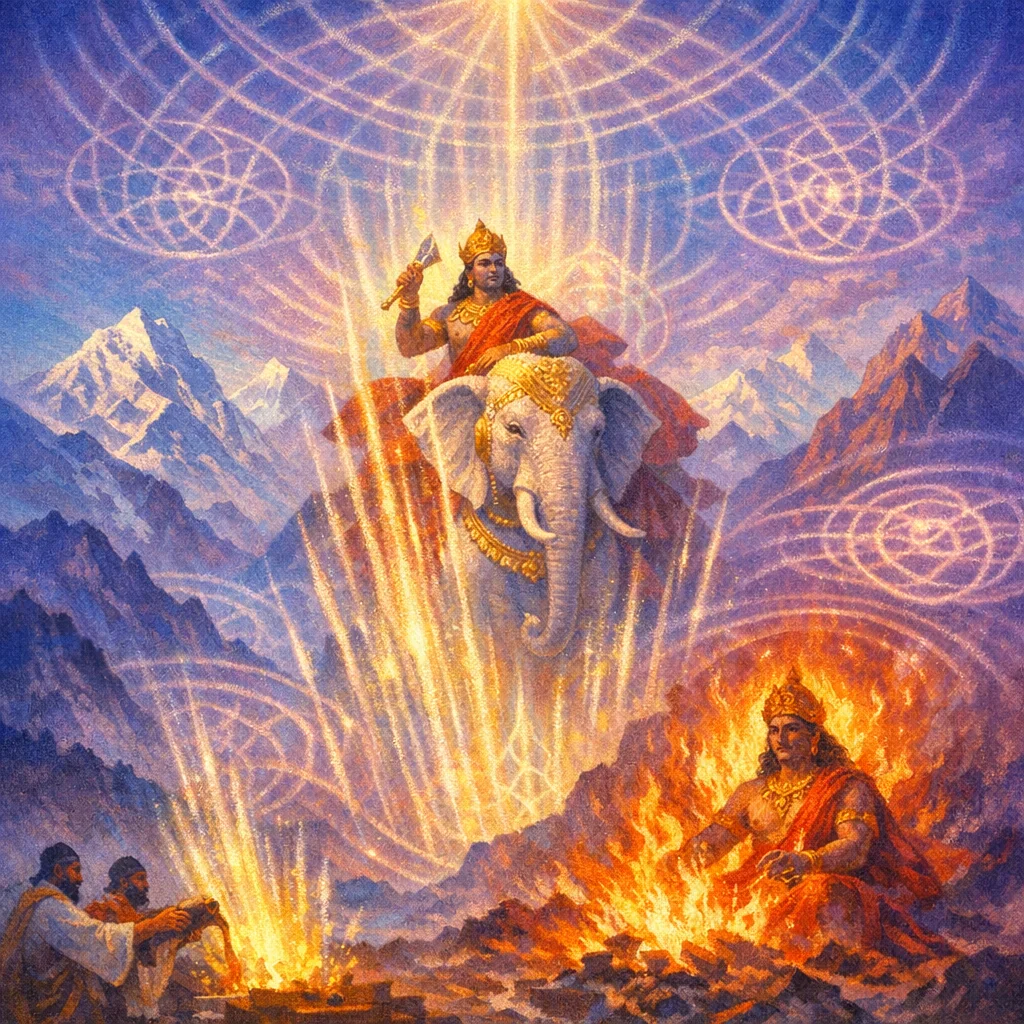
Aindra soma-invocation: energizing the rite through Indra’s wealth-giving power, with Agni/Apāṃ Napāt as the kindled mediator
Indra
Upbeat exhortative and success-seeking—suited to energizing offering-actions and calling down Indra’s boon
Bharadvāja (probable for the Agni/Apāṃ Napāt verses)
Soma libation context is explicit (full Soma-pour; refill/pour forth) with Indra as principal Soma-drinker and Agni as the kindled carrier.
Mantras
Mantra 1
देवो वो द्रविणोदाः पूर्णां विवष्ट्वासिचम् उद्वा सिञ्जध्वमुप वा पृणध्वमादिद्वो देव ओहते
The god, your giver of wealth, maketh the full libation to flow: pour ye it forth, or fill ye (the vessels) again; thereupon the god beareth (to you) advantage.
Mantra 2
प्रैतु ब्रह्मणस्पतिः प्र देव्येतु सूनृता अच्छा वीरं नर्यं पङ्क्तिराधसं देवा यज्ञं नयन्तु नः
May Brahmaṇaspati go forth; may the divine Sūnṛtā go forth; unto the heroic, the manly, the dispenser of bounty in due order: may the gods conduct our sacrifice.
Mantra 3
ऊर्ध्व ऊ षु ण ऊतये तिष्ठा देवो न सविता ऊर्ध्वो वाजस्य सनिता यदञ्जिभिर्वाघद्भिर्विह्वयामहे
Stand thou aloft, for our succour, like a god Savitṛ; aloft, the winner of strength, when, with unguents and with voices of praise, we invoke thee.
Mantra 4
प्र यो राये निनीषति मर्तो यस्ते वसो दाशत् स वीरं धत्ते अग्न उक्थशंसिनं त्मना सहस्रपोषिणम्
The mortal who seeks to lead (his rite) unto wealth, who, O opulent Agni, worships thee, he obtains a hero, a chaunter of hymns, of himself a thousandfold nourisher.
Mantra 5
प्र वो यह्वं पुरूणां विशां देवयतीनाम् अग्निं सूक्तेभिर्वचोभिर्वृणीमहे यंसमिदन्य इन्धते
For you, of many tribes, god-desiring, we choose Agni, the active, with well-uttered hymns and words; him whom others kindle with the fuel-stick.
Mantra 6
अयमग्निः सुवीर्यस्येशे हि सौभगस्य राय ईशे स्वपत्यस्य गोमत ईशे वृत्रहथानाम्
This Agni is indeed lord of excellent valour; he is lord of auspicious wealth; he is lord of good offspring abounding in cattle; (he is lord) of the slayings of Vṛtra.
Mantra 7
त्वमग्ने गृहपतिस्त्वं होता नो अध्वरे त्वं पोता विश्ववार प्रचेता ताक्षि यासि च वार्यम्
Thou, Agni, art the lord of the house; thou art our Hotṛ in the sacrifice; thou art the Potṛ, all-desirable, wise: thou fashionest, and thou attainest the desirable (reward).
Mantra 8
सखायस्त्वा ववृमहे देवं मर्तास ऊतये अपां नपातं सुभगं सुदंससं सुप्रतूर्तिमनेहसम्
We, thy friends, mortals, choose thee, the god, for succour; the Son of the Waters, auspicious, of beneficent deeds, of excellent victory, unfailing.
Frequently Asked Questions
Because the section is Aindra: Indra is praised as draviṇodāḥ (giver of wealth) and is the chief recipient of Soma, expected to return ‘advantage’—prosperity and victory—to the sacrificers.
Soma worship needs a mediator: Agni is ‘chosen’ and kindled to carry offerings, and Apāṃ Napāt expresses Agni’s hidden fiery power (especially in waters), invoked as auspicious and unfailing support for the rite.
They reflect live ritual instruction: priests prepare and manage the Soma stream/cups, and the chant aligns speech with action so the offering is timely and effective.