Adhyaya 267
Setubandha-Niścaya (Decision for the Causeway) and Vānara-Senā Saṃniveśa — Bridge Strategy and Alliance Consolidation
Upa-parva: Rāmopākhyāna (The Rama Narrative) — Embedded Exemplum within Āraṇyaka-parva
Mārkaṇḍeya describes the assembly of the vānara leadership around Rama, with numerous troop-commanders arriving under Sugrīva’s direction and the host forming an encampment likened to a sea in scale and sound. Rama and Lakṣmaṇa are portrayed as the central command presence as the force advances and reaches the ocean, where the practical problem of crossing becomes the strategic focus. In council, multiple proposals arise—jumping, boats, and makeshift floats—yet Rama rejects them as infeasible for the entire host and as tactically risky. He adopts a disciplined coercive posture by fasting on a kuśa-grass bed, compelling the ocean-deity to appear in a dream-vision and offer a lawful solution: employ Nala, a recognized artisan, whose thrown materials will be supported to form a stable bridge. Rama authorizes the setu-building, described with specific dimensions, and the ‘Nala-setu’ gains enduring fame. Vibhīṣaṇa then arrives with advisors; despite initial suspicion, Rama evaluates conduct and intent, accepts him, and consecrates him for rulership, after which the host crosses by the bridge, conducts forward operations near Laṅkā, identifies infiltrators, and dispatches Aṅgada as envoy to Rāvaṇa.
Chapter Arc: वैशम्पायन जनमेजय को सुनाते हैं—अरण्य में द्रौपदी से शिबि-देश के राजकुमार कोटिकास्य का सामना होता है, और वह उससे संबोधन करने में संकोच भी करती है। → द्रौपदी स्पष्ट करती है कि वह अकेली है और स्वधर्म में स्थित रहते हुए भी विवश होकर बोल रही है; वह राजकुमार की पहचान (सुरथ-पुत्र, कोटिकास्य) बताकर संवाद को मर्यादा की सीमा में रखती है। → द्रौपदी अपना परिचय देती है—त्रुपद की पुत्री ‘कृष्णा’, पाँच पाण्डवों की पत्नी—और संकेत करती है कि वे रथश्रेष्ठ शीघ्र ही लौटेंगे; दिशाओं के अनुसार उनके आगमन/स्थिति का उल्लेख कर राजकुमार को सावधान करती है। → वह कोटिकास्य को अतिथि-धर्म का मार्ग दिखाती है—वाहनों से उतरकर सम्मानपूर्वक प्रतीक्षा करो; धर्मसुत युधिष्ठिर तुम्हें देखकर प्रसन्न होंगे—और स्वयं पर्णशाला में प्रवेश कर अतिथ्य की तैयारी का विचार करती है। → क्या कोटिकास्य द्रौपदी की मर्यादित चेतावनी मानकर अतिथि-भाव से ठहरेगा, या पाण्डवों के लौटने पर यह भेंट किसी संकट में बदलेगी?
Shlokas
Verse 1
#::732:.8 #::3::.7 () हि 2 7 षट्षष्ट्यधिकद्विशततमो< ध्याय: द्रौपदीका कोटिकास्यको उत्तर वैशम्पायन उवाच अथाब्रवीद् द्रौपदी राजपुत्री पृष्टा शिबीनां प्रवरेण तेन । अवेक्ष्य मन्दं प्रविमुच्य शाखां संगृह्लती कौशिकमुत्तरीयम्,वैशम्पायनजी कहते हैं--जनमेजय! शिबिदेशके प्रमुख वीर कोटिकास्यके इस प्रकार पूछनेपर राजकुमारी द्रौपदी कदम्बकी वह डाली छोड़कर अपनी रेशमी ओढ़नीको सँभालती हुई संकोचपूर्वक उसकी ओर देखकर बोली-- इस प्रकार श्रीमहाभारत वनपर्वके अन्तर्गत द्रौपवीहरणपर्वमें द्रौपदीवाक्यविषयक दो सौ छाछठवाँ अध्याय प्रा हुआ ॥/ २६६ ॥/ हि न (0) है 7 7 सप्तषष्ट्याधिकद्विशततमो< ध्याय: जयद्रथ और द्रौपदीका संवाद वैशम्पायन उवाच तथा<<सीनेषु सर्वेषु तेषु राजसु भारत । यदुक्त कृष्णया सार्ध तत् सर्व प्रत्यवेदयत्
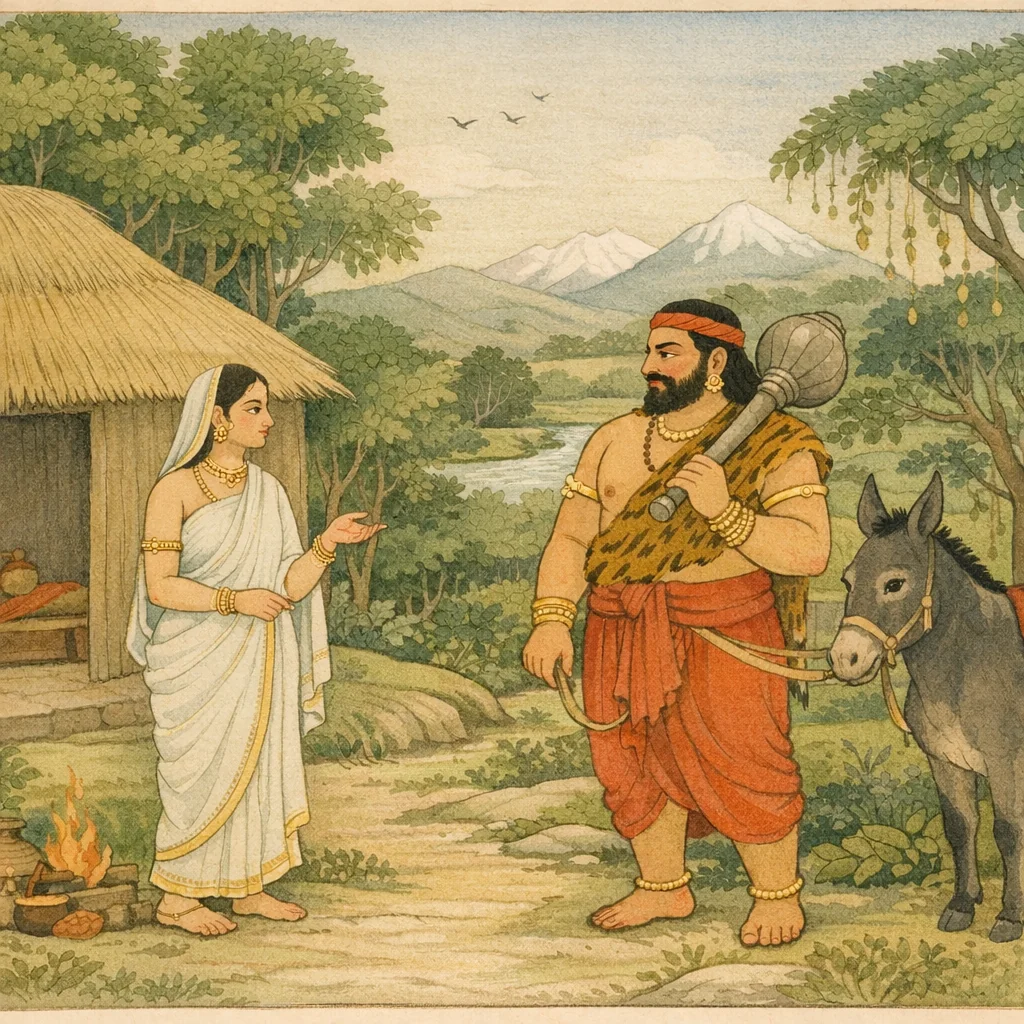
Vaiśampāyana said: Then Draupadī, the princess, questioned by that foremost hero of the Śibis, spoke. Casting a modest glance, she let go of the branch and, gathering up her silken upper garment, addressed him with restrained composure—an image of dignity under pressure, where modesty and self-possession become her ethical stance amid coercive attention.
Verse 2
बुद्धयाभिजानामि नरेन्द्रपुत्र न मादृशी त्वामभिभाष्टमर्हति । न त्वेह वक्तास्ति तवेह वाक्य- मन्यो नरो वाप्यथवापि नारी,“राजकुमार! मैं बुद्धिसे सोच-विचारकर भलीभाँति समझती हूँ कि मुझ-जैसी पतिपरायणा स्त्रीको तुम-जैसे पर पुरुषसे वार्तालाप नहीं करना चाहिये; परंतु यहाँ कोई दूसरा ऐसा पुरुष अथवा स्त्री नहीं है जो तुम्हारी बातका उत्तर दे सके
“O prince, I understand clearly after careful reflection: a wife devoted to her husband, such as I, ought not to converse with another man like you. Yet here there is no other man or woman who can respond to your words.”
Verse 3
एका हाहं सम्प्रति तेन वाचं ददामि वै भद्र निबोध चेदम् । अहं हारण्ये कथमेकमेका त्वामालपेयं निरता स्वधर्मे,“मैं इस समय यहाँ अकेली ही हूँ। इसलिये विवश होकर तुमसे बोलना पड़ रहा है। भद्रपुरुष! मेरी इस बातपर ध्यान दो। मैं अपने धर्मके पालनमें तत्पर रहनेवाली हूँ। इस समय इस वनमें मैं अकेली हूँ और तुम भी अकेले पुरुष हो, ऐसी दशामें मैं तुम्हारे साथ कैसे वार्तालाप कर सकती हूँ?
“Alas, I am alone here at this moment; therefore, compelled by the situation, I must speak to you. Noble sir, attend to what I say. I am devoted to the observance of my own dharma. In this forest I am a lone woman, and you are a lone man—how, in such a circumstance, can I properly converse with you?”
Verse 4
जानामि च त्वां सुरथस्य पुत्र यं कोटिकास्येति विदुर्मनुष्या: । तस्मादहं शैब्य तथैव तुभ्य- माख्यामि बन्धून् प्रथितं कुलं च,परंतु मैं तुम्हें पहचानती हूँ, तुम राजा सुरथके पुत्र हो, जिसे लोग कोटिकास्यके नामसे जानते हैं। शैब्य! इसीलिये मैं तुम्हें अपने बन्धुजनों तथा विश्वविख्यात वंशका परिचय देती हूँ
Vaiśaṃpāyana said: “I recognize you, son of King Suratha—the one whom people know by the name Koṭikāsya. Therefore, O Śaibya, I shall now tell you of my kinsmen and of my widely renowned lineage.”
Verse 5
अपत्यमस्मि ट्रुपदस्य राज्ञ: कृष्णेति मां शैब्य विदुर्मनुष्या: । साहं वृणे पञ्च जनान् पतित्वे ये खाण्डवप्रस्थगता: श्रुतास््ते
I am the daughter of King Drupada; among people I am known, O Śaibya, by the name Kṛṣṇā. Therefore I choose as my husbands those five men of whom you have heard—those who have gone to Khāṇḍavaprastha. The statement frames her identity and agency in marriage, while also pointing to the extraordinary dharmic situation of accepting five husbands within the epic’s larger moral order.
Verse 6
'शिबिदेशके राजकुमार! मैं राजा ट्रुपदकी पुत्री हूँ। मनुष्य मुझे कृष्णाके नामसे जानते हैं। मैंने पाँचों पाण्डवोंका पतिरूपमें वरण किया है, जो खाण्डव-प्रस्थमें रहते थे। उनका नाम तुमने अवश्य सुना होगा ।। युधिष्ठिरो भीमसेनार्जुनौ च माद्रयाश्न पुत्रौ पुरुषप्रवीरौ । ते मां निवेश्येह दिशश्चतस््रो विभज्य पार्था मृगयां प्रयाता:,'युधिष्ठिर, भीमसेन, अर्जुन तथा माद्रीपुत्र नरवीर नकुल-सहदेव--ये ही मेरे पति हैं। वे सब-के-सब मुझे यहाँ रखकर हिंसक पशुओंको मारनेके लिये अलग-अलग बँटकर चारों दिशाओंमें गये हैं
Yudhiṣṭhira, Bhīmasena, and Arjuna, along with the two heroic sons of Mādrī—Nakula and Sahadeva—these are my husbands. After settling me here, the Pārthas divided themselves toward the four directions and went out on the hunt, intent on bringing down dangerous beasts.
Verse 7
प्राचीं राजा दक्षिणां भीमसेनो जय: प्रतीचीं यमजावुदीचीम् । मन्ये तु तेषां रथसत्तमानां कालो$भित: प्राप्त इहोपयातुम्,स्वयं राजा युधिष्ठिर पूर्व दिशामें गये हैं, भीमसेन दक्षिण दिशामें, अर्जुन पश्चिम दिशामें और नकुल-सहदेव उत्तर दिशामें गये हैं। मैं समझती हूँ, अब उन महारथियोंके सब ओरसे यहाँ पहुँचनेका समय हो गया है
Vaiśampāyana said: “The king has gone to the east; Bhīmasena to the south; Arjuna, the conqueror, to the west; and the twin brothers (Nakula and Sahadeva) to the north. I think the time has now come for those foremost of chariot-warriors to arrive here from all directions.”
Verse 8
सम्मानिता यास्यथ तैर्यथेष्टे विमुच्य वाहानवरोहयध्वम् । प्रियातिथिर्धर्मसुतो महात्मा प्रीतो भविष्यत्यभिवीक्ष्य युष्मान्,“अब तुमलोग अपनी सवारियोंसे उतरो और घोड़ोंको खोलकर विश्राम करो। मेरे पतियोंका आदर-सत्कार ग्रहण करके अपने अभीष्ट देशको जाना। महात्मा धर्मपुत्र युधिष्ठिर अतिथियोंके बड़े प्रेमी हैं। वे तुमलोगोंको देखकर बहुत प्रसन्न होंगे”
Vaiśampāyana said: “Having been duly honored by them, you may then proceed to whatever destination you desire. Unharness your mounts and dismount to rest. The high-souled son of Dharma (Yudhiṣṭhira) is one who dearly loves guests; on seeing you, he will surely be pleased.”
Verse 9
एतावदुक््त्वा द्रुपदात्मजा सा शैब्यात्मजं चन्द्रमुखी प्रतीता । विवेश तां पर्णशालां प्रशस्तां संचिन्त्य तेषामतिथित्वमर्थ,शिबिदेशके राजकुमार कोटिकास्यसे ऐसा कहकर वह चन्द्रमुखी द्रौपदी अपनी उत्तम पर्णशालाके भीतर चली गयी। “ये लोग हमारे अतिथि हैं” ऐसा सोचकर उसे उनपर विश्वास हो गया था। अतः वह प्रसन्नतापूर्वक उनके आतिथ्यकी व्यवस्थामें लग गयी
Having said only this much, that moon-faced Draupadī, the daughter of Drupada, trusting the son of Śaibya, entered the excellent leaf-hut. Reflecting that they were to be treated as guests, she placed her confidence in them and, with a pleased mind, set about arranging their hospitality—thus upholding the ethical duty owed to an atithi (guest), even amid uncertainty.
Verse 266
इति श्रीमहाभारते वनपर्वणि द्रौपदीहरणपर्वणि द्रौपदीवाक्ये षट्षष्ट्यधिकद्विशततमो<5 ध्याय:
Thus ends, in the Śrī Mahābhārata, within the Vana Parva—specifically the section concerning the abduction of Draupadī—Draupadī’s discourse: the two-hundred and sixty-sixth chapter. This is a formal colophon marking the close of a chapter and situating it within the epic’s larger moral narrative.
Frequently Asked Questions
The dilemma is how to pursue a just objective while facing a natural barrier: whether to adopt risky, potentially harmful shortcuts (mass leaping, improvised transport) or to insist on a scalable, orderly solution that minimizes preventable loss and maintains legitimacy.
Effective action is presented as disciplined and proportionate: evaluate constraints, avoid impulsive heroics that do not generalize to the collective, and integrate specialized knowledge through accountable leadership.
No explicit phalaśruti is stated in the provided passage; the meta-function is exemplum-based instruction, using Rama’s conduct to illustrate dharmically bounded strategy and the legitimization of alliances.