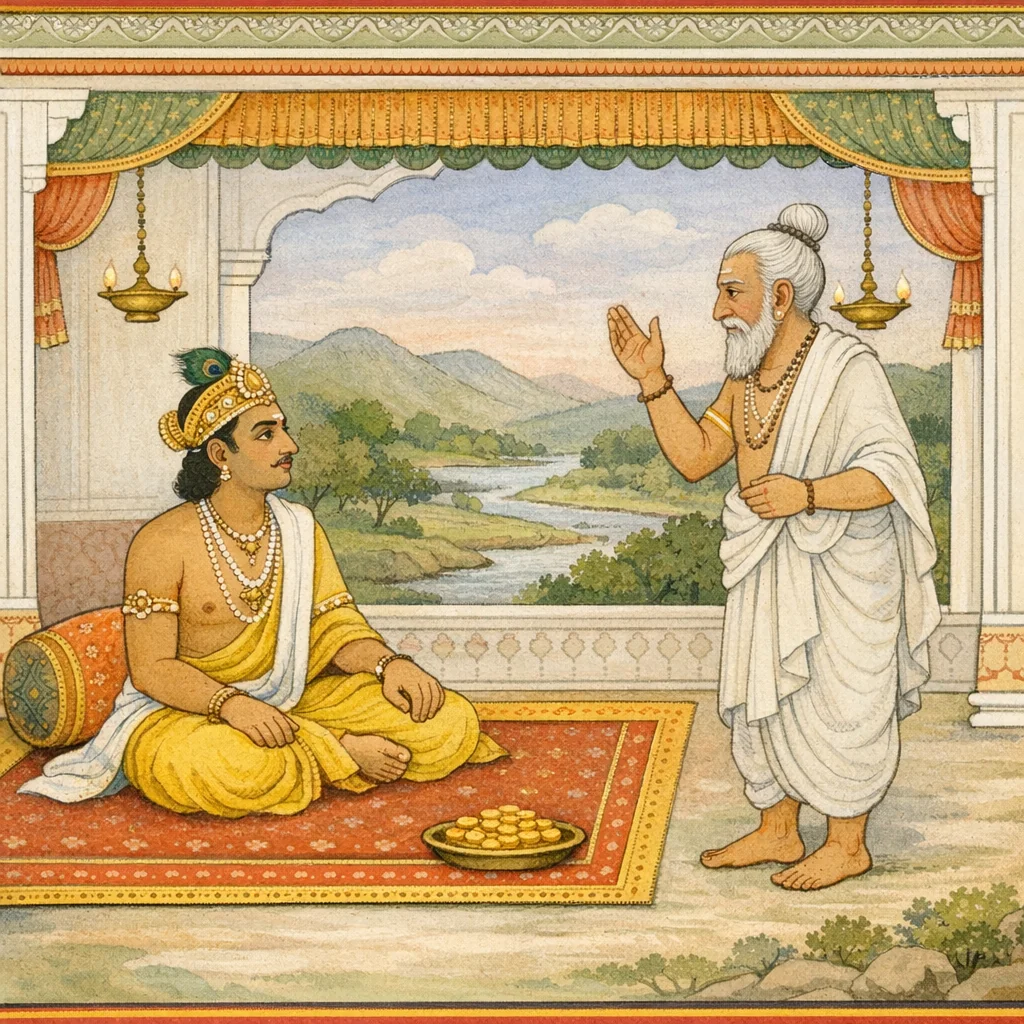
Adhyaya 197
कौशिकस्य क्रोधविनिवृत्तिः — Kauśika’s Anger Checked by Householder Dharma
Upa-parva: Mārkaṇḍeya–Kauśika–Gṛhapatnī Saṃvāda (Dharma-sūkṣmatā Episode)
Mārkaṇḍeya introduces Kauśika, a learned brāhmaṇa devoted to Vedic recitation and tapas. While reciting beneath a tree, he is defiled by a crane’s droppings; seized by anger, he uses ascetic potency to bring the bird down, then regrets the act as a product of rāga-dveṣa. Seeking alms, he enters a household where a woman asks him to wait while she attends to ritual cleanliness and then urgently serves her hungry, fatigued husband. The brāhmaṇa rebukes her for delaying a brāhmaṇa, asserting the superior status and fiery power of brāhmaṇas. The woman responds with measured deference: she does not disrespect brāhmaṇas, yet her chosen dharma is patiśuśrūṣā (service to her husband), and she demonstrates insight by revealing knowledge of Kauśika’s earlier act against the crane. She teaches that anger is an internal enemy; true brāhmaṇa-qualities include truthfulness, self-control, non-retaliation, purity, study, and even-mindedness. She concludes that dharma is subtle and recommends that Kauśika seek further instruction from a self-controlled vyādha living in Mithilā. Kauśika’s anger subsides; he accepts the correction as spiritually beneficial and departs in self-reproach.
Chapter Arc: पाण्डव, मार्कण्डेय से पुनः ‘भूय एव’ कहकर किसी महाभाग्य-युक्त आख्यान की याचना करते हैं; वैषम्पायन के वचन से कथा का द्वार खुलता है—नीतिमार्गरत दो राजाओं, सेदुक और वृषदर्भ, का प्रसंग। → मार्कण्डेय बताते हैं कि वृषदर्भ ने बाल्यकाल से एक गुप्त व्रत धारण किया था—ब्राह्मण-याचक को ‘कुप्यम्’ (सोना-चाँदी आदि) के अतिरिक्त कुछ न देने का संकल्प। उधर सेदुक के पास वेदाध्ययनसम्पन्न ब्राह्मण आता है और गुरु-दक्षिणा में असाधारण याचना करता है—अश्वसहस्र। राजा की मर्यादा, सामर्थ्य और दान-धर्म के बीच तनाव बढ़ता है; ब्राह्मण शाप देने को उद्यत होता है। → ब्राह्मण स्पष्ट करता है कि वह सेदुक द्वारा भेजा गया है और उसी के उपदेशानुसार वृषदर्भ से याचना कर रहा है; वृषदर्भ दुविधा में पड़ता है—व्रत की सीमा बनाम ब्राह्मण-वचन की अवहेलना का भय। राजा कहता है कि वह पूर्वाह्न में वही देगा जो राजकीय कर/बलि के रूप में प्राप्त होगा—दान को ‘यथालाभ’ से बाँधकर शाप-भय और व्रत-पालन के बीच एक तीक्ष्ण, जोखिमभरा समाधान चुनता है। → वृषदर्भ ब्राह्मण को तत्काल आश्वासन देता है और दान की व्यवस्था को राज्य-आय (बलि) से जोड़ देता है; ब्राह्मण के शाप-उद्यम को रोककर संवाद को दान-प्रतिज्ञा की दिशा में मोड़ देता है। अध्याय का अंत इस नैतिक गाँठ पर होता है कि दान का व्रत, दाता की क्षमता, और याचक की अपेक्षा—तीनों का संतुलन कैसे साधा जाए। → ब्राह्मण की याचना (अश्वसहस्र) और वृषदर्भ की ‘पूर्वाह्न-बलि’ वाली प्रतिज्ञा के बाद प्रश्न लटकता है—क्या राज्य-आय पर्याप्त होगी, और क्या वृषदर्भ अपने गुप्त व्रत तथा ब्राह्मण-धर्म दोनों की रक्षा कर पाएगा?
Shlokas
Verse 1
हि >> मो न (0) है 7 घण्णवत्यधिकशततमो< ध्याय: सेदुक और वृषदर्भका चरित्र वैशम्पायन उवाच भूय एव महाभाग्यं कथ्यतामित्यब्रवीत् पाण्डव:,वैशम्पायनजी कहते हैं--जनमेजय! पाण्डुनन्दन युधिष्ठिरने मार्कण्डेयजीसे पुनः: यह अनुरोध किया--“भगवन्! फिर मुझे क्षत्रियोंका माहात्म्य सुनाइये'
Vaiśampāyana said: Then the Pāṇḍava (Yudhiṣṭhira), seeking further instruction, spoke again: “O venerable one, please tell it once more—recount to me again the greatness (and exemplary conduct) of the kṣatriyas.”
Verse 2
अथाचष्ट... मार्कण्डेयो महाराज वृषदर्भसेदुकनामानौ राजानौ नीतिमार्गरतावस्त्रोपास्त्रकृतिनौ,तब मार्कण्डेयजीने कहा--“महाराज! पूर्वकालमें वृषदर्भ और सेदुक ये दो राजा थे। दोनोंही नीतिके मार्गपर चलनेवाले और अस्त्र तथा उपास्त्रोंकी विद्यामें निपुण थे
Vaiśampāyana said: Then Mārkaṇḍeya declared, “O great king, in former times there were two kings named Vṛṣadarbha and Seduka. Both were devoted to the path of righteous policy and conduct, and were accomplished in the sciences of weapons and subsidiary martial disciplines.”
Verse 3
सेदुको वृषदर्भस्य बालस्यैव उपांशुव्रतम भ्यजानात् कुप्यमदेयं ब्राह्मणस्य,“वृषदर्भने बचपनसे ही एक गुप्त व्रत ले रखा था कि “ब्राह्मणको सोना-चाँदीके सिवा और कुछ नहीं देना चाहिये (तात्पर्य यह कि उसे सुवर्ण तथा रजत ही प्रदान करना चाहिये)”। उनके इस व्रतको सेदुक जानते थे
Verse 4
अथ त॑ सेदिकं ब्राह्मण: कश्निद् वेदाध्ययनसम्पन्न आशिषं दत्त्वा गुर्वर्थी भिक्षितवान्,“एक दिन कोई वेदाध्ययनसम्पन्न ब्राह्मण राजा सेदुकके पास आया और उन्हें आशीर्वाद देकर गुरु-दक्षिणाके लिये भिक्षा माँगता हुआ बोला--'राजन्! आप मुझे एक हजार घोड़े दीजिये।” तब सेदुकने उस ब्राह्मण-से कहा--'ब्रह्मनम! आपकी अभीष्ट गुरु- दक्षिणा देना मेरे लिये सम्भव नहीं है
Vaiśampāyana said: Then a certain Brahmin, accomplished in Vedic study, came to King Seduka. After offering him a blessing, he begged for alms as a teacher’s fee, saying, “O King, grant me a thousand horses.” Seduka replied to the Brahmin, “Revered sir, it is not possible for me to give the teacher’s fee you desire.”
Verse 5
अश्वसहस््र॑ मे भवान् ददात्विति तं सेदुको ब्राह्मणमब्रवीत्,“एक दिन कोई वेदाध्ययनसम्पन्न ब्राह्मण राजा सेदुकके पास आया और उन्हें आशीर्वाद देकर गुरु-दक्षिणाके लिये भिक्षा माँगता हुआ बोला--'राजन्! आप मुझे एक हजार घोड़े दीजिये।” तब सेदुकने उस ब्राह्मण-से कहा--'ब्रह्मनम! आपकी अभीष्ट गुरु- दक्षिणा देना मेरे लिये सम्भव नहीं है
Vaiśampāyana said: A Veda-learned brāhmaṇa once approached King Seduka, blessed him, and then, seeking his teacher’s fee as alms, said, “O King, grant me a thousand horses.” Hearing this request, Seduka replied to the brāhmaṇa that fulfilling such a desired guru-dakṣiṇā was not possible for him—setting up a moral tension between honoring a worthy request and the limits of one’s means.
Verse 6
नास्ति सम्भवो गुर्वर्थ दातुमिति,“एक दिन कोई वेदाध्ययनसम्पन्न ब्राह्मण राजा सेदुकके पास आया और उन्हें आशीर्वाद देकर गुरु-दक्षिणाके लिये भिक्षा माँगता हुआ बोला--'राजन्! आप मुझे एक हजार घोड़े दीजिये।” तब सेदुकने उस ब्राह्मण-से कहा--'ब्रह्मनम! आपकी अभीष्ट गुरु- दक्षिणा देना मेरे लिये सम्भव नहीं है
Vaiśampāyana said: “It is not possible for me to give such a gift for the sake of the teacher.” Once, a Brahmin accomplished in Vedic study came to King Seduka. After blessing him, he begged alms as a teacher’s fee and said, “O King, give me a thousand horses.” Seduka replied to that Brahmin, “O Brahmin, it is not possible for me to grant the teacher’s fee you desire.”
Verse 7
स त्वं गच्छ वृषदर्भसकाशम् । राजा परम-पधर्मज्ञो ब्राह्मण तं भिक्षस्व । स ते दास्यति तस्यैतदुपांशुब्रतमिति,“अतः आप वृषदर्भके पास चले जाइये। ब्राह्मण! राजा वृषदर्भ बड़े धर्मज्ञ हैं। आप उन्हींसे याचना कीजिये। वे आपकी अभीष्ट वस्तु अवश्य दे देंगे। यह उनका गुप्त नियम है!
Vaiśampāyana said: “Therefore, you should go to King Vṛṣadarbha. O brāhmaṇa, that king is supremely learned in dharma—beg from him. He will grant you what you seek; for this is his private vow: to give when asked.”
Verse 8
अथ ब्राह्मणो वृषदर्भसकाशं गत्वा अश्वसहसत्रमयाचत् । स राजा त॑ कशेनाताडयत्,“तब ब्राह्मण देवताने वृषदर्भके पास जाकर एक हजार घोड़े माँगे। यह सुनकर राजा उन्हें कोड़ेसे पीटने लगे”
Vaiśaṃpāyana said: Then a brāhmaṇa went to King Vṛṣadarbha and asked for a thousand horses. Hearing this, the king struck the brāhmaṇa with a whip—an act that violates the reverence due to a supplicant and exposes a lapse in royal dharma, where power is used to humiliate rather than to protect and give.
Verse 9
त॑ ब्राह्मणो<ब्रवीत् । कि हिंस्पनागसं मामिति,“यह देख ब्राह्मणने उनसे पूछा--“राजन्! मुझ निरपराधको आप क्यों मार रहे हैं!
Vaiśampāyana said: Then the brāhmaṇa spoke to him, asking, “O king, why do you seek to harm me, who am without fault?” The question frames the act of violence as an ethical problem: punishment or injury without guilt is adharma, and a ruler’s force must be governed by justice rather than impulse.
Verse 10
एवमुक्क्त्वा तं॑ शपन्तं राजा55ह । विप्र कि यो न ददाति तुभ्यमुताहोस्विद् ब्राह्मण्यमेतत्,'ऐसा कहकर ब्राह्मण देवता शाप देनेको उद्यत हो गये। तब राजाने उनसे कहा --विप्रवर! क्या जो आपको अपना धन न दे, उसको शाप देना ही उचित है? अथवा यही ब्राह्मणोचित कर्म है?”
Vaiśampāyana said: Having spoken thus, when the brāhmaṇa was poised to pronounce a curse, the king addressed him: “O best of brāhmaṇas, is it right to curse someone merely because he does not give you his wealth? Or is this truly conduct befitting a brāhmaṇa?”
Verse 11
ब्राह्मणने कहा--'राजाधिराज! आपके पास राजा सेदुकने मुझे भेजा है, तभी आपसे गुरु-दक्षिणा माँगने आया हूँ। उनके उपदेशके अनुसार ही मैंने आपसे याचना की है!
The brāhmaṇa said: “O emperor among kings! King Seduka has sent me to you; therefore I have come to ask you for the teacher’s fee. In accordance with his instruction alone, I have made this request of you.”
Verse 12
राजोवाच पूर्वाह्न ते दास्यामि यो मे5द्य बलिरागमिष्यति | यो हन्यते कशया कथं मोघं क्षेपणं तस्य स्थात्,राजा बोले--ब्रह्मन! आज जो भी राजकीय कर मेरे पास आयेगा, उसे कल पूर्वज्षिमें ही आपको दे दूँगा। जिसे कोड़ेसे पीटा जाय, उसे खाली हाथ कैसे लौटाया जा सकता है?
The king said: “O brāhmaṇa, whatever royal levy (tribute) comes to me today, I will give to you tomorrow in the forenoon. If a man is struck with a whip, how could he be sent away empty-handed? How could my promise become futile?”
Verse 13
ब्राह्मण उवाच राजाधिराज तव समीपं सेदुकेन प्रेषितो भिक्षितु-मागत: । तेनानुशिष्टेन मया त्वं भिक्षितोडसि,इत्युक्त्वा ब्राह्मणाय दैवसिकामुत्पत्ति प्रादात् । अधिक स्याश्वसहस्रस्य मूल्यमेवादादिति ऐसा कहकर राजाने ब्राह्मगको एक दिनकी आय दे दी। इस प्रकार उन्होंने एक हजारसे अधिक घोड़ोंका मूल्य ही दिया-
The Brahmin said: “O emperor among kings, I have come to your presence to beg, having been sent by Seduka. In accordance with his instruction, I have begged from you.” Having said this, the king granted the Brahmin the day’s divinely allotted income—indeed, he gave an amount exceeding even the value of a thousand horses. The episode highlights royal duty expressed as generosity: the ruler’s wealth is to be used to relieve need, and a petitioner’s request, properly conveyed, becomes an occasion for dharmic giving rather than mere transaction.
Verse 195
इस प्रकार श्रीमहाभारत वनपर्वके अन्तर्गत मार्कण्डेययमास्यापर्वमें ययातिचरितविषयक एक सौ पज्चानबेवाँ अध्याय पूरा हुआ
Thus ends the one hundred and ninety-fifth chapter of the Śrī Mahābhārata’s Vana Parva, within the Markandeya Samasya sub-section, dealing with the account of King Yayāti. This closing colophon signals the completion of a narrative unit that frames Yayāti’s story as a moral exemplum within the forest-episode context.
Verse 196
इति श्रीमहाभारते वनपर्वणि मार्कण्डेयसमास्यापर्वणि सेदुकवृषदर्भचरिते षण्णवत्यधिकशततमो<ध्याय:
Thus, in the Śrī Mahābhārata, within the Vana Parva—specifically in the section summarizing the discourse of Mārkaṇḍeya—ends the one-hundred-and-ninety-sixth chapter, known as the episode concerning Seduka, Vṛṣa, and Darbha. (This is a colophon marking the close of the chapter.)
Frequently Asked Questions
Whether ascetic power and social rank justify punitive anger: Kauśika’s reaction to a minor offense reveals the conflict between status-driven indignation and the ethical requirement of restraint and proportionality.
Dharma is subtle and anchored in self-mastery: anger is an internal enemy; genuine brāhmaṇa excellence is defined by truth, non-retaliation, discipline, study, and even-minded conduct rather than mere ritual learning or tapas.
Yes: the chapter explicitly treats anger and delusion as obstacles to spiritual welfare and portrays correction (accepting rebuke and seeking instruction) as a step toward niḥśreyasa—highest good—by aligning power with ethical restraint.