Adhyaya 6
Adhyāya 6: Vidura’s Saṃsāra-Upamā (The Allegory of the Well, Time, and Desire)
Upa-parva: Vidura–Dhṛtarāṣṭra Saṃsāra-Upamā (Allegory of Saṃsāra) Sub-episode
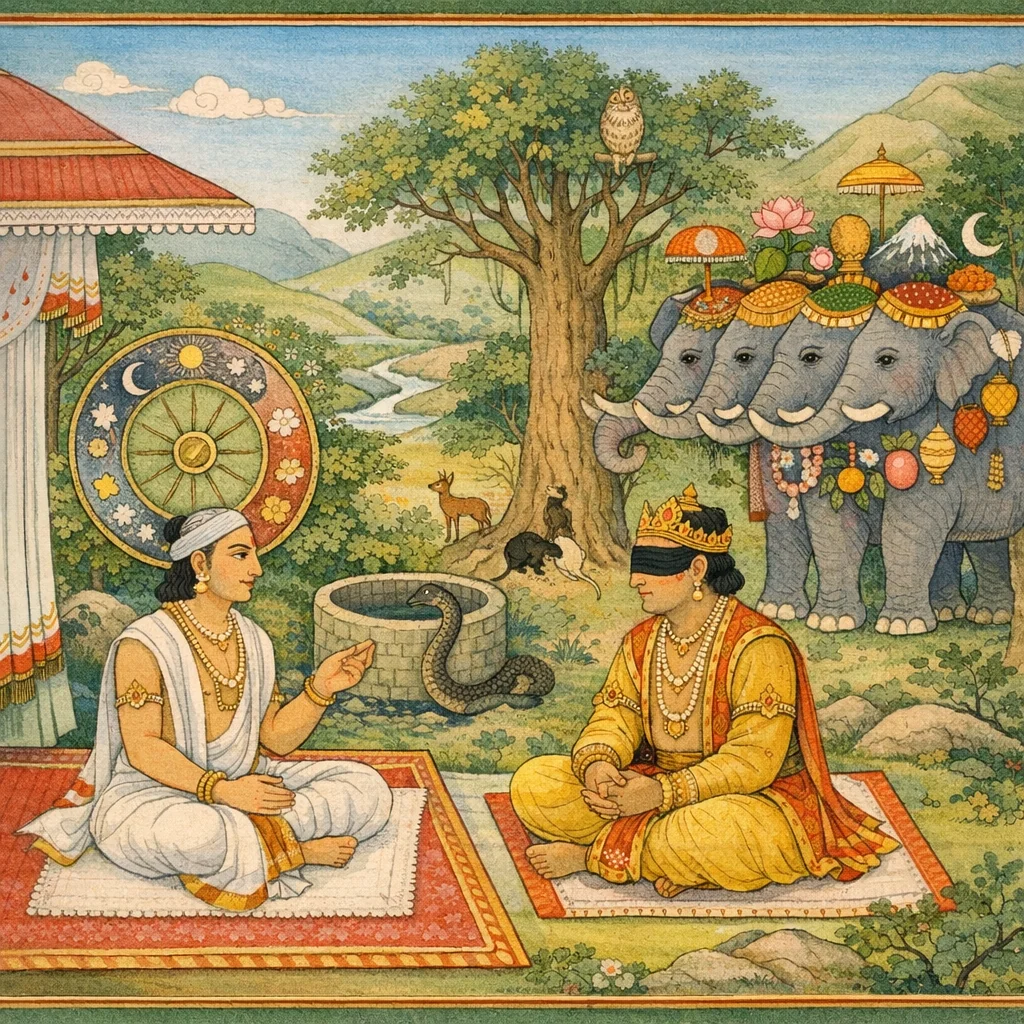
Dhṛtarāṣṭra opens with a sequence of inquiries framed as compassion: he asks how a person can dwell in harsh conditions, where that perilous ‘dharma-crisis’ place is, and how one might be freed from a great fear. Vidura answers by citing an instructive allegory used by mokṣa-knowers to secure a ‘good course’ beyond. He identifies the ‘wilderness/forest’ as the vast saṃsāra, with predators as diseases and a large-bodied woman as jarā (old age) that erodes beauty and form. The ‘well’ is the embodied condition (deha), with Kāla (Time) as the great serpent beneath—Antaka, the universal taker. The vine on which the human hangs is the hope of continued life; the elephant with six faces is the year, mapped through seasons and months, while the gnawing mice are day and night consuming life. Bees and honey-streams signify desires and their tastes in which humans sink. The chapter concludes: those who understand the turning of the saṃsāra-wheel cut its bonds—knowledge functioning as liberation-oriented agency.
Chapter Arc: धृतराष्ट्र, शोक से व्याकुल, विदुर के ‘संसार-वन’ रूपक को सुनकर चकित होकर पूछते हैं—ऐसा घोर दुःख सहकर भी वह जीव वहाँ कैसे रमता है, और वह देश कहाँ है जहाँ वह धर्मसंकट में फँसा रहता है। → राजा बार-बार उस ‘फँसे हुए ब्राह्मण/जीव’ के उद्धार का उपाय पूछते हैं; करुणा जागती है—‘सब बताओ, हम उसे निकालने का यत्न करेंगे।’ विदुर रूपक के प्रत्येक घटक का अर्थ खोलते जाते हैं, और श्रोता को धीरे-धीरे बोध होता है कि यह कथा किसी दूर देश की नहीं, अपने ही अस्तित्व की है। → विदुर निर्णायक व्याख्या करते हैं: ‘कूप’ देह है; भीतर का महान नाग ‘काल’ है; वृक्ष के पास घूमता षड्वक्त्र कुंजर ‘संवत्सर’ है—उसके छह मुख ऋतुएँ, बारह पाँव महीने; चूहे समय/दिन-रात की क्षय-शक्ति हैं; और सीमा पर खड़ी विशाल नारी ‘जरा’ है जो रूप-वर्ण का विनाश करती है। इस क्षण रूपक का पर्दा हटता है—संसारचक्र का भय और उसकी अनिवार्य गति प्रत्यक्ष हो जाती है। → विदुर बताते हैं कि बुद्धिमान पुरुष इस संसारचक्र की परिक्रमा को जानकर उसके पाश काटते हैं—अर्थात् देह-काल-जरामय बंधन को पहचानकर वैराग्य, विवेक और मोक्षमार्ग की ओर मुड़ते हैं। धृतराष्ट्र का शोक ‘व्यक्ति-हानि’ से उठकर ‘तत्त्व-बोध’ की दिशा में रूपांतरित होने लगता है। → धृतराष्ट्र के भीतर उठता अगला प्रश्न—‘यदि यह सब देह-काल का जाल है, तो शोक का वास्तविक उपचार और मोक्ष का सीधा साधन क्या है?’
Shlokas
Verse 1
अफ्-४#-राज षष्ठो& ध्याय: संसाररूपी वनके रूपकका स्पष्टीकरण ध्ृतराष्ट्र ववाच अहो खलु महद् दु:खं कृच्छुवासश्न॒ तस्य ह | कथं तस्य रतिस्तत्र तुष्टिवां वदतां वर,धृतराष्ट्र बोले--वक्ताओंमें श्रेष्ठ विदुर! यह तो बड़े आश्वर्यकी बात है! उस ब्राह्मणको तो महान् दुःख प्राप्त हुआ था। वह बड़े कष्टसे वहाँ रह रहा था तो भी वहाँ कैसे उसका मन लगता था और कैसे उसे संतोष होता था?
Dhṛtarāṣṭra said: “Alas, that was indeed great suffering, and his dwelling there was truly under hardship. O best of speakers, how could he still take delight in that place, and how could he find contentment there?”
Verse 2
स देश: क्व नु यत्रासौ वसते धर्मसंकटे । कथं वा स विमुच्येत नरस्तस्मान्महाभयात्,कहाँ है वह देश, जहाँ बेचारा ब्राह्मण ऐसे धर्मसंकटमें रहता है? उस महान् भयसे उसका छुटकारा किस प्रकार हो सकता है?
Vidura said: “Where, indeed, is that land in which that man lives, caught in a grievous dilemma of dharma? And how can that person be freed from that great fear?”
Verse 3
एतनमे सर्वमाचक्ष्व साधु चेष्टामहे तदा । कृपा मे महती जाता तस्याभ्युद्धरणेन हि,यह सब मुझे बताओ; फिर हम सब लोग उसे वहाँसे निकालनेकी पूरी चेष्टा करेंगे। उसके उद्धारके लिये मुझे बड़ी दया आ रही है
Vidura said: “Tell me all of this clearly. Then we shall at once make every proper effort to bring him out from there. Indeed, a great compassion has arisen in me for his rescue.”
Verse 4
विदुर उवाच उपमानमिदं राजन् मोक्षविद्धिरुदाह्तम् । सुकृतं विन्दते येन परलोकेषु मानव:
Vidura said: “O King, this is an illustrative comparison, set forth to explain the method that leads to liberation. By following it, a person gains the fruit of righteous merit in the worlds beyond.”
Verse 5
इस प्रकार श्रीमह्ाभारत स्त्रीपर्वके अन्तर्गत जलप्रदानिकपर्वमें धृतराष्ट्रके शीकका निवारणविषयक पाँचवाँ अध्याय पूरा हुआ,विदुरजीने कहा--राजन! मोक्षतत्त्वके विद्वानोंद्वारा बताया गया यह एक दृष्टान्त है, जिसे समझकर वैराग्य धारण करनेसे मनुष्य परलोकमें पुण्यका फल पाता है ।। उच्यते यत् तु कान्तारं महासंसार एव सः । वन दुर्ग हि यच्चैतत् संसारगहनं हि तत् जिसे दुर्गम स्थान बताया गया है, वह महासंसार ही है और जो यह दुर्गम वन कहा गया है, यह संसारका ही गहन स्वरूप है
Vidura said: “O King, the wise who know the truth of liberation describe this as an illustrative example. When a person understands it and adopts dispassion, he gains the fruit of merit in the next world. What is called a ‘wilderness’ is in fact this vast cycle of worldly existence itself; and what is termed a ‘hard-to-cross forest’ is nothing other than the dense, bewildering thicket of saṃsāra.”
Verse 6
ये च ते कथिता व्याला व्याधयस्ते प्रकीर्तिता: । या सा नारी बृहत्काया अध्यतिष्ठत तत्र वै,इति श्रीमहाभारते स्त्रीपर्वणि जलप्रदानिकपर्वणि धृतराष्ट्रविशोककरणे षष्ठो5ध्याय:
Vidura said: “And those fierce, serpent-like afflictions that were described to you—those very maladies have been clearly enumerated. That woman of vast and formidable form was indeed stationed there.” Thus, in the Mahābhārata, in the Strī Parva, in the section concerning the offering of water, in the episode on dispelling Dhṛtarāṣṭra’s grief, ends the sixth chapter.
Verse 7
यस्तत्र कूपो नृपते स तु देह: शरीरिणाम्,नरेश्वर! उस वनमें जो कुआँ कहा गया है, वह देहधारियोंका शरीर है। उसमें नीचे जो विशाल नाग रहता है, वह काल ही है। वही सम्पूर्ण प्राणियोंका अन्त करनेवाला और देहधारियोंका सर्वस्व हर लेनेवाला है
Vidura explains to the king that the “well” spoken of in that forest is not a literal pit but the embodied condition itself—the body of all living beings. The great serpent said to dwell at the bottom is Time (Death). It is Time that brings every creature to its end and strips embodied beings of everything they cling to. The teaching redirects the listener from outward images to inner truth: life in the body is precarious, and one should live with discernment and detachment, remembering the inevitability of death.
Verse 8
यस्तत्र वसते5धस्तान्महाहि: काल एव सः | अन्तक: सर्वभूतानां देहिनां सर्वहार्यसौ,नरेश्वर! उस वनमें जो कुआँ कहा गया है, वह देहधारियोंका शरीर है। उसमें नीचे जो विशाल नाग रहता है, वह काल ही है। वही सम्पूर्ण प्राणियोंका अन्त करनेवाला और देहधारियोंका सर्वस्व हर लेनेवाला है
Vidura said: “The great serpent that dwells there in the depths is none other than Time itself. O king of men, it is Time that becomes the end of all beings and strips embodied creatures of everything they possess.”
Verse 9
कूपमध्ये च या जाता वल्ली यत्र स मानव: । प्रताने लम्बते लग्नो जीविताशा शरीरिणाम्,कुँएके मध्यभागमें जो लता उत्पन्न हुई बतायी गयी है, जिसको पकड़कर वह मनुष्य लटक रहा है, वह देहधारियोंके जीवनकी आशा ही है
That creeper which has sprung up in the middle of the well—clinging to whose spreading tendril the man hangs suspended—represents the embodied being’s very hope of continuing life, a fragile support amid peril.
Verse 10
स यस्तु कूपवीनाहे तं॑ वृक्ष परिसर्पति । षड्वक्त्र: कुज्जरो राजन् स तु संवत्सर: स्मृत:,राजन! जो कुएँके मुखबन्धके समीप छ: मुखों-वाला हाथी उस वृक्षकी ओर बढ़ रहा है, उसे संवत्सर माना गया है
Vidura says: “That six-faced elephant which advances toward the tree, close by the mouth-covering of the well—O King—should be understood as the ‘year’ itself.” In the allegorical frame, time is portrayed as an unstoppable force moving on, pressing the embodied being toward inevitable change and decline, urging vigilance and right conduct.
Verse 11
मुखानि ऋतवो मासा: पादा द्वादश कीर्तिता: । ये तु वृक्ष निकृन््तन्ति मूषिका: सततोत्थिता:
“Its ‘faces’ are the seasons; its months are spoken of as its twelve ‘feet’. Yet there are ever-rising mice that keep gnawing and cutting down the tree.” (Vidura uses this image to warn that time is structured and measurable, but it is also relentlessly consumed by subtle, ceaseless forces—so one should not be careless about life, duty, and the consequences of delay.)
Verse 12
ये ते मधुकरास्तत्र कामास्ते परिकीर्तिता:,और जो-जो वहाँ मधुमक्खियाँ कही गयी हैं, वे सब कामनाएँ हैं। जो बहुत-सी धाराएँ मधुके झरने झरती रहती हैं, उन्हें कामरस जानना चाहिये, जहाँ सभी मानव डूब जाते हैं
Vidura says: “Those ‘bees’ spoken of there are in truth desires. And the many streams that continually drip with honey are to be understood as the sweet ‘juice’ of craving—an intoxicating relish in which people everywhere become submerged.”
Verse 13
यास्तु ता बहुशो धारा: स्रवन्ति मधुनिस्रवम् । तांस्तु कामरसान् विद्याद् यत्र मज्जन्ति मानवा:,और जो-जो वहाँ मधुमक्खियाँ कही गयी हैं, वे सब कामनाएँ हैं। जो बहुत-सी धाराएँ मधुके झरने झरती रहती हैं, उन्हें कामरस जानना चाहिये, जहाँ सभी मानव डूब जाते हैं
Vidura explains that the many streams that keep flowing with the drip of honey should be understood as the sweet ‘juices’ of desire—those alluring currents in which human beings repeatedly sink and lose themselves.
Verse 14
एवं संसारचक्रस्य परिवृत्तिं विदुर्बुधा: । येन संसारचक्रस्य पाशांश्छिन्दन्ति वै बुधा:,विद्वान् पुरुष इस प्रकार संसारचक्रकी गतिको जानते हैं, इसीलिये वे वैराग्यरूपी शस्त्रसे इसके सारे बन्धनोंको काट देते हैं
Thus the wise understand the turning of the wheel of worldly existence; and because they know its course, they truly cut through the nooses of that wheel—severing bondage by the weapon of dispassion and clear insight.
Verse 66
तामाहुस्तु जरां प्राज्ञा रूपवर्णविनाशिनीम् । जो सर्प कहे गये हैं, वे नाना प्रकारके रोग हैं। उस वनकी सीमापर जो विशालकाय नारी खड़ी थी, उसे विद्वान पुरुष रूप और कान्तिका विनाश करनेवाली वृद्धावस्था बताते हैं
Vidura explains that the wise identify the towering woman standing at the boundary of that allegorical forest as Old Age (jarā)—the force that destroys beauty and complexion. In the moral frame of the passage, she marks the inevitable decline that overtakes embodied life, reminding one to act with discernment and detachment before time erodes all outward splendor.
Verse 116
रात्यहानि तु तान्याहुर्भूतानां परिचिन्तका: । छः: ऋतुएँ ही उसके छः मुख हैं और बारह महीने ही बारह पैर बताये गये हैं। जो चूहे सदा उद्यत रहकर उस वृक्षको काटते हैं, उन चूहोंको विचारशील विद्वान प्राणियोंके दिन और रात बताते हैं
Vidura explains, in the language of a moral allegory, that the ceaseless passage of time consumes all embodied beings. The wise identify the two ever-active ‘mice’ gnawing at the tree of life as day and night; the tree’s six ‘faces’ are the six seasons, and its twelve ‘feet’ are the twelve months. The teaching is that life is steadily worn away by time, so one should awaken to discernment and live with purposeful dharma rather than negligence.
Frequently Asked Questions
Dhṛtarāṣṭra’s concern frames the dilemma as how a person can live amid ‘dharma-crisis’ and great fear; Vidura reframes it as the universal predicament of embodied life—how to respond ethically and intelligently to aging, disease, desire, and mortality.
Recognizing the mechanics of saṃsāra—time’s consuming force, the body’s vulnerability, and desire’s intoxicating pull—enables discernment and loosens attachment; knowledge is presented as the means to cut the bonds of cyclic entanglement.
Yes, implicitly: Vidura states that those who know the ‘turning’ of the saṃsāra-wheel cut its snares, indicating a soteriological benefit—understanding this teaching supports liberation-oriented clarity rather than merely narrative information.