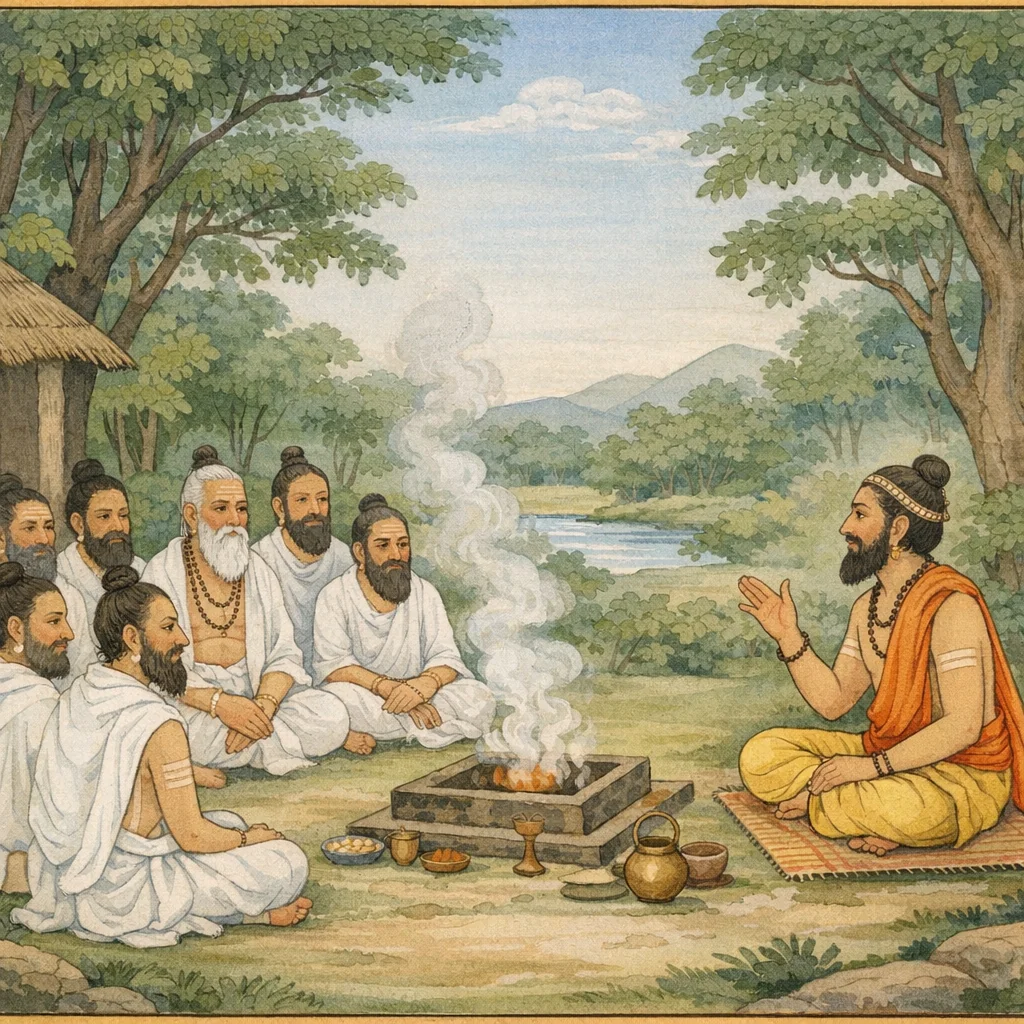
Adhyaya 59
Deva–Asura–Gandharva–Nāga Vaṃśa-kathana (Genealogies and Partial Descents)
Upa-parva: Vaṃśānucarita (Genealogical Accounts) — Surāsura-prabhava-kathana
Vaiśaṃpāyana reports that Indra, in consultation with Nārāyaṇa, arranges for devas to descend to earth in partial aspects to secure the welfare of worlds and counter disruptive forces. Janamejaya then requests a precise account of the origins (saṃbhava) of devas, dānavas, gandharvas, apsarases, humans, yakṣas, and rākṣasas. Vaiśaṃpāyana responds with a structured genealogical recital: the six mind-born sages of Brahmā; Kaśyapa’s progeny through Dakṣa’s daughters (including Aditi, Diti, Danu, Kadrū, Vinatā, and others); the twelve Ādityas by name; the Diti-line through Hiraṇyakaśipu and Prahlāda to Bali and Bāṇa; extensive Danu-line enumerations; and further lineages including Siṃhikā’s sons (e.g., Rāhu), Kāleyas, Śukra’s association as asura preceptor, and notable nāgas and vānateya (Garuda-related) figures. The chapter closes with an explicit limitation on exhaustive counting, a catalog of gandharvas and apsarases, and a phalaśruti asserting merit from disciplined recitation and listening.
Chapter Arc: नैमिषारण्य के शान्त यज्ञ-परिसर में शौनक ऋषि सूतनन्दन उग्रश्रवा से आग्रह करते हैं—वंश-परम्परा का वर्णन सुन लिया, अब उसी महायज्ञ (जनमेजय के सर्पसत्र) में जो-जो अद्भुत कथाएँ, अवकाश-क्षणों में, व्यास-सम्पन्न रूप से कही गयीं, उन्हें क्रम से सुनाओ। → शौनक का प्रश्न कथा को ‘कथानुबन्ध’ की ओर मोड़ देता है—सर्पसत्र जैसा ‘परमदुष्पार’ अनुष्ठान, सभा के महात्मा, यज्ञकर्म के बीच-बीच में उठती जिज्ञासा, और उन विरामों में वेदाश्रयी आख्यानों के साथ-साथ स्वयं व्यास द्वारा ‘चित्र’ महाभारत का प्रवाह—यह सब एक साथ स्मृति में उभरता है। → उग्रश्रवा का निर्णायक वचन—‘हन्त ते कथयिष्यामि’—वह प्रतिज्ञा करता है कि कृष्णद्वैपायन-व्यास के मतानुसार, आदितः (आरम्भ से) सम्पूर्ण महाभारत सुनाएगा; और उसे कहने में उसके भीतर ‘महान् हर्ष’ जाग उठता है। → कथा-परम्परा की वैधता और मार्ग स्पष्ट हो जाता है: जनमेजय ने पूछा, व्यास ने विधिवत् सुनाया, और अब वही पुण्यकथा उग्रश्रवा नैमिषारण्य में शौनकादि ऋषियों को सुनाने जा रहा है—श्रवण के लिए सभा तैयार। → व्यास-प्रणीत महाख्यान का वास्तविक प्रवाह अब आरम्भ होने को है—अगला चरण उसी ‘आदितः’ कथन की देहरी पर रोक देता है।
Shlokas
Verse 1
ऑपन--माज छा जज ::अ (अंशावतरणपर्व) एकोनषष्टितमो< ध्याय: महाभारतका उपक्रम शौनक उवाच भगुवंशात् प्रभृत्येव त्वया मे कीर्तितं महत् । आख्यानमखिलं तात सौते प्रीतो5स्मि तेन ते,शौनकजी बोले--तात सूतनन्दन! आपने भृगुवंशसे ही प्रारम्भ करके जो मुझे यह सब महान् उपाख्यान सुनाया है, इससे मैं आपपर बहुत प्रसन्न हूँ
Śaunaka said: “O dear son of the Sūta, beginning from the lineage of Bhṛgu you have recounted to me this entire great narrative. Because of that, I am pleased with you.”
Verse 2
वक्ष्यामि चैव भूयस्त्वां यथावत् सूतनन्दन । या: कथा व्याससम्पन्नास्ताश्व भूयो विचक्ष्व मे,सूतपुत्र! अब मैं पुन: आपसे यह कहना चाहता हूँ कि भगवान् व्यासने जो कथाएँ कही हैं, उनका मुझसे यथावत् वर्णन कीजिये
I shall speak to you again, O son of the Sūta. Please recount to me once more, in proper order and without omission, those narratives that were composed and delivered by Vyāsa—so that their meaning and moral import may be clearly grasped.
Verse 3
तस्मिन् परमदुष्पारे सर्पसत्रे महात्मनाम् | कर्मान्तरेषु यज्ञस्य सदस्यानां तथाध्वरे,जिसका पार होना कठिन था, ऐसे सर्पयज्ञमें आये हुए महात्माओं एवं सभासदोंको जब यज्ञकर्मसे अवकाश मिलता था, उस समय उनमें जिन-जिन विषयोंको लेकर जो-जो विचित्र कथाएँ होती थीं उन सबका आपके मुखसे हम यथार्थ वर्णन सुनना चाहते हैं। सूतनन्दन! आप हमसे अवश्य कहें
O Sūta’s son, in that serpent-sacrifice of the great-souled—so difficult to bring to completion—whenever the rites of the yajña paused and the officiants and assembled members had leisure within the sacrificial session, many varied discussions and remarkable narratives would arise on diverse topics. We wish to hear from your own mouth a faithful account of all those matters; therefore, please tell us.
Verse 4
या बभूवु: कथ॒त्षित्रा येष्वर्थेषु यथातथम् | त्वत्त इच्छामहे श्रोतुं सौते त्वं वै प्रचक्ष्व न:,जिसका पार होना कठिन था, ऐसे सर्पयज्ञमें आये हुए महात्माओं एवं सभासदोंको जब यज्ञकर्मसे अवकाश मिलता था, उस समय उनमें जिन-जिन विषयोंको लेकर जो-जो विचित्र कथाएँ होती थीं उन सबका आपके मुखसे हम यथार्थ वर्णन सुनना चाहते हैं। सूतनन्दन! आप हमसे अवश्य कहें
O Sauti, we wish to hear from you a faithful account of all those varied and remarkable discussions that arose among the great sages and assembled elders who had come to that difficult-to-complete serpent-sacrifice—whenever the ritual proceedings allowed them leisure. Please relate them to us exactly as they occurred.
Verse 5
सौतिर्वाच कर्मान्तरेष्वकथयन् द्विजा वेदाश्रया: कथा: । व्यासस्त्वकथयच्चित्रमाख्यानं भारतं महत्,उग्रश्रवाजीने कहा--शौनक! यज्ञकर्मसे अवकाश मिलनेपर अन्य ब्राह्मण तो वेदोंकी कथाएँ कहते थे, परंतु व्यासदेवजी अति विचित्र महाभारतकी कथा सुनाया करते थे
Sauti said: “During the intervals between ritual acts, the Brahmin sages would recount stories grounded in the Vedas; but Vyāsa would narrate the wondrous, vast epic tale—the great Bhārata.”
Verse 6
शौनक उवाच महाभारतमाख्यानं पाण्डवानां यशस्करम् | जनमेजयेन पृष्ट: सन् कृष्णद्वैपायनस्तदा,शौनकजी बोले--सूतनन्दन! महाभारत नामक इतिहास तो पाण्डवोंके यशका विस्तार करनेवाला है। सर्पयज्ञके विभिन्न कर्मोके बीचमें अवकाश मिलने-पर जब राजा जनमेजय प्रश्न करते, तब श्रीकृष्ण-द्वैपायन व्यासजी उन्हें विधिपूर्वक महाभारतकी कथा सुनाते थे। मैं उसी पुण्यमयी कथाको विधिपूर्वक सुनना चाहता हूँ
Śaunaka said: “The narrative called the Mahābhārata is a source of renown for the Pāṇḍavas. When King Janamejaya, in the course of the rites of the serpent-sacrifice, asked questions, then Kṛṣṇa-Dvaipāyana Vyāsa would at that time relate to him, in due order, the story of the Mahābhārata.”
Verse 7
श्रावयामास विधिवत् तदा कर्मान्तरे तु सः । तामहं विधिवत पुण्यां श्रोतुमिच्छामि वै कथाम्,शौनकजी बोले--सूतनन्दन! महाभारत नामक इतिहास तो पाण्डवोंके यशका विस्तार करनेवाला है। सर्पयज्ञके विभिन्न कर्मोके बीचमें अवकाश मिलने-पर जब राजा जनमेजय प्रश्न करते, तब श्रीकृष्ण-द्वैपायन व्यासजी उन्हें विधिपूर्वक महाभारतकी कथा सुनाते थे। मैं उसी पुण्यमयी कथाको विधिपूर्वक सुनना चाहता हूँ
Śaunaka said: “At that time, during the intervals between the rites, he had it recited in due ritual order. I too wish to hear, in proper manner, that sacred and meritorious narrative.”
Verse 8
मन:सागरसम्भूतां महर्षेर्भावितात्मन: । कथयस्व सतां श्रेष्ठ सर्वरत्नमयीमिमाम्,यह कथा पवित्र अन्तःकरणवाले महर्षि वेद-व्यासके हृदयरूपी समुद्रसे प्रकट हुए सब प्रकारके शुभ विचाररूपी रत्नोंसे परिपूर्ण है। साधुशिरोमणे! आप इस कथाको मुझे सुनाइये
O best among the virtuous, please recount this sacred narrative—born from the ocean-like mind and heart of the great seer, whose inner self is purified and disciplined. It is filled with every kind of auspicious thought, like a treasury of jewels; therefore, tell it to me, for it sanctifies the inner being.
Verse 9
सौतिरुवाच हन्त ते कथयिष्यामि महदाख्यानमुत्तमम् | कृष्णद्वैपायनमतं महाभारतमादित:,उग्रश्रवाजीने कहा--शौनक! मैं बड़ी प्रसन्नताके साथ महाभारत नामक उत्तम उपाख्यानका आरम्भसे ही वर्णन करूँगा, जो श्रीकृष्णद्वैपायन वेदव्यासको अभिमत है
Sauti said: “Come then— I shall recount to you, from the very beginning, the great and excellent sacred narrative called the Mahābhārata, the work approved and intended by Kṛṣṇa Dvaipāyana (Vyāsa).”
Verse 10
शृणु सर्वमशेषेण कथ्यमानं मया द्विज । शंसितुं तन्महान् हर्षो ममापीह प्रवर्तते,विप्रवर! मेरे द्वारा कही जानेवाली इस सम्पूर्ण महाभारत-कथाको आप पूर्णरूपसे सुनिये। यह कथा सुनाते समय मुझे भी महान् हर्ष प्राप्त होता है
Listen, O twice-born sage, to this entire account as I relate it without omission. As I set forth this great Mahābhārata narrative, a profound joy arises in me here as well, for the telling of it is itself a sacred delight.
Verse 59
इति श्रीमहा भारते आदिपर्वणि अंशावतरणपर्वणि कथानुबन्धे एकोनषष्टितमो5 ध्याय:,इस प्रकार श्रीमह्याभारत आदिपर्वके अन्तर्गत अंशावतरणपर्वमें कथानुबन्धविषयक उनसठवाँ अध्याय पूरा हुआ
Thus, in the Śrī Mahābhārata, within the Ādi Parva—specifically in the Aṃśāvataraṇa Parva—this is the narrative colophon marking the completion of the fifty-ninth chapter dealing with the connecting thread of the story. (The accompanying Hindi note likewise states: “In this way, the sixty-ninth?—here intended as the fifty-ninth—chapter on the narrative linkage in the Aṃśāvataraṇa section of the Ādi Parva is completed.”)
Frequently Asked Questions
The chapter frames a governance dilemma at the cosmic scale: how to restore stability and public welfare (sarvaloka-hita) through calibrated intervention (aṃśataḥ avataraṇa) without collapsing the distinction between divine intent and human agency.
Order is intelligible through origins and relations: by tracing descent and transmission, the listener learns to interpret events as structured consequences within dharma, rather than as isolated incidents.
Yes. The closing verses commend disciplined reading/hearing of these genealogies in the presence of learned custodians, associating the practice with prosperity, reputation, desired progeny, and a favorable posthumous course—functioning as a textual warrant for preservation and study.