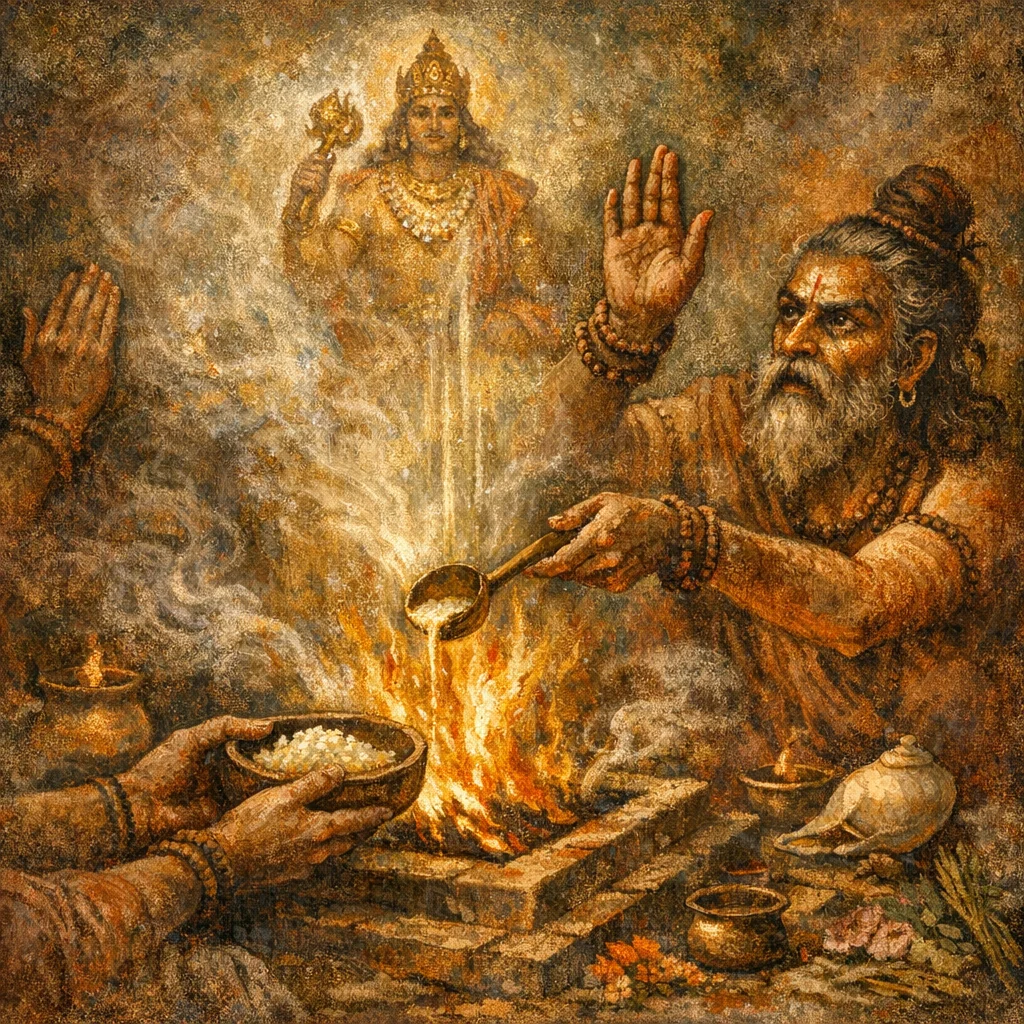
Sukta 72
Rishi: Indra-hymn tradition (specific r̥ṣi not determinable from excerpt alone)
Devata: Indra
Chandas: Anuṣṭubh (probable)
Mantras
Mantra 1
इन्द्रः। उत् तिष्ठताव पश्यतेन्द्रस्य भागमृत्वियम्। यदि श्रातं जुहोतन यद्यश्रातं ममत्तन
Arise; look forth and behold Indra’s portion, the portion that is of the rite. If ye offer what is well-cooked, (then) offer; if what is ill-cooked, then make him glad (therewith).
Mantra 2
श्रातं हविरो ष्विन्द्र प्र याहि जगाम सूरो अध्वनो वि मध्यम्। परि त्वासते निधिभिः सखायः कुलपा न व्राजपतिं चरन्तम्
The well-cooked oblation—O Indra—come forth unto it: the Sun hath reached the midmost of his course. Round thee sit thy comrades with treasures, as clan-guards about the lord of the cattle-fold moving to and fro.
Mantra 3
श्रातं मन्य ऊधनि श्रातमग्नौ सुशृतं मन्ये तदृतं नवीयः । माध्यन्दिनस्य सवनस्य दध्नः पिबेन्द्र वज्रिन् पुरुकृज्जुषाणः
Well-cooked, I deem it, in the udder; well-cooked in the fire, well-prepared—I deem that the right, the newer order. Drink, O Indra, bolt-bearer, of the curds of the midday pressing, taking pleasure, thou of many deeds.
Frequently Asked Questions
To make sure Indra receives his proper sacrificial portion at the right time (midday) and remains satisfied, so the rite yields prosperity and protection—especially for wealth and cattle.
It addresses a practical ritual problem: if the cooking is perfect, offer it; if not, the mantra provides a way to proceed so Indra is still gladdened and the ritual result is not lost.
Curds are invoked as a strengthening midday offering for Indra Vajrin; his ‘drinking’ symbolizes acceptance and enjoyment, which translates into vigor, success, and prosperity for the patron.