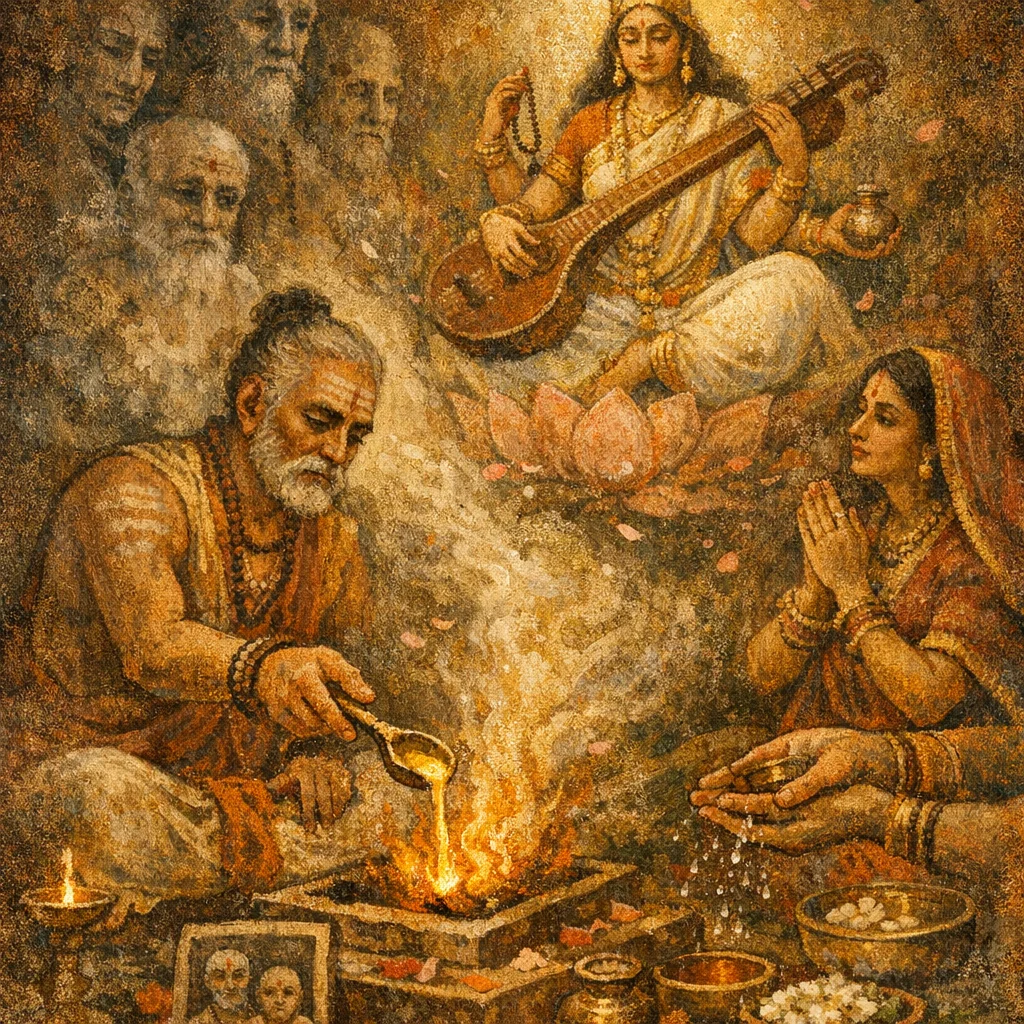
Sukta 68
Rishi: Traditionally Atharvanic/Angirasa milieu (hymn to Sarasvatī; specific r̥ṣi varies by anukramaṇī)
Devata: Sarasvatī
Chandas: Anuṣṭubh (probable; requires metrical check)
Mantras
Mantra 1
सरस्वती। सरस्वति व्रतेषु ते दिव्येषु देवि धामसु । जुषस्व हव्यमाहुतं प्रजां देवि ररास्व नः
O Sarasvatī, in thine ordinances, in thy heavenly seats, O Goddess, take thou delight in the oblation duly offered; and grant us, O Goddess, progeny.
Mantra 2
इदं ते हव्यं घृतवत् सरस्वतीदं पितॄणां हविरास्यं१ यत्। इमानि त उदिता शंतमानि तेभिर्वयं मधुमन्तः स्याम
This oblation, rich with ghee, is thine, O Sarasvatī; this, which is the Fathers’ mouth of offering. These most gracious boons of thine, proclaimed forth—by them may we be honeyed, may we be sweet with prosperity.
Mantra 3
शिवा नः शंतमा भव सुमृडीका सरस्वति । मा ते युयोम संदृशः
Be thou for us benign, most gracious, most compassionate, O Sarasvatī. Let us not be parted from thy presence, from thy favourable sight.
Frequently Asked Questions
It is primarily a paustika hymn: to have the oblation accepted by Sarasvatī and to obtain progeny and lasting household prosperity.
The hymn treats the offering as connected to the Pitṛs as a ‘mouth of offering’ (havir-āsya), suggesting that prosperity and lineage are secured when the rite aligns divine favor with ancestral continuity.
No. The text itself emphasizes a ghee-rich havis (ghṛtavat) and a concluding benediction; it does not prescribe herbs or amulets in these three verses.