Sukta 64
Rishi: Atharvanic tradition (śānti/prāyaścitta hymn; specific r̥ṣi not stated in the supplied excerpt)
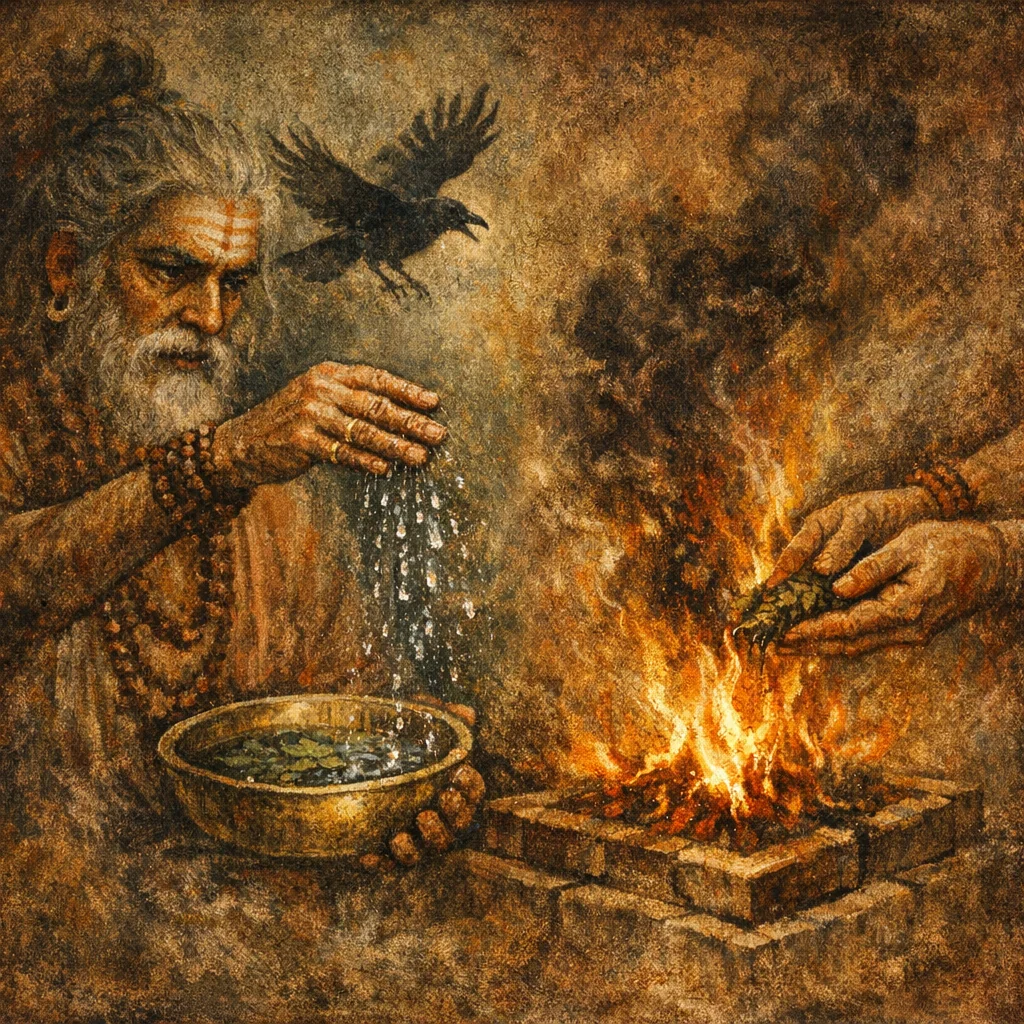
Devata: Āpaḥ (Waters) as purifiers and protectors
Chandas: Anuṣṭubh (probable; common in AV śānti verses)
Mantras
Mantra 1
पापमोचनम्। इदं यत् कृष्णः शकुनिरभिनिष्पतन्नपीपतत्। आपो मा तस्मात् सर्वस्माद् दुरितात् पान्त्वंहसः
This—when the black bird of omen, flying forth toward me, hath lighted down—may the Waters guard me from that, from every evil hap, from anguish and from sin.
Mantra 2
इदं यत् कृष्णः शकुनिरवामृक्षन्निरृते ते मुखेन । अग्निर्मा तस्मादेनसो गार्हपत्यः प्र मुञ्चतु
This—when the black bird of omen hath rubbed (defiled) with its mouth, as of Nirṛti—may Agni, the Household Fire, from that guilt set me wholly free.
Frequently Asked Questions
It is used when an inauspicious black bird (śakuni) approaches, alights, or is believed to have defiled a person—an event treated as an omen requiring immediate purification and expiation.
Waters cleanse and protect from ‘evil hap’ (durita) and anguish (aṃhas), while Agni Gārhapatya performs expiation by ‘releasing’ from enas—together expressing complete removal of taint.
No. The hymn’s ritual logic centers on simple, primary purifiers: clean water for sprinkling/ablution and the household fire for expiatory release; optional ghee/kuśa may be used according to custom.