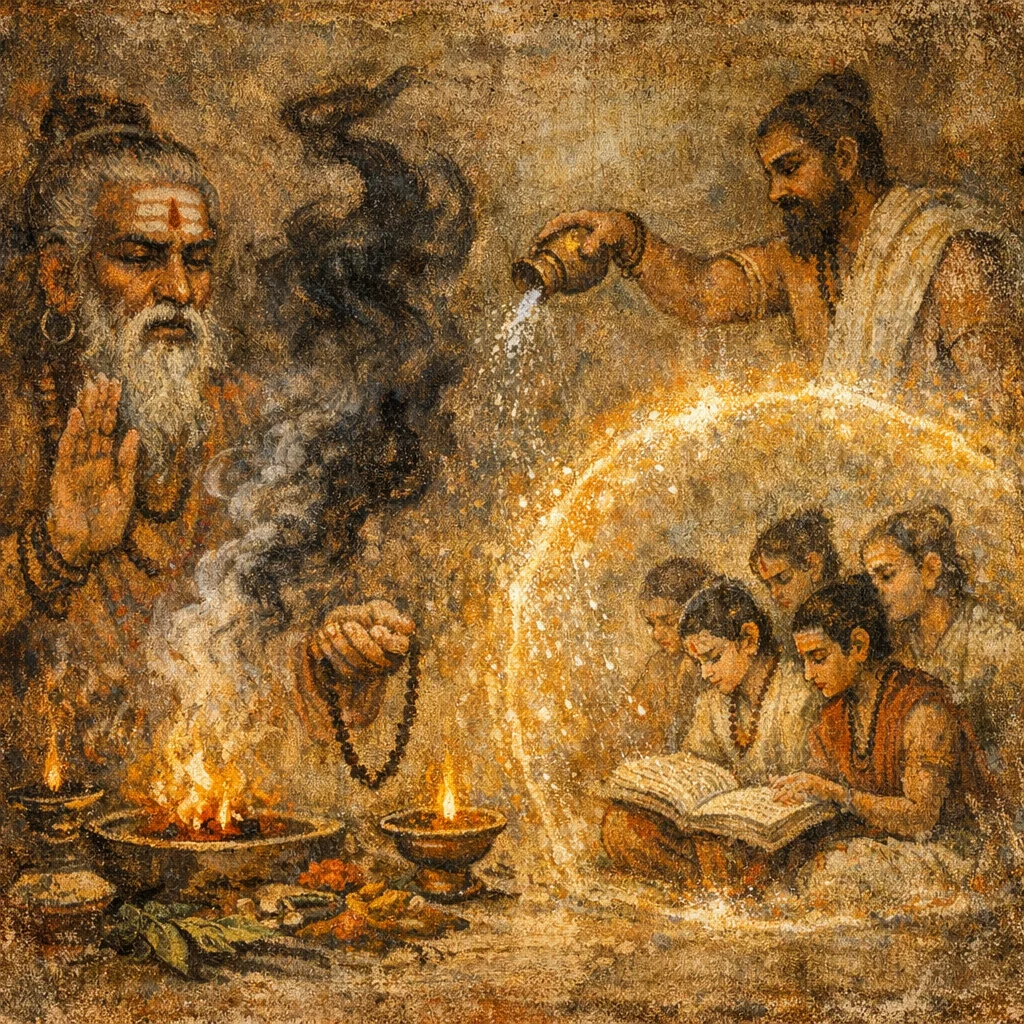
Sukta 54
Rishi: Atharvanic tradition (attribution uncertain)
Devata: Ṛc and Sāman (personified Vedic speech-forms)
Chandas: Anuṣṭubh (approx.)
Mantras
Mantra 1
अध्यापकविघ्नशमनम्। ऋचं साम यजामहे याभ्यां कर्माणि कुर्वते । एते सदसि राजतो यज्ञं देवेषु यच्छतः
We worship the Ṛc and the Sāman, by which twain men perform their rites. These two shine in the session; they guide the sacrifice unto the Gods.
Mantra 2
ऋचं साम यदप्राक्षं हविरोजो यजुर्बलम्। एष मा तस्मान्मा हिंसीद् वेदः पृष्टः शचीपते
The Ṛc, the Sāman—what I have inquired of—oblation-strength, Yajus-force: let not this Veda, when questioned, injure me therefor, O Lord of might.
Frequently Asked Questions
For removing impediments in Vedic learning/teaching and for ensuring that recitation and chanting function safely and effectively, especially when the Veda is being questioned or examined.
Because the hymn views sacred speech-forms as living powers: verse (ṛc) and chant (sāman) are what make ritual action possible and what ‘carry’ the sacrifice to the gods when used correctly.
It asks protection from harm arising from misuse, misunderstanding, or the intense potency of sacred knowledge—so inquiry and instruction proceed without fear, error, or backlash.