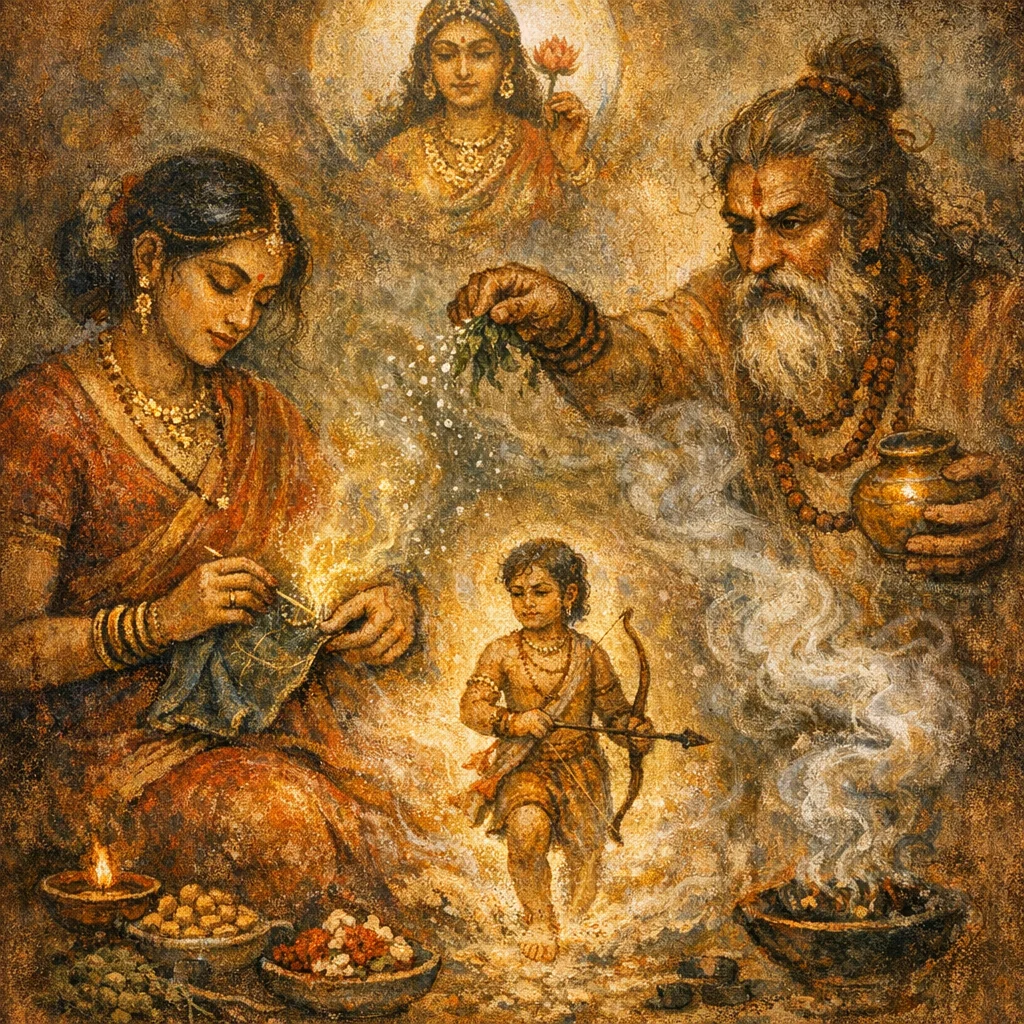
Sukta 48
Rishi: Atharvanic tradition (hymn addressed to Rākā; specific ṛṣi attribution varies by anukramaṇī lists)
Devata: Rākā (full-moon goddess; fertility and restoration)
Chandas: Mixed; predominantly Triṣṭubh-like cadence in Atharvanic adaptation (exact metrical scan depends on pada resolution).
Mantras
Mantra 1
राका। राकामहं सुहवा सुष्टुती हुवे शृणोतु नः सुभगा बोधतु त्मना । सीव्यत्वपः सूच्याच्छिद्यमानया ददातु वीरं शतदायमुक्थ्यऽम्
Rākā I call—most easy to invoke, most worthy of fair praise: let the fortunate Goddess hear us; let her, of her own might, take heed. Let her stitch the skin with the needle that pierceth; and let her bestow a hero-son, a hundred-giving boon, meet to be hymned.
Mantra 2
यास्ते राके सुमतयः सुपेशसो याभिर्ददासि दाशुषे वसूनि । ताभिर्नो अद्य सुमना उपागहि सहस्रापोषं सुभगे रराणा
What gracious favours, O Rākā, fair in form, wherewith thou givest riches to the pious giver—therewith, well-minded, draw near to us to-day, rejoicing, O bounteous one, with thousandfold increase.
Frequently Asked Questions
Rākā is the auspicious fullness of the moon, invoked as a goddess who restores completeness—of the body (healing) and of the household (fertility and prosperity).
It is a vivid ritual image for repairing what has been pierced or cut: the mantra asks the lunar power of wholeness to ‘seal’ and restore the body’s covering so integrity returns.
Ideally near the full moon (Paurṇamāsī) or under the waxing/full moon for fertility and increase; for immediate healing needs, it may be recited at once and repeated on the next full moon as reinforcement.