Sukta 45
Rishi: Atharvanic tradition (anukramaṇī confirmation needed)
Devata: Bheṣaja (remedy) / personified counter-agent to Īrṣyā
Chandas: Anuṣṭubh (probable)
Mantras
Mantra 1
ईर्ष्यानिवारणम्। जनाद् विश्वजनीनात् सिन्धुतस्पर्याभृतम्। दूरात् त्वा मन्य उद्भृतमीर्ष्याया नाम भेषजम्
From men, from what is common to all, from Sindhu have I fetched thee round about; from afar I deem thee lifted forth—a remedy, by name, against jealousy.
Mantra 2
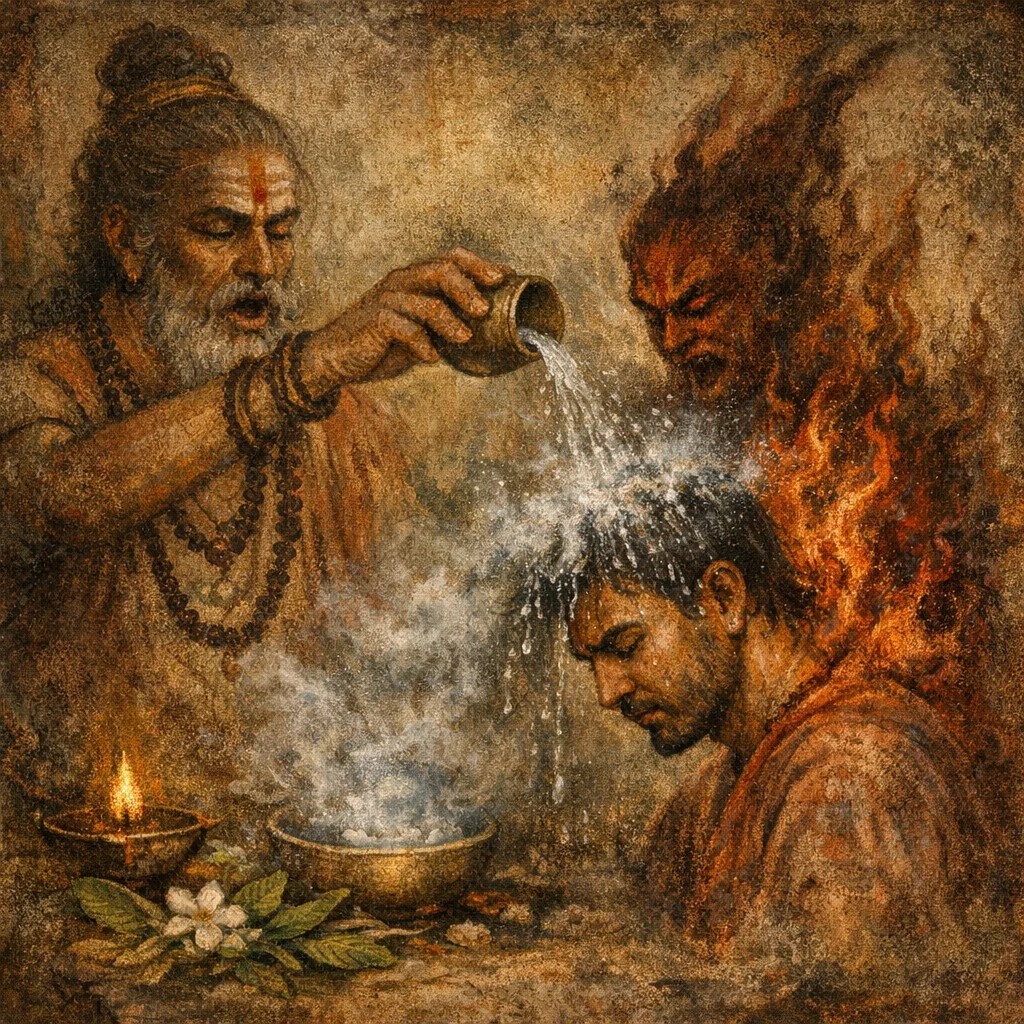
अग्नेरिवास्य दहतो दावस्य दहतः पृथक्। एतामेतस्येर्ष्यामुद्राग्निमिव शमय
As from the burning fire, as from the burning forest-blaze—apart! This jealousy of this man, draw it forth; quench it, as one quencheth a glowing firebrand.
Frequently Asked Questions
It addresses īrṣyā—jealousy or envy—treated as a harmful, heat-like force that can damage relationships and wellbeing. The hymn installs a remedy and commands the envy to be drawn out and pacified.
The fire simile explains envy as something that spreads, burns, and harms if not checked. By commanding it to be quenched like a firebrand, the mantra enacts cooling and separation of that hostile emotion from the client.
The text does not name a specific plant; it speaks of a bheṣaja (remedy) in general. In practice, the ‘remedy’ can be a simple protective token—an herb bundle or knotted thread—consecrated with recitation and a symbolic quenching action.