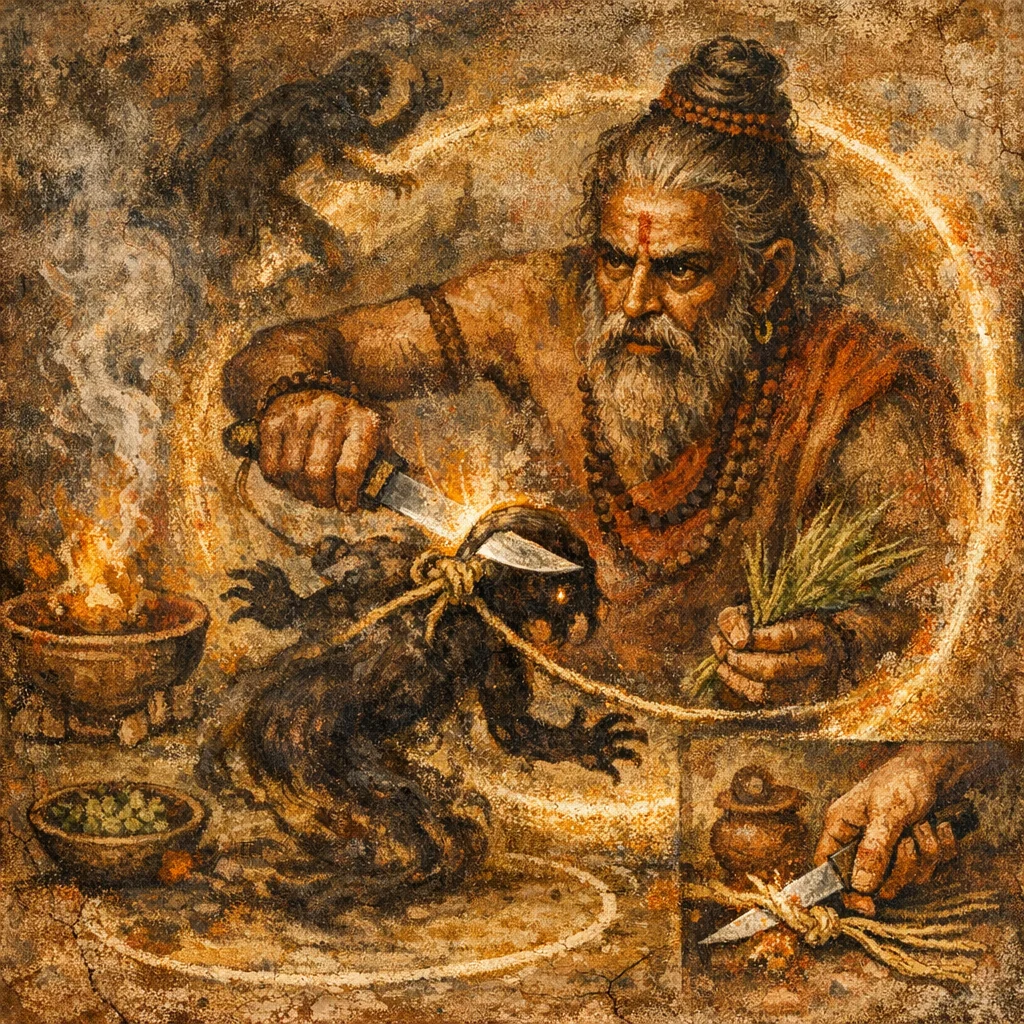
Sukta 113
Rishi: Atharvanic tradition (Anukramaṇī attribution not supplied in input)
Devata: Tṛṣṭikā (personified destructive/cutting power)
Chandas: Likely Anuṣṭubh (needs metrical verification)
Mantras
Mantra 1
शत्रुनाशनम्। तृष्टिके तृष्टवन्दन उदमूं छिन्धि तृष्टिके । यथा कृतद्विष्टासोऽमुष्मै शेप्यावते
O Tṛṣṭikā, praised for thy sharpness, cut forth and cut away that yonder foe, O Tṛṣṭikā; so that the made-haters may be for him—unto that man—an occasion of penal shame.
Mantra 2
तृष्टासि तृष्टिका विषा विषातक्यऽसि । परिवृक्ता यथासस्यृषभस्य वशेव
Keen-edged art thou, O Tṛṣṭikā; poison art thou, poison-bearing art thou: turned back and driven round, as a submissive cow before a bull, so be (the foe).
Frequently Asked Questions
Tṛṣṭikā is a personified destructive potency—imagined as keen-edged like a blade and also venom-bearing—invoked to disable and turn back an enemy.
It aims to ‘cut away’ a specified foe’s power, drive him into retreat, and impose disgrace and helpless submission through a coercive invocation.
The text uses poison and cutting primarily as ritual-symbolic language; traditional practice may use only symbolic substitutes (gesture, blade-token, effigy) rather than literal harm.