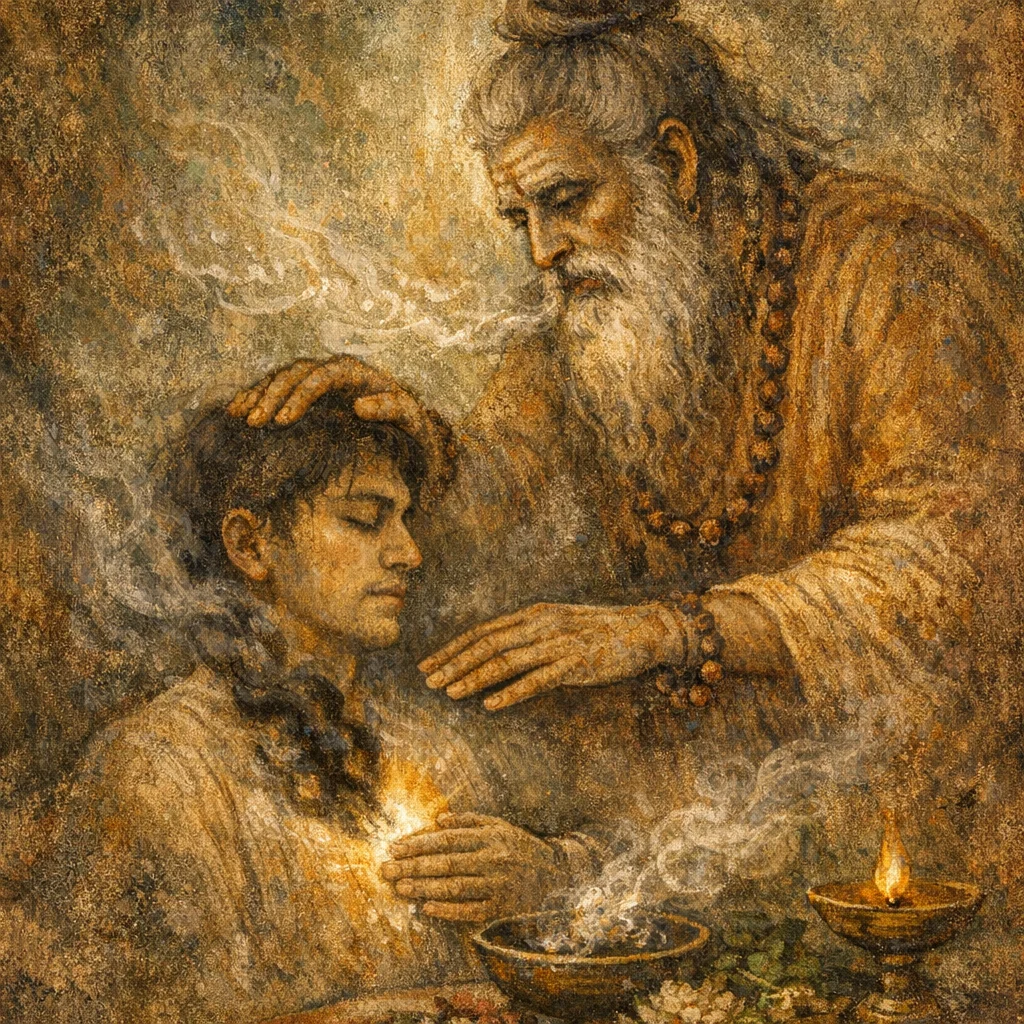
Sukta 89
Rishi: Atharvanic tradition (domestic charm corpus)
Devata: Prīti (affection) as functional devatā; Soma as empowering agent
Chandas: Anuṣṭubh
Mantras
Mantra 1
प्रीतिसंजननम्। इदं यत् प्रेण्यः शिरो दत्तं सोमेन वृष्ण्यम्। ततः परि प्रजातेन हार्दिं ते शोचयामसि
A begetter of affection is this: that dear head-gift, bestowed with Soma’s virile might. Therefrom, with what is born thereof, we cause thy heart’s distress to waste away round about.
Mantra 2
शोचयामसि ते हार्दिं शोचयामसि ते मनः । वातं धूम इव सध्र्य१ङ्मामेवान्वेतु ते मनः
We cause thy heart’s distress to waste away; we cause thy mind’s distress to waste away. As smoke goes with the wind straight onward, so—yea, to me—let thy mind follow.
Mantra 3
मह्यं त्वा मित्रावरुणौ मह्यं देवी सरस्वती । मह्यं त्वा मध्यं भूम्या उभावन्तौ समस्यताम्
For me may Mitra and Varuṇa bring thee; for me may the Goddess Sarasvatī. For me may both unite thee at the earth’s mid-place, and make us meet together.
Frequently Asked Questions
It is used to generate affection and concord while easing “heart-burning” (hārdi) and mental distress, especially in strained relationships or grief-filled situations.
Here Soma functions as the empowering consecratory force—symbolizing vigor and efficacy—by which the charm is made potent, even when represented by a sanctified liquid in later practice.
Both: its first aim is to dry up heart and mind distress (healing), and its second is to align the other person’s mind toward meeting and concord (attraction), ideally under ethical/social order (Mitra–Varuṇa).