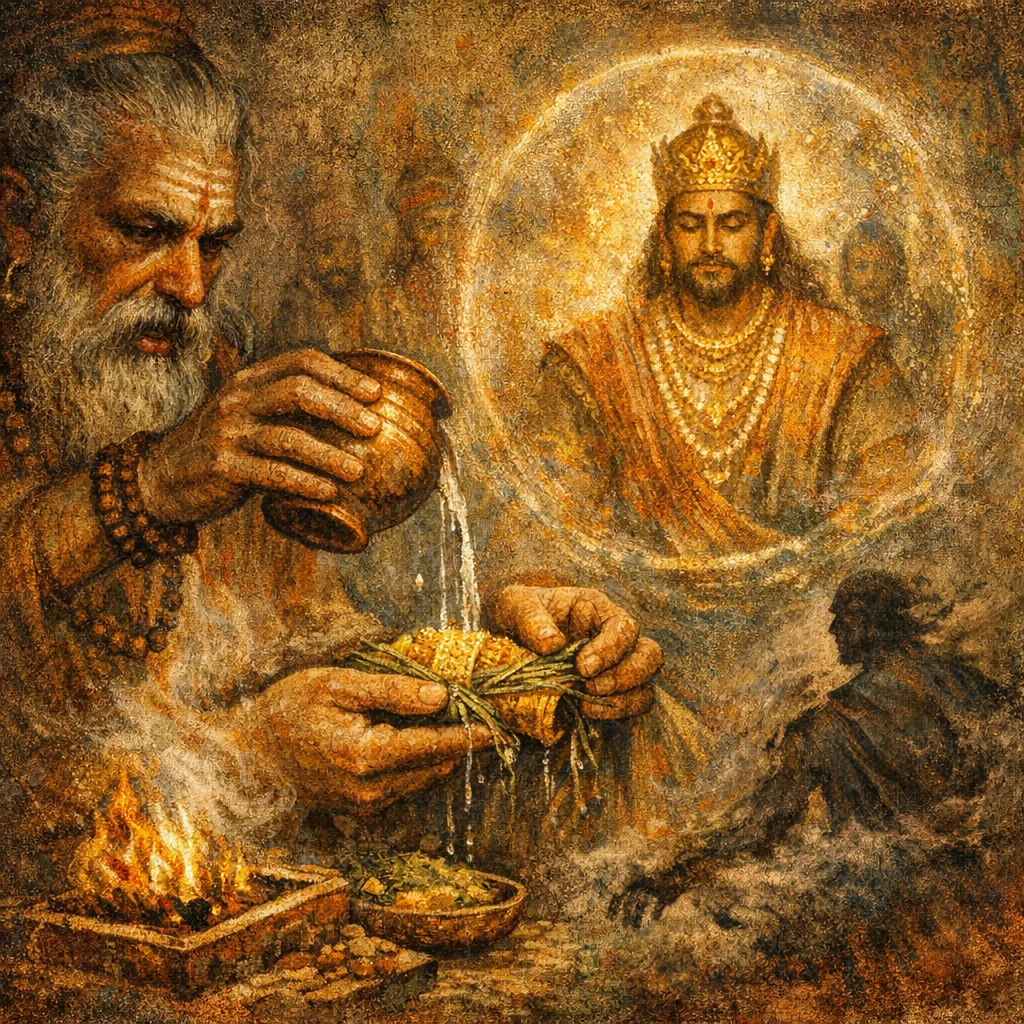
Sukta 88
Rishi: Atharvanic/Angirasa tradition (not specified in excerpt)
Devata: Dhruva (steadfastness) / Rājā (king) as ritual focus
Chandas: Anuṣṭubh (probable)
Mantras
Mantra 1
ध्रुवो राजा। ध्रुवा द्यौर्ध्रुवा पृथिवी ध्रुवं विश्वमिदं जगत्। ध्रुवासः पर्वता इमे ध्रुवो राजा विशामयम्
Firm is the King. Firm is the Heaven, firm the Earth, firm is all this moving world. Firm are these mountains: firm is this King of the peoples.
Mantra 2
ध्रुवं ते राजा वरुणो ध्रुवं देवो बृहस्पतिः । ध्रुवं त इन्द्रश्चाग्निश्च राष्ट्रं धारयतां ध्रुवम्
Firm for thee be King Varuṇa; firm be the God Bṛhaspati. Firm for thee let Indra and Agni uphold the realm—yea, firm.
Mantra 3
ध्रुवोऽच्युतः प्र मृणीहि शत्रून्छत्रूयतोऽधरान् पादयस्व । सर्वा दिशः संमनसः सध्रीचीर्ध्रुवाय ते समितिः कल्पतामिह
Steadfast, unshaken—crush thou the foes; make low the men that play the enemy. Let all the quarters be of one accord, converging: for thy firm rule let the assembly here be duly ordered.
Frequently Asked Questions
To ‘fix’ the king and the realm in steadfast stability—like heaven, earth, and mountains—so rule is unshaken, enemies are subdued, and public concord is secured.
They represent key supports of governance: Varuṇa (sovereign order), Bṛhaspati (counsel and authority of speech), Indra (victory and force), and Agni (ritual legitimacy). Together they are asked to uphold the rāṣṭra firmly.
No. While suited to enthronement and consolidation, it can also be used in times of faction, rebellion fears, or before an important assembly to restore unity and orderly governance.